Books & Arts

Books and Arts

How museums can promote diversity without demonizing tradition

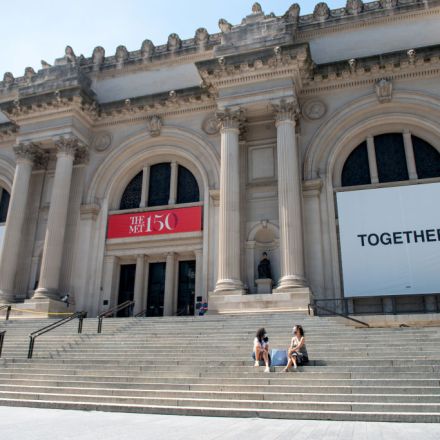
The resignation of Jim Ryan as president of the University of Virginia in June marks the growing momentum of the Trump administration’s efforts to dismantle diversity, equity and inclusion initiatives within US universities. The Department of Justice deemed Ryan’s resignation a step toward resolving its inquiry into UVA’s compliance with the administration’s new policies. Conservatives may be encouraged by news of major institutions like UVA and Harvard rolling back heavy-handed DEI programming. But pure reactionary animus to the excesses of progressive ideology has often gotten conservatives into trouble – not just in education, but in the arts.
Museums
Hoover

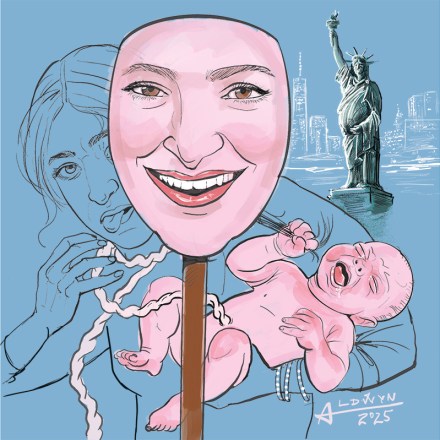
‘Being a mom sometimes sucks’: an interview with Sarah Hoover

I am expecting Sarah Hoover to be brash. The New York art-scene stalwart and influencer has written a warts-and-all misery memoir about motherhood and self discovery called The Motherload, which is presently cruising atop US bestseller lists. The book, unanimously agreed to be “unflinchingly honest” about all the bad things that can happen on a woman’s journey to and through new motherhood, opens with a stream-of-consciousness account of a party Hoover threw at the Chateau Marmont in 2017 for her first baby’s ten-month birthday. “I’d be in LA for a couple of weeks, staying at the hotel, and a diet of room service and edibles was my general game plan.

The enduring appeal of Jaws, 50 years on

It’s been 50 years since audiences first thrilled to the thudding theme music and bared teeth of the original Jaws. The movie, released on June 20, 1975, immediately had customers lining up around the block, recouping its then-astronomic $20 million production cost within a week. It still stands alongside Rocky and Star Wars as one of a trio of enduring “high-concept” mid-70s blockbusters. In keeping with Sylvester Stallone’s boxing picture and George Lucas’s space opera – and most other Hollywood money-spinners – it’s easy to forget that there was nothing inevitable about the film’s long-lasting success.

Jaws
Dyer

A walk through Geoff Dyer’s childhood

We all know we’re supposed to draw a line between the artist and the art. The veteran English essayist Geoff Dyer himself once had cause to remind me, mid-enthusiastic gabble, that his book on D.H. Lawrence was, in fact, “a conceit.” But as a reader often more interested in the lives of writers than their works, I must confess the idea of a full-blown memoir – finally! – from Dyer had me excited. I was not disappointed.

The enduring brilliance of C.S. Lewis

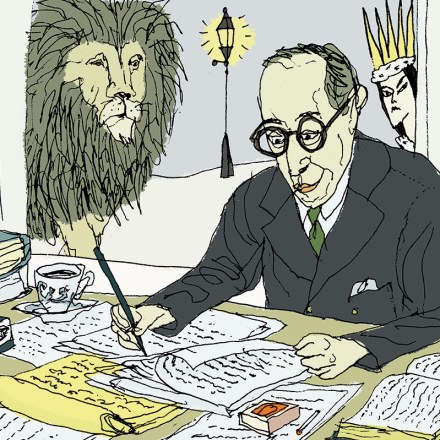
Unexpectedly, the Oxford literature professor Clive Staples Lewis – better known as C.S. Lewis – is having something of a moment, more than six decades after his death. Director Greta Gerwig, of Barbie fame, has embarked upon the ambitious project of filming all seven of his Chronicles of Narnia books for Netflix, starting with The Magician’s Nephew. She has assembled a starry ensemble that will include Daniel Craig, Carey Mulligan, the excellent Emma Mackey as the White Witch and, for the voice of the divine lion Aslan, none other than Meryl Streep. There are rumors that Lewis’s ever-popular satirical epistolary novel The Screwtape Letters is to be turned into an animated film.

Lewis
Scalia

How to make America read again

Christopher J. Scalia, in 13 Novels Conservatives Will Love (But Probably Haven’t Read) hopes not only to refresh “how conservatives talk about fiction,” but also to disabuse the left of the notion that “conservative thought is an oxymoron.” He’s set himself a difficult task, since, as he notes, nobody reads any more; whether this is truer of conservatives than of the left, I don’t know. Using the form of a book in order to attract people who don’t read might seem odd, but Scalia knows his audience and his light, avuncular style proves engaging throughout. He’s also chosen a structure that even the most TikTok-numbed zoomer might appreciate: the extended listicle.

The mechanics of cancel culture

Must we approve of an author’s private life in order to enjoy his or her books? Possibly not, to judge by the continuing popularity of writers as diverse as Charles Bukowski, Allen Ginsberg, P.L. Travers, Roald Dahl and Norman Mailer, to name but a few of those whose domestic affairs have fallen short of the temperate or monogamous ideal. And what of the sage of Cornish, J.D. Salinger, most of whose interactions during his long years of New Hampshire exile involved hanging around with local teenagers? In 1972, a fresh-faced journalism student named Joyce Maynard left college and went to live with the 53-year-old author of The Catcher in the Rye at his invitation. After eight months, she was unceremoniously dumped.

Bailey
Doyle

Glennon Doyle’s latest offering marks a change in direction

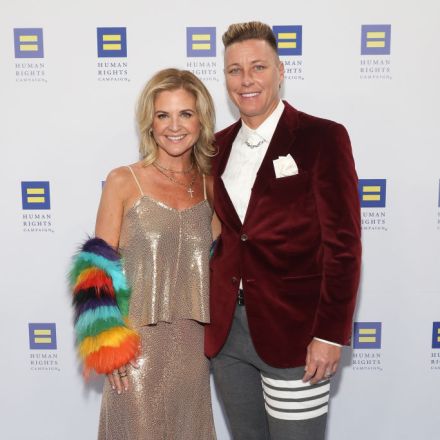
Glennon Doyle – wife, mother, lesbian, blogger, former Instagram phenomenon, political influencer –  says “we can do hard things.” This aphorism, taken from a poster in a classroom back when she was a third-grade teacher in Virginia, might just be one of the most successful dicta to emerge in recent American history – more successful, even, than Barack Obama’s “Yes we can!” When Joe Biden won the presidency in November 2020, his campaign manager swiftly tweeted “We can do hard things... and you just did!” Months later, in January 2021, Democrat Chuck Schumer, addressing Congress after the siege of the Capitol, declared: “In America, we do hard things.

Mark Twain’s finest invention was himself

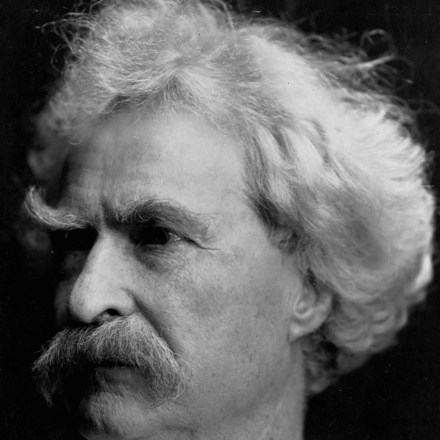
To speak of Mark Twain is to speak of the American psyche laid bare: forever restless, with an insatiable appetite for reinvention and biting commentary. Twain was not just a novelist or humorist: he was, in many respects, the nation’s most accurate mirror. He wrote the truth and then laughed at it. He carved his stories out of riverbanks and war zones, courtrooms and campfires. In his storytelling, Twain blurred the lines between truth and falsehoods, rage and laughter, freedom and fate. He gave us some of the greatest figures in American fiction. But Twain (1835-1910) was a creation more vivid, more volatile and more enduring than any character he put on the page. The “father of American literature,” as William Faulkner called him, didn’t hide behind his fiction.

Twain