Books & Arts

Books and Arts

Vacation time

Americans are a vacationing people. We are those who mark the start of the summer with a ticket to a theme park, the end of high school with a tour of Europe and the commencement of retirement with a cruise trip. In fact, it is entirely fitting that the coronavirus pandemic first gripped the American consciousness thanks to reports of travelers marooned aboard cruise ships, or that, as virus cases at last start to flatline, many long for nothing more than for a few weeks at sea in the company of, say, Tony Orlando or Marie Osmond. Some would say that this vacationing spirit is an inheritance from our empire-making ancestors in Great Britain.

vacation
Weinberg

The legend of forgotten musical genius Mieczyslaw Weinberg

Imagine a John Le Carré thriller — one of the Cold War ones, not the tedious lefty morality tales — in which we meet Moisey Vainberg, a Polish Jewish composer who defected to Russia in 1943 while the rest of his family was wiped out in the Holocaust. He dresses like a mid-level bureaucrat and seems nervous about drawing attention to himself. That’s sensible, given that under Stalin he was thrown into jail for ‘Jewish bourgeois nationalism’. Then he’s rehabilitated, his music enjoys a brief vogue, he’s performed by Rostropovich, Shafran, Gilels, Kogan and the Borodins — but he never boasts or promotes himself. A few recordings reach the West, but the critics wrinkle their noses.

Men of letters

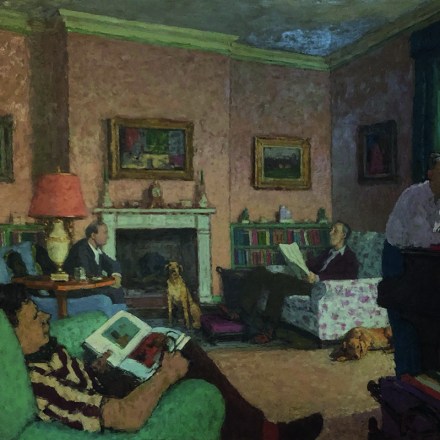
In the spring of 1945 three men pooled their resources to buy Long Crichel House, a former rectory built during the reign of Queen Anne in a secluded Dorset village. Desmond Shawe-Taylor and Edward Sackville-West were highly influential music critics, while Eardley Knollys, a former gallery owner, was now assistant secretary to the National Trust and a painter. The idea was for the three friends to live communally but each have his own part of the house where he could work undisturbed and enjoy some privacy. The house was in fact large enough to accommodate not only a live-in butler and cook-housekeeper but, from 1949, a fourth partner, Raymond Mortimer, the leading literary and art critic of the day.

crichel
caste

Is caste the American class system?

John Dollard (1900-80), trained in sociology at the University of Chicago and in psychoanalysis at the Berlin Institute, brought the sensibility of a novelist to a five-month study in Indianola, Mississippi, which he wrote up as Caste and Class in a Southern Town (1937). Dollard went south, but what he found applied in the other direction: The ‘caste line is drawn in the North as effectively, if not as formally, as in the South,’ which meant ‘We are still deliberately or unwittingly profiting by, defending, concealing or ignoring the caste system.’ Caste, Dollard argued, had far-reaching implications: ‘Our social system has come under world inspection and is literally being looked at by several billion people or their competent agents.

Girls on film

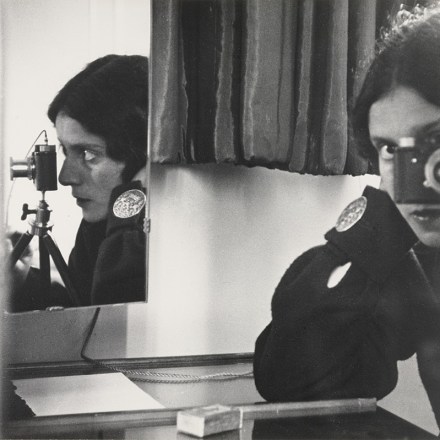
We are familiar with Dorothea Lange’s gritty photographs of Okies during the Dust Bowl. New Woman Behind the Camera, which opens this month at the Metropolitan Museum of Art, showcases Lange alongside over 120 other female photographers who refashioned modernist photography in the same years. Photography developed through an ambivalent relationship to high art: the camera was often seen as a medium for journalism or advertising. Yet the modernist works here showcase the flexibility of the form. Still, there are inherent tensions in an exhibit like this. Georgia O’Keeffe once declined an invitation to be included in an exhibit of ‘women artists’: she wanted to be seen as competing with the best, not as part of an inferior subgroup.

woman
failure

No success like failure

It is a standard narrative in all showbiz reporting — and one that arts hacks seem to be duty bound to abide by. It is the fairy tale of ‘Making It’: the story of a star whose career took time to get off the ground but, thanks to perseverance and self-belief, went stratospheric. It goes like this: ‘I was a nobody, and I was turned down from everything. And I nearly didn’t go to that final audition, but whaddya know? I turned up and... Shazam! Oscars raining down and a mini-series on Netflix.’ There is an encyclopedia of stars who toughed it out before making it big.

Mind of a murderer

There are a lot of theories as to why we are living through a true crime boom. Is it white women fetishizing our pain and fear of men? Is it a psy-op to discredit leftist attempts to defund the police and abolish prisons? Or is it the collective psyche trying to metabolize a few decades of turmoil and violence now that murder rates are down from their Seventies and Eighties peak? I think it’s less complicated. It’s entertaining, it’s cathartic and it’s a way of externalizing anxiety. You listen to stories of bloody murder and grave injustice, and then you listen to the problem getting resolved as the murderer is revealed, the innocent person released, the mystery solved.

true crime
woman window

Watching The Woman in the Window

Watching the rich and famous fail in slow motion is an American pastime. Movies like Heaven’s Gate, Eyes Wide Shut and They All Laughed weren’t reviewed — it was their circumstances, their producers, their directors that people wrote about. And that’s how most material on The Woman in the Window (not to be confused with the 1944 Fritz Lang film) begins and ends: ‘A.J. Finn’s beloved novel had a long, hard way to its release.’ Now that it’s here, dumped on Netflix in lieu of a major theatrical release by the already defunct Fox 2000 Pictures, fans of the book are largely disappointed, and fewer still are even aware of the film’s existence. Compared to the anemic ‘Netflix Originals’ it’s padding out, The Woman in the Window is a stunner.