Books & Arts

Books and Arts

Take a trip with Hawkwind

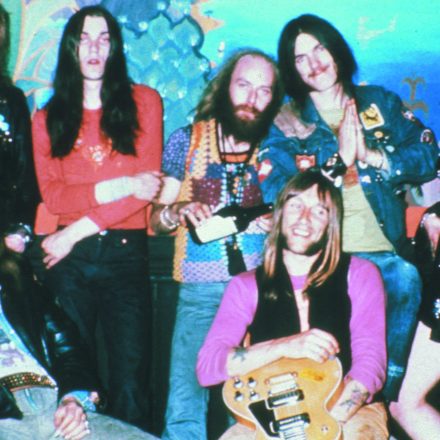
Fifty years ago this midsummer, a ramshackle convoy of vehicles — cars, minibuses, motorcycles and the odd hippie caravan — could be seen wending its way through the western counties of England in search of a patch of agricultural land near Shepton Mallet called Worthy Farm. There had already been several Sixties-era tribal gatherings in the fields beyond Michael Eavis’s now legendary homestead, but this iteration, widely advertised in the countercultural press, came billed as the very first Glastonbury Festival.
Hawkwind
Medici

Meet the Medici at the Met

Someone turned up the lights on portraiture in 16th-century Florence. Lyrical poetry went hard rock. Colors became high key. Posers now scowled at the oil-on-canvas flashbulbs, giving attitude, hands on hips, codpieces a-thrusting. Not that they even cared about looking as good as they do. Sure, they got dressed for the occasion, but notice the sprezzatura, the indifference in their eyes to the whole affair. That was the maniera moderna, the new mannerism in art, and no one captured it better than Agnolo Bronzino. Whether it’s the ‘Portrait of a Young Man with a Book’ (mid-1530s), his haughty painting in the collection of the Metropolitan Museum of Art, or ‘Lodovico Capponi’ (1550-55), his side-eye romancer at the Frick Collection, these figures are boys interrupted.

The soul of Flannery O’Connor

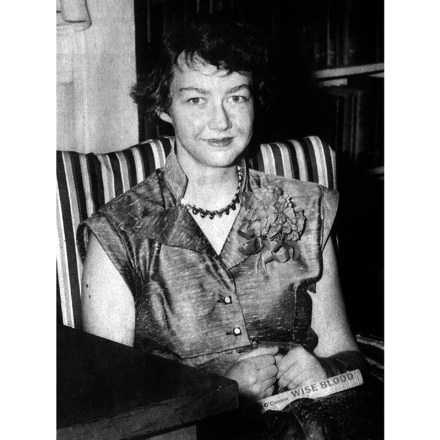
Since the racial riots last summer, Flannery O’Connor has been scrutinized by literary critics and activists for reasons wholly unrelated to her literary artistry and her formidable oeuvre, whose size, though not large, is remarkable for a writer who died at the age of 39 after having been diagnosed in her mid-20s with lupus. The abruptly renewed interest in Miss O’Connor could be said almost to amount to an O’Connor revival were it not focused on a single question: ‘Was Flannery O’Connor a racist, or was she not?’ Attempts to answer it have involved an evaluation of her character based on her novels, stories and voluminous correspondence, and led in one instance to the critical conclusion that she was ‘not a saint’.

O'Connor
bill evans

Along came Bill Evans

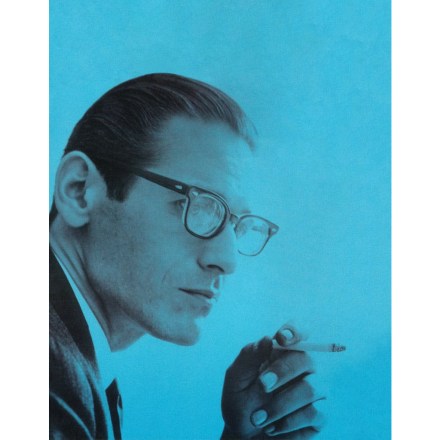
Everybody Digs Bill Evans was the title of one of the great jazz pianist’s early albums, but it wasn’t always clear that he dug himself, at least if you consider his turbulent personal life. There was, first and foremost, the lifelong drug habit, culminating in his death in 1980, which one friend deemed the ‘longest suicide note in history’. There was also the introspective streak that prompted Evans to doubt his own prowess even after he had become famous. But there is also the spellbinding music that casts as powerful a spell as ever. Small wonder that a cluster of purveyors of fine music, including Craft Records, Electric Recording Company and Acoustic Sounds, have rushed to reissue his works on CD and LP.

Nature is healing

Ignoring the padlocked gate, my six-year-old son Nicholas and I climbed through a break in the metal fence and pushed into the mesh of undergrowth. This was the site of Ducker, the open-air swimming pool that once belonged to Harrow School in London. Here the young Winston Churchill romped (naked, since trunks were for prefects), as, in his own day, did my dad. When I arrived at Harrow in the 1980s, the pool — far bigger than Tooting Bec Lido, which is now the UK’s largest — had just been abandoned. It was covered with graffiti, the haunt of skateboarders. Returning in 2021, I looked for changes wrought by three decades of neglect. Google Maps showed a J-shaped artificial lake, 98ft by 492ft.

nature
video

The last American video store

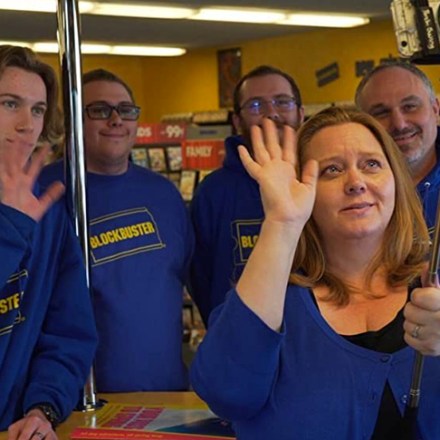
Without a space or a location, ‘the movies’ cease to exist. They become another niche interest with little to no cultural penetration. Awards-season movies, summer blockbusters, sleeper hits and all kinds of popular film phenomena cease to exist without theaters themselves. The last year has shown how much movie culture relies on the activity of going to the movies and the physical space itself. The Last Blockbuster is a documentary about the death of another space: video stores, albeit through the eyes of the last representatives of a corporation that destroyed vast swaths of mom & pop stores across America. Lloyd Kaufman, the co-founder of Troma Entertainment, an independent film distribution company, is an understandably hostile subject.

So many stories are boring

We need to stop letting people ‘tell their stories’. Why should random people get half an hour to tell what Oprah would call ‘their truth’? There are so many podcasts out there that simply broadcast people’s rambling anecdotage about the worst thing that ever happened to them — going for that salacious, daytime-TV vibe, but with the authority of journalism, which means narrating traumatic and often outlandish stories while the hosts offer weighty reflections like ‘huh’ and ‘crazy’. The moment when I gave up on the podcast Committed, a series dedicated to letting couples tell their ‘hilarious, heartbreaking, and inspiring stories’ with no journalistic interference whatsoever, was in an episode called ‘No More Secrets’.

podcast mckay truth