Books & Arts

Books and Arts

This month in culture: July 2024

The Bear, season three Hulu, June 27 America loves a misanthropic, depressive chef. How else would we know the chef is a real artist? The Bear returns for its third season with the trailer promising lots of arguing, screw-ups, failures and everything else you’ve come to expect from the beloved show. We’re not sure why you would take a perfectly good beef-sandwich shop in Chicago and try to turn it into a Michelin-starred restaurant, but we hope Carmy and the gang give us some sort of good reason. — Zack Christenson Jeremy Allen White in The Bear Wimbledon ESPN and ABC, July 1 You know summer has arrived when the brilliant green grass of the All-England Lawn Tennis and Croquet Club lights up your screens.
culture
Stones

The evergreen, ageless Rolling Stones

Are the Rolling Stones the new Rat Pack? Or put it another way: how did the Stones achieve this curious headlock on our affections? If anything, it seems to get stronger over time. In the band’s current US stadium tour, aptly sponsored by the old-age interest group AARP, a million customers are each paying $100 for a seat that allows you to aim a pair of binoculars at a distant video screen. Want an actual view of the stage? It’ll cost you up to ten times as much. Still, it’s all gravy. The last major Stones tour grossed $550 million at the box office.

CreatiVets and the art of war

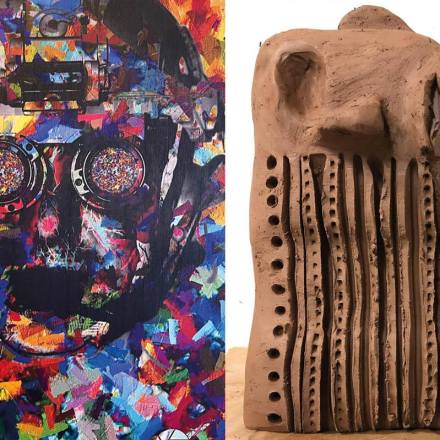
On Independence Day, Americans recall not only the ideals that led to the founding of the United States, but the sacrifices of those who have made our unique experiment into an ongoing reality. Recognizing the challenges that affect many who have been in the military, CreatiVets, founded in 2013, provides help to disabled veterans through engagement with the arts. Program participants learn how to address and share their experiences through studio arts, music, songwriting and creative writing. The organization’s goal is to help these veterans “transform their stories of trauma and struggle into an art form that can inspire and motivate continued healing.

CreatiVets
Bosker

Bianca Bosker’s snapshot of the art scene

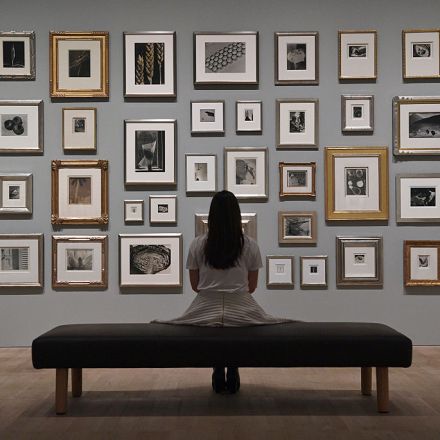
Early on in her entertaining account of five years immersed in the New York art scene, author Bianca Bosker is informed that, as far as the art world is concerned, because she is a journalist, she is the “enemy.” Given that the job of a journalist is to find things out, then explain and communicate those findings, it is unsurprising that a hermetic, deeply self-protective society like the art world would be resistant to journalistic inquiry. In reality it’s not just Bosker’s profession that makes it difficult for her to get past art’s gatekeepers, but a whole litany of personal and social failings that are gleefully enumerated by an art dealer early on.

Suburbia’s irredeemable reputation in the American canon

"My God, the suburbs!” John Cheever, the short-story writer who has rejoiced in the nickname “the American Chekhov,” had what can only be described as ambivalent feelings about the twentieth-century housing developments that grew up on the outskirts of major cities. He said of them that “they encircled the city’s boundaries like enemy territory and we thought of them as a loss of privacy, a cesspool of conformity, and a life of indescribable dreariness in some split-level village where the place name appeared in the New York Times only when some bored housewife blew off her head with a shotgun.” Cheever was not wholly consistent himself.

suburbia
Barry

Kevin Barry’s latest novel is bursting with energy, brutality and poetry

"He walked as calamity. He walked under Libra. He was living all this bullshit from the inside out. Oh, he scathed himself and harangued and to his own feet flung down fresh charges. But there were dreams of escape, too — one day you could ride south on a fine horse for the Monida Pass.” Well met by moonlight, Tom Rourke, doper and dreamer, formerly of County Cork, now a miner in Butte, Montana, in 1891. Welcome to yet another wild and whirling world made by Kevin Barry. Barry’s first collection of short stories, There Are Little Kingdoms, appeared in 2007; he was already celebrated in his native Ireland as a creator of darkly comic troubled characters compassionately drawn.

Is the hype for The Bee Sting justified?

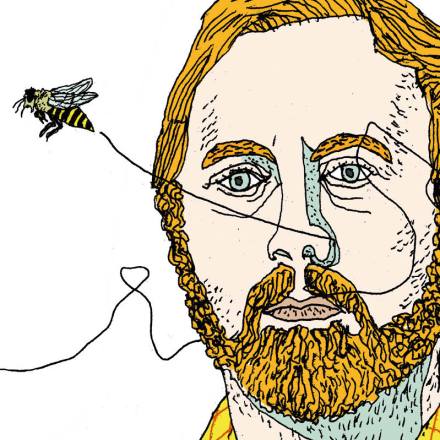
On a recent visit to the bookshops of New York, I found all the usual suspects front and center. If you wanted David Grann, Amor Towles or Salman Rushdie, you had come to the right department; if your tastes veered more toward the Air Fryer Cookbook, that particular whim would be well catered for, too. But the single book I saw on most prominent display everywhere I visited was the new novel by the Irish author Paul Murray, The Bee Sting. A shop assistant in McNally Jackson professed herself an admirer of both writer and work. “I’ve never seen anything like it. We sell a dozen copies a day, sometimes more. It’s hit a chord with people in a way that other books just don’t.

Murray
King

Stephen King’s You Like it Darker shows a master at his peak

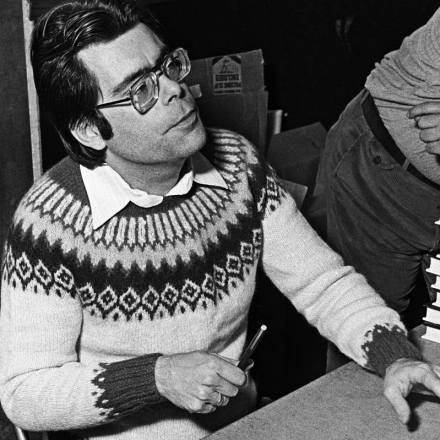
It is not hyperbole to call Stephen King the most influential horror writer alive. Across page and screen alike, nobody else can claim to have had such an expansive and lasting impact on popular culture. King’s name has become so commonplace that it’s easy to take it and him for granted, and to forget that behind the ultrafamiliar and now-ubiquitous branding there lies, in fact, a wild and strikingly original mind and a beating, bloody, passionate heart. You Like It Darker, King’s latest offering, is a highly accomplished and masterful collection of twelve short (and not so short) stories, all blistering examples of King’s powers. Though some have seen the light of day elsewhere, most are published here for the first time. All are worth the purchase.

John Freeman’s Hit and Run is gorgeously crafted

John Freeman’s gorgeously crafted novella, Hit and Run, is a gripping account of a few tumultuous months in a youngish man’s life. It is imbued with a black-and-white, noirish tinge, beginning as a detective narrative, moving through domestic drama and romance and eventually morphing into a ghost story, profitably exploring what these genres have in common. Based on real events, though it isn’t clear which elements are true, it shows how lives can unravel (and ravel) at the whims of fate, and at the same time demonstrates that everything is connected. This is a work about significant moments, about “a piece of time so sharp it carved a human being from existence,” glittering with reflections and refractions.

Applebaum

Anne Applebaum’s solutions to the ‘threat’ of autocracy

Liberal democracy is endangered more by its friends than by its enemies. Neither Moscow nor Beijing lured the United States into strategic humiliations in Iraq and Afghanistan. Nor was the rise of China to the rank of a great power brought about by Westerners sympathetic to Beijing’s communist system. If liberal parties and movements in the United States and Europe seem to be losing ground to populists, this is not thanks to Facebook ads purchased by Vladimir Putin in support of Donald Trump or Brexit. Liberals themselves sabotaged liberal democracy by prioritizing liberalism over democratic legitimacy for three decades after the Cold War — on fundamental issues ranging from trade and foreign policy to immigration and national values. Anne Applebaum’s latest book, Autocracy, Inc.