Features

Features

A new balance

It is already commonplace to say that coronavirus has brought the age of globalization to a shuddering halt. How silly it suddenly seems for production to be held up at a factory in Ohio for want of a 50-cent part normally imported from China. Months after the first COVID-19 deaths in America, we are still waiting for urgently needed Chinese medical supplies. Americans are going without pork or beef, but Chinese-owned US meat processing plants are exporting carcasses to China. Something seems to have gone wrong with almost everything. The global supply chain has us in domestic and strategic knots. As a result, the idea of national self-sufficiency, which had already been growing since the financial crisis of 2008, is suddenly in high fashion.

globalization
metoo

Rebuilding #MeToo

When Tarana Burke started the original Me Too movement in 2006, it was about the victims. It was about power in numbers and emboldening survivors of sexual assault to come out of the shadows. When the allegations about Harvey Weinstein broke in 2017 and #MeToo really started gaining traction, I was happy to see the purging of predators across all industries and political parties. #MeToo was a bipartisan movement that was long overdue. After a few questionable high-profile accusations, such as the hit piece against the comedian Aziz Ansari on the now-defunct website babe.net, lots of voices started to ask if #MeToo had gone too far.

Xi’s useful idiots against free speech

On December 30, Ai Fen, director of the emergency department at Wuhan Central Hospital, got the lab results back about one of her patients who had a flulike illness. The words she read on the report made her blood run cold: ‘Sars coronavirus’. She circled the word ‘Sars’, took a photo and emailed it to a doctor at a neighboring hospital. Within hours, the photo had been sent to dozens of people in the Wuhan medical community. One of them sent a series of messages to a private group on WeChat, advising his colleagues to take precautions, and someone took screenshots of those messages and shared them more widely.

useful idiots
putin xi

Putin needs Xi more than China needs Russia

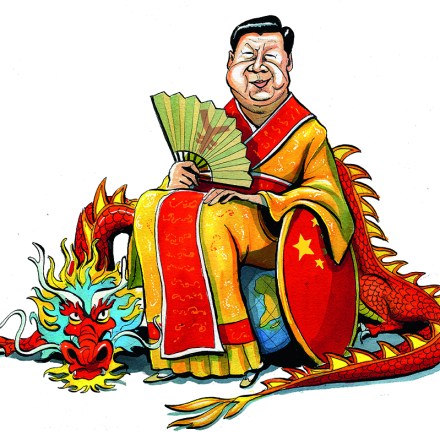
On May 9, Vladimir Putin had been due to review a parade of troops and military hardware on Red Square alongside Xi Jinping and Emmanuel Macron. Russia’s coronavirus lockdown forced Putin to cancel the elaborate celebrations of the 75th anniversary of the end of World War Two in Europe — as well as to postpone a national referendum that would have extended his personal rule until 2036. But though Putin and Xi have been deprived of the opportunity to make a show of solidarity amid the sea of Soviet flags that bedecks Moscow annually for Victory Day, the coronavirus crisis promises to throw Russia and China closer together than they have ever been. China needs friends; Russia needs money.

We need a Pompeo Plan to tame the dragon

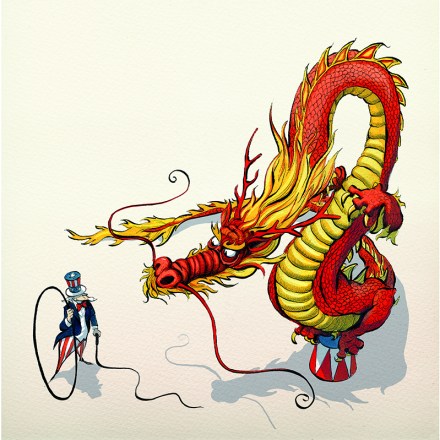
It is traditional that the serious statesperson should respond to a crisis such as COVID-19 by calling for a ‘new Marshall Plan’. The New York Democrat Chuck Schumer wants one for the domestic economy. The Texas Democrat Julián Castro wants one in Central America. A chorus of European leaders, some of them democratically elected, wants one for the European Union. It is only a matter of time before the Trump administration wants one too, but on its own terms, in order to counter the threat of China. Call it Marshall’s Law. Between 1948 and 1951, the Marshall Plan or European Recovery Program (ERP) transferred $12 billion (c. $130 billion in today’s money) to western Europe, most of it to Britain, France and Germany.

marshall plan
ma jian wuhdunnit wuhan

Wuhdunnit? We have only suspicions, not proof

We don’t yet know the full story of the coronavirus outbreak in China. Even so, it already has a tragic hero: Dr Li Wenliang. His name is known around the world now, but the details of what happened to him are telling. On December 30 last year, Li warned fellow medics on a WeChat group that seven patients had been quarantined at his hospital in Wuhan. They had some kind of coronavirus. A few days later, after screenshots of his messages were posted to the wider internet, he was summoned by the Wuhan Public Security Bureau. The secret police presented him with a typed confession stating he had lied. He signed it. He had to. The police document was sententious but chilling: ‘Your behavior severely disrupted social order... We advise you to calm down and reflect carefully.

Neocons come home to roost

Dolphins returned to the canals of Venice during the COVID-19 lockdown, and neoconservatives are returning to the Democratic party. Bill Kristol and his colleagues at the Bulwark support Joe Biden for president, even though an anti-Trump Republican of sorts briefly jumped into the race. Michigan congressman Justin Amash earned the esteem of the Kristol crew when he collaborated with Democrats to impeach Donald Trump last year. But the Bulwark feared that if Amash was on the ballot as the Libertarian party’s presidential nominee, he’d take votes away from Biden.

neocons
professors

Professing virtues

Laramie, Wyoming For a good part of the 20th century, the college professor was an object of fun in American popular culture: a long-hair in the 1920s, an egghead in the Thirties, and in the Fifties an absent-minded intellectual at best, at worst a Comsimp suspected of being a sworn agent of Comrade Stalin and the Politburo. In the revolutionary Sixties, he was publicly imagined as a hirsute hippy in jeans and sandals waving the Cuban or Chinese flag, indistinguishable from students made up like Che Guevara. Americans have always been ambivalent about the pedagogue and his intellectual and social contribution to the Republic.