And Finally

And Finally

Can British democracy survive the ‘bad chaps?’

What is the greatest threat to British democracy? Zack Polanski’s call for “building a society” that “doesn’t include” people who “identify as right-wing?” Labour’s efforts to flood the Upper House with party apparatchiks? Islamist extremism? The correct answer is Reform UK. That, at least, is the conclusion of a new book called What If Reform Wins by the Times reporter Peter Chappell. Before I get to its flaws, I should acknowledge it’s an enjoyable read, with plenty of deft, comic touches. It imagines that Reform wins a majority in June 2029, and then gives a blow-by-blow account of the constitutional crisis that follows, with the informal rules and conventions underpinning our democracy being stress-tested and found wanting.

british democracy

The ‘airport effect’ that’s ruining modern life

The phrase “computer says no” now has its own Wikipedia page. The first recorded use dates back to a Stasi-era 1970s East German film segment titled Der Computer Sagt: Nein. However, its idiomatic use arose in 2004 via a series of sketches in Little Britain, each illustrating an example of technology--enabled bureaucratic intransigence, typically flying in the face of common-sense human judgment. It is perhaps the 21st-century equivalent of “jobsworth.” To behavioral scientists, the phrase illustrates something known as “defensive decision-making,” whereby the primary motivation for a decision is not the likely quality of the outcome but the decision-maker’s often unconscious urge to use any available means to offload accountability for his actions.

Dear Mary: How can I stop my husband from interrupting?

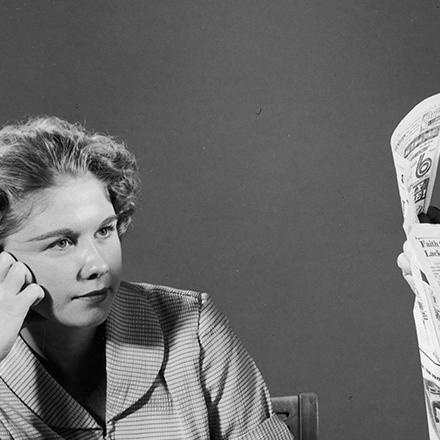
Q. My husband worked in an office for 25 years and now works from home. As well as the interaction with colleagues, he clearly misses hearing the sound of his own voice. I sympathize, but during the day I obviously need to tell him various things, and almost as soon as I begin to speak he starts interrupting with fatuous prompts such as “And then what did he say?” or “And did you tell him you were wondering when he was going to ring up?” When he keeps interrupting, I lose the thread of my message. How can I keep things pleasant? – S.R., London W12 A. Next time you have some facts which need to be conveyed, open a file on your computer and type out what you would say were you not to be interrupted.

Who cares if fridge magnets are tacky?

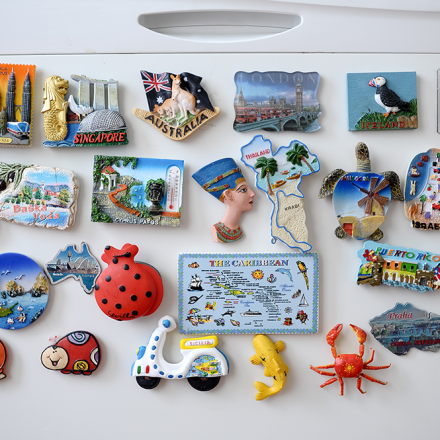
Let’s dispense with the obvious question first. Are they common? While there’s a clear temptation to consult Nicky Haslam on such matters, I don’t think I can be bothered. Not least because first, I am a Prusso-Italian immigrant, second, I was born in Essex and third, I adore fridge magnets. We should be honest and admit that, like everything in life, they are signifiers. The aim is to show our friends how cultured, traveled, well-read, ironic and amusing we are. They are our lives writ in ceramic. Where to begin? One of my favorite magnets, designed to strike fear and dread into any intruder, dates back to Iraq circa 2004: “Caution Stay 100 meters back or you will be shot.” No punctuation, not even an exclamation mark!

Why does everything now pivot?

“As the door turneth upon his hinges,” says the Book of Proverbs, “so doth the slothful upon his bed.” But today nothing turns, neither the door, nor the slothful, nor his ox, nor his ass. It pivots. I read in the paper that Meg O’Neill, the new CEO of BP, is “expected to double-down on the pivot back towards oil and gas.” Doubling down on a pivot must take some gymnastic skill. Saudi Arabia meanwhile is trying out a new snooker shot: “to pivot away from less lucrative projects” – such as snooker. Here the writer might as well have said “turn away,” as in the Bible. Pivot has the restrictive extra sense of remaining in one place as you turn. We English borrowed the noun pivot from the French in the 14th century, and they used it to mean “hinge.