Books & Arts

Books and Arts

Prince of Europe’s long peace

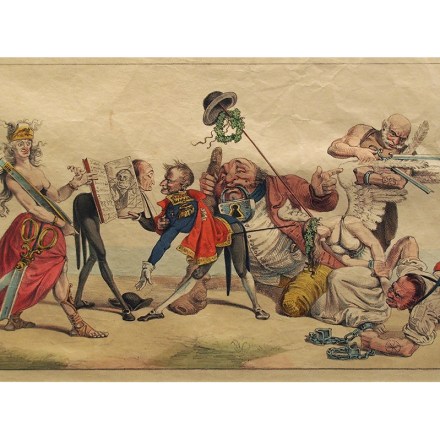
This is a giant Teutonic forest of a book, to be progressed through with determination as if by seasoned infantry; it is as far as biography can get from a Viennese waltz. But it has its rewards. It is an extensive and wellresearched chronicle of Klemens von Metternich’s monumental career — 39 years as foreign minister of the Austrian Empire, the last 27 of them also as state chancellor, and an extensive diplomatic career prior to all that. Wolfram Siemann presents and argues for a new and rather liberal interpretation of ‘the Metternich system’ instead of the normal view of Metternich’s influence as rigid and reactionary.
metternich
decadence douthat

Apocalypse soon

An age demands a name when it’s an age of upheaval. The name should describe the ills of society and even suggest their cure. Ross Douthat’s The Decadent Society aims to do exactly that — and succeeds in ways that he might not have intended. Douthat rejects the common view of decadence as Caligula-inspired orgies or Marquis de Sade-style perversion, or even excessive consumption of chocolate cake by women. For him, decadence is ‘neither empty of any judgment nor excessively deterministic’. He finds this sweet spot in the work of Jacques Barzun, who defined decadent times by their ‘deep concerns’ and ‘peculiarly restless’ mood.

The refreshing darkness of Netflix’s Locke & Key

Don’t be put off by the slow first episode, which makes you fear it’s just going to be another of those so-so emo magical-fantasy adolescent dramas in which Netflix abounds: Locke & Key is superior, addictive and bingeworthy stuff in the league of, or possibly even better than, Stranger Things. It begins with an achingly clichéd scenario — family driving across America to seek new life in exotic location, kids bickering in the back, awkward high-school experiences awaiting them, etc. — and the familiarity never lets up.

locke & key
banjo

Finger pickin’ good

The banjo was present at the creation of jazz but, like the clarinet and the fiddle, it fell from favor, and for similar reasons. The saxophone and the electric guitar were easier to play, more expressive and much, much louder. The banjo was on the way out even as it was on the way in — in the Hot Five recordings of December 1927 that instituted the jazz solo as we know it, Johnny St Cyr played both banjo and guitar — but the banjo had somewhere else to go. The fleet-fingered took their four-and fivestringers to the hills — the Appalachians, for instance. There, the banjo thrived with those other refugees from early jazz, the fiddle and the steel-strung guitar. Metropolitan contempt caught up with it in the Seventies.

Tenor badness

In Stephen Spielberg’s 2004 comedy The Terminal, Viktor Navorski (Tom Hanks) is a native of Krakozhia, a small eastern European country engulfed in civil war. When Navorski lands at JFK, he discovers that his passport is invalid as America does not recognize Krakozhia’s new regime. He’s stuck in the airport for months and unable to accomplish his mission: completing his father’s quest to obtain the autographs of all 57 musicians in Art Kane’s 1958 photograph ‘A Great Day in Harlem’, a who’s who of jazz greats (including Count Basie, Coleman Hawkins, Dizzy Gillespie and Thelonious Monk), captured on East 126th Street in daylight without their instruments.

benny golson
anna faris coupling podcasts

Conscious coupling

Most of the podcasts that sell relationship advice imply that romance is synonymous with sex. The theory of that equivalency has been a theme in the arts for centuries: Shakespeare, Flaubert, Thackeray and Tolstoy all exposed its follies and truths. Unsurprisingly, the podcast hosts have a less poetic, nuanced note than the classic writers, such as giving the advice: ‘If you’re having a dry spell, listen to us or break up.’ Tony and Alisa DiLorenzo are a Christian couple who have married for 23 years. Perhaps surprisingly, their podcast, ONE Extraordinary Marriage, depicts sex and romance as interchangeable. Tony and Alisa, who couple on the page in their co-authored book 7 Days of Sex Challenge, start each episode with a ‘hug’.

Cosmopolis

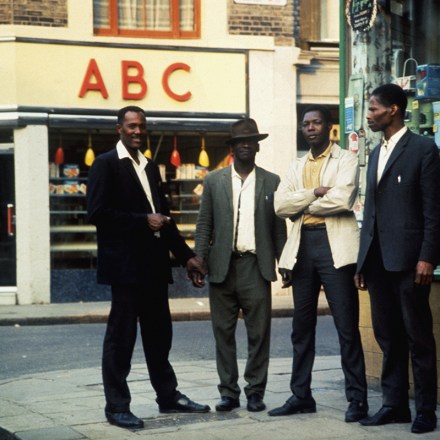
Every history of London, and there have been many, has looked at the importance of migration to the city. Failing to mention that would be as inconceivable as not mentioning the River Thames. Both, after all — one literally, the other metaphorically — flow directly through the city’s heart. In this new and scholarly study, the difference is that London’s history of migration — its patchwork of settlement, its Irish ‘rookery’, its ‘colored quarter’, Huguenot silk-weavers, Jewish street-sellers, German bakers, Italian waiters, Chinatown, Banglatown — is put center-stage. The movement of all these people to London, the city’s extraordinary national, then continental, then international pull, is the story.

migrant
warhol

Magus of mass production

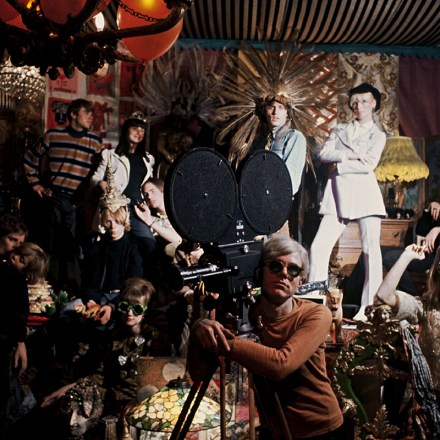
‘If you want to know all about Andy Warhol,’ the artist said in the East Village Other in 1966, ‘just look at the surface: of my paintings and films and me, and there I am. There’s nothing behind it.’ This quotation re-appeared in 2002 on the US Post Office’s commemorative Warhol stamp. It’s fabulously fitting for a stamp that reproduced a self-portrait, but when scholars recently compared the audiotapes of the interview with the printed version, the passage wasn’t on the tapes. Warhol sometimes invented interviews from whole cloth. He answered questions with a gnomic ‘yes’ or ‘no’ or, refusing to speak at all, allowed proxies like his ‘superstar’ Edie Sedgwick to answer for him.

It’s different for girls

‘Buy pink baby clothes,’ Kim Jiyoung, the protagonist of this best-selling South Korean novel is told at the obstetrician’s office. Jiyoung’s mother responds: ‘It’s OK, the next one will be a boy.’ There are numerous births in this book. Births of girls are met with disappointment. The births of sons are celebrated. When Jiyoung is born in 1982, ‘abortion for medical problems had been legal for 10 years...aborting females was common practice as if “daughter” was a medical problem’. Her younger sister is ‘erased’.

jiyoung
susan rosenberg

The bloody decade: think America’s divided now? Try the 1970s

Late on the afternoon of November 29, 1984, Susan Rosenberg and Timothy Blunk were loading boxes into a blue Oldsmobile Cutlass sedan and a U-Haul trailer parked at a self-storage facility in Cherry Hill, New Jersey, not far from Philadelphia. The boxes were heavy, so despite the autumn chill and the wind, Rosenberg and Blunk were working up a sweat. Both wore glasses as part of their disguises. Blunk had an ill-fitting wig that he barely managed to keep on his head. An FBI wanted poster called Rosenberg armed and extremely dangerous, and the Bureau wasn’t wrong. On the front seat of the Olds, purses held semiautomatic pistols — an Interarms Walther PPK .38 caliber and a Browning Hi-Power 9mm. They were both fully loaded.