Features

Features

Don’t let climate activists stop you from traveling

A decade ago, when I first started contributing to the New York Times’s annual “52 Places to Go” list, the top user comments were about the destinations: Why was Calcutta chosen but not Chattanooga? This year, in a sign of the times, the most popular comments suggest that we should all just stay home to save the planet. The climate-obsessed among us are falling out of love with travel, particularly with the idea of exploring far-off places where your carbon footprint is greater. If their movement gains steam they won’t save the world, but they might well wreck the global economy and deprive themselves and others of much-needed perspectives and experiences that make the world a better place.


travel
debt

Want student loan forgiveness? Make universities pay

At the turn of the twentieth century, Saturday Evening Post editor and Yale dropout George Lorimer bitingly summed up academia when he said “colleges don’t make fools, they only develop them.” On the heels of yet another multibillion-dollar Biden administration college bailout, it seems we haven’t learned the lesson: colleges might not make fools, but they’re certainly trying to make fools of us. The bailout projects come from a Biden campaign promise: “I will eliminate your student debt.” Half-slogan, half-bribe, this resonated with millions burdened by the unpayable debt brought on by liberal arts degrees that may barely be worth the paper they’re printed on.

The depressed press

There is a recurring type of incident that reflects the insularity of today’s media class: “Everyone was talking about it, but no one reported it.” There is no stronger indictment of contemporary media bias — it doesn’t arise just out of partisanship, nor out of opposition to reporting stories that displease our ruling class. It reaches the point of actively lying and covering up things any average American knows to be true. The most prominent recent example is found in the reaction to Special Counsel Robert Hur’s findings regarding Joe Biden’s hoarding of classified documents.

press fake news media consultancy journalism
BRICS

Nixing BRICS: how to counter the China-led alliance

Americans are used to exercising influence through international entities such as NATO, the World Trade Organization or the World Bank. Each of these groups was set up with American leadership or at its instigation; all have been used to advance Washington’s vision of global liberal-democratic capitalism. No comparable international organization or collection of nations has been influential since the Soviet Union’s collapse. That may be changing. The so-called BRICS alliance (its founding countries were Brazil, Russia, India, China and South Africa) recently added new members Iran, Ethiopia, Egypt and the United Arab Emirates.

How game ranching protects endangered species

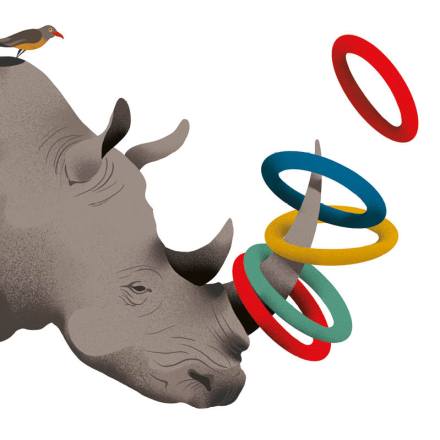
Game ranching in Africa is big business, farming wild animals that unlike regular livestock have evolved there and don’t need much care. What they do need is space. South Africa’s most famous reserve, Kruger National Park, is an 8,000-square-mile chunk of wilderness on the border with Mozambique, but private land stocked with wildlife covers almost ten times that area. Ranchers stock their property at game auctions where animals are sold to ranchers who either want to introduce a species or add a new bloodline. In 2019, American cattle breeders were delighted when an Angus bull sold in North Dakota for a record $1.51 million. But in 2016, the winning bid for a stud buffalo in South Africa was close to $10 million.

game
Charles

King Charles’s cancer and the future

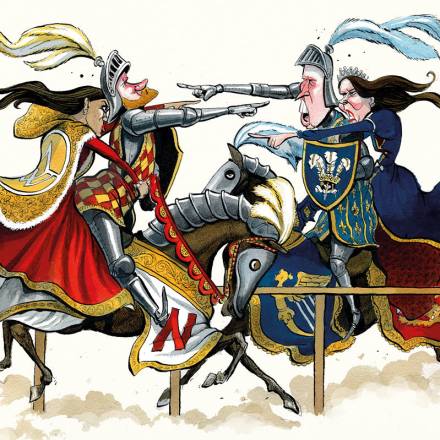
On September 23, 1951, King George VI was operated on for cancer. It was a grueling, dangerous procedure, conducted at Buckingham Palace by Clement Price Thomas, a leading chest surgeon. The king, unsurprisingly, was miserable at the idea, saying, “if it’s going to help me get well again, I don’t mind, but the very idea of the surgeon’s knife again is hell.” Yet he was kept unaware of the seriousness of his illness, instead being informed that the cause of his health problem was nothing more urgent than obstruction in one of his bronchial tubes, which would require a “resection” of the lung, and that it would cure the “pneumonitis” that he believed he was suffering from.

Lessons from costly wars past

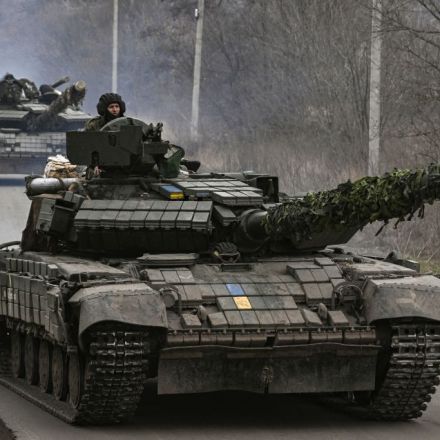
Money is often a substitute for strategy in US foreign policy. We spent $2 trillion in Afghanistan, only to lose the country the minute our troops began to pull out. How much will it realistically cost, then, to beat Russia in Ukraine? Will the next $100 or $200 billion do the trick? This is not a question that supporters of war-spending ask themselves. As in Afghanistan, spending is a way to defer thinking about actually winning — or facing the serious possibility of losing. Our aid buys delay, not results. Ironically, while the specter of World War Two is invoked every time there’s a conflict, our experience then teaches the same lesson as recent attempts to purchase victory.

wars
gemini

Why everybody should have seen the Google Gemini blunder coming

Has it ever bothered you that all the Founding Fathers were white? Fear not: Google Gemini AI is here to save the day. In February, Google updated its artificial intelligence LLM, or Large Language Model, releasing one called Gemini. The hope was that tech companies could build off each other’s platforms and that Google’s new AI would correct earlier mistakes made by Microsoft’s Bing, which in turn corrected mistakes made by OpenAI. Shortly after Google released Gemini to the public, internet users began quizzing the AI. Immediately problems were apparent, especially within Gemini’s image creation. When asked to replicate portraits of medieval British kings, for example, Gemini provided images containing historically inaccurate ethnicities.

How AI helps the tech giants

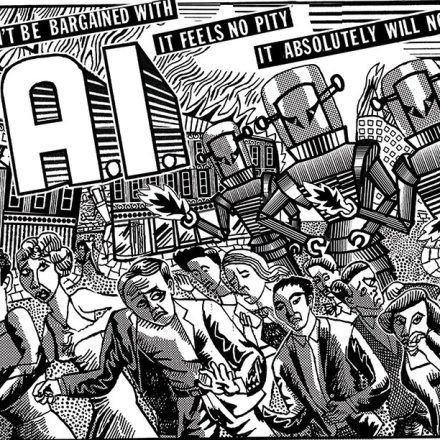
Artificial intelligence (AI) and its related technologies — machine learning and the metaverse — represent a watershed in the evolution of the global economy. Like other such shifts, its emergence is likely to favor certain interests, notably a handful of technology giants, the media and a small cadre of highly skilled programmers. Everyone else faces economic danger, certain to roil domestic and international politics in coming years. Eighty-two percent of millennials fear AI will reduce their earning ability — and they are right to be worried. The first group to lose will be the usual suspects: factory and warehouse workers as well as professionals with largely routinized occupations suited to automation.

ai
texas

My first year in Texas: the good, the bad and the surprising

I’m reflecting on the good, the bad and the surprising of my first year in Texas. I took a huge risk moving my business and my family away from California. How has it gone? I had a tough entry into my new life. Moving is insanely stressful. So much so that when I arrived in Texas after a cross-country move with a tot, something was wrong with my stomach. I’d never had debilitating stomach pain before and I figured it would just resolve itself. When it didn’t after about a week, my husband suggested calling a Teledoc, who advised me to get to the ER immediately after hearing my symptoms. After fifteen years in Los Angeles, and thanks to a family member who worked in healthcare, I used to have access to some of the best doctors in the world.

How Dallas curbed violent crime

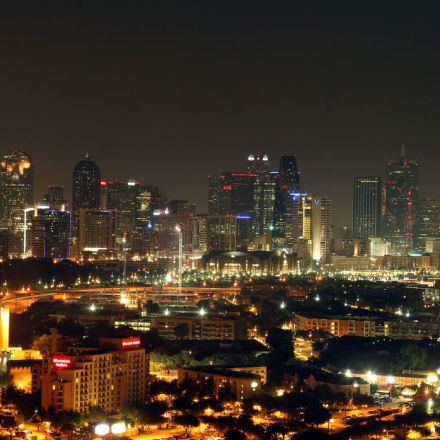
"He’s smoking meth,” I heard on the police radio. Lieutenant Jordan Colunga promised to take me to the action, but maintained his leisurely pace. He chuckled as the undercover officers dictated their observations from a gas station. The pipe fiend, having wisely decided he had had his fill, unwisely began wandering the pumps to sell his surplus to passersby. Undercover cops don’t blow their cover for spontaneous drug dealers, so the observers passed along the information to a nearby squad car. The suspect was back in his vehicle by the time the beat cops arrived on scene. “He’s getting out of the car, he’s getting out of the car,” an officer said apprehensively on the radio before yelling, “He’s reaching, he’s reaching!” The laughter stopped. Colunga hit the gas.

Dallas
Navy Yard

Navy Yard is a failing experiment in gentrification

I break up my working day by going on a three-mile jog around the Navy Yard neighborhood of Washington, DC, where I’ve lived for just over a year. I leave my building, one of many newish luxury developments which has recently found itself a prime target for vehicle thefts; I pass by the barber’s whose windows were shot out on Friday and the doggie day care where on the same day an employee hit a pet that later died. As I cross N Street I glance down the block where, in October 2022, a man my age was killed in a drive-by shooting. I head south beyond the baseball stadium, where the July 2021 shooting of three people outside caused a sixth-inning suspension of play. I turn onto the waterfront path where someone was spotted with an automatic weapon this weekend.

Why was last year DC’s most violent in decades?

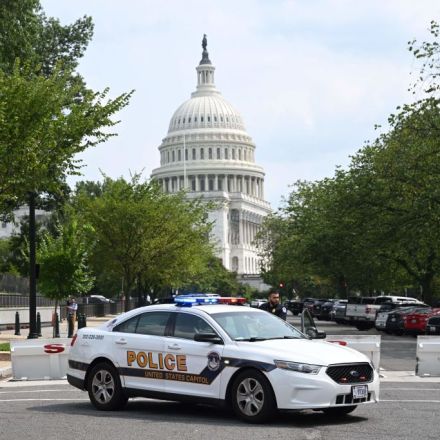
As a rule, people don’t like to commit crimes when others are watching. That’s why most violent crime occurs at night, and why erecting street lights in high-crime areas causes murders, carjackings and robberies to plummet. Essentially, if you want to stop crime, you have to let wannabe criminals know you can see them. By that standard, Washington, DC should be crimeless. The eyes of the world are constantly trained on our nation’s capital. And thanks to the residents of a certain public housing project on Pennsylvania Avenue, Secret Service motorcades and Marine helicopters seem perpetually on patrol. You would think that, for all these reasons, it would be hard to commit crime inside the Beltway.

crime
attainder

Kangaroo courts and bills of attainder

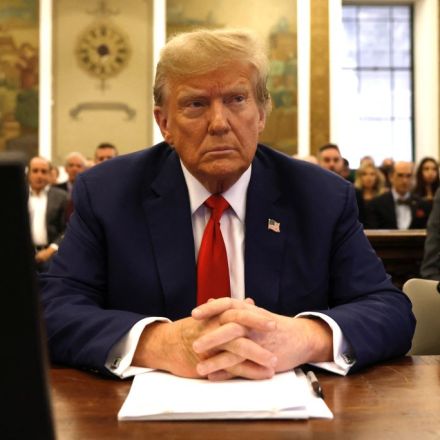
I want to talk about two things in this column: bills of attainder and kangaroo courts. The two often go together. What is a “bill of attainder?” We get the term from English law. A person or persons whom the people in charge don’t like is “attainted.” Forget about due process, presumption of innocence, or any such quaint ideas. Bills of attainder worked through the untrammeled deployment of state power. To be accused was tantamount to being found guilty; common penalties included the abrogation of the right to own property, and, not infrequently, the right to life itself.

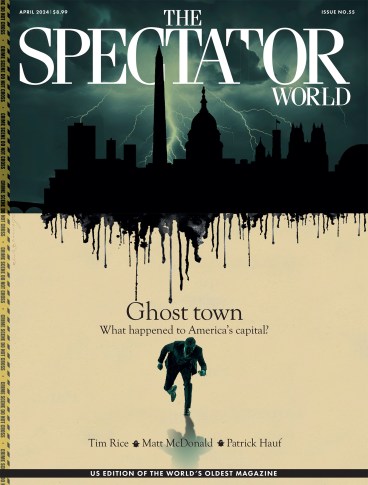
What happened to America’s capital?

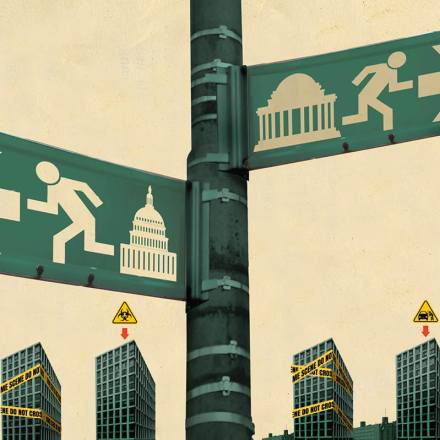
Muriel Bowser is a woman with a plan. In late February the mayor of the District of Columbia unveiled a $400 million, five-year economic development strategy to revitalize the capital’s downtown. It involves converting empty office space into residential units and rebranding parts of the neighborhood. Soon, visitors to Washington will be able to watch homeless addicts shoot up in “Historic Green Triangle” and get their phones stolen by moped-riding teenagers in the “Penn West Equity, Innovation & University District.” Bowser has drafted these desperate measures in a belated response to the desperate times.

DC