Features

Features

Justice for Derek Chauvin

As I write, jury selection for the murder trial of Derek Chauvin is about to begin in Minneapolis. You remember Derek Chauvin, right? He is the (former) policeman charged with the murder of St George Floyd, race martyr (also drug addict, woman abuser, and career criminal). Chauvin and his three colleagues disgusted civilized opinion last spring when a bystander’s video clip of Officer Chauvin kneeling on George Floyd’s neck was released. Nine minutes. Chauvin kept Floyd pinned to the ground for some nine minutes. ‘I can’t breathe,’ Floyd can be heard crying. An ambulance eventually came to whisk Floyd off to hospital. Too late. Floyd died, murdered by the brutish policeman who cruelly, gratuitously, asphyxiated him by kneeling on his neck, cutting off his air supply.
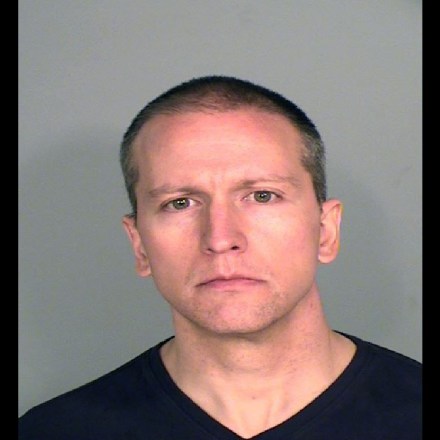
derek chauvin
border crisis

How the border crisis could define Biden’s presidency

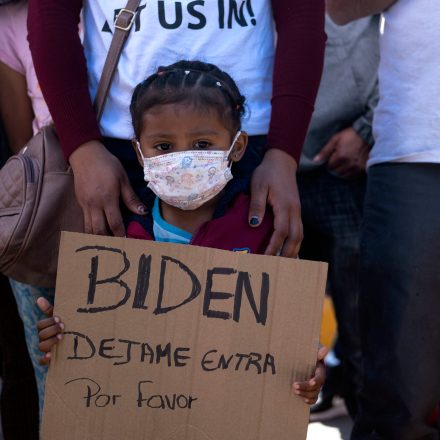
Joe Biden has spent his first couple of months in office enjoying what his predecessor never had: a presidential honeymoon. Americans have rewarded Biden with early approval ratings of 60 percent or higher. He may be benefiting from the inevitable diminishing of the coronavirus as cases decline and more states reopen. Or the public may simply be relieved to have a president who isn’t perpetually in the spotlight, even if he doesn’t always seem aware of the fact he is president. But no honeymoon can last too long, and Biden’s is coming to an end at America’s southern border, where a crisis is escalating. Eighty thousand people tried illegally to cross the border in January, double the figure of a year ago. In February, nearly 100,000 did the same.

Is the truth about burn pits too toxic?

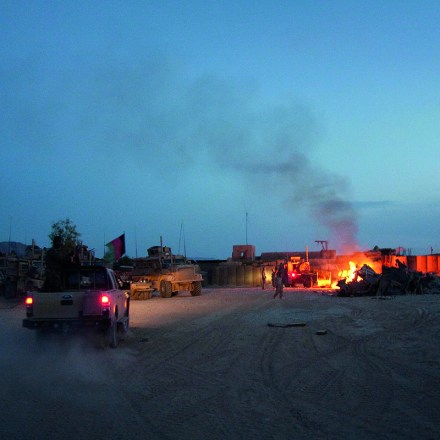
In June 2020, while COVID raged and cities rioted, my older brother Pat was promoted to major in the Marine Corps and diagnosed with thyroid cancer. I went down to the base at Quantico, Virginia on a Monday to see Captain-now-Major Pat get ceremonially ‘pinned on’ with the golden oak leaf before a formation of Marines. On Wednesday, Pat ran eight consecutive six-minute miles and went in for minor surgery to remove a suspicious growth on his thyroid. I’d packed my bags for a week to help out with my two- and four-year-old nephews while my sister-in-law drove back and forth to Walter Reed.

burn pits
uighurs

How China targets Uighur expats in the US

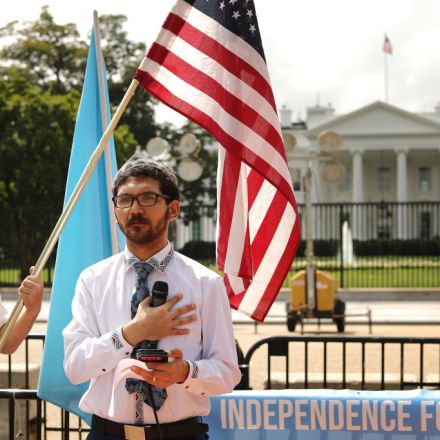
It has been more than two years since Ziba Murat has heard the voice of her ailing mother, Gulshan Abbas, a retired physician who was abruptly ‘disappeared’ in September 2018 in Xinjiang province, China. While exact facts and figures are hard to come by, it is widely reported that at least three million Uighurs in China have been forced into concentration camps, which Beijing calls ‘reeducation’ facilities for stamping out ‘Islamic extremism’. The scale of the ongoing atrocities is bone-chilling: from forced sterilizations and sexual violence to beatings and indoctrination. The Chinese government’s assault extends to Uighurs abroad.

How to overcome the new fear of flying

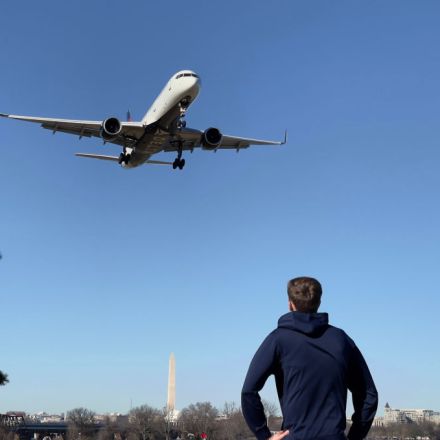
Back in another lifetime when I was getting certified to become a yoga instructor, my teacher always asked us, ‘Is this a fear that’s keeping you alive or a fear that’s keeping you from living?’ She would pose this question as we hesitated to try a headstand or a handstand. It was a hard question to answer then. It’s even harder now, in the middle of a global pandemic when your most irrational fears could be justified. In early January of this year I was going insane. We were approaching almost a full year of lockdown here in California, the state with arguably the most stringent lockdown measures in the nation. At the time, all the restaurants were closed. You couldn’t get a haircut. Again.

flying
cannabis weed

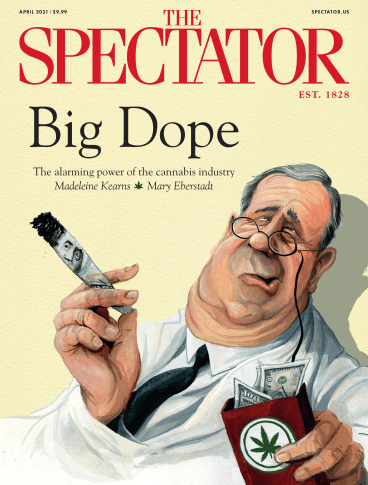
Big Dope

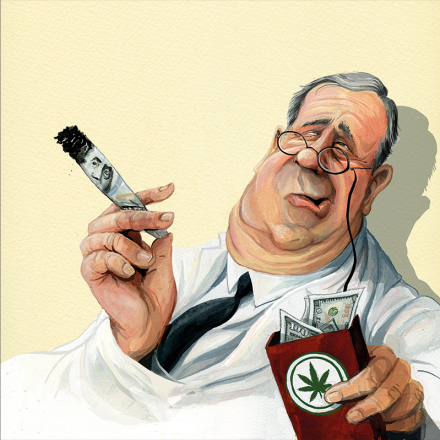
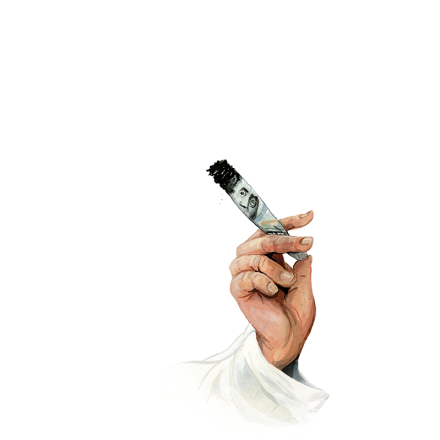
Young people are now more likely to consume marijuana than to smoke tobacco. The social acceptance of tobacco is falling, just as the popularity of weed is getting higher. A 2019 Gallup poll found that 12 percent of US adults (and 22 percent of those aged 18 to 29) said they smoke marijuana. It won’t be too long, I predict, before we look back in horror at the widespread acceptance of cannabis use. It’s easy to forget that anti-tobacco researchers had to plod on at tortoise pace for years before they were able to prove what they had long suspected to be true (and what we all now take for granted): the causal link between smoking and lung cancer. Big Tobacco was so rich and powerful that its lobbying suppressed the true dangers.

Please cancel me

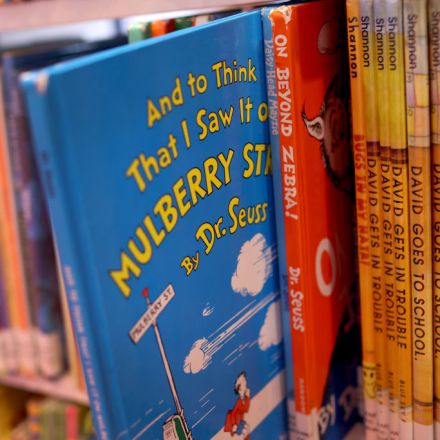
Dr Seuss books are getting canceled and I couldn’t be more envious. Earlier this month, the Seuss estate announced that it would discontinue publication of six of the author’s beloved children’s books after consulting with shrieking activists. The reason was that some of their illustrations depict blacks and Asians in offensive and outdated ways. From there, the flimsy dominoes of corporate America began to fall: eBay banished the titles from its online store; Universal Orlando announced it was ‘evaluating’ the theme park’s Seuss Landing area. All this is bad news for one of America’s most imperishable literary icons. Still...have you seen those book sales? In the first week of March, the top 10 children’s books on Amazon were all by Seuss, as were 23 of the top 30.

cancel
drugs

More drugs!

In rural upstate New York, where I grew up, pot-smoking was disproportionately a sport of farmers’ kids. That’s because inequitable ownership of land meant that some people could grow weed more discreetly than others. Among those with acres to till, private oases of marijuana were easily created by their offspring out of sight — especially, I recall, in between tall rows of feed corn. And with easier access to the drug, the sons and daughters of farmers also seemed to smoke more of it than the kids who were forced to rely on retail. This brings us to a paradox that, while not exactly one of Zeno’s, amounted to my earliest intuition of a chicken-and-egg problem.

The dark Prince

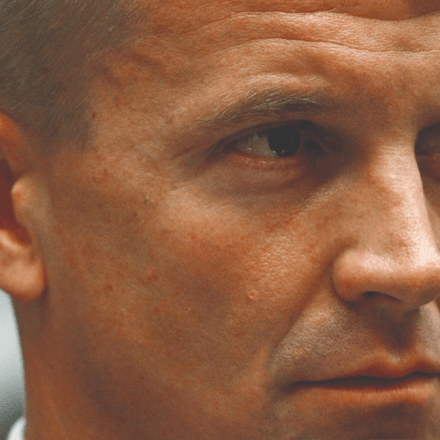
‘No modern US war would be complete without the involvement of Blackwater founder Erik Prince,’ wrote journalist Jeremy Scahill in his seminal book Dirty Wars. That was back in 2013. Since its founding in 1997, Blackwater, Prince’s private military outfit, has been reincarnated several times under different names. But Prince has stayed the same. Iraq, Afghanistan, Libya, Somalia — Prince, a very 21st-century mercenary, has wreaked havoc in all these places. He comes, he spoils, he leaves a mess that is impossible to clear up. Take Libya.

prince
smoking

Shame won’t make you quit smoking. Love might

My first memory of my Aunt Mary involves a rattlesnake and a meat cleaver. I was maybe seven years old when my cousins and I found the rattlesnake near a stack of cardboard boxes in her garage. It was barely 9 a.m. and we ran inside to find her already in full makeup and a silk housecoat, a cigarette dangling from her lips. She grabbed the cleaver and walked up to the recoiling viper — as entranced by her severe face and big red hair as we were — and chopped its head off with a nimble clank. ‘Wait till it stops wigglin’, then go toss it over yonder,’ she said through a cloud of smoke, and motioned toward an embankment at the end of the driveway. My last memory is from a little over a decade later.

Journalism is pure madness

On January 21, a Canadian online news outlet called the Tyee published a hit piece on Angelo Isidorou, a 24-year-old journalist for the Post Millennial, another online Canadian magazine. Isidorou had made himself a target by becoming a board member of the Non-Partisan Association, a municipal political party in Vancouver which, in spite of its name, is center-right. Isidorou’s sin, as captured on the Tyee’s front page, was that he had been photographed ‘flashing a symbol favored by hate groups’. The symbol in question was the thumb-to-index-finger ‘OK’ sign, which according to the Tyee’s reporter is a ‘widely recognized white power signal’.

journalism
vinfluencers

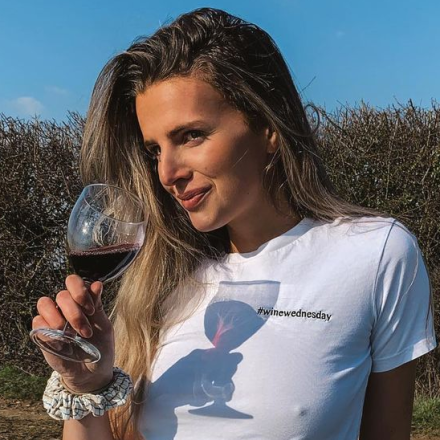
Thirst trap: how ‘vinfluencers’ took over the wine world

The first time I saw the Instagram feed of Georgie Fenn I thought she was a model stooge. Utterly gorgeous, Fenn regularly poses in carefully picked diaphanous clothing, ‘nipple poke’ a specialty. Paid brand collaborations offer excellent returns. Her artfully shot images tagged with maxims as trite as ‘It doesn’t matter what you’re drinking as long as you’re enjoying it’ are a marketeer’s wet dream. Miss Fenn is an up-and-coming ‘vinfluencer’ — that is, she uses her considerable social media presence (31k and rising @winingawaytheweekend) to sell wine.

The city that never dies

Peggy Noonan, in a recent Wall Street Journal column, offers a bleak take on the pandemic’s impact on American society, or at any rate the subset that lives in New York. New York vies with London as one of the most prodigious aggregations of talent on the planet, and has survived a previous pandemic, multiple financial crises and a terrorist assault. Noonan’s argument — and she’s far from the only one to make it — is that NYC is headed over a cliff because corporate managers have awakened to the advantages of the Zoom call. I can understand how such dark notions arise. Given the breadth and scale of the present catastrophe, it’s not unreasonable to think the world has changed irreversibly for the worse. But I don’t think it has, at least not due to coronavirus.

new york
money cash cashless

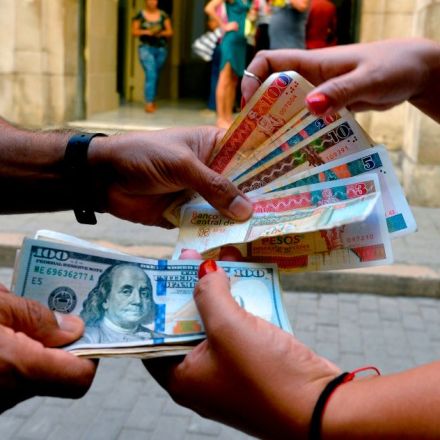
Show us the money

No one likes to waste a good crisis, and the digital-payments industry is certainly trying its hardest to spin the narrative that COVID-19 is about to deliver the coup de grâce to cash. Various lobbying efforts culminated in a recent CNBC report claiming we have all switched to payment apps to avoid catching the disease from dollar bills. A ‘cashless customer’, Heima Sritharan, supposedly speaks for the entire millennial generation: ‘Not that I was using cash that much before, but I find that during Covid especially, I just don’t want to use cash as much because of the germs aspect.’ The report quotes a figure from the Pew Research Center suggesting that 34 percent of consumers under the age of 50 went the previous week without making a single purchase with cash.

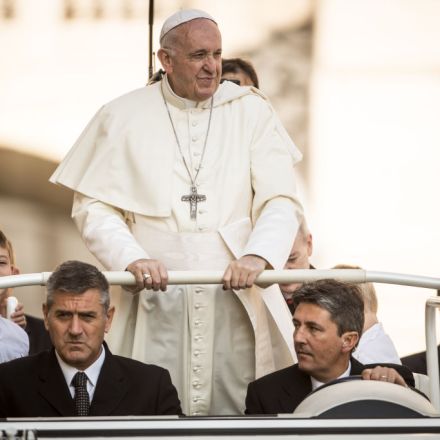
Is the Pope a Chinese asset?

Twenty years ago, the Catholics of a city in Alaska gathered enough money to build a church dedicated to the Sacred Heart. They presented the architectural drawings to the city council, whose non-Catholic members winced a bit. Were Gothic arches really meant to be painted the color of pale strawberries? Why were the bell towers capped with domes in cotton-candy stripes? But, what the hell, Catholics have their own funny ideas about what churches should look like. OK, they said, we’re fine with this so long as you don’t shove it in our faces. Here’s a bit of land on the outskirts of town where you can build the thing and we won’t have to look at it every time we walk down Main Street.

pope francis