Books & Arts

Books and Arts

This month in culture: February 2025

Kinda Pregnant In theaters February 5 Amy Schumer stars as Lainy, a woman who dons a prosthetic pregnant belly when she grows envious of her best friend’s maternal glow. Once inside the secret world of mommies, Lainy learns how far she will go to stay close to her friends while being pulled toward a new love — Will Forte, who assures Lainy that she’s the least pregnant person he’s ever dated. Striking the balance of irreverence and heart Schumer is known for, Kinda Pregnant is buoyed by an accomplished comedic cast and backing from Adam Sandler’s Happy Madison Productions.

culture
Doomers

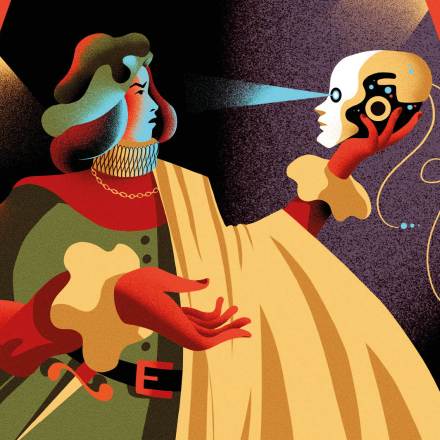
Doomers looks at what AI means for the future

I wrote my play Doomers partly because, the night Sam Altman was fired, I was performing in a play called Zoomers. Someone — I forget who — suggested the idea of Doomers as a joke, and I thought it was a good one. My method for some, if not all, of my plays over the past few years has been to take some kind of mimetic material — downtown, Gen Z, polyamory — and to find what is surprising or human inside the meme. I try to locate a universal story in what might otherwise seem like a surface-level idea that feels niche, obnoxious or both. Sam Altman and the autistic tech world, in particular, represent opaque surfaces that I believe conceal something deeper.

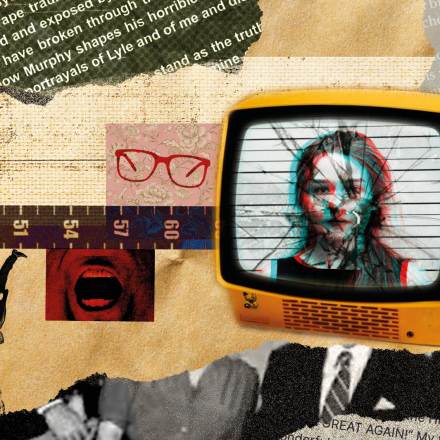
Why we dramatize history — and why we should stop

A few weeks ago, a friend asked if I had watched the Newsnight interview with Prince Andrew. That interview, yes — the one with all the sweating and the pizza in Woking, in which he definitely didn’t meet Virginia Roberts Giuffre but he did single-handedly crash his reputation, and Emily Maitlis, like the Medusa of journalism she has since become, just let him tie his own noose. Of course I’ve watched it. I’m a journalist. And a twenty-first-century citizen. Who hasn’t? My friend, for one, though she pointed out that she can just watch the three-part Amazon dramatization of the whole affair, A Very Royal Scandal, which is even juicier than the interview. (“I’m the son of the sovereign,” bellows the Duke of York, played by a soapy Michael Sheen.

history
Barry Lyndon

The luck of Barry Lyndon

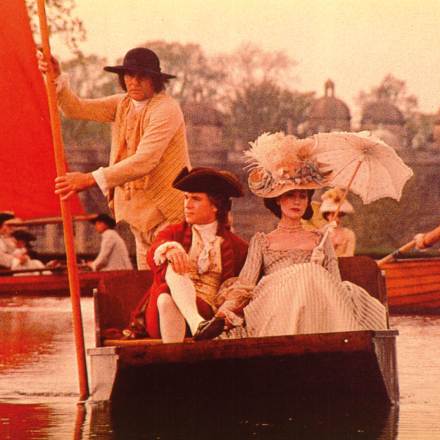
Shortly after Stanley Kubrick’s adaptation of William Makepeace Thackeray’s novel The Luck of Barry Lyndon was released in American cinemas in 1975, it was mercilessly parodied in the satirical publication MAD magazine. Over seven pages, “Borey Lyndon,” as it was called, was treated as an embarrassing flop, something to be ridiculed and regretted. The opening caption set the tone: “So you think Historical Movies are a thing of the past?! So you think no one wants to see Costume Epics any more?! So you think they’re too dull and slow-moving to hold your interest?! Then you probably just woke up after seeing this latest dull extravaganza! Well... here’s a chance to be put back to sleep — with MAD’s even duller version of ‘Borey Lyndon’!

Why Goethe matters

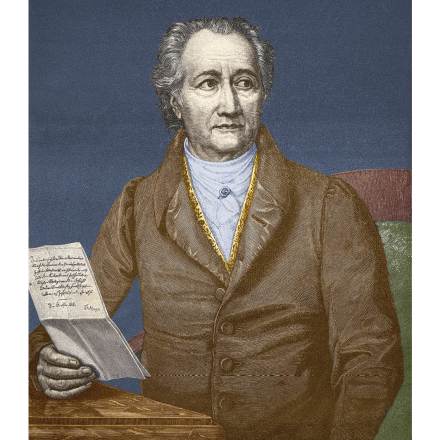
Johann Wolfgang von Goethe bears one of the most famous names in world literature, though he is largely unread by English-speakers. He is most closely associated with the novel and dramatic form, so many would be surprised to know that he primarily spoke of himself, for much of a long life that spanned from 1749 to 1832, as a scientist. He was a pioneering exponent of the science of evolution, and in two wonderful poems, The Metamorphosis of Plants and The Metamorphosis of Animals, he explored his belief that nature evolves from simpler, earlier life forms. This, rather incredibly, was seventy or eighty years before Charles Darwin began to write.

Goethe
Cher

Cher should stick to what she knows best

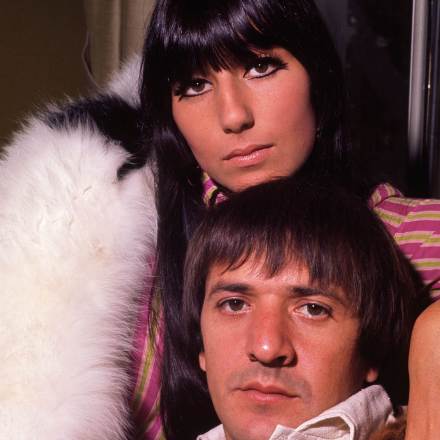
The worst celebrity memoirists write first-person Wikipedia pages. Like Michelangelo carving a beautiful posterior out of Italian Carrara marble, the best celebrity memoirists edit their lives into tawdry yet moving epics. When they work, celebrity memoirs are the Warhols of American literature. When they fail, they’re the literary equivalent of a CVS receipt: boring and destined for the trash. Cher: The Memoir, Part One falls somewhere in between. It takes a miracle to reach Cher’s narrative peak. For more than a hundred pages, she details her childhood criss-crossing America as her mom marries and divorces man after man. I lost track of how many jerks Cher’s mother married, but according to Google, she married six different men (Cher’s heroin-addict biological father twice).

Wrestling with Jordan Peterson

Jordan Peterson is one of those curious figures who has, thanks to the mysterious operations of the internet, been thrust into the limelight, willingly or not. While he has become a locus of hatred for certain left-wingers, thanks to his implacable attitude toward “woke” phenomena, in reality his supposedly controversial advice amounts to little more than that young people should work hard and take responsibility for their actions. Even the bolshiest socialist couldn’t really disagree. His 12 Rules for Life is a bestseller on both sides of the Atlantic, and he has a large and adoring fanbase.

Peterson
science

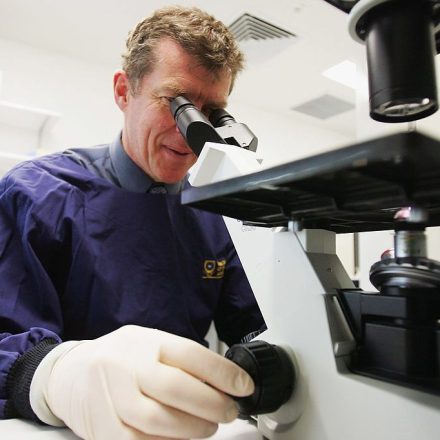
Will science lead us back to God?

After generations of treating the universe as mere matter to be bent to our will, it seemed inevitable that the future of humanity would be to merge with machines. Billionaires and tech utopians now predict a near future in which the human mind itself might be “downloaded” or transferred into a digital realm, allowing us to overcome death itself by slipping the bonds of our physical existence altogether. Modern-day prophets like Yuval Noah Harari proclaim that we have embarked on a second industrial revolution, though the product this time will not be machines or vehicles or powerful new weapons but human beings themselves. There’s a certain logic to this way of thinking.

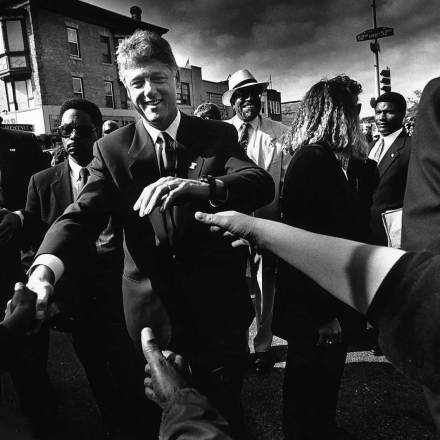
Bill Clinton’s latest memoir sees him at his chirpiest — and most combative

In February 1974, the British prime minister Edward Heath, then facing one of his country’s cyclical economic crises, called a snap general election. The result was close; Heath’s Conservative Party won the popular vote but secured fewer parliamentary seats than the Labour opposition. After power-sharing discussions broke down, Heath resigned from office. A fifty-seven-year-old bachelor without a London home of his own, he lodged for the next several months at a small Westminster flat owned by his political secretary Timothy Kitson. The man who had served as his nation’s head of government for the previous four years was left with a typist, a single daytime detective and a part-time driver at his disposal.

Clinton