Spectator Life

Spectator Life

An intelligent mix of culture, style, travel, food and property, as well as where to go and what to see.

All about the allium

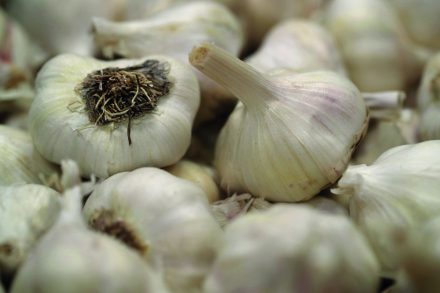
‘A nickel will get you on the subway,’ the saying goes, ‘but garlic will get you a seat.’ Garlic’s always possessed a pungent reputation — according to the explorer Robert de la Salle, the area of modern-day Chicago was so full of Allium tricoccum, our native wild garlic, that the Algonquin called it Che-ka-kou, ‘place of the smelly onions’. But it was Lucky Leif Erikson who brought the first bulbs of Allium sativum, the kind of garlic you buy at the grocery store, to the settlements of Vinland in Newfoundland and along the shores of the Gulf of Saint Lawrence. The Vikings didn’t remain chez nous, but garlic did, carving out a niche for itself as is its wont.

garlic

Do the vegans want blood?

Veganism is upon us. Something which was a minority dietary choice five years ago is now mainstream, a seemingly unstoppable bandwagon. I’m not here to discuss its merits, whether ethical, environmental or dietetic; the jury is still out. What interests me is the etiquette. I have fed guests at my table for more than 50 years, and many of them have been vegetarians. No problem. Perhaps I’ve been blessed with particularly lovable vegetarian friends, but somehow their food preferences have always trumped my own carnivorous tendency and we all eat vegetarian. I hated the idea of serving separate dishes. Veganism turns up the dial. It is, frankly, a cook’s nightmare.

Born Toulouse: varietals, vermouth and verse

I like vintners with a sense of humor. When Vern and Maxine Boltz retired — he from the Oakland Fire Department, she from flying the friendly skies of United — they decided to try their hands at making wine. That’s intrepid, not necessarily funny. But in 1997 they found a sweet parcel of 160 acres above the Navarro River in the Anderson Valley of Mendocino County and started planting. ‘Go forth and multiply,’ they said to the grapes and the grapes (Pinot Noir, mostly) did just that. In 2002 they produced 400 cases for sale and Toulouse Vineyards was launched. ‘Toulouse’? Yes, they reasoned, ‘What to do we have to lose?’ Fair warning: their publicity deploys variations of that homophonic witticism early and often.

toulouse

Strawberry yields forever

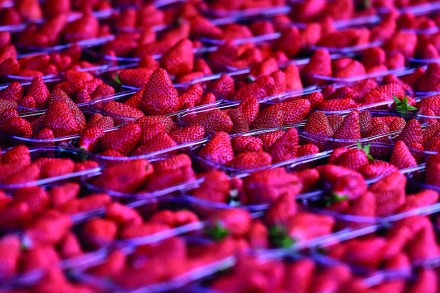
Looking to impress your girl in NYC? Order her some Omakase berries from Oishii. Although they’ll probably be the most expensive strawberries you’ll ever buy in the States, a pack of eight, hand-delivered to you at a secret rendezvous in the Oculus at the World Trade Center, will still only set you back $50. That, as you’ll know if you’re inclined towards thrift in courtship, is significantly less than a dinner date within the same city precincts. Word on the street is that these berries are so good (a subtle hint is provided in the company name, Oishii, which means ‘delicious’ in Japanese) that you can be served a single one as dessert at a Michelin-starred joint in Manhattan and not feel gypped.

strawberry

Arise, the cupcake

Do you know the milquetoast muffin man? His name is Charlie Brooker, he’s the co-creator of the hit television series Black Mirror and he thinks cupcakes are ‘bullshit’. ‘A cupcake is just a muffin with clown puke topping,’ Brooker wrote in 2012. ’Once you’ve got through the clown puke there’s nothing but a fistful of quotidian sponge nestling in a depressing, soggy “cup” that feels like a pair of paper knickers a fat man has been sitting in throughout a long, hot coach journey between two disappointing market towns.’ I’m usually quite skeptical of gastronomic fads — the rainbow bagel and matcha ice creams can go pound sand — but I’m here to defend the cupcake.

cupcake

Feed it to the Marines

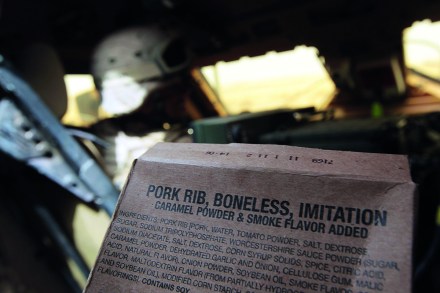
Between my parents, my six brothers, my sister and I, we were always gathering for something special in normal times: a graduation, a baptism, a cookout, even just pastries after Sunday Mass. But then the days and weeks of quarantine stretched darkly before us with nothing to celebrate, minor or major. The days all run together, differentiated by nothing except my parents’ choice of detective procedural for binge-watching. Until this week, when we got the news: L. is coming home. My younger brother L. is a second lieutenant in the Marines, the second of my brothers to become an officer.

marines

Cellar’s market

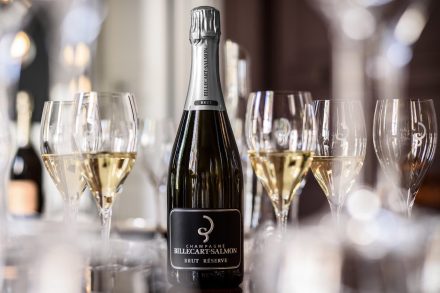
I met Kingsley Amis only once. It was in the bar of the Garrick Club at about three in the afternoon. He had clearly been there for some time. I was with a friend who knew him, so cadged an introduction. I cannot say that we had a truly meaningful exchange. More like 1 Corinthians 13:12: ‘through a glass, darkly’. But the encounter did put me in mind of General Principle Number 1 from Amis’s amusing book on drink, candidly titled On Drink. ‘Short of offering your guests one of those Balkan plonks marketed as wine,’ he advises, ‘go for quantity rather than quality.’ If you had asked my opinion about that advice a couple of months ago, I might have demurred.

cellar lockdown billecart

Civilized caffeination

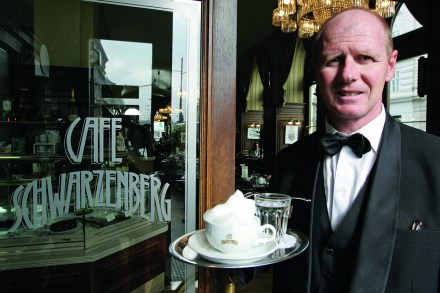
Palaces, art galleries, parks, composers’ houses, operas, concerts, Spanish Riding School horses, full-throated choirboys wearing sailor suits...yes, I go to Vienna for all these delights. But, deep down, probing my true desires and motives, I really go there for the coffeehouses. It’s just that to make the coffeehouse experience the most delicious it can be, you need to arrive cold, hungry, intellectually stimulated and with aching feet from visiting one of the above attractions. Then you’ll feel the warmth seeping into you as you sink down onto a coffeehouse banquette.

viennese coffeehouse

Upper crust: a sweeter approach to sourdough

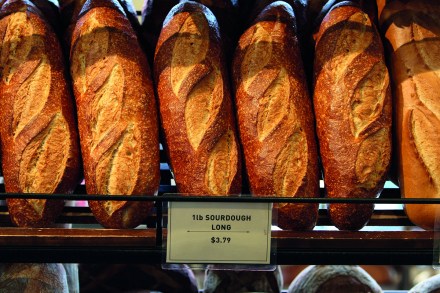
Hoping to win an election in 2020? If you’re not above buying votes, take a tip from the poet Juvenal, who described — disapprovingly, it is true — how Roman politicians in the second century used to bribe the lower classes with free sourdough bread and cutting-edge entertainment. (Yes, the Romans knew how to make sourdough — there are a few burnt loaves still around in the ruins of Pompeii). Nowadays it’s the millions of workers in the tech industry that you’ll have at your feet if you mention sourdough, but they want to bake it themselves, so you’ll do better handing out free workshops, countertop flour mills and Emile Henry bakeware.

sourdough

Cooking for dad: real food is nothing fancy

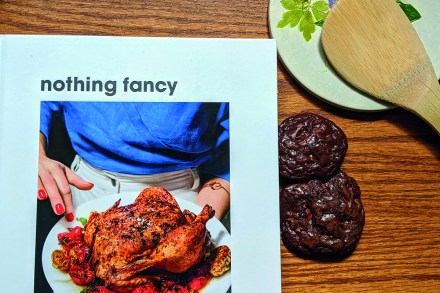
I fled New York City in March for my hometown in Pennsylvania. I brought with me one suitcase, a good chunk of it filled by my favorite book: the bestselling Nothing Fancy by Alison Roman of the New York Times. I’m now facing weeks here with three shirts and an impractical selection of underwear, but I regret nothing about my packing. As my father drove up the turnpike to evacuate me, I had decided in a burst of wartime can-do spirit that my contribution to the household would consist in cooking for the family, and damn if I wasn’t going to make a go of it. There was more than a little self-interest in this idea. Like all middle children, I long for a chance to shine in front of my family.

alison roman

Wine is for lovers: mein Gott and yours

Ovid’s little how-to manual, The Art of Love, is full of good advice. Let’s say you are interested in a girl. Take her to the games. Sit close to her. If a speck of dust falls on her lap, ‘flick it off with your fingers. If none falls, flick off — none.’ The Art of Love is full of such useful tips, elegantly expressed. Practical chap that he was, Ovid knew that even so subjective a pursuit as love could be helped along by the mastery and deployment of certain techniques. Among the many impressed by Ovid’s handbook was the German Renaissance humanist Vincent Obsopoeus. In 1536, he published De Arte Bibendi (The Art of Drinking), an allegro poem deeply inspired by Ovid’s Ars Amatoria.

joel gott cabernet sauvignon

Lacking liquor in Northern Virginia

It’s been one day since Northern Virginia closed its liquor stores and already civilization has collapsed. Fires burn on the horizon as the cry of the sober mob reverberates through the streets. People nail boards over their windows and spray paint ‘NO VODKA’ on them. Yuppies have descended into the underground Metro stations, where rumor is they’ve become something less than human. Harvesters, we call them, and last night they came for my friend Bone Saw… That, of course, is not what’s happened in Virginia since the state ordered the temporary closing of some liquor stores last week. Life in the quarantined DC suburbs has mostly continued as usual.

liquor alexandria northern virginia

Cab and conversation

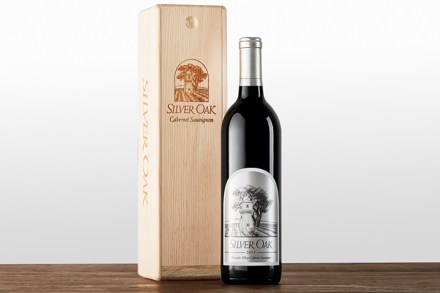
This article was originally published in The Spectator’s UK magazine. Subscribe to the US edition here. I had to go to Hillsdale, Michigan, home of Hillsdale College, to make my first visit to Healdsburg, the Sonoma County town that is the epicenter of about 100 California wineries and tens of thousands of vineyard acres. On this first, virtual trip, I dipped my toe into the Alexander Valley, the region north-northwest of Healdsburg. There are more than 40 vineyards in the Alexander Valley and I sampled two of the best, Silver Oak and Jordan. At least since Plato’s Symposium (Greek for ‘drinking party’), it has been understood that the essential accompaniment to wine is not food, though that is nice, but conversation.

silver oak alexander valley

Salami of the sea

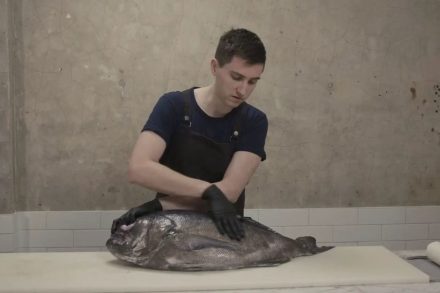
‘Seacuterie’ is a crime of a word. It looks OK in writing, if you don’t think about it too much, or if you’re the kind of person who approaches words like a scientist observing a new strain of bacillus. A linguistics student would point out that seacuterie is a portmanteau word, in which segments of multiple words are cut loose from their motherships and roped together into rafts of new meaning, producing such fantabulous and indispensable neologisms as ‘sheeple’ and ‘frenemies’. ‘Seacuterie,’ he’d tell you, is a portmanteau of ‘sea’ and ‘charcuterie.’ That’s all very well, but portmanteau or no portmanteau, ‘seacuterie’ sounds silly when you say it aloud.

seacuterie

Save French food!

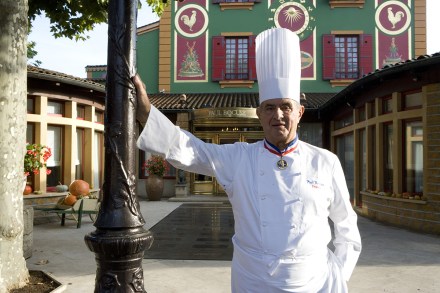
The annual publication of the century-old Michelin restaurant guides creates an excitement in France akin to the Oscars, but the 2020 Guide Michelin is provoking dyspepsia. This is the first time since 1965 that the restaurant founded by Paul Bocuse — the pope, the Napoleon, of French cuisine — no longer figures among the 27-strong group of French restaurants receiving the ultimate culinary accolade: three-star status. Two years after the maestro’s death, the black truffle soup and volaille de Bresse en vessie Mère Fillioux no longer seduce Michelin inspectors. What Bocuse called la sainte trilogie, butter, cream, wine, has lost its infallibility. And Monsieur Paul is not the first to go.

french food

The carnivore confessions: I’ve never felt better than on my meat-only diet

Since late last summer, I’ve been experimenting with something pretty crazy. It’s not drugs. Nor is it a trendy celebrity religion. It’s meat. Like Jordan Peterson and other great apes, I’m on the carnivore diet. The carnivore diet is a lot simpler than keto, for example, which involves counting macronutrients. On carnivore, you merely refrain from eating anything that isn’t an animal product. Beef, lamb, chicken, pork and seafood are all in, but vegetables, fruit and grains are out. It’s reverse veganism, or the hunter-gatherer diet, but with more hunting and no gathering. Apart from those who work at a zoo, most people know of the carnivore diet because of Peterson and his daughter Mikhaila.

meat-only

Say cheese

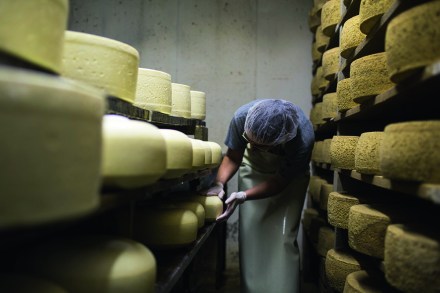
This article is in The Spectator’s March 2020 US edition. Subscribe here. ‘What do ties matter, Jeeves, at a time like this?’ Bertie Wooster was once heard to groan. Does cheese matter in a time of coronavirus, climate panic and tariff wars? These pressures can lead anyone to succumb temporarily to Sartresque nausea. Fortunately the gentleman’s gentleman was at hand with a steadying dose of sanity: ‘There is no time, sir, at which ties do not matter.’ And there is no time at which cheese does not matter.

cheese

Vintage Brooklyn: the wines of Red Hook

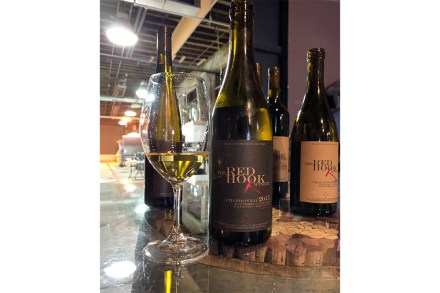
Close your eyes and think about the word ‘winery’. What image comes to mind? I’m guessing you will say, ‘A large stone pile from the 17th century or before surrounded by lovingly tended gardens and row after row of neatly staked vines.’ That is not wrong, but it is incomplete. There are plenty of wineries in France and elsewhere that feature modernist architecture. And there is one in Brooklyn, New York at 175 Van Dyke Street, towards the end of Pier 41 at the old Navy Yard. With a spectacular view of the Statue of Liberty and the New Jersey waterfront, Red Hook Winery — a retail tasting room in front, barrels and vats in the back — occupies a fetching but improbable spot. Red Hook was started in 2008 by Mark Snyder.

red hook winery

In praise of the Midwestern steakhouse

This article is in The Spectator’s February 2020 US edition. Subscribe here. In the 20th century, you joined a city or country club for status and a good meal on the regular. But who wants to eat the same food from the same chef every meal for the rest of your life? Now we go to restaurants. There’s always a new spot, a new dish, a new someone you need to impress by swiping right across the menu. It’s been my lifestyle choice for over a decade now. My life revolves around food, and most of my monthly budget goes on gastronomy. But I’m tired. Most of these hotspots just aren’t that hot. My jaded palate needs something new — or rather, something old.

steakhouse

The fast and the furious

This article is in The Spectator’s March 2020 US edition. Subscribe here. If the Roman Catholic Lent can be exemplified by fish fries, the Byzantine Catholic Lent can be encapsulated by Patrick Bateman’s final monologue in the movie American Psycho: ‘My pain is constant and sharp, and I do not hope for a better world for anyone. In fact, I want my pain to be inflicted on others.’ I am not a misanthrope. But a mere several days into the Byzantine Great Fast preceding Easter, going to social events can be torturous. The sight of meaty or cheesy foods causes me to want to pull the pin from my corporal grenade of self-control.

fast
israeli cuisine

Let’s eat: Israeli cuisine is coming of age

This article is in The Spectator’s February 2020 US edition. Subscribe here. Being a Zionist is a complex business, not least because, like supermarket hummus, there are so many varieties. There are settlement-hungry messianists and utopian socialists, hard-right annexationists and soppy liberals who still dream of exchanging land for peace. It’s an identity that can confuse even its devotees. I’ve tended to belong in the last camp, but in recent years I’ve drifted from political Zionism altogether. It’s so draining, so deadlocked, so knotty and angst-ridden. I made a decision a few years ago to dial back my engagement with Israel, and life was a little lighter as a result. But it left an absence.

A Trumpian feast

This article is in The Spectator’s February 2020 US edition. Subscribe here. Donald Trump serves the best food in Washington. The residents of DC won’t say so, but it’s true. America’s capital has a lively food scene, with many excellent restaurants. None is better than the two that are in the soon-to-be-sold Trump International Hotel on Pennsylvania Avenue: Sushi Nakazawa and BLT Prime by David Burke. Burke’s joint is absolutely my kind of place. It’s in the hotel lobby. The building used to be a post office before the Trump family converted it. The enormous glass-roofed lobby area is a marvel: put politics to one side and admit that it is an extraordinary achievement.

trump dc

California bound

This article is in The Spectator’s February 2020 US edition. Subscribe here. I think it was from the late Roger Scruton, back when he was writing about wine for another magazine, that I learned the importance of being a terroiriste — not, nota bene, a terrorist. That, as Qasem Soleimani learned to his sorrow, is something else entirely. No, what Sir Roger had in mind was the importance of environment to the production of delicious wine. Terroir means the composition of the soil, yes, but it also means so much more. One dictionary sums it up as the ‘complete natural environment in which a particular wine is produced, including...the soil, topography, and climate’.

Award winning bottles of wine

My vegan hell

This article is in The Spectator’s February 2020 US edition. Subscribe here. The children are eating eggs and bacon by the time I make it downstairs. A pair of frozen hash browns sits lonely on the plate at the head of the table. They have been cooked in a separate pan, one greased in vegetable oil rather than butter. I scold myself for the bitter glare I cast upon the urchins crying ‘Good morning, Daddy!’ They cannot know that the crisp pork fat and fried eggs lie on their plates only because Daddy has agreed to go vegan for the amusement of Spectator readers. The English never seem to tire of starving the Irish. At least there are potatoes this time around. Vegans forsake leather in their belts, wool in their coats and any animal product in their mouths.

Vegan

The conservative case for opposing ‘ag-gag’ laws

Activists from the animal welfare group Direct Action Everywhere (DxE) last week released photographs taken on an Iowa pig farm. They claimed they had walked through an open door, photographed pigs suffering from hideous rectal prolapses and open sores, as well as what appears to be overcrowding. The photographs were taken last April, and the activists have claimed that they withheld the pictures to avoid the accusation that they had contaminated the living conditions and endangered the pigs. Ironically, they have received criticism both for endangering the pigs and for withholding evidence.The owner of the farm is Republican State Sen. Ken Rozenboom.

ag-gag

French women do get fat

This article is in The Spectator’s January 2020 US edition. Subscribe here.Paris ‘And please meet Alice, who has brought industrial cheese,’ said our Parisian host as she introduced me to the other dinner guests. Imagine my despair! I had failed her, not to mention her guests, on the sacrosanct fromage. A fate worse than death. Food is a national obsession for the French. The couple throwing the party presented us with a three-course meal, all made from scratch using seasonal produce from the local market. To think that I almost brought a six-pack of beer.

french women

Back in the USSR

A perfect summer day in the wild woods west of Moscow. Around us, slender birch saplings lean together, lean apart, like elegant dancers swaying to the music of the wind. Buckets in hand, Dmitri Denisovich and I walk between shimmering streaks of brightness and patches of shade, collecting mushrooms. Every Russian knows the names of at least a dozen forest mushrooms. Adults and children alike are said to be able to follow their rich musty fragrances into the darkest glades, recognizing the tastiest, rarest and most poisonous fungi. ‘Lisichki!’ cries Dmitri, spotting a cluster of yellow ‘little vixen’ chanterelles. ‘My favorite.’ In eastern Europe, all the food is on the table; in the West, it’s all in the cupboard.

russian food

Standing up to eat is the new line in dining in DC

This article is in The Spectator’s January 2020 US edition. Subscribe here. Going into Spoken English, you feel a little like Henry Hill taking the back entrance to the Copa in Goodfellas. Wander into the Line Hotel, past the check-in, take a right past the elevators and enter the kitchen. It works best if you’re with someone you need to impress. Unfortunately, this time I’m with a Spectator editor. The Line is one of DC’s newest and hippest boutique hotels. That’s another way of saying it’s slightly less boring than the Hilton about five blocks away.

standing

Who invented the hamburger?

The hamburger is the perfect meal in the hand, eaten by workers on their lunch breaks, or by families who cannot afford fancy restaurants. It is the great comestible leveler, suitable alike for suburban barbecues and the front steps of tenement houses. The staple food of American democracy yields cheeseburgers, baconburgers, franchise brands, and drive-in outlets with total annual sales of five billion units. The precise origins of the patty, however, remain opaque. Nobody knows for certain who first thought of cooking a patty of minced beef and serving it inside a fresh-baked bun. The earliest use of the name was for an 11-cent dish, the ‘Hamburger steak’, served at a New York restaurant, Delmonico’s, in 1873. There is no mention of buns or relish.

hamburger