Spectator Life

Spectator Life

An intelligent mix of culture, style, travel, food and property, as well as where to go and what to see.

AI’s come for our carmakers

During the first half of this year, Chinese carmakers achieved a feat of hyper-production that sounds less like industrial manufacturing and more like a plague of locusts. In just six months, they unveiled 650 new models – an average of four brand-new cars every day. At the same time, on the other side of the Pacific, Elon Musk abandoned Tesla’s car assembly lines. He retooled the entire factory to mass-produce the Optimus humanoid robot. What on earth is happening to the world’s car industry? These two bizarre developments seem to signal the end of the global automotive industry as we know it. The age of spanner-wielding, oily-fingered car worker emerging from under a jacked-up rolling chassis appears to have been vaporised.

Where the super-rich rev their engines

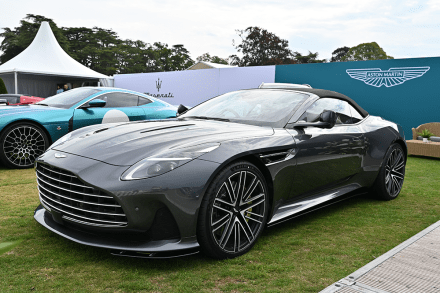
You join me on the Swiss Alps’ Furka Pass, a road routinely cited by enthusiasts on four wheels and two as one of the finest sections of winding blacktop in the world. It was up here, above the little Alpine town of Andermatt, that James Bond’s Aston Martin DB5 first stirred cinemagoers in 1964. In tribute, I’m at the wheel of an Aston too; a brand new V12-engined Vanquish Volante.    Welcome to the Supercar Owners Circle, a highly exclusive car club for those who have whole portfolios of seven-figure limited-edition performance cars. But it’s not about values or the number of valves. You can enter a car from 2026 or 1926; cost and horsepower are less important than style and individuality.

How Volkswagen drove its own demise

I moved on from most of my father’s automotive prejudices. He refused to buy from the Japanese ‘who treated our prisoners so cruelly’, French and Italian cars would ‘always let you down in the end’ and Fords were gaudy creations of ‘big-headed Americans’. Instead, it was Volkswagen (VW) I never trusted. Stupidly stuck in a bygone era, I couldn’t get over that infamous 1938 photograph of Adolf Hitler, smiling with childlike delight, leaning over a miniature Beetle. Beside him, in a smart civvy suit, SS Colonel Ferdinand Porsche gleefully shows off the prototype. The foundation of Volkswagen is the definitive portrait of a dictator and his sycophants. Okay, it’s 88 years later and I don’t like hearing about people losing jobs, even at VW.

There is no car more beautiful than an Aston Martin

The oddities at the Penzance Rotary Club Classic Car & Bike Show included a golden thing that looked like the affair baby of an Alfa Romeo roadster and a Silver Ghost; a three-wheel Messerschmitt Cabin Scooter with the nerve to call itself a cabriolet and a picnic basket on the back, presumably for your body parts after it kills you. But the most beautiful car was the Aston Martin: a Vantage sports car. It is always an Aston Martin unless an understated Ferrari is lurking. Then it is still, probably, an Aston Martin. The time when a 1960 Alfa Romeo Giulietta was normal has gone, along with the optimism that made it The Vantage is as gorgeous as the new Aston Martin DB12 S, which I drove in France in May.

Why the death of the manual car matters

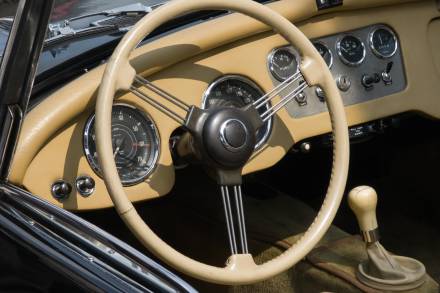
There was a time when any travel involved engaging in a delicate, tactile negotiation with the material world. To step into a motor car (or climb aboard a railway carriage or board a steamer) was not merely about changing your location but a chance to operate a complex mechanical instrument.   Car drivers listened to the rising baritone of the engine, felt the precise vibration of the engine revs and – with a smooth, practised movement – slotted the gearstick into place. It was a sensory dialogue – a minor act of humanity and engineering combined to delightfully punctuate any journey.

The rise of ‘autobesity’

It’s a busy Saturday morning and in the supermarket car parks of Britain we are forced to indulge in a cartoonish game of automotive Tetris, performing 15-point turns to coax our modern SUVs, EVs and people-carriers into parking spaces painted in 1971 for a Morris Minor. Alloy wheels scrape kerbs and mirrors bang bollards as children are extracted through two-inch gaps in doors that can now barely open.   The monstrous inflation of modern car sizes crashed into the headlines last week with the latest transport crisis dubbed ‘carspreading’ or ‘autobesity’.

The safety features in my car are downright dangerous

When we needed a new family car, I insisted on the Kia Sportage. My friend Charlotte leant me her Which? website password, I part-exchanged my erratic Volvo XC40 and a lovely Kia Sportage duly arrived. Of course, I immediately whizzed off to one of my favourite places in the world: Brent Cross Shopping Centre. I fantasised about all the things from John Lewis that I was going to toss into the Kia’s spacious boot.   But my daydreams were interrupted by an unexpected cacophony of noises from the car. Bleep… bleep… bleep! Ping! Plink! Plink-plink! Wonnngggg!

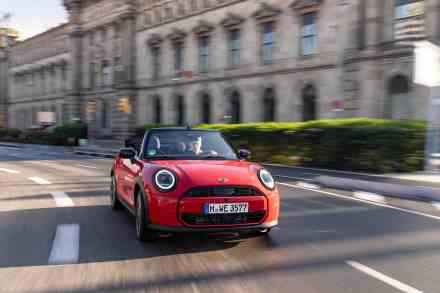
The Mini: ‘a car for people who want to be different but aren’t’

The car is populist modern art – I am sorry, reader, meet your plug-in Raphael – and a mirror of the driver’s soul. I am small and raging, and I love the Mini, because it is like me. I wonder if people used to feel this way about horses. Probably.   The Mini is like a lot of British people apparently: we are over-represented in the small and raging. It’s the best-selling British car of all time and if it wasn’t in Bond – I mean around Bond - it was in The Italian Job, which is both sexier – anyone can have Bond, Caine is slightly more detached – and more relatable.

Why real drivers prefer old bangers

Any loser can drive a posh car but it takes real character to drive a crap one. If a sports car is a penis extension, then a rust-bucket screams Big Dick Energy. Even, or especially, if you are a woman. I picked up my own crap car, a 2007-plate Nissan X-trail, five years ago because I moved to the countryside and needed a workhorse to replace my previous car, a Honda CR-V, which I’d bought for £500. Prior to this I had a Volkswagen Type 2, which cost £18,000, but every time you turned the key in the engine you still had to hold your breath.  My Nissan looks like it has just been in a fight – and lost. The heating has gone. The seat covers are ripped. The sunroof jams. The battery light flickers on and off like it’s trying to communicate in Morse code.

How classic car meets are revving back to life

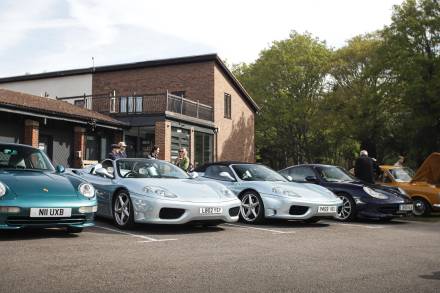
It’s all-too easy to get bogged down in the never-ending list of reasons that owning a car in the UK is a hellish endeavour. Whether it’s the soaring fuel prices or the mass emergence of potholes, I empathise. However, I am happy to report that, after attending a classic meet hosted by the newly started Cobham Car Club, an appreciation of car culture is very much back at the wheel. Down in Surrey one April weekend, crammed into the car park of Leatherhead Golf Club, were more than 140 cars and dozens of motoring enthusiasts. Gathered together were a mix of old classics, such as a 1962 Aston Martin DB4 in a beautiful burnt almond or the 1981 Porsche 924 Turbo in a bright red.

The virtual battle between bikes and cars

The role of the private car in Communist societies would make the subject of a lovely thesis. In brief: only Hoxha’s Albania managed to ban them completely, in a move judged too restrictive by Pyongyang and Beijing. In the ‘freer’ states in Eastern Europe, choice wasn’t great, but the car was seen, and advertised, as a symbol of liberty and the good life. And, even under the bleakest years of Stalinism, communist newspaper Pravda (or Izvestia) would recount how Ivan or Vladimir, having worthily toiled away in farm or factory, was now the proud possessor of his own Moskvich.

The British road trip is over

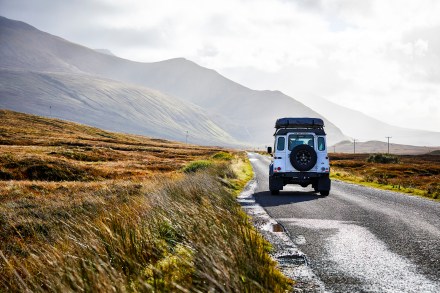
You set off on a spring morning, windows down, full of hope. Sunglasses, flasks of tea and a picnic rug are packed. You are ready to experience the freedom of the road, leave your worries in the rear-view mirror, put pedal to the metal (and every other optimistic road trip cliché). Follow the brown signs to the Pembrokeshire Coast 200, South West 660, Wales Way, Antrim Coast Road or any of the other curated, promoted and hash-tagged routes now crisscrossing the UK.

The Bentley Continental GT is a car for the upper-middle classes

Bentley’s Continental GT has a name to suit it: four voluptuous syllables then two emergency stops. This is the first car I reviewed, and it is still my favourite. I think this is because I grew up in Esher, and this is the car of the functional aspirant upper-middle class. It is important to remember that the state limousines – the pair of sinuous maroon sharks that transport the monarch from one demonstration of public magic to the next - are Bentleys, based on the long-gone Arnage, elongated for majesty. The Bentley is for people who work hard: the still responsible. Just enough flash. Not too much. If Aston Martin is British romance and Rolls Royce British violence in lambswool, Bentley is British functionality and taste.

Don’t tolerate potholes

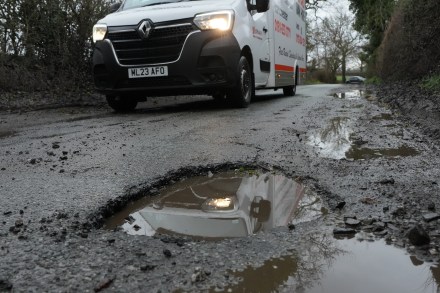
Following Russia’s invasion of Ukraine in 2022, a meme circulated on Facebook suggesting the same thing could never happen here because the potholes would prove too much of an impediment. Given the current state of the roads, I think we can safely say any invasion plans must surely now have been shelved. And thank goodness. Owing to the paucity of our armed forces, potholes would be our first line of defence. The sides of motorways would be littered with abandoned enemy vehicles if anyone were rash enough to mount a ground assault. Dazed POWs would be wondering why they’d been ordered to take over a country with a crumbling infrastructure.

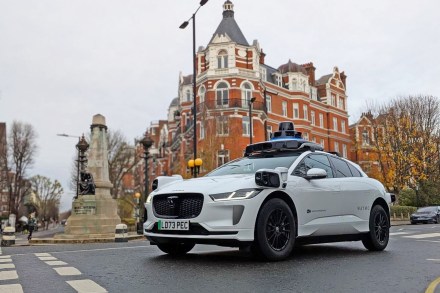
Can driverless cabs handle London?

The first time I took a ride in a Waymo was in 2024. It was summer in San Francisco, and my wife and I had spent several weeks watching these curious, sensor-laden Jaguar I-Paces gliding– driverless – up and down the city’s famous slopes. Intrigued, we downloaded the app, summoned one and climbed in.  It was the stuff of sci-fi. The car knew my name and displayed our route on a screen as we traced through traffic. Uncannily, the wheel still turned; phantom hands steering us into every corner. My wife was slightly perturbed; I loved every self-driving second.  But what struck me most wasn’t the technology, but how little fuss these all-electric cars were causing.

Driving isn’t fun any more

It is almost inconceivable that we used to live in a world where people would ‘go for a drive’. Not to get to a destination, but simply for the pleasure of driving. Sunday afternoons were the time of choice for this activity and would see car owners take to the road simply because it was good fun to be behind the wheel. The idea that driving was anything other than functional now seems absurd.   That world has vanished, partly due to the sheer volume of cars. In 1971 (the year my dad learned to drive), there were roughly 15 million cars on UK roads. Today, on those same roads, there are 34 million.

A Vermeer of a car – the Rolls-Royce Ghost Series II

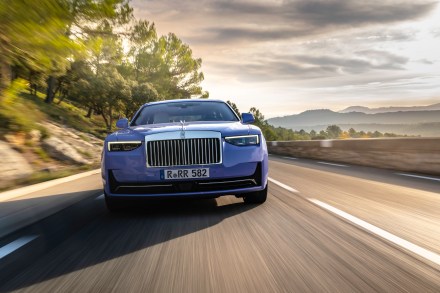
A Rolls-Royce press trip is like being taken by Mary Poppins – Mary of the novel, not the film, she is more savage and interesting – and shown a thing you would not otherwise know. When you arrive at the destination – it is Provence today, but it could be California or Ibiza tomorrow – you find the cars at the airport, laid out in blue and lilac and grey. Among them stand smiling men, whose job it is to help you drive the car: during the self-drive part they stand at roadsides smiling at you, though I think they have had weapons training. If you know this is a Rolls-Royce press trip, fair enough.