Latest from Coffee House

Latest from Coffee House

All the latest analysis of the day's news and stories

What’s keeping terrorism experts awake at night?

From our UK edition

This keeps me up at night. Have you come across this expression of pained anguish lately? This isn't about conversations with friends or loved one’s on Covid, returning to work or never working again. I’m talking about news stories on national security and terrorism, where experts and counter-terrorism officials are interviewed and feel duty-bound to disclose that they can't sleep at night. The number of these individuals who haven’t had a decent night’s sleep of late is frankly quite alarming. 'This keeps me up at night,' terrorism scholar John Horgan told Slate’s Aymann Ismail last November. He was referring to the gathering storm of far-right extremism in America.

When will Pakistan take a stand against terror?

From our UK edition

Last week, Pakistan’s Supreme Court ordered the release of UK born Ahmed Omar Saeed Sheikh who was accused of kidnapping and beheading the Wall Street Journal reporter Daniel Pearl. The verdict came after Sindh High Court overturned the death penalty for Sheikh and three alleged abettors last year, ruling that there was insufficient evidence to find them guilty of murder and stating that they had served their sentence for their role in the kidnapping. The decision has outraged Washington, with Joe Biden’s new State Department chief Antony Blinken dubbing it an ‘affront to terrorism victims everywhere’ and announcing his readiness to prosecute Sheikh in the US.

Streatham terror incident: what we know

From our UK edition

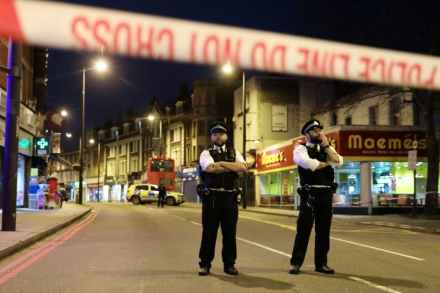
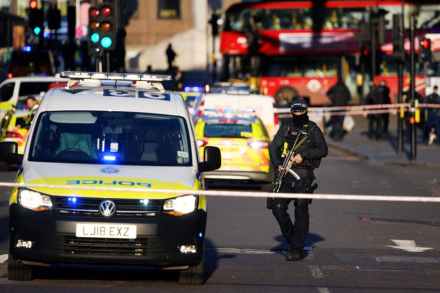
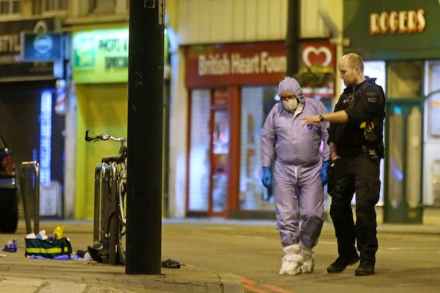
A terrorist recently released from prison has been shot dead by undercover police in Streatham, south London, after stealing a kitchen knife from a shop and stabbing three people, one of whom one is in a critical condition. Sudesh Amman, jailed for distributing terrorist materials two years ago, was wearing a fake suicide vest when he was shot by the undercover officers who had been following him. There are reports that Amman, 20, kept a notebook where he wrote of his ambition to “die as a shuhada [martyr]”: he seems to have struck days after his early released. He had served half of his three-year sentence. https://twitter.com/metpoliceuk/status/1223987448742666241?

We need to stamp out extremism in our prisons

From our UK edition

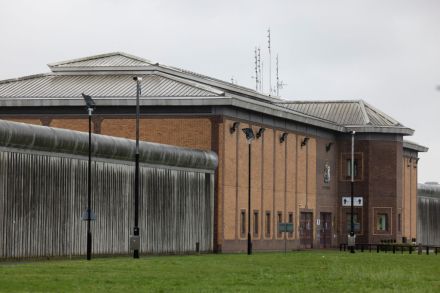
Jonathan Hall QC, the government’s independent reviewer of terrorism legislation, has launched an inquiry into how our prison service is managing the threat posed by terrorism. The backdrop to his review is the rapidly accumulating evidence that, across our penal system, violent extremism has increased its grip resulting in outrageous attacks on either side of the prison walls. In an interview with the Times, Hall said he found it ‘astonishing’ that convicted terrorists, far from being at risk from other vengeful inmates, achieve iconic status. This is not astonishing for those of us who have been writing and arguing for some years about the need for a transformed response to jail extremism that goes beyond benign containment.

Britain’s prisons are a breeding ground for Islamist terror

From our UK edition

Was Reading terrorist Khairi Saadallah radicalised behind bars? What we do know is that locking Saadallah in HMP Bullingdon to develop a ‘close’ relationship with radical cleric Omar Brooks was an extraordinary lapse in operational security. Only 16 days after leaving the prison, the violent, troubled and combat experienced Saadallah launched his murderous attack in Reading. At the very least, it is clear that prison served little purpose in stopping him. Once again, this raises the question of whether Britain's jails are a breeding ground for radicalisation.

Are we witnessing the birth of an African Islamic State?

From our UK edition

On Monday, 13 soldiers were killed by the Islamic State in northeastern Nigeria. A week ago, just after midnight on Friday morning, a Boko Haram suicide bomber blew up 14 villagers in northern Cameroon. These attacks — passing us by, as they do, in a stream of news and information — are becoming increasingly common in the beleaguered states of West Africa.  At the end of last year, Islamists kidnapped 344 schoolboys in an apparent ransom attempt. While the raid saw a continuation of Boko Haram’s strategy (in 2014 the group kidnapped 276 schoolgirls, to global condemnation) it marked a change in the terror group’s ambitions.

The questions no one wants to ask about the Reading terror attack

From our UK edition

There is an awful lot going on at the moment. So much, indeed, that stories that might once have detained us now rush past unobserved and all but un-commented upon. One such story is the conviction and sentencing of Khairi Saadallah for the murders of James Furlong, David Wails and Joseph Ritchie-Bennett on 20 June last year. Some readers may recall that I wrote about that attack here at the time. The UK had just been through its first lockdown, so it was understandable if people were somewhat preoccupied. Yet still it seemed significant that three men, all identified by the UK media as ‘members of the LGBTQ community’, should have been stabbed to death while enjoying the sun in a park in Reading one un-locked down evening.

Northern Ireland is still plagued by terrorism

From our UK edition

It’s slow business for global terrorists these days with all the targets banged up under Covid house arrest. But there’s one place in the United Kingdom where it has been pretty much business as usual for violent extremism. Northern Ireland’s police service has just released its security assessment for 2020. This contains some startling information for a place with roughly the same population as Hampshire. Last year there were 39 shooting incidents and two security related deaths, the same number as in 2019. The number of bombings – which include viable devices defused by the army – actually rose year on year to 17, with 8 happening in Belfast. Imagine this happening in Southampton.

The problem with deradicalisation

From our UK edition

Is it possible to 'deradicalise' terrorists? Jonathan Hall QC, the government's terror watchdog, doesn’t think so. He may have a point, but it’s complicated. One of the institutional problems we have is a sort of misplaced arrogance based, in part, on the historic experience of counter-insurgency against violent Irish republicans. Until quite recently, the Ministry of Justice press office referred to our prison deradicalisation processes as ‘world-class.’ Hall himself only recently began looking at our distinctly Heath-Robinson terrorist risk management ‘system’ after London Bridge killer Usman Khan ran rings around it.

Are we any closer to stopping the next Usman Khan?

From our UK edition

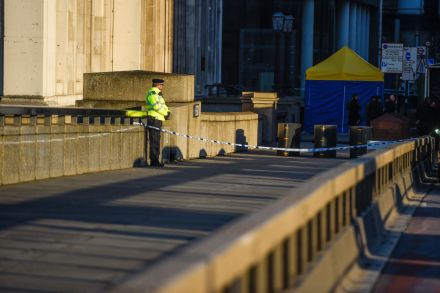
This weekend is the first anniversary of the London Bridge attack. Usman Khan murdered two young people at an event he was invited to, run by the ‘Learning Together’ scheme, which is part of the University of Cambridge. The conference was designed to celebrate the achievements of people like Khan who had joined the course while serving in high-security HMP Whitemoor. Saskia Jones and Jack Merritt were stabbed to death by the dedicated Islamist, supposedly on community supervision nearly a year after being released from prison for terrorism crimes. Twelve months later, are we any closer to understanding that fatal convergence of perpetrator and victims?

Will the Beirut blast change Britain’s foreign policy?

From our UK edition

What should the British government do to help Lebanon recover from the Beirut explosion? Ministers say they are working to provide the Lebanese government with technical support and financial assistance, but they are coming under pressure from senior Conservative colleagues to use the disaster as a turning point in the way Britain approaches the Middle East generally. Tobias Ellwood, chair of the Defence Select Committee, and Tom Tugendhat, chair of the Foreign Affairs Committee, have both called for Britain to take a more active role in the region, or risk seeing hostile states such as Iran and terrorist groups filling a 'vacuum'. These two MPs have been instrumental in pushing Boris Johnson to toughen his approach to China in recent months.

The Begum Appeal is a fundamental error of logic

From our UK edition

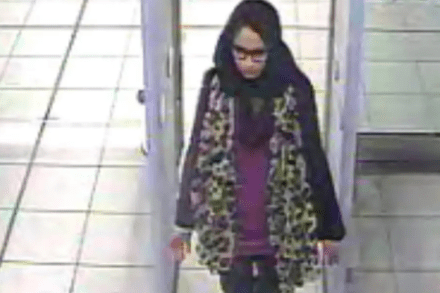
There has been an emotional response to the case of Shamima Begum, quite rightly. It is not clear to me that lawyers are better equipped than politicians to navigate such emotions, but sadly we live in an age which is increasingly demanding legal answers to political questions. What is perhaps surprising is that, with uncharacteristic vigour, our Court of Appeal have jumped headfirst into the maelstrom. The Special Immigration Appeals Commission (SIAC) – created to consider cases like these – found against Ms Begum in February, which seemed largely uncontroversial at the time.

How will the government try and deal with the terrorist threat?

From our UK edition

Next week, the government will introduce emergency legislation to stop anyone convicted of terrorist offences from being automatically released half-way through their sentence. But, as Whitehall sources acknowledge, this only tackles one vulnerability in the system. So, as I write in The Sun today, a broader plan to deal with the jihadi threat is being drawn up. One idea under discussion is for a sex offenders’ register for terrorists. This would enable the state to place restrictions on terrorists long after they have completed any prison sentence. These restrictions could include who they are allowed to meet with, where they are allowed to travel to both at home and abroad and a requirement to show the police their phones, laptops and internet and social media use.

Boris’s terrorism crackdown is a mistake

From our UK edition

Boris Johnson has responded to the Streatham attack by vowing to crackdown on convicted terrorists, introducing retrospective legislation to end the automatic early release of such prisoners at the halfway stage. But this is the wrong approach. Instead, the fault lies within a dysfunctional and ineffective probation service that attaches insufficient weight to protecting the public. And the probation service is under the Government’s direct control. Justice secretary Robert Buckland says that the proposed law will not increase the ‘penalty’ element of the sentence, only the administration. But if that’s true, there is no need for a change in the law. He can alter the administration immediately.

How the crackdown on terrorists can avoid the Human Rights Act trap

From our UK edition

Some human rights lawyers have warned that emergency legislation to prevent automatic early release of convicted terrorists – confirmed by Boris Johnson at Prime Minister’s Questions today – may be unlawful and will be challenged in the courts. But the warning should not deter Parliament from enacting this legislation. It is for Parliament, not the courts, to decide how best to protect the public and how to treat convicted terrorists fairly. In the wake of Sunday’s terrorist attack in Streatham, attention has rightly turned to the scandal of automatic early release of highly dangerous terrorists. Sudesh Amman, the Streatham attacker, had been released from custody in late January, having served half his sentence of three years and four months.

How the Streatham terrorist exploited a loophole in our knife laws

From our UK edition

When I worked at Lidl, there were a few products that we took extra care with. Some of these were high-value goods at risk of being stolen (like the £100 laptop we once sold, causing biblical scenes of chaos in the middle aisle). Others were to comply with laws on selling dangerous goods. Knives were always locked up behind the till. In Lidl's Tooting branch, in a relatively rough area near Streatham, the knives were all taken out of their boxes and locked up in the managers’ office. To purchase, you’d have to show ID and wait at a till as a manager brought back the knife. So how was it possible that Sudesh Amman, barely out of his teenage years, was able to swipe a knife from a local high street shop?

Emergency terror laws set to end early prisoner release

From our UK edition

The government has this afternoon unveiled its response to the Streatham terrorist incident on Sunday – which saw a man recently released for terror offences stab civilians in south London. Speaking in the Chamber, Justice Secretary Robert Buckland said that the government will table emergency legislation to end automatic early release for convicted terrorists. Under the plans, terror offenders will only be considered for release if they have served two-thirds of their sentence rather than half and then it will be subject to the approval of the parole board. Crucially, this will retrospectively end automatic early release for 220 convicted terrorists who are currently behind bars.

The Streatham terror attack reveals a failure within our prisons

From our UK edition

The Streatham attack, again, highlights the problem of what to do with those convicted of terror offences. Longer sentences are, obviously, part of the answer. One of the purposes of prison is to keep those who are a danger to the public off the streets. Letting those convicted of terror offences out early doesn’t fit with that. It is absurd that someone can plead guilty in November 2018 to possessing and disseminating jihadi materials and then be released in January 2020. But the other issue is what is going on inside our prisons. It is all too clear that Suddesh Amman did not come out of prison deradicalised. Neither did the London Bridge attacker.

Six weeks is too long for an election campaign

From our UK edition

The number of parties represented in national election debate multiplies. There are now seven crowding on to television podiums and local hustings. Yet this impression of diversity is, like the current public policy use of that word, misleading. Five of the parties — Labour, Liberal Democrats, Greens, SNP and Plaid Cymru — are essentially the same. They see achieving Remain, growing the state and destroying the Tories as the most important causes. The Brexit party is merely an epiphenomenon of Tory Brexit weakness and is therefore passing into history. So it is the Conservatives vs the rest, and ‘the rest’ includes all the broadcast media.

Portrait of the week: Terror in London, Trump in London and a resignation in Malta

From our UK edition

Home Usman Khan, aged 28, out of prison on licence after serving eight years of a 16-year sentence for preparing acts of terrorism, stabbed to death Jack Merritt, aged 25, and Saskia Jones, aged 23, at Fishmongers’ Hall and wounded three others before being stopped on London Bridge by members of the public and shot dead by police. A Polish kitchen worker called Lukasz Koczocik tried to disarm him with a pole; another man grabbed a narwhal tusk from the wall at the hall where Khan had been attending a conference on rehabilitation while a third let off a fire extinguisher to distract him from further bloodshed. One man who pursued the killer was said to be a murderer present at the conference.

Who are we kidding – of course terror is a political issue

From our UK edition

It was pleasing to see that old clip of Gerry Adams endorsing Jeremy Corbyn re-emerge, just before the acts of carnage were carried out at London Bridge. It reminded us all, should we have needed to be reminded, of Jeremy’s genial relationship with terrorists who murder British citizens (or indeed Israeli citizens). The question, I suppose, is: will it sway any opinions? You would doubt it, such is the kind of deranged certitude in which the his supporters bask, where everything bad about Mr Corbyn has actually been made up by Boris Johnson, or people like me. Even as the first reports of the atrocity were coming in, Corbyn’s Momentum acolytes were all over social media suggesting that it was an establishment plot to scupper Labour’s chances at the election.

Usman Khan’s time in prison could hold the key to explaining his murderous attack

From our UK edition

London Bridge terrorist Usman Khan appears to have spent some of his final months behind bars at HMP Whitemoor, a high-security prison near Peterborough, where some of the country’s most dangerous people are held. The prison's chequered history could be relevant to the horrific events that unfolded in the capital last week. I last visited Whitemoor near the beginning of 2016. This ‘new build’ prison, finished in 1992 with space for around 450 inmates, was designed to be escape proof. Two years later, five IRA terrorists and a gangster brutally disabused this notion by escaping over the perimeter wall armed with a gun that had been smuggled into the ‘supermax’ special secure unit where they were held. A prison officer was shot during the escape.

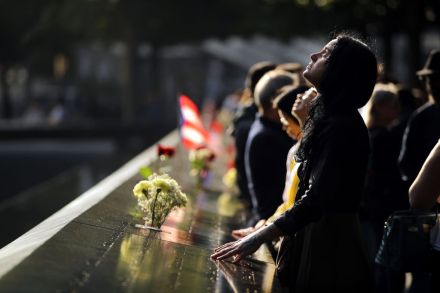
9/11 and the false sense of American security

Eighteen years ago, I was only a child. My first indication that something bad had happened on September 11, 2001 was that a birthday party my whole class had been slated to attend was canceled. Instead of heading to a celebration, I waited with the rest of my classmates for our parents to come and take us home. Except my mother didn’t take me home. We went straight to the supermarket. I remember watching, mouth agape, as my mother piled what seemed like hundreds of boxes of spaghetti, cases of water, and canned goods into the wagon. None of us knew what would come next, and she wanted to be prepared. That commitment to preparation came from fear. A fear that was rational and justified, and which grew out of a realistic sense that the sands had shifted. We were at war.

9/11

Alms for arms

From our UK edition

In the rush to declare Isis dead now that its caliphate has been routed from Iraq and Syria, it’s easy to forget that its Nigerian fellow traveller, Boko Haram, is still going strong. April’s five-year anniversary of the Chibok schoolgirls’ kidnapping, for example, passed with barely a celebrity tweet to mark it, despite the fact that 112 of the girls are still missing. Nor is much fuss likely to be made next month, when an insurgency that has killed nearly 30,000 will enter its second decade as violent as ever. Out of sight and out of mind, Boko Haram’s power is growing. And to find out why, all you have to do is follow the children who beg on the streets of Nigeria’s northern cities.

What Isis wants

From our UK edition

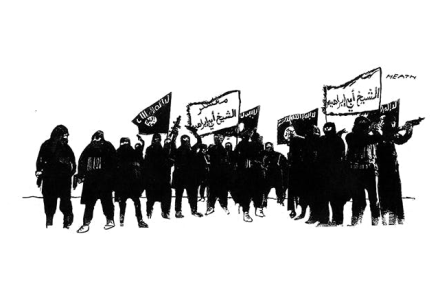
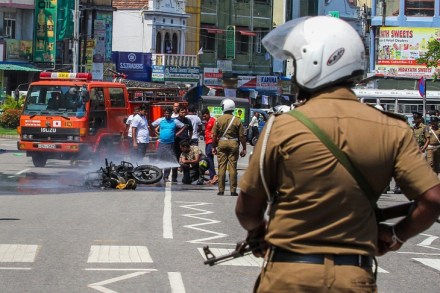
It has become commonplace to describe terror attacks as ‘senseless’. The horrific Easter Sunday bombings in Sri Lanka, which cost the lives of more than 350 people, several British citizens among them, make little sense. The only way to understand them is as a symptom of the growing globalisation of terror. The tactics — synchronised bombs on a Christian holy day — are grotesquely familiar. And it was not surprising to learn that one of the attackers was partly educated in London. The attacks, on three Catholic churches and three hotels favoured by westerners, clearly targeted Christians. The culprits have been identified as local Islamic extremists. The purpose of the attacks, therefore, was to increase tensions between Muslims and non-Muslims.

Islamic terror and the Left’s pretzeled language

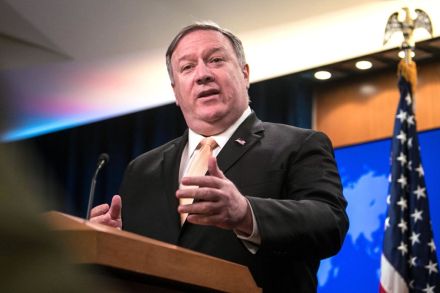
After years of Obama-era State Department obfuscations and Orwellian redactions, it was heartening to hear Secretary of State Mike Pompeo lay the blame for the ‘horrific wave’ of bombings at international hotels and Catholic churches across Sri Lanka on Easter Sunday where it belongs: at the feet of ‘Islamic radical terror.’ Pompeo stated at a press conference Monday that ‘radical Islamic terror remains a threat’ and that the US, along with international partners, is working against the ‘evil’ of ISIS, al-Qaeda, and other radical Islamist groups. That’s a far cry from the antics of the State Department under Obama.

mike pompeo sri lanka

How the police should deal with far-right terrorism

From our UK edition

As New Zealand comes to terms with the most deadly terrorist attack ever carried out on its soil, leaders from around the world will be asking their security advisors whether this marks the start of an escalation of right-wing threats and whether their current strategies for defeating this form of extremism are fit for purpose. It has been obvious for several years now that far-right extremism has been growing across western democracies with social media providing the means for a new global connectivity between far-right individuals and groups.

My grief for the victims of the New Zealand mosque attack | 15 March 2019

From our UK edition

'We belong to Allah and to Allah we shall return'. Muslims around the world, including me, are now reciting the verse from the Quran that Muslims say on hearing of the death of a fellow believer. Taking in news of the murder of 49 worshippers at a mosque in sleepy, safe New Zealand at the hands of a white supremacist, this verse came to my lips again and again. I felt the same grief when I watched the attacks on 9/11 unfolding. In the days afterwards, I also struggled with the reaction of others in Riyadh, where I was living at the time, and their shameful sense of schadenfreude. This was hard to deal with as I struggled to comprehend the attacks on New York, a city I love and call home.

My grief for the victims of the New Zealand mosque attack

From our UK edition

'We belong to Allah and to Allah we shall return'. Muslims around the world, including me, are now reciting the verse from the Quran that Muslims say on hearing of the death of a fellow believer. Taking in news of the murder of 49 worshippers at a mosque in sleepy, safe New Zealand at the hands of a white supremacist, this verse came to my lips again and again. I felt the same grief when I watched the attacks on 9/11 unfolding. In the days afterwards, I also struggled with the reaction of others in Riyadh, where I was living at the time, and their shameful sense of schadenfreude. This was hard to deal with as I struggled to comprehend the attacks on New York, a city I love and call home.

Bangladesh doesn’t want Shamima Begum. Here’s why it might have to take her

From our UK edition

Whatever the arguments over the Government’s decision to revoke Isis bride Shamima Begum’s British citizenship, the teenager's future now depends on one thing: will the courts determine she is a dual national who is eligible for Bangladeshi citizenship? If so, Sajid Javid's decision is lawful, as this means that the loss of her British citizenship will not leave her stateless. But what does Bangladesh make of this row? The view from Dhaka has been clear: we don't want her. In a statement issued this week, the country's foreign ministry said: “The government of Bangladesh is deeply concerned that she has been erroneously identified as a holder of dual citizenship shared with Bangladesh alongside her birthplace, the United Kingdom.

Isis’s collapse has sparked a new rift between Trump and Europe

From our UK edition

The days of black-clad militants rampaging through cities, parading captives as war trophies and doing wheelies in U.S.-made Humvees are over. The Islamic State – which once presided over eight million people in a reign of terror across territory as large as the United Kingdom – is now confined to an orchard in the dusty Syrian village of Baghouz. The so-called caliphate is now just 700 square metres. Within days— certainly weeks —all of Isis' territory will be retaken, the stragglers either killed in a barrage of US airstrikes or sent to Syrian Kurdish-run prison camps to the north. The demise of the caliphate, however, has given way to a new question: what to do with Isis foreign fighters? Donald Trump's answer is to make sure that Europe pulls its weight.

The shame of those siding with Shamima Begum | 20 February 2019

From our UK edition

At last, having kept pretty shtum about it for the past few years, the virtue-signalling set has mustered up some sympathy for women caught up in the horrific Isis vortex.  Unfortunately, though, their sympathy isn’t for the Yazidi women who were burned alive after refusing to become sex slaves for Isis jihadists. Or the Kurdish women who found themselves living under the brutal misogynistic yoke of the Isis empire. Or the Syrian and Iraqi women whose husbands and sons were beheaded for adhering to the wrong branch of Islam. No, their sympathy is for a woman who supported the movement that did all those things. Who provided moral succour to the Isis barbarians.

Sajid Javid is wrong to strip Shamima Begum of her British citizenship

From our UK edition

Sajid Javid’s decision to strip Shamima Begum of her British citizenship leaves me deeply uneasy. I can understand why a Home Secretary charged with keeping the public safe would want to do whatever possible to keep this woman out of the country. But Begum was born in this country, grew up here and was educated here. This, surely, makes her British. As a country, we should want to take charge of investigating her and, if the evidence is there, prosecuting her. After all, she offended against the ties that bind when she headed from this country—a liberal democracy with the rule of law—to go and serve in a so-called caliphate that offended against the values we hold most dear.

Isis bride Shamima Begum should be allowed home

From our UK edition

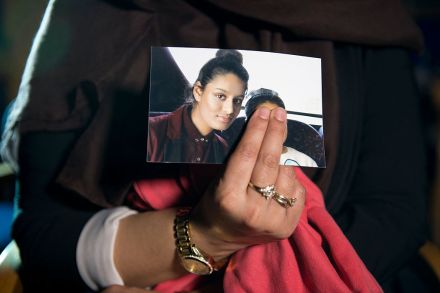
So, what do you reckon then about the jihadi bride, Shamima Begum, unearthed by the Times’ Anthony Loyd in a refugee camp in Syria? Should she be brought back home for an NHS delivery for her imminent baby – with the cops hovering backstage – or left to stew in a Syrian refugee camp, to give birth in the same conditions as other mothers-to-be? I may be misjudging my readers here, but I fancy I can discern which way most of us would want to go. But the first thing to say about all this is that this wretched 19-year old is about the least important aspect of the Isis situation.