World

Trump’s bad Huawei deal with Xi

Trump’s decision to lift the ban on US companies doing business with Huawei, the Chinese telecommunications company, is a stunning defeat for him. It’s also a major reversal for the US intelligence community, which has been concerned for years about what it considers to be Huawei’s wholesale theft of American technology.Lifting of the ban reinstates Huawei at the leading edge of China’s global spying. It undercuts months of private attempts to encourage America's allies to join in what the US hoped would be something close to a worldwide ban. And, over the long term, it also threatens America’s strategic advantage as a leader in new technologies.

huawei

China’s Belt and Road Initiative is neo-Imperialism

China’s Belt and Road Initiative (BRI) is touted by Beijing as an attempt at multinational economic cooperation and development, comprising everything from foreign direct investment to the development of infrastructure. However, the purpose of the BRI is not economic or cultural but strategic, and is an effort to mask the expansion of Chinese power. In its strategic intent, the BRI should be considered an imperial project alongside the likes of the British East India Company (EIC) or the Dutch East Indian Company, Vereenigde Oostindische Compagnie (VOC).  With the BRI, China is exercising the 'imperial excuse', just as the EIC and VOC did centuries ago.

belt and road initiative

Ignore the scorn, Trump has been proved right on North Korea

Don’t believe the Trump-haters when they trash the Singapore summit between America and North Korea, which we mark the first anniversary of today. This was a win for everyone who wants to see a stable peace on the Korean Peninsula. And the alternative remains too horrific to imagine. Some will say the summit accomplished nothing but a vague statement of goals and principles, with nothing delivered and no schedule for future deliveries. The pundits will pontificate that Trump was duped, that he shied from going toe-to-toe with North Korea’s Kim Jong-un – and that Washington has done the worst thing possible, and legitimized a state whose human rights record is surely the worst of any on the planet. That’s just wrong.

korea Kim Jong-un and Donald Trump

On D-Day, Macron has learned nothing and forgotten everything

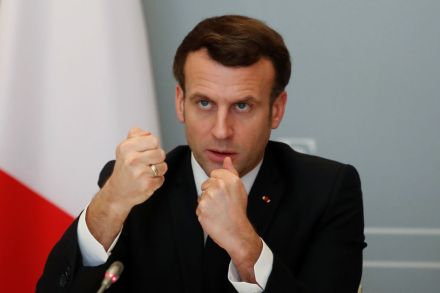
No one wants to hear a lecture on ‘liberty and democracy’ from a finance guy turned technocrat. Especially not at a service commemorating the dead of the D-Day landings. In the last 30 years, finance guys and technocrats have enriched themselves at the voters’ expense, abused the notion of economic liberty, and wrecked social contracts across the West. Thank you for your service, as the voters never say. The 75th anniversary of D-Day should be a time for remembering the true meaning of freedom and democracy — and for honoring the thousands of young men who died in foreign fields so that we might inherit those privileges. Instead, we got Emmanuel Macron’s side-eyed hectoring of Donald Trump at Thursday’s memorial service.

macron d-day

Sadiq Khan’s anti-Trump crusade is dull and reductive

Perfectly nice man normally, Sadiq Khan, mayor of London. Ambitious as Lucifer, obviously, but unpompous and cheerful in his manner, which is always good. But on Trump, he’s lost it, hasn’t he? Yesterday he was complaining about Trump and other far-right leaders ‘using the same divisive tropes of fascists of the 20th century’. You don’t use the f-word lightly if you’re grown up. And you hesitate, if you’ve got any sense, before using it about a US president who’s here to commemorate the contribution of US forces to the D-Day landings. Trump was wholly unfazed by the observations. In a tweet, he replied: ‘He is a stone cold loser who should focus on crime in London, not me...

sadiq khan

The cosmic magnetism of Trump and Brexit

Polite British eurosceptics still insist that Brexit isn’t Trump and Trump isn’t Brexit — as if that meant anything at all. Many of us Britons like to think that our populist revolt is a more civilized affair than the one happening across the Atlantic. As London prepares to welcome President Trump next week, it may be time for the British to admit that we have been deluding ourselves. The truth is that Trump is the sun to the Brexit moon. Some mysterious cosmic magnetism always seems to pull them together. Nigel Farage might call it destiny. Look at recent history. On June 24, 2016, the day after the EU referendum, Donald Trump arrived by helicopter at Turnberry, his golf course in Scotland.

cosmic magnetism

The triumph of Matteo Salvini

Since becoming leader six years ago Matteo Salvini — Il Capitano as they call him — has transformed the radical-right Lega from small regional separatist party into the largest party in Italy. After last week’s European elections, the Lega is now also the second largest national party in the European Parliament. Its 28 seats place it level with Angela Merkel’s CDU, and just behind the 29 seats of Nigel Farage’s Brexit party. The European Parliament election results confirm Salvini as the undisputed leader of Europe’s populists. Their insurrection is determined to unseat the EU ancien régime. Its latest champion, French president Emmanuel Macron, is ever less convincing and popular in France and elsewhere in Europe.

matteo salvini
AI

China will be the AI superpower

As President Trump settles in for a long trade war with China, he ignores a far more serious crisis in China relations. At stake is not just the size of a trade deficit, but the future of America’s position as a superpower. China has made clear its determination to lead the world in Artificial Intelligence by 2030 and to become the world’s sole AI superpower by 2050. To achieve these goals, China is aggressively investing tens of billions of dollars in future technology including robotics, surveillance, and data analysis. This state-controlled effort unites both the public and private sectors for a single purpose: world domination.

Let’s call the Russian collusion ‘hoax’ what it really is

During the Japanese bombardment of Shanghai in 1932, the Austrian essayist Karl Kraus was anguishing over the placement of commas in a column. It might seem futile at such a moment, he told a friend, but ‘if those who are obliged to look after commas had always made sure they were in the right place, then Shanghai would not be burning.’ Hyperbolic? Perhaps. But the general point holds: words matter, as do the their appurtenances, punctuation. (After all, ‘Let’s eat Grandma’ means something quite different from ‘Let’s eat, Grandma.’) George Orwell made a kindred observation about the importance of having the courage to call things by their real names.

trump-russia hoax

The paranoid style in British politics

The politics professor Matthew Goodwin made an interesting comment on Twitter earlier this week. He pointed out that many of the elements of the ‘paranoid style’ in politics – a phrase coined by Richard Hofstadter in a famous essay to describe right-wing populist movements – are now as common on the Left as they are on the Right. Goodwin mentioned ‘Remainia’ as being particularly susceptible to the paranoid style, which is characterized by ‘heated exaggeration, suspiciousness and conspiratorial fantasy’, according to Hofstadter. That struck me as an astute observation and I’ve tried to flesh out the idea in my Spectator column today.

paranoid

Maria Butina: jailed for the crime of being Russian

Maria Butina was not a Russian spy. She did not trade sex for influence. She had nothing to do with any clandestine espionage activity, nor did she ever hide her dealings with American political officials. In fact, she unabashedly loved America – perhaps to a fault. But she’s currently sitting in jail, and almost no one will say a word in her defense. The ordeal to which she’s been subjected is jaw-dropping for its recklessness and absurdity. There’s so much that’s wrong with this case, it’s almost hard to know where to begin. Maybe the most obnoxious malfeasance was committed by moralizing media members who saw fit to cast judgment on her personal romantic decisions – as if that was ever remotely any of their business in the first place.

maria butina

Russia and China are watching Iran, and waiting

As US-Iran tensions rise, America’s sway over its allies is falling. Last week, Major General Christopher Ghika, the British officer second in command of anti ISIS forces in Iraq and Syria, publicly contradicted the rationale behind American troop build-ups in the region. US Central Command was quick to rebuff Ghika, but Britain’s Ministry of Defence supported him. Other NATO allies, too, are balking at confrontation with Iran. Spain has withdrawn a frigate from the American-led, Gulf-bound carrier group. Federica Mogherini, the EU’s High Representative for Foreign Affairs, has called for ‘maximum restraint’. If there is to be a third Gulf War, the US might find itself with fewer friends than in the last.

iran

Mr Pompeo goes to Sochi

On Tuesday, Secretary of State Mike Pompeo traveled to Sochi to meet Russian Foreign Minister Sergei Lavrov and, of course, Russian President Vladimir Putin. It was the first such trip by a high-ranking US official since the release of the Mueller report in April. During his meeting with Lavrov, Pompeo struck a conciliatory tone while calling for cooperation more between the United States and Russia. If that sounds familiar that’s because it is. US-Russia diplomatic efforts always start pushing in the same direction, then something goes wrong. ‘We have differences.

mike pompeo putin sochi

How I learned to stop worrying and love Trump’s trade war

Alarmist news reports and panicky stock sell-offs. A threat to impose tariffs on US goods in retaliation for President Trump’s threatened levies. You’d think that Beijing had just ruthlessly shut down a major engine of American growth. But the truth is that tariff fear-mongering reveals the gulf between America’s financial markets and its real economy that provides everyday goods and services. The Chinese economy has grown spectacularly since Beijing turned away from Maoism in the 1980s. It’s true that major American industries from aircraft to agriculture have profited handsomely from supplying Chinese demand. The offshoring model supercharged by China’s admission to the World Trade Organization (WTO) in 2002 has been especially lucrative.

donald trump trade war

Our real problem with China: Xi Jinping

At the last minute the Chinese Communist Party chief Xi Jinping vetoed the trade deal with the United States, after his representatives had negotiated and agreed to it. Xi claimed that he will take the responsibility for ‘all possible consequences.’ This left President Trump no choice but to impose higher tariffs on some Chinese imports. This battle over trade marks only the early rounds of the US struggle with China. China’s economic success was achieved in large measure by taking advantage of the working people of both China and the US. It was made possible because the US allowed it to enter the world’s free trade system. Because China entered the West’s economic ecosystem a generation ago, it has flourished.

xi jinping

The future of world trade is in the balance

Ongoing trade talks between American and Chinese officials took an unexpected turn on Sunday: President Trump took to Twitter and announced a plan to impose tariffs on all Chinese imports by Friday. The tariff threat adds urgency to negotiations that will continue on Wednesday, when a Chinese delegation is due to arrive in Washington, DC. The move is a departure from last week when US Treasury Secretary Steven Mnuchin and Trade Representative Robert Lighthizer arrived in Beijing to initiate a fresh round of trade talks with China. Despite chronic trade tensions, both sides had sounded optimistic ahead of the meeting. State Councilor Wang Yi, China’s top diplomat, expressed hopes the two sides could ‘reach a mutually beneficial, win-win agreement’.

world trade
netta barzilai israel eurovision

Israel and the war of Eurovision

Game of Thrones fans watched in horror on Sunday as Cersei Lannister invited the citizens of King’s Landing into the Red Keep, ostensibly to shelter from an impending attack. But Cersei’s invitation was not benign. It reflected a simple but horrifying strategy: to use her subjects, innocent civilians, as human shields. To get to Cersei, her enemies would first have to maim and kill thousands of innocents. How should rational, moral actors respond to this kind of terror? How should soldiers fight honorably against opponents who care little about the lives of their subjects? These questions may thrill GoT fans, but they are not solely the purview of fiction.

Kim Jong-un is doing to Trump what Trump is trying to do to China

Will he stay or will he go? Speculation about President Trump’s future began with House Speaker Nancy Pelosi’s comment this past weekend that she worried in the run-up to the 2018 midterm elections that Trump wouldn’t accept a close result and deem it a Democratic hoax. Now she’s indicating that she’s not convinced that he will abide by the results of the 2020 election if they are close and he’s the loser. As it happens, Trump amplified those concerns with a tweet riffing on Jerry Falwell, Jr.’s contention that he deserves an extra two years added to his first term because an attempted deep state putsch, led by Robert Mueller and his minions in the FBI, deprived him of the ability to govern effectively over the past two.

kim jong-un
us-russia

The great folly of US-Russia misunderstandings

Vladimir Putin is not nearly as clever as American liberals like to believe. His meddling in the 2016 election backfired, after all — spectacularly. The Kremlin did not expect Donald Trump to win, just as no one in Washington did. If Trump had lost, the Kremlin’s gambit would have paid off: stolen emails would have damaged America’s newly elected president as she faced a hostile, Republican-controlled House and Senate. She could hardly expect cooperation from them on Russian sanctions or anything else, and the GOP could be counted on to react to another Democratic administration by adopting an oppositional foreign policy.

China’s war on Islam

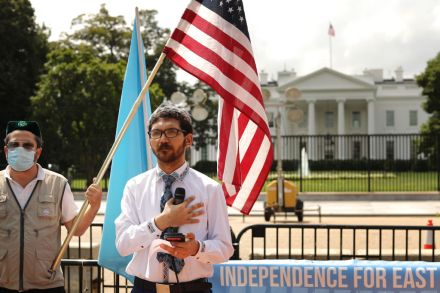
The Reuters photo could be mistaken for a shot of one of America’s ‘supermax’ prisons, the ones where the most dangerous criminals are held. An endless green security fence, topped with coils of barbed wire, punctuated by soaring octagonal guard towers with 360-degree views, all fronting what looks like a massive concrete wall or side of a building. Yet the Chinese workers walking outside the fence give away the truth. The picture is not of a US prison, but rather a Chinese ‘re-education’ center in vast Xinjiang, in the country’s far west. According to research by the Australian Strategic Policy Institute, there are 28 such massive detention camps in Xinjiang, most built within just the last several years.

uighurs