World

Have Americans got George III all wrong?

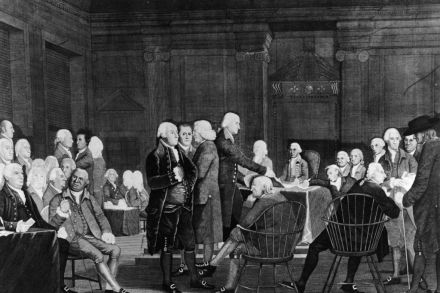
Americans are rarely accused of underestimating themselves, but might they in fact be a greater people than they think? That thought has regularly occurred to me over the past three years while I was researching and writing my new biography of their last king, George III, and especially when I read Richard Brookhiser’s insightful comment in his recent book Give Me Liberty, where he points out that Britain’s thirteen American colonies in the 1760s and early 1770s were among “the freest societies in the world.
George iii
lévy

What Bernard-Henri Lévy sees for the West

I meet Bernard-Henri Lévy at his apartment in central Paris on a chilly autumn afternoon. Considerations of security prohibit me from revealing its location. A French Jew who is a public and vocal enemy of both Islamism and some of the world’s worst regimes, Lévy is both perhaps the most important public intellectual in Europe, and a man with enemies. I have come to ask him about the future of the West — if, that is, he feels there will be one. Lévy, internationally known by his initials BHL, is a philosopher who has been at the heart of French — and international — society for half a century. But he remains an idiosyncratic figure.

florence

Florence with Dante

The trouble with Florence, says Ricardo, a local journalist, is that we’re just living off our past glories. “Aren’t we all?” I reply. Florence could perhaps be forgiven when it has accumulated such vast cultural and physical capital, built up over centuries. Signs remind you that it’s 700 years since the death of its most famous son, Dante, father of the Italian language. I must admit I’ve always been too intimidated to read his epic, The Divine Comedy, which T.S. Eliot said was “as great as poetry ever gets.” To prepare for my assault on the summit, I have been reading about Dante himself. I hadn’t known he had no more than a passing acquaintance with his great love, Beatrice.

Stop pretending Ukraine will ever be in NATO

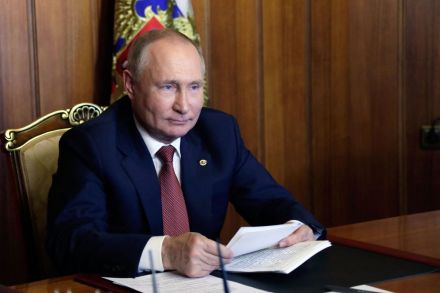
Russian President Vladimir Putin is once again making the West nervous. And unlike his previous display of military might near the border with Ukraine last spring, Washington is concerned enough that it's sent CIA director (and former US ambassador to Russia) William Burns to Moscow for talks earlier this month. If Burns’s trip was meant to scare the Kremlin into halting additional military formations near the Russia-Ukraine border, then the confab didn’t work as planned. The Ukrainian government estimates that up to 100,000 Russian forces are now camped out in the area. American and European officials are sharing information with one another about various scenarios the Russians could be contemplating, the most dramatic being a second invasion of Ukraine in seven years.

ukraine

America needs more than ‘guardrails’ with China

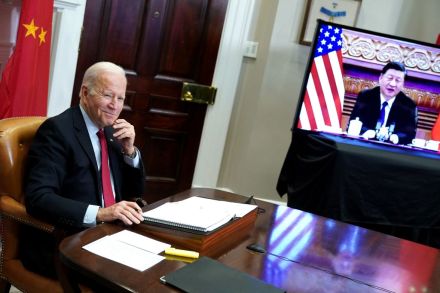
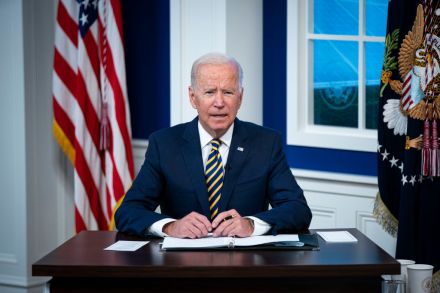
As recently as a week ago, there was talk that Monday night’s virtual summit between President Joe Biden and Chinese Communist Party general secretary Xi Jinping was an opportunity to “reset” the US-China relationship. By the time the two leaders sat down in front of their video screens, the summit had been downgraded to a “meeting” and the White House made clear that little concrete agreement, and no breakthrough, was to be expected. The meeting lived down to expectations, uneasily combining a more sober and realistic US assessment of the parlous state of bilateral ties with what seems a return to a pre-2017 model of surface bonhomie and references to the “the long-term work that we need to do together,” according to a senior US official.

xi

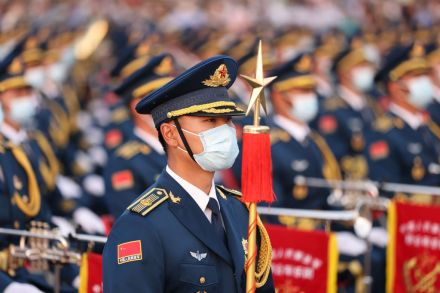
Communist China abandons Confucius

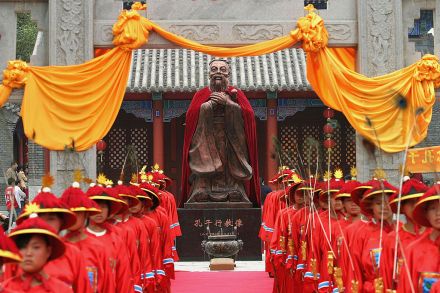
China in late September celebrated the 2,572nd birthday of Confucius, a mark of pride for the Chinese Communist Party. A week later, it celebrated its 72nd “National Day,” commemorating the founding of the People’s Republic of China. Chinese President Xi Jinping regularly gushes over Confucius in speeches and even in his 2015 book. Since 2004, the Chinese government has sponsored more than 500 “Confucius Institutes” — public educational and cultural promotion programs — to the price tag of billions of dollars. But how Confucian is China? And is Confucian statecraft a good thing?

The dictator behind Europe’s next migrant crisis

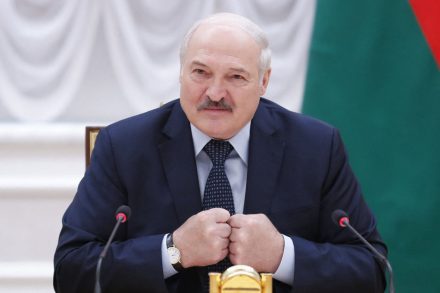
Belarus, the former Soviet satellite state, isn’t exactly a global heavyweight. Alexander Lukashenko, the country’s authoritarian president, is an international pariah who is better at concocting conspiracy theories than he is at running a country. At $60 billion, the Belarusian economy is about the size of Rhode Island’s. Other than petroleum, cheese and dump trucks, Belarus doesn’t offer much in the way of exports. A once promising information technology sector is now gutted, as Lukashenko’s crackdown on dissent forces highly educated talent to flee the country for the Baltics. Lukashenko, however, is smarter than he looks.

lukashenko

Kamala in Paris

Ah, the French. Is there any other people Americans so love to antagonize? Recall that after France (rightly) decided to abstain from the Iraq war in 2003, we didn't just express our discontent; we introduced the term "cheese-eating surrender monkeys" into the Kissingerian lexicon. We then canceled French fries, which are Belgian. Call it a sibling rivalry between children of the Enlightenment; call it a clash between social democracy and rugged individualism. Whatever you call it, just don't go canceling a submarine agreement at the last minute for the love of God. That's what Joe Biden did last month when Australia suddenly nixed a plan to purchase subs from the French in favor of American and British vessels. And stop the presses! A conspiracy of the Anglophones was afoot!

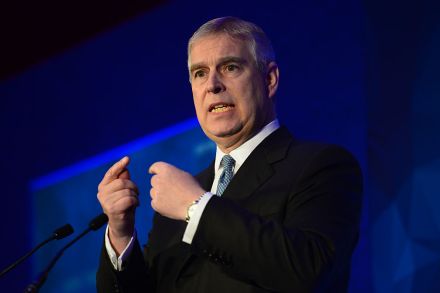
The Grand Old Duke of York attacks an Epstein victim

If one was to look up the dictionary definition of "brass neck," it should come with a picture of the Grand Old Duke of York, grinning inanely and posing in his regimental finery. Obstinacy has been a steady feature of his life, but one only brought into full public view since his entanglement with Jeffrey Epstein. Prince Andrew seems incapable of listening to anyone who is neither extremely wealthy nor a member of the British royal family — and judging by his recent antics, both of those sectors of society are given short shrift, too.

andrew

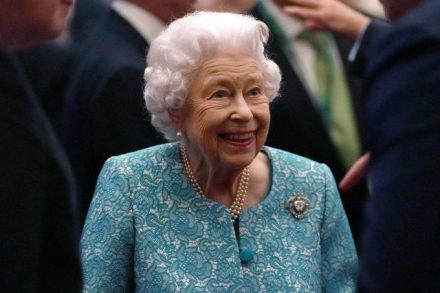
What’s wrong with Queen Elizabeth?

Is Queen Elizabeth II unwell? Rumors have been circulating through the British and American media for over two weeks, and the British public are worried. First came the ninety-five-year-old’s unprecedented use of a walking stick public. Then came an overnight hospital stay, which royal retainers tried to cover up. And now she has canceled her appearance at the COP26 climate summit in Glasgow on her doctors’ orders, and will be sending a recorded video message instead. Buckingham Palace has released a photograph showing the queen in her usual good spirits. Yet the frailty of the recently-widowed queen and her Glasgow no-show send a worrying message. Queen Elizabeth is dedicated to her duty.

queen elizabeth ii

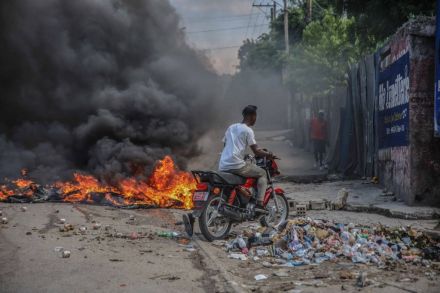
America has few good options in Haiti

Haiti has never been known as a beacon of stability and tranquility. Most of its politicians are feckless, in league with criminals, or too consumed with trying to stay alive themselves. America not so long ago intervened on the island twice in 10 years — the first time in 1994, when President Clinton’s threat of an invasion compelled the junta to reverse its coup three years earlier, and the second in 2004, when the Bush administration participated in an international stabilization force after Haiti’s president Jean-Bertrand Aristide resigned. But this year has been an especially tough one for the Western Hemisphere's poorest nation.

haiti

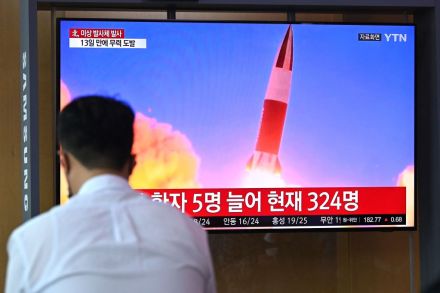
Don’t fear North Korea’s recent missile launch

Let’s be honest. If North Korea didn’t have nuclear weapons and missiles to carry them to targets as far away as the US homeland, you would not be reading this article. In fact, the national security establishment would most likely consider North Korea, a nation that can no longer feed itself with a GDP smaller than Rhode Island's, to be a joke. And yet the so-called Democratic People’s Republic of Korea (DPRK) keeps cranking out ever-more advanced weapons platforms that drive headlines and clicks the world over. North Korea’s most recent test, a submarine-launched ballistic missile, seems at least on the surface to be pretty threatening. Yet a more sober analysis suggests that such a weapon, at least by itself, is no major threat to anyone, and for the foreseeable future.

north korea

Evergrande illusions

At the height of the 2008 financial crisis I was invited to an off-the-record media lunch with a famous investor. I was taken aback when one of the world’s most successful capitalists announced that the crisis showed the Chinese had a superior economic model. China has tried something different from traditional capitalism, with its reliance on the ‘hidden hand’ of the free market. Since the first economic reforms in 1978, the heavy hand of the state has grown and modernized the economy with staggering results. If you believe the data, eight hundred million Chinese people no longer live in poverty and China has averaged 10 percent growth a year since reforms began.

Evergrande
scotland

Scotland by sleeper

Traveling internationally these days is a bit like how Dicky Umfraville, a character in Anthony Powell’s Dance to the Music of Time, describes aging: being punished for a crime one hasn’t committed. After taking my pre-departure COVID test, alerting the British government to my whereabouts for the next week (no small undertaking given I’d be in a different bed every night), and proving all this plus my vaccination status to the British Airways check-in desk at JFK, I finally settled in my seat and supplemented my mandatory mouth-muzzle with an eye mask as though bound for Gitmo, not Heathrow. An hour into the flight, the woman in front of me started bawling: a panic attack brought on by mild turbulence.

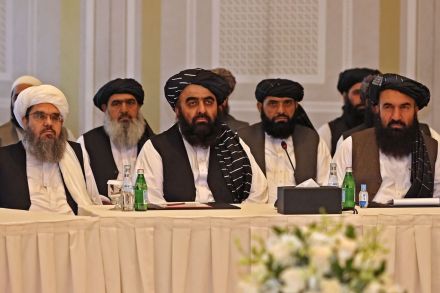
The Taliban learn just how hard governing Afghanistan is

For the first time in two decades, and arguably for the first time since the late 1970s, there is a semblance of calm in Afghanistan’s countryside. The US troop withdrawal last August, ending Washington’s 20-year misadventure in the country, has ushered in a period when airstrikes, IEDs, and Taliban-orchestrated bombings are no longer daily facts of life. Afghans who haven’t seen their relatives for years are now able to travel the roads without worrying about getting menaced by Taliban gunmen or fleeced by corrupt Afghan army troops. At the same time, Afghanistan is at a perilous moment in its history.

taliban

Greta Thunberg didn’t win the German elections

Greta Thunberg is back in business. Previously slowed down by European pandemic restrictions, the Fridays For Future movement has now hit the streets, starting in Berlin. 'We must not give up, there is no going back now,' Thunberg told thousands of local protesters. The appeals and influence of her movement have translated, at least somewhat, into a stronger climate-focused youth vote in last month's German elections. The Green party has made significant advances in Parliament, becoming one of the kingmakers in upcoming coalition talks. Yet Germany’s environmentalists aren’t the only ones who outperformed their previous results. The liberal-democrat FDP scored 23 percent of Germany’s first-time voters, the same amount as the Greens.

greta

Taiwan could spark a war between America and China

Some time between now and the next 10 years war between the United States and Communist China is certain. The only questions are when and how it will start — and how many millions of people will die. Why would I dare make such a bold prediction? Simple. History has conspired to create the perfect mix: trillions of dollars in trade up for grabs, a geopolitical rivalry, military tensions, bad blood, competing national egos and a quest for tech dominance. Washington and Beijing seem on the way to a world war the likes of which mankind has never before seen. And the most likely spark for this war is Taiwan.

taiwan china
foreign policy

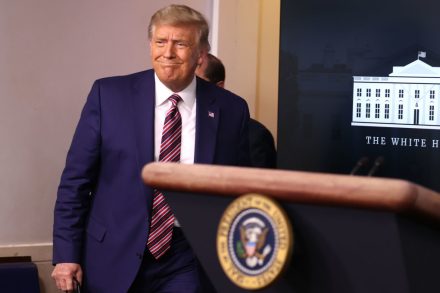
Biden stole Trump’s foreign policy

When President Donald Trump in 2020 signed a trade deal with China after years of escalatory tariffs, then-presidential candidate Joe Biden blasted the agreement. 'China is the big winner of Trump’s "phase-one" trade deal with Beijing,' Biden said after the agreement was finalized. He wasn’t alone. Many trade experts at the time believed the purchasing targets Beijing was required to meet were highly unrealistic. Sure enough, China’s compliance has been less than ideal. According to the Peterson Institute for International Economics, China is roughly 70 percent of the way there with two months left to go. Yet despite Biden’s past comments about the accord, not to mention the tariffs that set the stage for the deal, the White House isn’t fully breaking with the pact.

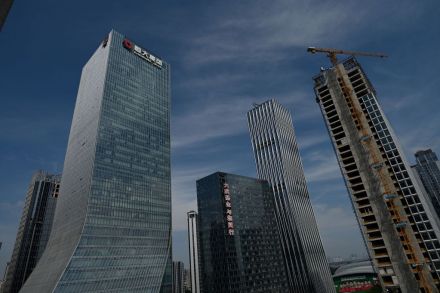
The next real estate crisis could come from China

Debt is as much a part of the real estate business as bricks and mortar. And as the great New York builder William Zeckendorf once famously remarked, 'it’s better to be alive at 20 percent than dead at the prime rate.' But the Evergrande Group, the second largest real estate company in China, has taken corporate debt to new heights, with liabilities of a staggering $310 billion, to finance its breakneck growth. In 2010, it had revenues of $7.3 billion and assets totaling $16.7 billion. In 2020, the figures were $81 billion and $368 billion. To be sure, it is a huge company, with 1,300 projects in more than 240 cities in China and 200,000 employees. This year alone, it began 77 new projects.

evergrande

The foreign policy amateur

Since Joe Biden was elected in part as a salve for Donald Trump's perceived foreign policy blunders, it seems reasonable nine months in to go searching for the Biden Doctrine, to assess his initial foreign policy moves, to see what paths he has sketched out for the next three years. ...is that a tumbleweed? Well, OK, there was Afghanistan, Biden's most significant foreign policy action. Biden won election in November and took office in January. There was ample time for replanning and renegotiating anything that had been left behind by Trump, especially since Biden and his team had muddled in Afghanistan during the Obama era and knew well the mess they'd helped create. The rush for the last plane out was a fully expected unexpected event.

biden foreign policy