World

Biden wants to forget all about North Korea

If you don’t follow North Korea for a living as I do, you likely have forgotten all about the so-called hermit kingdom and its portly pariah of a leader, Kim Jong-un. Sure, there are the occasional headlines. Kim has lost a whole bunch of weight. The country is locked down as it has no way to combat Covid-19 and would never let in the international community to distribute vaccines. And, of course, there was last night's missile test. But even then the media does not seem to care much when it comes to North Korea. The reasons are quite obvious: with the Omicron variant sweeping the world, even a regime such as North Korea's has trouble breaking into the news cycle.

The China Olympics are a moral failing

The international community has failed regarding China and the 2022 Olympics. It's a moral failing above all, but it's also an administrative and symbolic failing. Beijing's worldwide abuses of human rights, international trade, military aggression toward neighbors and, of course, the unleashing of the Covid-19 pandemic has been allowed to fester, and gone unpunished. In return, China has been granted an international nod of approval by getting to host the 2022 International Olympic Games in Beijing, with the blessing of the International Olympic Committee and European and Western democracies. Sure, there are the diplomatic boycotts that have been issued by several countries, including the United States.

The China reckoning

Fifteen years ago, I remarked to an acquaintance over lunch that it looked like China might eat America’s lunch in naval power. My interlocutor, a person well-known in leadership positions in the China studies community, scoffed at my comment. Over the next few years, he never missed an opportunity to ridicule my wild-eyed prediction. I often wonder what he thought in February 2021 when, less than a month after becoming president, Joe Biden warned US senators that if America didn’t “get moving, [China is] going to eat our lunch.” I claim no credit for prescience, just a historian’s sensitivity to trends over time. The fiftieth anniversary of President Richard Nixon’s visit to China falls in February 2022.

china
foreign policy

The next chapter in American foreign policy

The new year begins a new chapter in American foreign policy. For the first time since 2001, we are not at war in Afghanistan. More than that, we no longer have an architectonic strategy for our role in world affairs. We had one during the Cold War: to win it. And we had one afterward, too: a decade before 9/11, our policy elite had already committed to the idea that we must police the world for the good of the liberal international order. The lead-up to the first Gulf War was the opening paragraph of that chapter, the ignominious retreat from Afghanistan its last line. Our policy mandarins have not changed their minds, but the world has changed too much for their grand design to have any meaning in 2022.

Will Armen Sarkissian save Armenia?

Yerevan, Armenia Armen Sarkissian, the president of Armenia, is incandescent with rage. “Five thousand brave and selfless Armenian soldiers were killed in this war,” he tells me at his office, referring to last year’s conflict with Azerbaijan and Turkey. “There must be accountability for their deaths.” Sarkissian strikes me as the only Armenian politician whose anger comes with a constructive program of national revival. The man once described by Zbigniew Brzezinski as the “Vaclav Havel of the Caucasus” radiates no grievances against foreign powers.

The Biden administration hates you more than China

After over a month of deliberation, the Biden administration announced last week that they had settled on a diplomatic boycott of the 2022 Beijing Winter Olympics. The decision not to send an official delegation, White House press secretary Jen Psaki said, was in response to the "ongoing genocide and crimes against humanity in Xinjiang." This is a relatively toothless and inoffensive form of protest, but it is welcome that the Biden administration at least acknowledges China's human rights abuses. What was more concerning was the administration's response when asked if they would push American companies to pull advertisements from the games. "What individual companies do is entirely up to them.

china ccp

Ending our corporate dependence on China

In the toxic world of American politics, the bipartisanship showed by the House of Representatives last week in overwhelmingly passing a bill to stop the import of Chinese products made with forced labor from Xinjiang is a rarity. The 428-1 vote on the Uyghur Forced Labor Prevention Act, the second in as many years, is the clearest indicator yet of how a new era in American relations with the People’s Republic of China (PRC) is developing. It's one where national security and moral concerns find common ground in opposing the oppressive and predatory policies of the Communist Party of China (CPC).

taiwan china

Biden must encourage Ukraine to negotiate

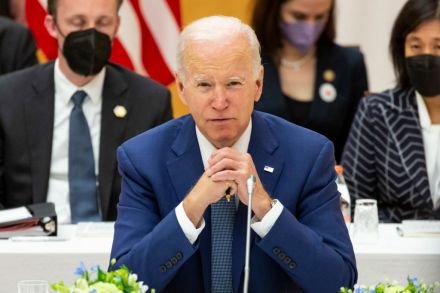
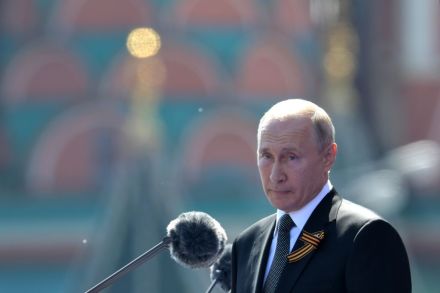
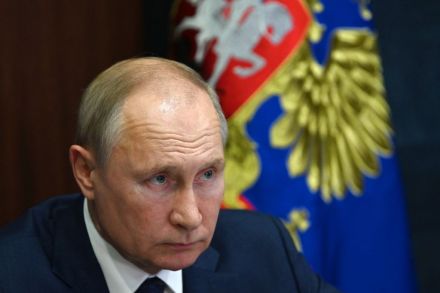
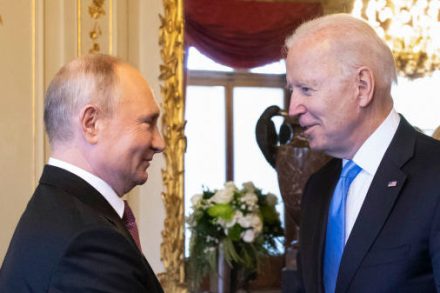
President Joe Biden spoke with Russian President Vladimir Putin today via video conference for just over two hours, the second time in six months that the two leaders have engaged in a face-to-face conversation. For Biden, the message he sought to deliver was strict and to the point: if you, Mr. Putin, go ahead and order a second invasion of Ukraine in nearly eight years, you can expect a raft of economic penalties that will negatively effect everything from Russia’s access to the SWIFT payment system to the ability of Russian banks to convert rubles into dollars. For the security-minded Putin, the meeting was an opportunity to press Biden on his principal demand: a written legal guarantee from Washington and the rest of NATO that Ukraine will not be invited into the alliance.

south africa shutdown

The hidden victims of the South African shutdown

I sit in a National Park in South Africa, looking at an empty restaurant in which a robust staff, hired on for the peak international travel season, stand idle and bored. Many will likely be let go next week as the tourism declines yet again. Many were out of work for a year and only just hired back. The ripple effect of the latest travel shutdown is felt immediately here. Many parks in Southern Africa lost 80 percent of funding through the last shutdown, which in South Africa was one of the most severe. We work here with the Rangers, tasked with protecting the last great population of rhino and elephant, and they cannot afford boots, let alone salaries to pay the staff who work without pause.

Boycott the 2022 China Olympics

Anything short of a full boycott of the 2022 Beijing Olympics is an abdication of America’s responsibilities and a rejection of its values. Dispatching athletes to China in February would also violate the Olympic spirit. In a November 2 social media post, three-time Olympian Peng Shuai accused former Chinese vice premier Zhang Gaoli of sexual assault. That post was deleted within minutes and Peng promptly disappeared. The Chinese government has clearly seized control of her and her whereabouts, while Chinese state media has taken control of her story, releasing an email, purportedly from Peng, rescinding her allegations. It's also published photos, purportedly from her friends’ social media, as claimed evidence that she is happy and healthy.

Why America needs a grand bargain with Russia

Russian is losing influence in a region it once dominated: Eastern Europe. Highlighting this newfound weakness are Ukraine and Belarus, two states that were once solidly in Russia’s sphere of influence and are now on the verge of completely falling away. In 2018, Ukraine enshrined in its constitution the goal of NATO membership and last year Belarus experienced massive pro-democracy protests; both of these events are in Russia’s eyes akin to westernization. The American foreign policy establishment acts as if Russia will ultimately accept being surrounded by Western-allied states. Instead, history shows that losing influence will cause Russia to lash out. If Ukraine moves toward NATO membership, it will incur a Russian invasion.

vladimir

Is Prince Charles the royal racist?

It has been a mystery that would have baffled Perry Mason or Ellery Queen. Since Meghan Markle and Prince Harry informed a shocked Oprah Winfrey in their bombshell interview that "there were concerns and conversations" about "how dark" the skin color of their first child-to-be was likely to be, the couple have slowly dripped information into the public domain. It's been made clear that it was a "senior royal" who expressed the opinion, albeit neither the Queen nor the Duke of Edinburgh. Although given the latter’s public remarks on race and nationality, it might have been easiest if the soon-to-be-late Prince Philip had simply claimed responsibility. Now, the "senior royal" has finally been fingered, and the alleged guilty party is Prince Charles.

charles

Can Viktor Orbán’s conservatism work in America?

American conservatives are often accused of narrow-minded parochialism, but in recent years, the right has turned its gaze abroad. The Brexit referendum and the rise of Boris Johnson in the United Kingdom anticipated the potential appeal of conservative populism to working-class voters. Alt-right intellectuals look to Singapore’s curious mix of technocratic managerialism and libertarian economics as a blueprint for governance, while their more extreme (and extremely online) fellow travelers celebrate would-be strongmen like Brazil’s Jair Bolsonaro and the Philippines' Rodrigo Duterte. More recently, the presidential campaign of Éric Zemmour in France has captured the imagination of immigration restrictionists.

Have Americans got George III all wrong?

Americans are rarely accused of underestimating themselves, but might they in fact be a greater people than they think? That thought has regularly occurred to me over the past three years while I was researching and writing my new biography of their last king, George III, and especially when I read Richard Brookhiser’s insightful comment in his recent book Give Me Liberty, where he points out that Britain’s thirteen American colonies in the 1760s and early 1770s were among “the freest societies in the world.

George iii
lévy

What Bernard-Henri Lévy sees for the West

I meet Bernard-Henri Lévy at his apartment in central Paris on a chilly autumn afternoon. Considerations of security prohibit me from revealing its location. A French Jew who is a public and vocal enemy of both Islamism and some of the world’s worst regimes, Lévy is both perhaps the most important public intellectual in Europe, and a man with enemies. I have come to ask him about the future of the West — if, that is, he feels there will be one. Lévy, internationally known by his initials BHL, is a philosopher who has been at the heart of French — and international — society for half a century. But he remains an idiosyncratic figure.

florence

Florence with Dante

The trouble with Florence, says Ricardo, a local journalist, is that we’re just living off our past glories. “Aren’t we all?” I reply. Florence could perhaps be forgiven when it has accumulated such vast cultural and physical capital, built up over centuries. Signs remind you that it’s 700 years since the death of its most famous son, Dante, father of the Italian language. I must admit I’ve always been too intimidated to read his epic, The Divine Comedy, which T.S. Eliot said was “as great as poetry ever gets.” To prepare for my assault on the summit, I have been reading about Dante himself. I hadn’t known he had no more than a passing acquaintance with his great love, Beatrice.

Stop pretending Ukraine will ever be in NATO

Russian President Vladimir Putin is once again making the West nervous. And unlike his previous display of military might near the border with Ukraine last spring, Washington is concerned enough that it's sent CIA director (and former US ambassador to Russia) William Burns to Moscow for talks earlier this month. If Burns’s trip was meant to scare the Kremlin into halting additional military formations near the Russia-Ukraine border, then the confab didn’t work as planned. The Ukrainian government estimates that up to 100,000 Russian forces are now camped out in the area. American and European officials are sharing information with one another about various scenarios the Russians could be contemplating, the most dramatic being a second invasion of Ukraine in seven years.

ukraine

America needs more than ‘guardrails’ with China

As recently as a week ago, there was talk that Monday night’s virtual summit between President Joe Biden and Chinese Communist Party general secretary Xi Jinping was an opportunity to “reset” the US-China relationship. By the time the two leaders sat down in front of their video screens, the summit had been downgraded to a “meeting” and the White House made clear that little concrete agreement, and no breakthrough, was to be expected. The meeting lived down to expectations, uneasily combining a more sober and realistic US assessment of the parlous state of bilateral ties with what seems a return to a pre-2017 model of surface bonhomie and references to the “the long-term work that we need to do together,” according to a senior US official.

xi

Communist China abandons Confucius

China in late September celebrated the 2,572nd birthday of Confucius, a mark of pride for the Chinese Communist Party. A week later, it celebrated its 72nd “National Day,” commemorating the founding of the People’s Republic of China. Chinese President Xi Jinping regularly gushes over Confucius in speeches and even in his 2015 book. Since 2004, the Chinese government has sponsored more than 500 “Confucius Institutes” — public educational and cultural promotion programs — to the price tag of billions of dollars. But how Confucian is China? And is Confucian statecraft a good thing?

The dictator behind Europe’s next migrant crisis

Belarus, the former Soviet satellite state, isn’t exactly a global heavyweight. Alexander Lukashenko, the country’s authoritarian president, is an international pariah who is better at concocting conspiracy theories than he is at running a country. At $60 billion, the Belarusian economy is about the size of Rhode Island’s. Other than petroleum, cheese and dump trucks, Belarus doesn’t offer much in the way of exports. A once promising information technology sector is now gutted, as Lukashenko’s crackdown on dissent forces highly educated talent to flee the country for the Baltics. Lukashenko, however, is smarter than he looks.

lukashenko