World

Europe: the little kids’ table at the Ukraine talks

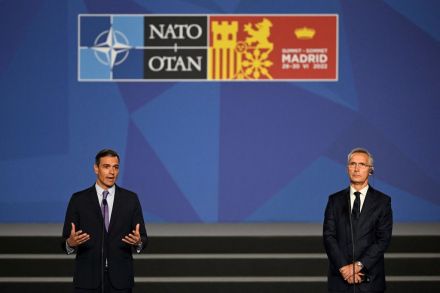
While American and Russian officials are yelling at one another in the UN Security Council chamber, another international actor has found itself at the little kids’ table: Europe. It's possible the phrase “little kids’ table” is too harsh. To be fair, French president Emmanuel Macron is at least in direct communication with Russian president Vladimir Putin and urging his European colleagues to formulate a joint European negotiating position on the Ukraine question. France is also a chief mediator of the Normandy Format, which seeks to resolve the eight-year conflict in Ukraine’s Donbas region. But Macron is largely an outlier on his own continent.

America’s control over the international system is slipping

The US-led expansion of NATO in the direction of the Russian border took place when America was at the peak of its power — the "unipolar moment" — and when Russia had hit geostrategic rock-bottom. The global balance of power has changed since then, and that helps explain what is happening now. Vladimir Putin is correct when he argues that, since the collapse of the Soviet Union, the United States and its Western allies have taken advantage of Russian weakness. It may sound simplistic, but back then in the immediate aftermath of the Cold War, American policymakers did a lot of things just because, well, they could do them. And then they created geostrategic narratives to justify what they wanted to do.

biden putin

The next North Korea crisis has begun

While the world is captivated by all things Omicron and Russia, North Korea is once again back on the world stage. And that can only mean one thing: bigger and badder missile tests. None of this should come as a surprise. North Korea’s leader, Kim Jong-un, has announced to the world on numerous occasions that he will continue to test such weapons, even as his nation suffers from a “food problem.” Kim, his father, and his grandfather have been marching towards a fully viable nuclear deterrent for decades now. What is new is that Kim has declared that he will not abide by the promise he made to not test certain weapons platforms that directly threaten the US homeland — what drove the near-nuclear showdown with President Donald Trump back in 2017.

north korea

Save Ukraine by admitting Georgia into NATO

As the Ukraine crisis continues to develop, it has become impossible to avoid mentioning Georgia and its relations with the West. This is not only due to the similarities in the two countries' geopolitical circumstances, but also because Georgia is explicitly mentioned with Ukraine in President Putin's demands to the West to forego any future NATO expansion. Like Ukraine, for years, Georgia has sat in the uncomfortable position of being pro-Western without enjoying the protections afforded by membership in both NATO and the European Union. Yet a country that was once a staunch Western ally has become mired in accusations of authoritarianism, behind-the-scenes governance, and covert pro-Russian sentiment. Georgia and Ukraine have occupied a unique position in the post-Soviet space.

vladimir putin alexei navalny

Trump was tougher on Russia than Biden

Vladimir Putin’s new year is off to quite a start. The Russian autocrat isn't just massing troops on the Ukraine border, kicking off a diplomatic panic in European capitals and in Washington. In recent days he's also backed a refugee stand-off with Poland, helped Kazakhstan's strongman squelch pro-democracy protests, maintained a presence in Assad’s Syria, established new footholds in Mali and Central African Republic, cozied up to communist China, and, in a nod to Khrushchev, hinted he might build military infrastructure in Cuba and Venezuela. What's remarkable about this geographically expansive, chaos-inducing, dangerous spectacle is that it was entirely avoidable. Mr. Putin is no cipher.

Don’t go to war with Russia over Ukraine

With shocking speed, talk in Washington has shifted from disunity among the Democrats and Joe Biden’s unhappy first year to possible war in Europe. The Putin government is reinforcing units poised to invade Ukraine. Washington is sending weapons to Kyiv. The United States and United Kingdom have begun to evacuate embassy personnel. President Biden is considering sending additional troops to garrison NATO member states. But for what? Why is the United States so thoroughly entangled in a conflict not its own? Not for reasons of history Throughout most of America’s relatively short existence, Ukraine was part of either the Russian Empire or Soviet Union.

ukraine

Russia may very well invade Ukraine

The United States is doing what it can to deter Russian President Vladimir Putin from ordering another invasion of Ukraine. Despite the cool and collected persona that Ukrainian President Volodymyr Zelensky is trying to present to his people, the White House still believes Russian military action is "imminent.” The Biden administration recently put 8,500 American troops on alert for deployment to Eastern Europe. Washington has spent the last several weeks trying to convince the Kremlin that any incursion into its neighbor would be costly. On Tuesday, the US sent a third shipment of lethal equipment to the Ukrainian military, including 300 additional Javelin anti-tank missiles. This comes on top of the 200,000 pounds of lethal aid that had already been provided by Washington.

Russia is the lost great power

Lost in the endless debate about whether Russia will invade Ukraine is the real reason that Moscow — armed with nuclear weapons and one of the most advanced militaries on the planet — feels so threatened by its neighbors, the NATO alliance, and ultimately the United States. While the expansion of NATO in the 1990s plays a big role, it is Russia’s everlasting internal debate about its place in the world that is the real source of tension. It's a historical black hole no one wants to get sucked into, but unless resolved it has the potential to be a source of armed conflict the likes of which Europe has not witnessed since World War II. Geography and history are both a blessing and a curse for Russia.

Will the old world order end in Ukraine?

As Russian troops encircling eastern Ukraine are preparing to attack, western leaders are bracing for a Russian invasion while struggling to maintain a united front. Following the fallout of peace negotiations and numerous deterrence measures that appear to be inconsequential, French President Emmanuel Macron has called on the EU to conduct its own dialogue with Russia and forge its own plan for security and stability. It’s an indication that most European nations are tired of being sidelined during negotiations and reluctant to impose harsh sanctions against Russia, especially since it could risk a gas shortage that would impact recovering European economies.

chinese meddling
china ccp

How China meddles in American academia

"Congress has dropped language from a must-pass bill governing US defense policy that would have effectively prevented US scientists from participating in Chinese programs aimed at attracting foreign scientific talent,” reported Science, the journal of the American Association for the Advancement of Science (AAAS) in December. The journal cautions, however, that the provision may reappear in another bill. The AAAS is the most authoritative voice for American scientists. It has generally opposed any restrictions on relations between US academics and China, and favored the US government’s stepping back from investigating and prosecuting scientists for lying about their service to China.

camus

The other Camus

Nearly two-thirds of French citizens say they fear that Muslim immigrants threaten white Christians with “extinction.” That bodes well for Éric Zemmour, France’s ubiquitous right-wing polemicist, candidate for its presidency — and prominent popularizer of the concept of le grand remplacement, the conspiracy theory that a cabal of Jews and globalist elites are conniving to “replace” Europe’s native population with Africans and Arabs. This paranoid thesis has inspired white supremacists across the world, and is an increasingly popular import on the American right. The man who coined le grand remplacement is the seventy-five-year-old novelist and travel writer Renaud Camus — no relation to Albert, but a kind of philosopher nevertheless.

What does Russia hope to achieve in Ukraine?

President Biden said this week that a “minor incursion” of Russian troops into Ukrainian territory would not bring about the severe economic sanctions the White House threatened in response to a “significant invasion.” His counterpart in the Kremlin can probably hardly believe his luck. Effectively, Vladimir Putin has been given carte blanche by the West to launch military operations against Ukraine. Of course, the fact that there is no definition of what constitutes a “minor incursion” gifts the White House a preemptive get-out clause from having to truly confront Moscow.

ukraine

Europeans are still free-riding off American security

Remember how Washington’s foreign policy establishment and their media echo chamber bashed the “isolationist” President Donald Trump for abusing, humiliating and making life miserable for our close European allies, in the process obliterating the “liberal international order”? Remember how some of the Europeans responded? Germany’s Angela Merkel declared “a new chapter” in US-European relations, saying that Europe “really must take our fate into our own hands.” France’s Emanuel Macron stated that Europeans need to stop “being naïve,” and assert their strategic independence from the US. What happened? Nothing. Here we are, three decades after the end of the Cold War, and it is déjà vu all over again between Washington and Moscow.

angela merkel
putin

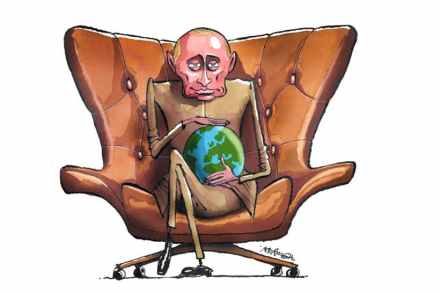
Can Putin ever be stopped?

Vladimir Putin has been the most effective practitioner of Realpolitik for the past two decades. With an economy about the size of Italy’s, and just as corrupt, he has accomplished his most ambitious goal: returning Russia to the status of a Great Power. Now he’s thrown his chips on the table once more, launching a massive troop build-up on the border with Ukraine and sending still more into Belarus (for “joint exercises”), positioning them just north of Ukraine’s capital of Kyiv. Although the numbers don’t appear large enough to conquer all his neighbor’s territory, they are large enough to push through the eastern region (the one bordering Russia) and form a land bridge to Crimea, which Russia conquered in February 2014.

A view of the U.S. Capitol (Photo by Drew Angerer/Getty Images)

Capitol Hill Club falls out with conservative clientele

The Capitol Hill Club, home to DC's most high-profile Republicans since the 1950s, is on thin ice with its conservative members. Cockburn, who has enjoyed many a cocktail inside the oak-lined walls of the club, is hearing that Republican members of Congress are incensed at the Capitol Hill Club for complying with DC mayor Muriel Bowser's vaccine mandate. As of January 15, DC restaurant and entertainment venues are required to check that all of their patrons are fully vaccinated. According to a GOP insider, House Minority Whip Steve Scalise warned the Republican conference at a meeting last week that members should not go to the Capitol Hill Club if they are not prepared to show their papers. In essence, comply or be quiet.

China is the new evil empire

History does not repeat itself, but it does rhyme. In the 1980s, the gravest threat to America’s freedoms came from the Soviet Union, which President Ronald Reagan called the Evil Empire. That rhymes with today’s equally serious threat from Communist China, the New Evil Empire. Xi Jinping rules China with absolute power, like an emperor. He has complete control over China’s sole political party, the CCP, the government, the economy, the military, the police, the judiciary, and the media. Even over religion: Christian churches must display Xi quotes instead of the Ten Commandments.

America still won’t risk a war with Russia over Ukraine

Anybody who thought this week’s intense diplomacy between American, European, and Russian officials would magically resolve the ongoing crisis in Ukraine should lie down until the feeling passes. Crisis diplomacy isn’t a walk in the park; if anything, it’s a slow-moving car ride through rush-hour traffic, with plenty of speed bumps along the way. On Monday, January 10, Washington and Moscow met for a round of discussions in Vienna to sound each other out and present their list of seemingly endless grievances. After eight hours of talks, both delegations left the room with, coincidently, similar assessments as to how it all went.

The coming war with…um…Canada?

We begin today by heading north, past Vermont, over Winterfell, above the Arctic Circle, beyond the part of the map labeled “monsters be here,” and into Canada. There do we find a writer named John Ibbitson, who recently published a piece for the Toronto Globe and Mail warning that American democracy may not be long for this world. “If the next presidential election reveals the U.S. hurtling toward possible violence and autocracy,” Ibbitson asks, “should Canada try to intervene?” Before an entire nation of 330 million bursts out laughing, consider that Ibbitson isn’t suggesting Canada militarily intervene on American soil. Still...for us Yanks, that is the image that springs to mind, isn't it?

Antony Blinken’s soundtrack to failure

Antony Blinken, the secretary of state and first guitarist, has broken with the tired protocols of the past, faced the complexities of the multipolar twenty-first century world, and issued a Spotify playlist. This may be a better way of reaching new audiences than bombing them. But shouldn’t public figures be judged on their records, not their record collections? “The thread that runs throughout my life is probably music,” Blinken told Rolling Stone last year as he meditated his mixtape. Hitler would probably have said the same about painting had Rolling Stone been around to profile the Viennese amateur who was turning the art world upside down.

Why we keep getting North Korea wrong

Kim Jong-un is focused first and foremost on managing his country’s lingering food crisis. But that doesn’t mean the thirty-seven-year-old dictator has any intention of siphoning off resources from North Korea’s weapons programs. He made that abundantly obvious this week, when Pyongyang conducted its second ballistic missile test using hypersonic technology in four months. According to North Korean media, the missile traveled 435 miles to the east, hitting the designated target. The response to the latest test was predictable. South Korea called an emergency meeting to discuss the launch. The US State Department quickly issued a statement to reporters reminding them that the tests are a violation of multiple UN Security Council Resolutions (as if North Korea cared).

north korea