Society

Why the BBC keeps on blundering

The dust is settling on the BBC’s latest crisis over its sloppy editing of a Donald Trump video, but it won’t be long before the next blunder. The reality is that every BBC crisis is epiphenomenal: the anger that periodically flares up against the BBC is rooted in our frustration that it fails to do the impossible and provide cultural order and unity. This is hard to articulate, so we magnify secondary issues like the pay of its top presenters, and perceived bias in the news. In doing so, we ignore the real problem: that the BBC can’t win. We can no longer trust the BBC to shelter us from

France finally agrees to intercept Channel migrant boats – but there's a catch

After months of pressure from Britain, France has agreed to begin intercepting small boats in the Channel. The move comes after Keir Starmer wrote a letter urging Emmanuel Macron to support the proposal, telling the French leader that we ‘have no effective deterrent’ for migrants hoping to get to the UK illegally by sea. As reported by Le Monde, Starmer insisted: ‘It is essential that we deploy these tactics this month.’ France will intervene only before traffickers have picked up passengers The plan will see French security forces allowed to stop the small boats while they’re at sea, the caveat being that France will intervene only before traffickers have picked up

Lara Brown, James Heale, Sam Olsen & Toby Young

19 min listen

On this week’s Spectator Out Loud: Lara Brown reports on how young women are saying ’no’ to marriage; James Heale takes us through the history of the Budgets via drink; Sam Olsen reviews Ruthless by Edmond Smith and looks at Britain’s history of innovation and exploitation; and, Toby Young questions the burdensome regulation over Politically Exposed Persons (PEPs).  Produced and presented by Patrick Gibbons.

I’m a Christmas pudding convert

I used to be a Christmas pudding denier. I couldn’t see the attraction of a dense pudding made mostly of currants; frankly, I’d rather have a trifle. Of course, I was wrong: I was judging Christmas pudding by poor examples, those that sat on the edge of a Christmas lunch tray at school or were half-heartedly doled out by other pudding sceptics (I’m looking at you, Mother). My conversion came about thanks to a party – a Christmas pudding party. Not a party for eating Christmas puddings but rather one where the guests made Christmas puddings. It was hosted by my friend Kate and I went along out of love

This is Hong Kong's Grenfell

Hong Kong is reeling from the tragedy of a devastating fire which ripped through seven 30-storey apartment blocks in a crowded housing estate two days ago. The death toll so far is 128 and still rising. At least 76 have been injured and almost 300 are missing. Stories abound of survivors trapped in flames and smoke. The death toll so far is 128 and still rising. At least 76 have been injured As is so often the case in such tragedies, the emergency services responded with inspirational courage. Firefighters battled the blaze for hours, medics treated the injured, and rescue workers pulled survivors from smoke-filled stairwells. At least one firefighter

Nigel Farage must come clean about his Dulwich College schooldays

The allegations concerning Nigel Farage’s conduct as a schoolboy have returned with unusual force, not because the country is suddenly preoccupied with the internal sociology of Dulwich College, but because Farage now leads a party that sits at the centre of the national debate. Any claim about his past, however old and recycled, is inevitably refracted through the lens of present politics. The BBC reports, the Guardian testimonies, and Farage’s own responses raise a set of questions that extend far beyond the details of adolescent behaviour. They touch on character, trust, political identity and the delicate task facing any new political movement seeking broad public legitimacy. If Farage admits he

What my run-in with Michael Gove can teach Labour MPs about digital ID

There are times in politics when a feeling of dread overwhelms. When your boss wants to go down a path you think is wrong. Spring 2021 brought one such moment for me, as vaccine passports were dangled as the key to our pandemic freedom. I suspect the Technology Secretary, Liz Kendall, experienced a similar feeling when told to front the Prime Minister’s mandatory digital ID plan. The OBR revealed this week that that plan will likely cost taxpayers a staggering £1.8billion. Ministers must realise that Britain could do without Keir Starmer’s enormously expensive, unpopular and troubling scheme. But will any of them yet be telling their leader? My suspicion is

France's military service rollout is about more than Russia

National service is being brought back in France. Emmanuel Macron used a visit to a military base in the Alps on Thursday to outline his initiative. The service will begin next year for a term of ten months, and it will be voluntary. Macron’s plan is being viewed as a response to the Russian threat, but for many French people there is a greater – and far closer – menace than president Putin. This view is shared among the silent majority and explains why Le Pen’s party now has the most seats in parliament Macron set a target of 50,000 annual recruits by 2035 with most aged 18 and 19,

Defending marriage, broken Budgets & the 'original sin’ of industrialisation

38 min listen

‘Marriage is the real rebellion’ argues Madeline Grant in the Spectator’s cover article this week. The Office for National Statistics predicts that by 2050 only 30 per cent of adults will be married. This amounts to a ‘relationship recession’ where singleness is ‘more in vogue now than it has been since the dissolution of the monastries’. With a rising division between the sexes, and many resorting to alternative relationships like polyamory, how can we defend marriage? For this week’s Edition, host William Moore is joined by political editor Tim Shipman, assistant editor – and parliamentary sketchwriter – Madeline Grant and the Spectator’s diary writer this week, former Chancellor and Conservative MP Kwasi Kwarteng. As

Rachel Reeves may have just killed the Great British pub

It is just after tea-time on Budget day, and my pub is already half-empty. A few hours ago, Rachel Reeves stood up and, in the name of ‘fiscal responsibility’, drove the final nail into what remains of Britain’s hospitality industry. By failing to address the devastation that Labour’s decision to hike employers’ National Insurance did to pubs, restaurants and hotels, it could be game over for hundreds of beloved locals. Reevesageddon is not just a Budget. It is a requiem. Raise one last pint while you still can There was little in the way of good news for us publicans in the Budget, but there was plenty to make us

Reeves' Budget could mark the finish line for British horse racing

When Rachel Reeves confirmed in her Budget that horse racing will be exempted from rises in gambling taxes, there were cautious celebrations. Racing Post editor Tom Kerr described it as ‘a reprieve for the sport’s battered finances’. Trainer Mark Walford, referring to the industry’s ‘Axe the Tax’ campaign, told the trade newspaper: ‘Racing as a whole has got behind the campaign, and it shows what we can do.’ This was a disastrous – potentially existential – day for racing My advice would be to put the champagne away. This was a disastrous – potentially existential – day for racing. The tax exemption is essentially meaningless in the context of the broader

What’s Trump got to do with the price of turkey?

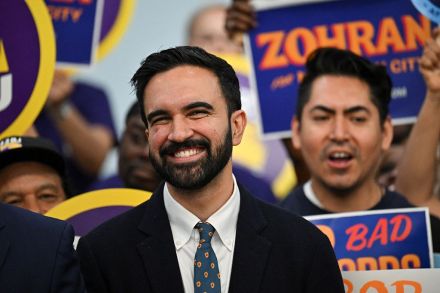
During last week’s excruciating Oval Office make-nice between an insultingly buddy-buddy American President and a fraudulently obsequious New York City mayor-elect, the contest was over which pol was the more patronising. At one point Trump graciously granted his petitioner permission to call him a ‘fascist’ while clearly implying the guy’s OTT campaign rhetoric had been embarrassing. Donald Trump sat regally on his throne, patting Zohran Mamdani’s arm while commending ‘Attaboy!’ as if petting a golden retriever that had fetched a ball. For his part, Mamdani stood mutely by the Resolute desk with cartoonish humility, hands over crotch. This cowed performance of beta-male submission was meant to disguise who’d got a

Why are we so suspicious of magpies?

I started counting magpies during my brief, doomed time as a history teacher. Trudging in every morning, the grim prospect of Weimar Germany with the Year 11s ahead, I began to take note of the number I spotted. If, on first sight, I spied only one, I knew I would have a terrible day. If I saw two, it would be lovely. If I spotted one, saluted furiously, said ‘Hello Captain’, told him the date, and then saw two, I might be all right. I’m not usually superstitious (I’m pessimistic enough to assume that everything usually turns out for the worst), so I’m not sure where this habit came from.

The art of owning up

Though Rebecca Culley is obviously a wrong ’un – having stolen £90,000 from her dear old gramps while pretending to care for him and only spend a minimum of his cash on ‘bits and bobs’ – I couldn’t help feeling a flash of admiration for her. When she was caught bang to rights, she diagnosed herself as a ‘spoilt brat’. At last, a person with lousy personality traits – in this case acquisitiveness, laziness and dishonesty – has refused to reach for some bogus medical synonym to justify their behaviour and has used words which all of us can read and think: ‘Yep, sounds about right.’ In return the judge

What the newspapers reported in ancient Rome

Nero’s personal amphitheatre, recently discovered near the Vatican, was praised to the skies in the ancient Romans’ ‘newspaper’. The historian Tacitus commented drily that it ought to carry stories of much greater historical merit. The ‘newspaper’ was the Acta Diurna (‘Daily Events’), written on papyrus by actuarii, posted up on an Album (whiteboard) in the Roman forum and elsewhere, and left for a few days before being taken down and put into storage for future reference (no copies survive). It was Julius Caesar’s ‘very first act as consul (59 bc) to ensure that the proceedings both of the Senate and of the people should be published daily’. Covering a huge

Letters: Britain’s energy policy is unsustainable

Unsustainable energy Sir: Sir Richard Dearlove (‘Net cost’, 22 November) succinctly sums up the views of many of us who cannot understand the whole lemming-like net-zero policy. This leap into the abyss was precipitated by Boris Johnson and the torch is now carried by Ed Miliband, who seems to have carte blanche to make matters worse. The destruction of our automobile and energy industries in terms of GDP and Treasury receipts is mindless – more so in a country producing less than 1 per cent of the world’s CO2 emissions. Interestingly, Matt Ridley’s article in the same issue (‘Star power’) gives longer-term hope regarding fusion energy generation, but it will be

The theatre isn’t a thinktank

Readers tend not to approve of rows between columnists, but I must take issue with something Lloyd Evans wrote in ‘No life’ last week. Our theatre critic claimed that his companionship ‘is very low calibre’, that he ‘can’t match anyone in conversation’ and that he ‘can barely recall making a witty or worthwhile comment’ in his life. I should like to disagree. Some time ago at a party in The Spectator’s garden I got talking with Lloyd and he said one of the most interesting things I’d heard in years. I had gone over to congratulate him on summing up the general awfulness of most of George Bernard Shaw’s plays

Could ‘Your party’ become the shortest-lived political party in British history?

Party poopers ‘Your party’ holds its inaugural conference this weekend in a state of internal wrangling. Could it become the shortest-lived political party in British history? It was registered on 30 September, meaning it will have to survive until 6 June next year to outlive Change UK – the anti-Brexit party launched in February 2019. It was formally registered on 15 April that year and dissolved on 19 December after flopping in the general election. Other failed political start-ups lasted a surprising length of time: — Veritas, a Eurosceptic party founded by former Labour MP Robert Kilroy-Silk in 2005, was eventually merged with the English Democrats in 2015. — The