The Battle for Britain | 6 December 2025
A quote (ODQ, 8th edition) runs around the grid’s perimeter, beginning at 3. It is preceded by the first name of its author, whose surname is an unclued entry. Four further unclued entries consist of two leaders, a receptacle, and its contents; letters of the five unclued entries unchecked by clue answers may be rearranged to spell out ‘BASK IN CHANTS’. Two sides, in short, should be highlighted. Across 10 Regularly avoid man in exotic female attire (2,3) 11 Returned home within a day for baby’s protection (6) 14 Naked boozer, close to collapse (4) 16 They sharpen points less clumsily (10) 17 Instincts + body = who one is
The unclued lights are first names of authors known by their initials: W.H. Auden (31), A.S. Byatt (40,2), T.S. Eliot (7,10), C.S. Lewis (35,6A) and P.G. Wodehouse (34,4). First prize Marcus Clissold-Lesser, Ramsgate, Kent Runners-up Jenny Mitchell, Croscombe, Somerset; Alison Gillam, Knotty Green, Buckinghamshire
There’s tetchy, and then there’s Ben Stokes ‘tetchy’ – pulling out his mic and stomping off cursing, or so I’m told, after Jonathan Agnew asked a disobliging question. Admittedly it’s hard not to feel some sympathy for Stokes, an inspirational leader on the pitch who had just seen his team skewered in two days in Perth in one of the most brutal (and thrilling) Ashes Tests in history, and then had to do a live BBC interview. But this was the ever-courteous Aggers, for heaven’s sake, the nearest thing to a secular saint for TMS. There’s no need for a four-letter outburst. He was asking what were standard if faintly
Q. My godfather, who has managed to get me a valuable internship in the Far East, has also sent me a business-class ticket to fly out there in the new year. I have seen how much the ticket costs (£3,800) and would much prefer to cash it in, go economy (£694) and spend the balance when I am there. But would it be rude to suggest this? – Name and address withheld A. First check with your godfather that he meant to buy you a business-class ticket – his secretary may have done it in error. Then offer to go economy. If he refuses, then make the most of the
Elizabeth II was a god and a commodity: now she is gone it is time for posthumous exploitation. Lilibet’s is a restaurant named for her childhood nickname at 17 Bruton Street, Mayfair, on the site of the house where she was born. It was inevitable that Elizabeth II would eventually get a personal restaurant. Princess Diana ate in the Café Diana – English breakfasts and kebabs – on the Bayswater Road and George VI is the inspiration for the superb Guinea Grill – mostly sausages, or rather it is the sausages I remember – near Lilibet’s. Because that is what the British do to our monarchs and their intimates. We
‘Do you know what vibe coding is, darling?’ I asked my husband. ‘What do you take me for?’ he replied. ‘Or 67?’ ‘Ah, I do know that the Prime Minister had to apologise for leading a classroom of little children in a series of hand moves to that one. But I’ve no idea what it means.’ Thus was my suspicion confirmed that most ‘words of the year’ are far from general concern. Vibe coding, some sort of AI software development, is Collins Dictionary’s new Word of the Year; 67 (pronounced ‘six seven’), which has no agreed meaning, is Dictionary.com’s. To me, a far more interesting word is fudge. It is
I was in Singapore last week, a city that hums with energy. It feels efficient, cosmopolitan and yet personal – if you know where to look. My schedule was packed, but in the best way. First stop: Jamie Dimon, JPMorgan’s chair and CEO, in conversation about the state of the world. Jamie was vintage Jamie – articulate, forthright, refreshingly unscripted. In a world drowning in platitudes, his candour was invigorating. He spoke about resilience and leadership that doesn’t flinch when the winds change. Focus on the mindset, not just the markets, he said. Then came the Bloomberg New Economy Forum. I sat on a panel about global debt sustainability, a
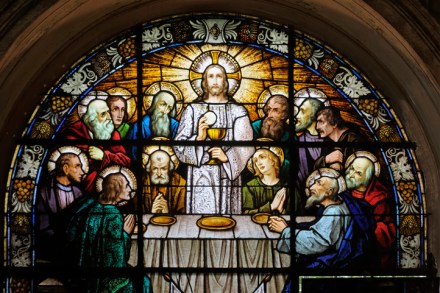
The Pope is visiting Lebanon and Turkey. Will anyone be raising the vexed question of the Latin mass and sacraments with him and asking him exactly why it is so vexed? Though Jesus spoke Aramaic, the New Testament first appeared in Greek in the 1st century ad because that was the common language of the Mediterranean. It remained the language of the liturgy until Pope Damasus I (d. ad 384) invited St Jerome to translate the whole Bible into Latin (the Vulgate: vulgatus, ‘widely used, common’). The Roman empire collapsed in the 5th century ad and local languages started replacing Latin, but the Roman liturgy remained standard in western Europe.
Sir Tom Stoppard, who died last week, never wrote a memoir, but he did sort of speak one. Just over ten years ago, he told me that he and his new wife, Sabrina Guinness, had become tenants of an old rectory in Dorset. I asked him if he would therefore speak as guest of honour at the AGM of the Rectory Society, a fan club for existing and former clergy houses which I invented in 2005. The AGM always takes place in a central London church, and in 2015, the year I invited Tom, it was held in the Queen’s Chapel beside St James’s Palace. Beyond expressing a tepid wish that
In August, The Spectator began to investigate allegations that Harry Shukman, a 33-year-old freelance journalist, had used a fake British passport as part of a two-year undercover investigation into the far-right in Britain which was sponsored by Hope Not Hate. We published an article about this in our 6 September issue titled: ‘Dirty tricks: the sinister tactics of Hope Not Hate.’ As a result of correspondence from their lawyers, we now know the passport was not ‘fake’ at all: the true story is even more interesting. Whatever the technicalities of the deed poll process, the essential question is an ethical one Shukman’s 12-month undercover investigation led to a series of
Watching David Dimbleby watching the royal family, I am instantly reminded of the BBC’s other royal David. It is pure Attenborough as he examines the exotic plumage and rituals of rex Windsorianus in its natural habitat. In this week’s first episode of What’s the Monarchy For?, a three-part study of the sovereign for BBC1, Dimbleby examines royal power, engagingly prodding and poking fun at both sides. However, it ends as it starts, with our host still scratching his head. The monarchy is the first thing much of the world thinks about when it thinks about Britain Perhaps we will have an answer by the end of the final episode. For
Too much information. That’s what you’re about to get. I wouldn’t read another line if I were you. I will be talking, at length, about my prostate and, by extension, my old fella and why I will not let the medical clergy anywhere near either of them, not the private medics or the chaotic maniacs who work for the NHS. I don’t mind whipping it out for you, though – and so this is an article which is both repulsive in its personal revelatory details and will also, if anyone takes it seriously, result in 230 premature deaths over the next decade or something. I don’t think it’s going to
Home What Rachel Reeves, the Chancellor of the Exchequer, told voters about the economy in a special press conference on 4 November was at odds with what the Office for Budget Responsibility had told her, Richard Hughes, its chairman, explained in a letter to the Commons Treasury Committee. Asked directly by Trevor Phillips on Sky if she had lied, Ms Reeves replied: ‘No, of course I didn’t.’ Sir Keir Starmer, the Prime Minister, said: ‘There’s no misleading there.’ Chris Mason, the BBC political editor, concluded: ‘On one specific element of what the Chancellor and the Treasury told us before the Budget, we were misled.’ Mr Hughes then resigned as the
Many years ago, and well retired, I was working in my study when the phone rang and a voice said: ‘This is Tom Stoppard. David West put me on to you.’ West was professor of Latin at Newcastle University and Tom called him when he had queries about Latin. But he had a question about the ancient Greeks which David could not answer, so he suggested Tom try me. I have no memory of what the question was, but my answer must at least have satisfied him because he continued to throw the odd leg-break my way. To give some idea of his range of interests, on one occasion he
Many mansions Does a two-bedroom flat worth £2 million deserve to be called a ‘mansion’? — The word ‘mansion’ is borrowed from the old French mansion, which means any old house. And so it was in English until the 18th century. It also had associations with a home lived in by a priest. — The first instance of ‘mansion’ being used specifically for a grand home was in 1512, according to the OED. In 1865, the word was being applied to lodging houses in Brighton, while the Westminster Gazette in 1893 defined it as a house with a back staircase. By 1901 blocks of flats in London were being called
On the Live Aid charity single, ‘Do They Know It’s Christmas’, Bono sings the (somewhat incongruous) line ‘Well tonight, thank God it’s them instead of you’. Although he is referring to starving children dying in poverty rather than well-heeled Americans appearing on television, much the same sentiment applies to the unfortunate ‘special guests’ who have been corralled into the latest (and, presumably, last, unless the ratings pick up dramatically) episode of With Love, Meghan, the Duchess of Sussex’s Netflix-funded wallow in self-regard and vanity. This instalment is festive-themed, and comes with all the joyful élan of a drunken department store Santa placing a lump of coal in a child’s stocking.
Oh God, another junior doctor strike. That seems to be the feeling of the country and of the junior doctors I’ve spoken to. Certainly it’s the feeling of the consultants, like myself, who will be covering for them. Why the BMA has called another strike is clear. They haven’t got what they wanted, and their current mandate expires in early January. What is less clear is whether they should be striking at all. During the last strikes I wrote that the majority of juniors weren’t striking chiefly for a pay rise, but because their jobs and prospects of career progression are being allocated to foreign doctors who, data shows, perform
Should the police disclose the ethnicity and background of suspects in high-profile crimes, and how soon should they reveal this information? In the year since the Southport unrest – in which migrant hotels were attacked after online claims the attacker had been an asylum seeker – the British state has had to ask itself this question. While the ethnicity and nationality of criminal suspects were routinely talked about in the 1980s, since the 1999 Macpherson report into ‘institutional racism’ in the Metropolitan Police, with its concerns racial stereotyping, the police have become far more reluctant to do so. When it came to Southport, for days we were only allowed to know that
I am not sure there are numbers small enough to capture the net literary loss to Britain of Sally Rooney’s books no longer being published here. Nonetheless, it seems that the would-be criminal bestselling author is banking on the withdrawal of her books and the television based on them being a huge deal – one major enough to shift Home Office policy in favour of Jew-haters at home and abroad. What a heavenly idea: the most politically odious, witless writer in generations being locked up till I’m almost a pensioner Rooney, a keen supporter of Palestine Action, now a proscribed terror group in the UK since breaking into RAF Brize Norton