Scotland

Salmond’s critics can’t ignore his lasting legacy

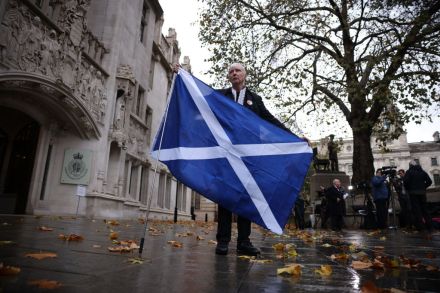
When he lost his Gordon seat in the 2017 general election, Alex Salmond told his count and those watching – friend and foe – that ‘you’ve not seen the last o’ my bonnet and me’. The line comes from Sir Walter Scott’s Bonnie Dundee, an ode to John Graham, the 1st Viscount Dundee, who led the 1689 Jacobite uprising to restore James VII and the House of Stuart. Quoting the lyric was pure Salmond. Not only was he fond of weaving poetry into his public statements – an art sadly lost to most political rhetoricians – it reflected his self-mythologising as a modern-day Scottish rebel against the British establishment. Salmond saw himself and his politics in romantic terms.
Alex Salmond was an unstoppable force of nature

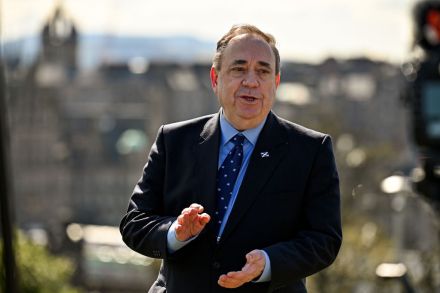
It is hard to believe that I will no longer wake up on Monday mornings to the sound of Alex Salmond on the phone, either berating me for my latest offence against journalism or telling me what I should be saying about the most recent political scandal. The former SNP leader and First Minister of Scotland was of the old school: combative and relentless, always on the phone, never stopping, never at rest, a 24/7 politician. We always said he would never cease promoting the cause of Scottish independence while he still had breath in his body. He didn’t. Alex Salmond died in North Macedonia, shortly after giving a speech. He was the most astute, gifted, and energetic politician of his generation The Scottish political world is in genuine shock.

Scotland’s doctors ‘half way’ to full pay restoration

Junior doctors in Scotland – now called 'resident' doctors following a recent name change agreed by the British Medical Association and the UK government – have received more good news this morning. Humza Yousaf pushed by the prospect of strike action last year by offering medics a 12.4 per cent pay rise and Scotland's doctor have today been offered another increase of 11 per cent over 2024/25. The doctors' union is recommending that staff vote for the rise, and now it's up to medics to accept the latest pay uplift presented to them. The cumulative rise would see an uplift of 8.5 per cent backdated to April this year, with a further 2.3 per cent boost implemented from 1 October.

Pro-life buffer zone residents could face £10,000 fines

Welcome to the land of the unfree – otherwise known as Scotland. John Swinney's SNP government have laid out its rules for anti-abortionists north of the border, and the measures are even worse than many campaigners first imagined. Buffer zones – in which pro-life activists cannot protest – were introduced at the end of September after MSPs passed the Abortion Services (Safe Access Zones) (Scotland) bill earlier in the year. And it now turns out that if residents living within these exclusion areas, within 200 metres of abortion clinics, hang protestations in their windows, they could be fined up to £10,000. Golly.

The SNP is in a donations row of its own

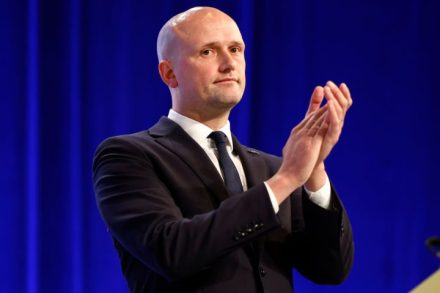
The thing about being holier than thou is that you actually have to be holier. Stephen Flynn, the SNP’s leader at Westminster, has made much of Sir Keir Starmer’s freebie woes. The SNP called for an investigation into Lord Alli’s donations to the Prime Minister and Flynn used a newspaper column to observe: ‘Of course, it’s important to say that such clothing gifts come with no attachments. No, none at all. They are all just from the kindness of a filthy-rich donor’s heart. I mean, who doesn’t have friends like that?’ Fortunately – and unfortunately – for him, Labour donors aren’t the only generous contributors in politics.

Politics needs more Tom Tugendhats

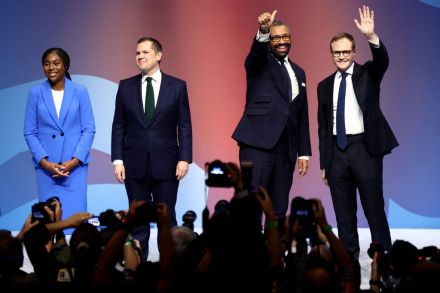
'I’ve got you a Tom TugendHAT,' a friend texted from this year's Conservative party conference. I haven’t received it yet, but I’ll save it for Tom’s next campaign. I’m no Tory – though I’ve had plenty people try and dispute that – but if we’re to have a Conservative party then it should have sensible people like my good friend Tom at the top. And while, on this occasion, he won’t be in the leader’s chair, I have no doubt that he will play a significant part in his party’s revival. You don’t have to be a Conservative to understand that we all have skin in the game when it comes to who the party’s next leader is, even if we don’t get a vote.

The SNP fraud probe has gone on far too long

So here’s a thing. Last week a prominent defence lawyer broke ranks and declared that the police investigation into alleged misuse of SNP party funds – Operation Branchform – had been going on too long and should be wound up pronto. Scottish criminal defence lawyer Thomas Leonard Ross KC told Sky News the probe 'cannot go on indefinitely'. 'Once somebody is charged then they have the right to a trial within a reasonable time,' he said. Many Scottish politicians have been saying this privately too – not all of them nationalists.

Sarwar faces mini-rebellion over winter fuel payment cuts

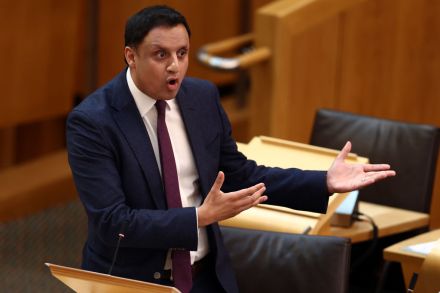
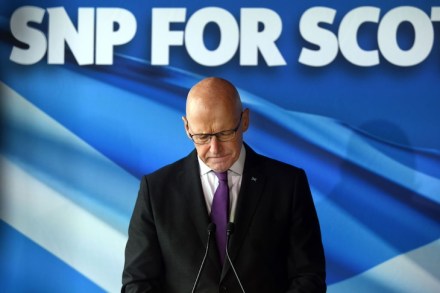
To Holyrood, where Scotland's politicians have overwhelmingly voted to oppose the Labour government's winter fuel payment cuts. 99 MSPs voted in favour of the motion tabled by SNP First Minister John Swinney, which called on the UK government to 'reverse the introduction of means testing for the winter fuel payment' – and in a sign of cracks emerging in the party, it transpires that Scottish Labour leader Anas Sarwar has faced a mini-rebellion over the matter. Oh dear. Of Scottish Labour's 22 MSPs, only 16 voted on today's motion. Earlier today, rumours began to circulate that several of Sarwar's MSPs were expected to break the whip and back the SNP – and it has now come to light that two did.

Yousaf under fire for blasting officials in Covid WhatsApps

All has not been well in the Scottish government for some time – and the latest revelation that former first minister Humza Yousaf was slamming civil servant press officers in WhatsApp chats is hardly likely to repair relations. It transpires that hapless Humza and one-time national clinical director Jason Leitch turned on their own officials in Covid message exchanges, uncovered by the Scottish Sun via Freedom of Information request. Oh dear. In a rather ironic twist, it has emerged that Yousaf complained he was 'not hugely impressed' by the efforts of the comms officials working in the health department, before promising to, er, 'sort it out'. Perhaps he should've taken a harder look at his own governing style, eh?

The SNP’s controversial social care plan hits another roadblock

If you need proof that the SNP’s modus operandi in government is to make it up on the hoof, consider the party’s plan for a National Care Service (NCS). Announced by former first minister Nicola Sturgeon, the NCS was to be a radical – even visionary – solution to growing pressure on both the National Health Service and the social care sector. By bringing sharp focus to the needs of a growing elderly population, the new care service would not only mean immediate improvements to the lives of those it was established to serve, it would also end the use of hospitals as unofficial care homes. The argument in favour of the creation of a dedicated care service are absolutely compelling. What a terrible shame, then, that the Scottish NCS is never going to become an actual thing.

SNP police probe investigating fake company claim

Back to Scotland, where the police probe into the SNP's funds and finances continues to rumble on. Now it transpires that prosecutors are looking into findings that suggests a non-existent company was paid for refurbishment work carried out at SNP HQ. More than £100,000 was coughed up for work on a 'media suite' in the party's Edinburgh office – yet officers are probing evidence that suggests the company paid wasn't, um, real. The SNP's 2020 accounts detail the party paid £615,000 to refurb the party's offices, with the money going on upgraded furniture and tech. One source told the Sunday Mail that: One of the biggest items being looked at is a six figure sum which on paper appears to have been spent creating a media suite at the Edinburgh offices.

Scottish Tories fume over leadership rivals snubbing Scotland

Back to the Tory leadership contest which is gathering pace post-conference season. In a matter of days, MPs will cast their votes to leave just two contenders in the race, before the membership gets its say. But there is consternation about the final two among the Holyrood group – which only appointed a new leader itself last week – after growing frustration about some of the frontrunners having snubbed Scotland. How very interesting. Half of the Scottish Tory crowd – which only appointed a new leader itself last week – have publicly thrown their weight behind Tom Tugendhat, who has the backing of 16 of the party's 31 MSPs.

It’s a tough time to be Scottish

Hard-working Scots could be forgiven for resorting to a stiff drink tonight as they contemplate an extraordinary triple attack on their living standards. The minimum unit price of alcohol has risen by 30 per cent, peak-time rail tickets have nearly doubled, and the energy price cap has just gone up by 10 per cent or £149. Oh, and many pensioners have also lost their winter fuel payments thanks to Rachel Reeves, ‘the pensioner freezer’, as the Labour chancellor is being called, even by some in the Scottish Labour party. But that hike in the minimum unit price of alcohol, which adds insult to injury, is entirely down to the Scottish government.

‘Absolute chancer’: new Scottish Tory leader blasts Farage

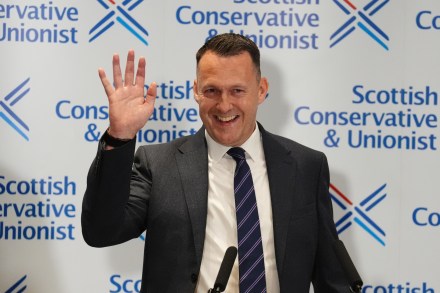
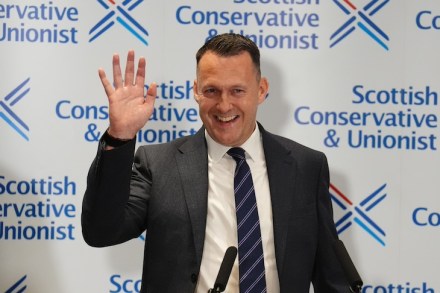
While one Tory leadership contest rumbles on, another has come to a close. Russell Findlay was made the new leader of the Scottish Conservative party on Friday – and he's enjoying his victory lap at Tory conference this weekend. At a fringe event today, the former crime journalist was keen to hammer home that his premiership will be about change – doesn't that sound familiar – and told his audience he wants to 'get down to the hard work of earning back the trust of the voters we’ve lost'. And with the recent leadership race shining a light on party infighting, he's certainly got his work cut out... But the Scottish leader couldn't resist taking a pop at his political opponents, either. And on the matter of one particular party, Findlay was pulling no punches.

Why is Scotland still tying itself in knots over gender?

Of all the self-inflicted harm to have felled politicians and undermined governments, was there ever a more curious case than that of self-ID and the SNP? In so bullishly battling the cause of Gender Recognition Reform (GRR), that would have allowed for trans-identifying people to self-declare their new gender, the SNP suffered the largest backbench rebellion of the Scottish parliament’s 25-year tenure, saw a minister defect to Alex Salmond’s Alba party, and lost two first ministers in rapid succession.       And after all such calamity, the SNP’s GRR Act was merely blocked by Westminster using a Section 35 order, a dead man’s switch designed to prevent Holyrood’s lawmakers passing incompetent bills that interfere in UK-wide legislation.

Russell Findlay becomes Scottish Tory leader

The first of two Conservative leadership contests has concluded and today it has been announced that the new leader of the Scottish party is Russell Findlay. The former crime journalist was widely seen as the party establishment favourite after former leader Douglas Ross announced he would be resigning from the post in June. Now Findlay faces the rather daunting prospect of reuniting his group after months of bad briefings mired the race in scandal. Best of luck... Ross stepped down after losing the support of his colleagues when he ousted ill colleague David Duguid in the Westminster parliamentary selection process.

SNP is not ‘Labour with a saltire’, fumes Sarwar

The general election may have been and gone but north of the border another fight is shaping up. The SNP has lost both members and support in the wake of Nicola Sturgeon's resignation, the police probe into party finances and the party's inability to find a new indyref strategy. Meanwhile, Scottish Labour under Anas Sarwar has seen its fortunes markedly improve – and even ex-SNP MPs have confessed to Mr S they see the group leader as the country's next First Minister. How very curious... Sarwar spent a lot of his time at Labour conference making moves around the 2026 Holyrood election. Speaking in Liverpool in conversation with Andrew Marr, the Scottish Labour leader tore into the current nationalist government.

Is Scottish Labour really back?

Labour’s first conference from government in 14 years might not be taking place against an ideal backdrop, with the Prime Minister and other ministers under scrutiny for accepting designer clobber and other goodies from party donors, but there is an unlikely glimmer of hope in the form of Anas Sarwar. Unlikely, that is, because Sarwar is leader of Scottish Labour and for almost a decade that great clunking juggernaut of electoral inevitability had sputtered to a halt and begun to rust. Reduced to just one seat north of the border and in a distant third place at Holyrood, the Scottish party had become an ominous lesson in how thoroughly Labour could be sidelined by a populist rival. There were times when serious Labour people wondered if the party would ever see majority government again.

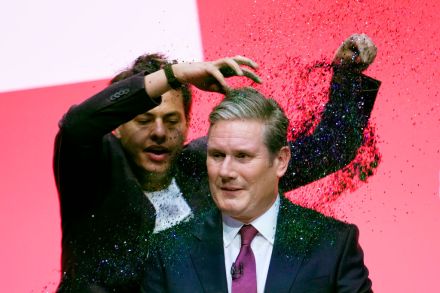
Starmer sends Glittergate warning

To Liverpool, where Sir Keir Starmer is enjoying his first Labour conference in government, against the backdrop of rather stormy weather and an even worse week of press. On Sunday night, the Prime Minister attended the Scottish Labour reception to welcome new MPs north of the border and ramp up support for his Caledonian lot ahead of the 2026 Holyrood elections, enthusiastically endorsing the Scottish leader as speculation about the fortunes of the party grows. A jubilant PM told the crowd: We've got a Labour government with 37 Scottish Labour MPs who want and are willing to stand for election. Places like that in Scotland – they don't fall from the sky. Not under the SNP's watch, anyway.

Is there any hope left for the independence movement?

As we mark 10 years on from Scotland’s independence referendum, the entire political ecosystem in Scotland is engaged in attempts to define, or redefine, the narrative of that time. Those on my side of the independence argument remember a campaign of energy, optimism and positivity that is simply unmatched. It’s also the case that, for many on the pro-union side, they recall a divisive and hostile experience of the Yes movement. Both points of view can, of course, be true and are equally valid. Yet, it’s a uniquely Scottish curiosity that my side – ultimately, the losing side – speaks more fondly of that time than the actual winners. But this is Scottish politics, and normal rules don’t always apply here.