Prufrock

Egotistical prose

Two recent pieces — one on the contemporary American essay and one on Sean Thor Conroe’s novel Fuccboi — argue that contemporary writing has become too egotistical. Rather than focusing on the story, writers constantly turn toward themselves. In the Drift, Jackson Arn writes in a review of Phillip Lopate’s The Contemporary American Essay, that he is sick of the constant questioning one finds in many contemporary American essays that also seem to lack any real interest in answers.

Praising multiculturalism

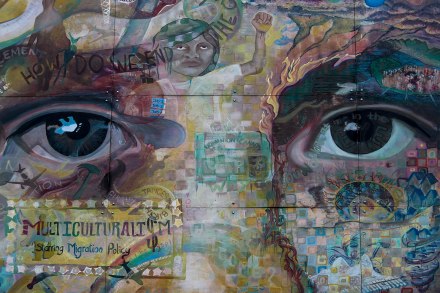
In their recent book on the Middle Ages provocatively called The Bright Ages, Matthew Gabriele and David Perry make the uncontroversial but often ignored point that the medieval period was multilingual and multicultural. (Listen to my conversation with them in the latest episode of the podcast.) It was, for the most part, seen as neither a virtue nor a vice that a city or region would contain various people from various places speaking various languages. It was a fact. That doesn’t mean that certain people or certain languages weren’t the objects of hatred — the burning of thousands of copies of the Talmud in Paris in 1242 is a case in point. But cities or regions didn’t exist in silos. It was a period of great cultural exchange.

Banning ‘Maus’

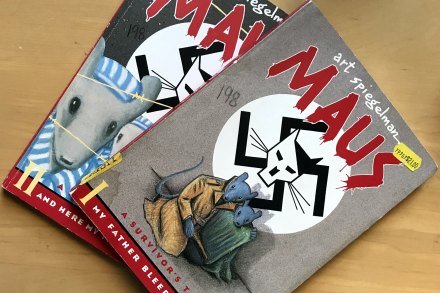
Whatever one thinks about the school board in McMinn County, Tennessee removing Maus from the curriculum, it isn’t “banning,” Thomas Balazs argues in a level-headed piece at Quillette. The school board voted to remove it from the required curriculum, which isn’t the same thing as removing it from the library: Both the content and artwork in this section are difficult to absorb, not just because of the bathtub scene, but also because the expressionist illustrations are distorted and sometimes grotesque. At a time when teen suicide is at an all-time high, this section alone may have caused some parents and board members understandable concern.

Cashing in on BLM

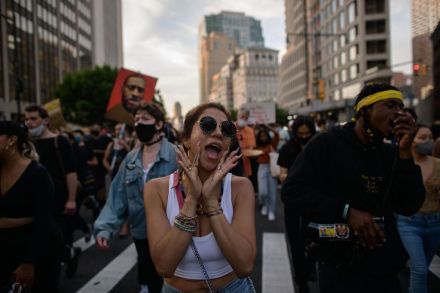
Whatever one thinks of the grassroots Black Lives Matter movement, it is not the same thing as the Black Lives Matter Global Network Foundation, which was cofounded by Patrisse Cullors. Starting BLMGNF has been very lucrative for Cullors, who has used her notoriety to land book contracts and a big juicy deal with Warner Brothers, as Variety reported in October 2020: The co-founder of Black Lives Matter has signed her first over overall deal with Warner Bros. Television Group. Characterized as multi-year and wide-ranging, the pact will see Cullors develop and produce original programming across all platforms, including broadcast, cable and streaming.

race

The New York Times buys Wordle

First the Athletic, now Wordle. In case you missed it, the New York Times has bought Wordle for a couple of mil. Josh Wardle, the game’s creator, talks to TIME magazine about how he feels about the sale: “‘My biggest sense, actually, right now, isn’t joy. It’s relief,’ Josh Wardle, who was paid ‘in the low seven figures’ for the daily puzzle, told me by phone. It was our second conversation in as many days... when we met, Wardle had not wanted his photo taken, and was clearly worn down by the attention tsunami that a few days earlier had swept across the Great Plains to engulf a Canadian industrial equipment salesman with the same name: ‘Regina man mistaken for inventor of Wordle fielding flood of emails, CNN interview request’ was the headline on a CBC story.

‘Ulysses’ at 100

I have twice tried and failed to finish James Joyce’s Ulysses. Perhaps the third time will be the charm, if there is a third time. Tomorrow marks the novel’s 100th anniversary. After being serialized in the Little Review between 1918 and 1920, it was published in full in Paris by the English-language bookstore Shakespeare and Company. The novel takes place in Dublin on a single day, but it was written in Trieste, Zurich and Paris. Catherine Flynn takes stock of the novel’s debt to the European avant-garde in a jargonish but nevertheless worthwhile piece in The Irish Times: The Dadaists attacked not only national identity but also sense itself.

Russia’s aristocratic anarchist

In the latest issue of The New Criterion, Gary Saul Morson writes about Peter Kropotkin. Kropotkin was raised in an “ancient and highly privileged” Russian family, but he became disillusioned with the aristocracy and came to view serfdom as a great evil. He was recommended to a post in East Siberia early in his life. The five years he spent there, Morson writes, changed him: When he arrived in Irkutsk, the capital of East Siberia, the spirit of reform reigned and the young governor-general was delighted to have a liberal on his staff. He assigned Kropotkin to outline reforms for the prisons and the system of Siberian political exile. By the time these proposals worked their way back to the centers of power, however, such reforms were no longer so welcome.

The brazen dishonesty of armchair postcolonial critical theory

Last week it was announced that Kate Clanchy has parted ways with her publisher, Pan Macmillan. Who is Kate Clanchy? She is an award-winning poet and teacher whose latest book, Some Kids I Taught and What They Taught Me, won the 2020 Orwell Prize. The book is the story of her poetry students who contributed to the anthology she edited, England: Poems from a School, and an analysis of how public schooling has changed in England. Why has she parted ways with Pan Macmillan? A year ago some people on social media criticized Some Kids I Taught for containing racial stereotypes. Her former students — including those included in the anthology — defended her, but to no avail. Clanchy at first defended the book but then agreed to rewrite it for a revised edition.

Revisiting Toni Morrison’s ‘Recitatif’

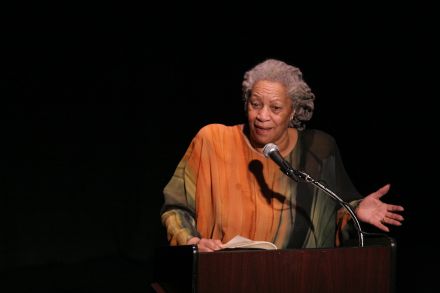
In the New Yorker, Zadie Smith argues that Toni Morrison’s only short story, “Recitatif,” is magisterial in how it deals with racial stereotyping and conflict. I agree. It follows two characters, Twyla and Roberta, who spend four months together in a shelter as young girls. One of them is white and one black, but we don’t know which one is which, and as they grow and their paths cross at various points, they grow further and further apart, which reaches a climax at a school protest: The personal connection they once made can hardly be expected to withstand a situation in which once again race proves socially determinant, and in one of the most vulnerable sites any of us have: the education of our children. Mutual suspicion blooms. Why should I trust this person?

Dostoevsky’s ‘Demons’ at 150

Dostoevsky’s novel Demons was first serialized in The Russian Messenger, which also published Crime and Punishment. Over at Law & Liberty, Daniel J. Mahoney argues that Dostoevsky’s alternative to nihilism in the novel is “less convincing or compelling than his unerring diagnosis of the demons that are revolutionary nihilism, political atheism, ‘half-science’ or scientism, and an incipient totalitarianism that combines moral fanaticism with contempt for the primordial distinction between good and evil.” He continues: At the heart of Demons is the revolutionary program of the nihilists themselves. Here Dostoevsky discerned where revolution leads with perfect accuracy.

The Great Books debate continues

Before Christmas, I called attention to Louis Menand’s review of two books on Great Books: Roosevelt Montás’s Rescuing Socrates: How the Great Books Changed My Life and Why They Matter for a New Generation and Arnold Weinstein’s The Lives of Literature: Reading, Teaching, Knowing. Menand didn’t like either. Both authors argued that reading great works of literature necessarily improves us. Menand disagreed. Now Brian Rosenberg, the president emeritus of Macalester College, has weighed in at The Chronicle. He argues that the difference between Menand and Montás “is about the purpose of reading and studying literature, and by extension about the purpose of the humanities in the academy.

Secularism and social justice

William Deresiewicz doesn’t believe in God. He thinks “religion is a lie” — not a weakness, not a mistake, but a lie, which is a pretty bold statement: “The philosophes saw through the falsehood of faith in the seventeen hundreds; I saw through it, one day in yeshiva high school in the midst of my Orthodox Jewish upbringing, at the age of fifteen. I’m frankly surprised that we’re still even talking about it.” (Deresiewicz is responding to a Ross Douthat column from almost a year ago now — “Can the Meritocracy Find God?” — in which Douthat hopes for but at the same time disbelieves in the possibility of a religious revival among the elite.

Norman Mailer cut

Norman Mailer, champion of gritty realism, liberal politics, and debauchery, has been knifed by his literary children. According to Michael Wolff, a junior staffer at Random House objected to the publication of his essay “The White Negro” in a forthcoming collection, and the publisher has decided to drop the entire volume: With slow-mo hammer-dropping predictability, Norman Mailer’s long-time publisher has recently informed the Mailer family that it has canceled plans to publish a collection of his political writings to mark the centennial of his birth in 2023, confirms the film producer Michael Mailer, the author’s oldest son.

Misremembering E. O. Wilson

In Scientific American, Monica R. McLemore, an associate professor of nursing, tells us that the work of E. O. Wilson, who died on December 26th, is “problematic” because it was “built on racist ideas.” What evidence does she provide? Not much other than a reference to Wilson’s seminal Sociobiology in which he argued that biology played a role in behavior: His influential text Sociobiology: The New Synthesis contributed to the false dichotomy of nature versus nurture and spawned an entire field of behavioral psychology grounded in the notion that differences among humans could be explained by genetics, inheritance and other biological mechanisms.

In praise of habit

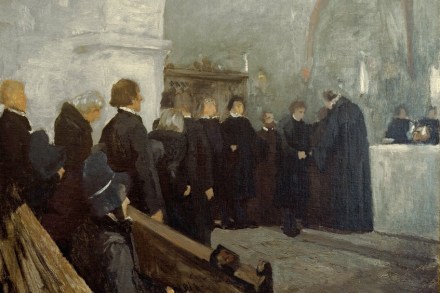
We have the kids home for Christmas — a son back from college in South Carolina, a daughter from Germany, a daughter and son-in-law from British Columbia for a three-week visit, and our youngest, who has been with us all year but who is as happy as a peach in summer to have her siblings home. We’re happy, too. Yesterday morning we were reading around the fire and started chatting about pastors and the emphasis in the Protestant church on feelings and niche theology. It is sometimes held that if one feels a certain way or espouses certain esoteric ideas, then one is a “mature” Christian.

The not-so-great Great Books debate

In this week’s New Yorker, Louis Menand reviews two books that defend a Great Books curriculum — Roosevelt Montás’s Rescuing Socrates: How the Great Books Changed My Life and Why They Matter for a New Generation and Arnold Weinstein’s The Lives of Literature: Reading, Teaching, Knowing. He doesn’t like either. Both authors claim that great works of literature shape our lives for the good and that this sort of moral or personal approach to texts is undervalued at modern universities, which, in turn, are more concerned about vocational training and marketable skills. English and comparative literature departments — are there any of those left? — emphasize specialization and ignore wisdom.

Tom Stoppard, libertarian

Tom Stoppard, libertarian Hannah Gold reviews Hermione Lee’s biography of Tom Stoppard in The Nation. I haven’t read the book, but I want to. Gold does a fair job in the first part of the review of providing us with a basic outline of Stoppard’s life and discussing Lee’s approach. In the second half, she turns to Stoppard’s politics and what she sees as a weakness of his work: In a speech delivered by Jake Milne, one of the journalist characters in Night and Day, which Lee posits "sums up the author’s views," Stoppard argues that "Junk journalism is the evidence of a society that has got at least one thing right, that there should be nobody with the power to dictate where responsible journalism begins.

Notre-Dame de Paris and that French esprit

I won’t say “Au revoir, Notre-Dame.” That’s a tad overdramatic. But something will be lost if the diocese in charge of the cathedral’s interior goes through with its recently approved plans to “modernize” it. For those of you who haven’t been following the story: French authorities have approved a proposal to revamp the interior of Notre-Dame Cathedral despite opposition from 100 cultural figures and criticisms saying the changes would “Disneyify” the historic landmark. The French National Heritage and Architecture Commission offered a favorable opinion to the proposal following a meeting on Thursday, December 9, giving the plan a green light to proceed.

Racist little free libraries

Racist little free libraries This piece in the New York Times is really something, and I mean that in the worst possible sense. Erin Aubry Kaplan lives in Inglewood, “a mostly Black and Latino city in southwestern Los Angeles County,” and she decides to build a Little Free Library, as they are called, in her front yard so neighbors walking by can borrow a book. She builds one because she loves books, but because in our puritanical times nothing can be as simple as that, she writes that she also put one up “to signal to my longtime neighbors that we had our own ideas about improvement, and could carry them out in our own way. There are organizations that help people build these little libraries, but I did mine independently.

An unconvincing case for cancel culture

An unconvincing case for cancel culture In this weekend’s Wall Street Journal, Barton Swaim reviews Erich Hatala Matthes’s Drawing the Line: What to Do With the Work of Immoral Artists From Museums to the Movies. While not a defense of cancel culture per se, Matthes attempts to provide a framework to help answer the question of which artists should be “canceled” and why. All cultures censor things. They have always prohibited certain works from being published or viewed, but this has almost always been because the works were inherently damaging, or so it was claimed, and usually to the young.