Prufrock

The crisis in American higher ed

The crisis in American higher ed It’s not quite right to say that American higher ed is in crisis. It does a lot of things very well and has, as Nick Burns points out in his history of the institution, a huge influence not just on American culture (for better and worse) but also the American economy: Expanding at breakneck speed after the Second World War, the American university has transformed from an institution accessible only to a small elite to the site of personal, professional, and political for­mation for vast swaths of the middle classes. Bachelor’s degree recipients made up just 5 percent of the U.S. adult population in 1940.


Tallying race in post-war American fiction

Tallying race in post-war American fiction In the Chronicle of Higher Education, Mordechai Levy-Eichel and Daniel Scheinerman have a doozy of a review of Jean So’s Redlining Culture: A Data History of Racial Inequality and Postwar Fiction. Many people think, So argues, that fiction has become more diverse since World War Two, both in terms of novels published by minorities and women and prizes won. But that is not the case. Here are Levy-Eichel and Scheinerman: According to So, the underlying feature of postwar American literature was the "inertia of whiteness" — by which he means the predominance of white, male writers like John Updike, Philip Roth, and Saul Bellow in terms of awards, reviews, and prestige.

The Atlantic’s clichéd new books section

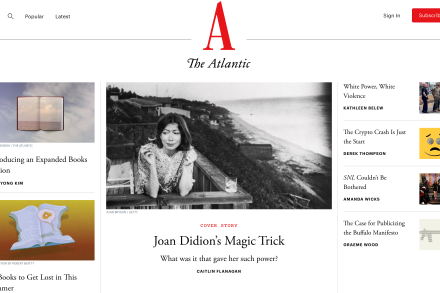
The Atlantic’s expanded books section  The Atlantic has announced it is expanding its books section. Reading can be revelatory, Jane Yong Kim writes in her note on the news. “Reading about books can have a similarly revelatory effect.” Do tell. Kim goes on. She trots out all the clichés about reading today as reasons for, well, reading — not a particularly auspicious start. Reading “has a unique quality of slowing us down even as it widens our horizons,” she writes. Books are a “vehicle for the free expression of ideas,” and free expression, in case you haven’t noticed, is under attack. But the expanded books section at the Atlantic, Kim tells us, is going to be a place where unpopular ideas will finally be given a hearing.

Richard Wilbur’s Molière

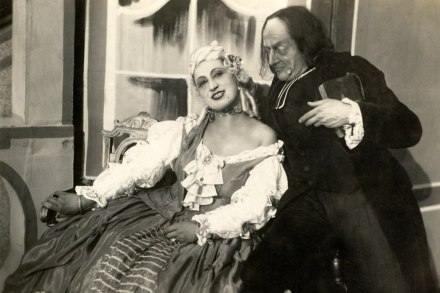
In the New York Review of Books, Geoffrey O’Brien reviews the complete Richard Wilbur verse translations of Molière, published in a new two-volume set by the Library of America. O’Brien doesn’t say so, but it’s a little odd for the Library of America to choose these volumes to republish. There are other works in translation in the catalogue, which focuses on “great American literature,” but those works either concern America herself (Tocqueville’s Democracy in America) or, as with Ezra Pound’s translations, are rendered so loosely as to constitute new works. According to Wilbur, however, the task of the translator is to replicate the original as much as possible in the translated text.

Remembering Midge Decter

Conservative editor and writer Midge Decter has died. She was 94. She was an executive editor at Harper’s and an editor at Basic Books, as well as the founder of the Independent Women’s Forum, co-chair of the Committee for the Free World, a board member of the Heritage Foundation, and one-time president of the Philadelphia Society. She married Norman Podhoretz in 1956 and is the mother John Podhoretz, current editor of Commentary, and journalist Ruthie Blum. In National Review, Yuval Levin remembers her as a “powerful and penetrating writer.” He writes: Her essays could see right to the core of the failures of the modern left — often long before those failures become apparent as a practical matter to everyone with eyes to see.

Medievalists going medieval

The New York Times reports on a minor dust-up in the world of medieval scholarship. Mary Rambaran-Olm, a postdoctoral fellow at the University of Toronto, wrote a largely negative review for the Los Angeles Review of Books in which she accused Matthew Gabriele and David Perry of “whitewashing” medieval history in their new book, The Bright Ages, in which (I have read the book) they attempt very much to do the opposite. They include the stories of figures (women and minorities) who are usually not included in trade histories covering over 1,000 years. The editors at the Los Angeles Review of Books requested edits to the review. Rambaran-Olm apparently refused most of them, so the editors killed the review.

A contradictory book on free speech

In the Chronicle of Higher Education, Jeffrey Aaron Snyder reviews a new book on free speech in higher education that argues that the idea of free speech has been used to protect racists from being punished for their racist ideas. The book is called It’s Not Free Speech: Race, Democracy, and the Future of Academic Freedom. The authors — Michael Bérubé and Jennifer Ruth — argue that the academy is full of white supremacists.

Jean Rhys in full

If you haven’t read Jean Rhys’s Wide Saragossa Sea, you should. It’s a “prequel” to Charlotte Brontë’s Jane Eyre, and while Rhys’s 1966 take on Mr. Rochester’s marriage to his first wife (who goes insane and is kept in the attic in Jane Eyre) is a tad heavy-handed, it is still an excellent if depressing read. Rhys’s life, it turns out, also makes for depressing reading. In the latest issue of Literary Review, Claudia Fitzherbert reviews Miranda Seymour’s biography of the novelist, I Used to Live Here Once: The Haunted Life of Jean Rhys: “In 1974, at the age of eighty-four, Jean Rhys was asked in a television interview whether she would prefer to write or be happy were she to live her life over again. ‘Oh, happiness!

The making of books

Lucasta Miller reviews Emma Smith’s history of books, Portable Magic, in the latest issue of the Critic. Portable Magic, Miller writes, “is not a conventional history in the sense of a chronological narrative”: Instead, it is a series of freewheeling essays, based on case studies, in which Smith explores what she calls "bookhood": a concept that focuses on the material culture of the book, while revealing how inexorably it is tangled up with human desire, aspiration and power. The range of reference is vast. One moment we are in Korea, where printed books with movable metal type long predated the Gutenberg Bible.

In defense of pessimism

In Aeon, Mara van der Lugt writes in defense of pessimism — sort of — by way of revisiting Voltaire’s response to Gottfried Wilhelm Leibniz in Candide: The question concerning these philosophers, then, is not just the theoretical one about whether life in general is good or bad, but also a more concrete one: face to face with one who suffers, what can philosophy bring to the table? What can philosophy offer in the way of hope and consolation? Both strands of thought have the same aim, but they plot different routes to get there: the pessimists offer consolation by emphasising our fragility, by recognising that no matter how hard we try, we may fail to achieve happiness, for no fault of our own.

The poetry of the New Right

If you haven’t read James Pogue’s essay in Vanity Fair on the New Right, as he calls them, do so. It is that rare thing today — a balanced and informative piece in a legacy publication. One thing that caught my eye was Curtis Yarvin’s interest in art and poetry. Yarvin is a forty-eight-year-old ex-programmer and blogger “who has done more than anyone to articulate the world historical critique and popularize the key terms of the New Right,” Pogue writes. He likes to write poetry, usually under the name of Mencius Moldbug, and is the poetry judge for the Passage Prize, a new arts award with $15,000 in prize money for poetry, fiction, nonfiction and visual art. Yarvin published the winners of the poetry contest on his Substack, Imperial Melodies.

Policing the Pulitzers

Several journalism organizations, news guilds, associations and publications have sent an open letter to the Pulitzer Prize asking that any newsroom that does not participate in the annual News Leaders Association “diversity survey” be excluded from consideration for the various awards in journalism: Our country is reckoning with racial inequity and many in the journalism industry can’t or won’t provide essential newsroom transparency on staff diversity. If we can’t collect crucial data, how do we expect to improve newsroom diversity and represent our communities?

The credibility of the humanities

In an odd piece in the Washington Post, Aaron Hanlon tries to diagnose the humanities’ “credibility problem.” The problem, he writes, is two-fold: first, “the public doesn’t seem to trust that we are engaging in real, methodical scholarly inquiry — or, at least, that such inquiries amount to much more than informed or pretentious opinion-making.”And second, “people often assume that humanities scholars start with political commitments and backfill the evidence rather than starting with questions to answer through some relatively transparent process of inquiry. The idea that humanities scholars are activists first and only then scholars leaves much of the public skeptical of the work we do.” Are these concerns valid? Hanlon doesn’t say.

Auden in America

When W.H. Auden was in his twenties, Alan Jacobs writes in a review of the poet’s two-volume Complete Works at Harper’s, he was worshiped by Britain’s intellectual class: One evening in August 1933, after hearing some new poetry read aloud, the British diplomat and politician Harold Nicolson opened his diary and made a confession: "A man like Auden with his fierce repudiation of half-way houses and his gentle integrity makes one feel terribly discontented with one’s own smug successfulness. I go to bed feeling terribly Edwardian and back-number, and yet, thank God, delighted that people like Wystan Auden should actually exist." The poet whose reading excited this envy and admiration was twenty-six years old.

The politics of unhappiness

In the latest issue of First Things, the physician and political scientist Ronald W. Dworkin takes a closer look at the politics of unhappiness. Negative feelings, he writes, have come to be attributed to specific causes, even if it is impossible to treat them as the result of such: An unpleasant sensation gets the mind churning, and we reach for something in our lives to blame. A man feels an unpleasant sensation. In a flash he ponders a thought he has had before: Maybe he should have started his own business, or married later in life, or traveled more — something. He blames his unpleasant sensation on one of these causes and declares himself ‘"unhappy.

Margaret Atwood: feelings are not ‘justifications’

Margaret Atwood has won the sixth annual Hitchens Prize, which is awarded every year to a writer who, “in the spirit of the late Christopher Hitchens, demonstrates a commitment to free expression and to the pursuit of truth without regard to personal or professional consequence.” No prize was awarded in 2021. Previous winners include Masha Gessen and George Packer. In her lecture, which accompanies the award, Atwood remembered her relationship with Hitchens. The two rarely agreed regarding “content, but we were in accord about process,” she says. Facts were what mattered to both, not feelings: Having feelings was not a thing back then.

The other Winslow Homer

A new show on the work of Winslow Homer at New York’s Metropolitan Museum of Art makes the case that he is a painter of national importance: Winslow Homer’s depictions of blustery, bucolic New England made him America’s 19th-century regional painter par excellence. But decisive visits to the tropics, a turn in the American South, and an intuitive sense of what the future might hold for America itself combined to make Homer (1836-1910) into an artist of national—even transnational—concern. This larger, lesser-known Homer is the subject of a new exhibition opening this month at New York’s Metropolitan Museum of Art.

Surrealism and freedom

In Art in America, Rachel Wetzler takes stock of surrealism a hundred years after its appearance on the art scene (the first use of the word that I am aware of was in Guillaume Apollinaire’s review of the 1917 performance of Parade (which was written by Jean Cocteau, scored by Erik Satie, and designed by Picasso).

Charles Isherwood replaces Terry Teachout

Of course, no one can replace Terry Teachout, as I’m sure Charles Isherwood would agree, but Isherwood is the new theater critic at the Wall Street Journal. His first review is of the much-anticipated revival of Neil Simon’s Plaza Suite starring Matthew Broderick and Sarah Jessica Parker, which he pans: Although Mr. Broderick and Ms. Parker labor mightily to reanimate Simon’s 1968 comedy, their staunch but sometimes strained efforts, and the play’s undeniable fustiness — especially with regard to the relationships between men and women at its center — result in a production that tends to sag between the volleys of wisecracks that suffuse early Simon plays.

The possibilities of travel

The first road trips I remember were between Seattle and Spokane in a yellow Chevy station wagon (maybe it was a Caprice?). This was when the speed limit was fifty-five and the trip would take six hours. I liked to ride in the “way back,” as we called it, stretched out on my back (before seatbelts were mandatory), looking up at the sky through the back window. When we traveled to Spokane — well, past Spokane — we were usually headed to my grandparents' lake cabin across the border in Idaho for a week of skiing, boating, swimming and exploring. We would tire of being in the car by the end of the trip, but there was always an air of excitement starting out, imagining all the things lying ahead.