Politics

Read about the latest political news, views and analysis

Reports about taking out Los Angeles and San Diego are greatly exaggerated

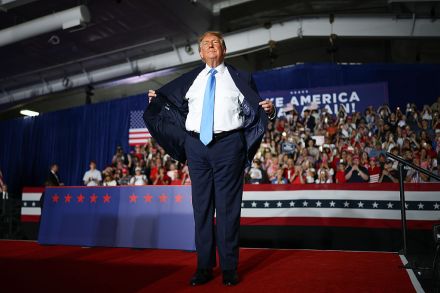
It’s four weeks until Election Day and Donald Trump is doing his utmost to dig Republicans out of their polling hole. In theory, anyway. Trump has been rallying through red states – Alabama, Oklahoma, Texas – to try and secure existing Senate seats. But today’s Democratic pile-on concerns a throwaway comment he made last night in Nebraska. Mid-weave, of course. The President said: “It’s a small price to pay for keeping the world safe, keeping our country safe. They could take out a city... ‘let ’em, let ’em take Los Angeles, let ’em take out San Diego, that’s...’ this is a very small price to pay... and it’s gonna be over with very soon, it's essentially almost over with.

donald trump san diego los angeles

Has the plague broken out in Russia?

On the evening of Friday October 2, Daria Shipilova, an employee of the Irkutsk Anti-Plague Institute, died in a district hospital in the Russian city of Shelekhov. Her place of work, and the rumored circumstances of her death, have triggered a public health emergency in the region and a slew of questions: did the plague bacterium, Yersinia pestis, kill Shipilova? Could this metastasize into a plague epidemic in Russia? Should we – abroad – be worried? The Russian authorities have done their best to play down the link between the plague and Shipilova’s death. According to Russia’s public health watchdog, Rospotrebnadzor, Shipilova had been diagnosed with pneumonia of “unknown etiology” – i.e. of unknown origin.

plague

AI could make government small again

For decades, we on the liberal right have been sold the fiction that Republican lawmakers are fighting for small government. There are many reasons why the state seems to relentlessly expand no matter who is in office; an important, though overlooked, one is that it is incredibly difficult to persuade voters that smaller budgets and reduced employee counts can achieve equal or superior results. Voters might dislike bureaucracy, but they fear what happens when the machinery behind it is dismantled – what if the alternative is worse? One needs look no further than the backlash against DOGE to see that the right needs to prove a smaller government can improve citizens’ experience in dealing with it.

Will Jon Ossoff’s luck last long enough for a run at the presidency?

Once upon a time, the export crop of Martha’s Vineyard and Nantucket was whale oil. Nowadays it is money, harpooned by visiting campaigns from deep-pocketed donors at anchor in their summer seaside retreats. In the peak season of July and August, the islands’ social rhythms are dictated by money-harvesting events, wrangled by local hosts jostling for the social éclat that comes from securing a high-profile honoree. By late August this year, the territory had already been worked over by a series of hopeful visitors with hands outstretched, such as the rising Texas Senate hopeful James Talarico, Hakeem Jeffries in eager pursuit of the House Speakership that is almost in his grasp, Maryland Governor Wes Moore and others questing the donor dollar.

ossoff

Get ready to flee socialist America

Peter Thiel, as is his wont, caused a stir last week when he expressed doubts that a Republican could win the White House in 2028. In an interview in Berlin on the MD Meets podcast, the billionaire cofounder of Palantir said he was still a “Vance partisan,” but he cautioned that a debate over whether Marco Rubio or J.D. Vance would be the better nominee was less important than the threat of socialism. “If Democratic Socialists take over the Democratic party that’s a much bigger deal,” Thiel said. “That is the end of America.” The PayPal godfather has already packed for the Pampas Thiel, who is a friend of mine, foresees parallels between the dynamics of right-wing populism and left-wing socialism.

socialist america flee

In pictures: The Nixon Revival

On Wednesday night, The Spectator welcomed readers and guests to our new home in NoMad for our first New York event, The Nixon Revival: why he matters again. US editor Freddy Gray chaired a lively discussion between Conrad Black, Daniel McCarthy and former Nixon staffer Geoff Shepard on the legacy of America’s 37th president — and why, more than half a century since Watergate, "Tricky Dick" is finding admirers on the American right. The discussion was livestreamed on the night and has now been edited to watch on demand, exclusively for Spectator subscribers. Watch it in full here. Before and after the conversation, readers mingled over drinks and rosé courtesy of Château Léoube, with the party spilling out on to The Spectator’s rooftop terrace overlooking Manhattan.

Is libertarianism dead? Daniel McCarthy vs. Robby Soave

45 min listen

In this episode of Americano, Freddy hosts a debate between Daniel McCarthy of the Heritage Foundation and Robby Soave of Reason magazine to examine whether libertarianism has effectively died as a vital political force or remains quietly triumphant through tech deregulation, AI innovation and unprecedented levels of individual freedom. https://www.youtube.com/watch?

The right has a woman problem

The right has its own unwritten rules of political correctness. There are forbidden words, and while they might not be met with censorship, they do elicit eye rolls. One proscribed term is “misogyny.” It also happens to be the most accurate description of the right’s mood and trajectory these days. The right’s response to this trend has been to downplay it, or even deny that it is happening at all. But ignoring it will not make it go away. Political discourse often operates like a ratchet: the intensity around a given topic is constantly turned up, but the mechanism is not designed to dial back.

right women

Can superintelligence save Trump?

Donald Trump’s greatest strength is his indefatigability. The grumblings within his administration grow louder. Inflation is stubborn, the price of oil too high, the Democrats ahead in the polls for all the key Senate election races. Yet the President is out and about, doing what he perhaps does best, which is campaigning. "Pretend I’m running, please. If we don’t win, they’ll end up impeaching me," Trump told a rally in Oklahoma yesterday. His aim is to turn the midterms into another presidential-style contest, and he’s right that the name Trump continues to be the key factor in American politics, something far more potent than the Republican party brand. As ever, though, the Donald divides opinions – and according to some surveys, his net approval rating is -23.

Is Peter Thiel right about the problem of Trump’s presidency?

In Trumpworld, there are whispers that one of the boss's biggest failings is his choice of personnel. Some claim that Donald Trump's appointees are toadies, disasters or novices, and that they drag down the effectiveness of policies that make sense for America. Peter Thiel, the billionaire tech chairman of Palantir, has criticized Trump's ill-chosen apprentices. In a podcast interview with Axel Springer CEO Mathias Döpfner, Thiel laid out a harsh view of Trump’s second term compared to his first: I think the two administrations made opposite mistakes. The first administration brought in all these people who couldn’t agree, and it was just all this internal fighting. The second administration, I think overcorrected for the mistake of the first term with all these loyalty tests.

second

How Trump’s second term self-destructed

The past year has turned out to be the most important of Donald Trump’s political life. It loosened the ties that had constrained his character – and Trump’s character is the key to his political project. There is no sillier exercise than trying to sum Trump up in ideological terms – calling him a conservative, say, or a fascist. Whatever you think conservatism is, it does not involve using the South Lawn of the White House for mixed-martial-arts fights, as Trump did in June. As for fascism, none of the conditions that made it possible a century ago exist today: there is no rising communist movement, no large pool of recently demobilized soldiers, no military humiliation, no manufacturing sector organized on military lines.

decade

The decade of Trump has been a necessary corrective

The past two centuries have been the era of mass production, of people as well as things. To a degree unimaginable before the Industrial Revolution, all of life has become standardized. Politics is no exception. It has come to be characterized by one set of rules piled atop another, positive law on top of the Constitution, an ever-increasing body of regulations on top of the laws, all couched within quite formal rhetorical and moral norms. There are rules governing elections, rules governing how parties nominate candidates and playbook rules for conducting a winning campaign. The candidate is really just a product, as is the elected official. They’re products manufactured according to standardized procedures. But Donald Trump isn’t. This enrages and frightens his critics.

Is the Trump phenomenon an anomaly?

I suppose you could say that the Trump decade began on June 16, 2015, when Donald and Melania Trump descended the golden escalator in Trump Tower to announce his candidacy for the presidency and the birth of MAGA, the “Make America Great Again” movement. There are, however, a few problems with that start date. For one thing, the Trump decade, which may have started then, did not stop when Trump took an extended vacation from the White House beginning on January 20, 2021. It continued running, like a television set blaring in another room, all through the Biden presidency. And now, in October 2026, the Trump decade has lasted more than a decade. Really, we are talking about the Trump era.

lynchings

Invented claims of lynchings and racist violence are irresponsible — and dangerous

“Cases of Black people found hanged in the US South are a reminder of nation’s lynching history,” read an ABC News headline last month. That phrase – “lynching” – has been used again and again in reporting on the death of a woman in Mississippi. The Associated Press used the word, as did the British state broadcaster the BBC, the Los Angeles Times and the Washington Post. You may think, with such a loaded phrase, that the suspects are members of the KKK. In fact, all three are black men, charged with the murder of Tasia Fortune, a 29-year-old woman found dead on August 3 in Jackson. Fortune’s own mother has said that she doesn’t believe the killing was motivated by race. You would hardly know it from the media’s coverage.

America must shore up its missile-building capabilities

America’s war with Iran is in its eighth month and stuck. On September 26, Donald Trump confirmed that he had rejected Tehran’s offer to reopen the Strait of Hormuz in return for lifting the American naval blockade and easing sanctions. He has reportedly told his staff that renewed bombing is likely after the midterm elections on November 3. He is reluctant to resume major combat any sooner. The embarrassing question is whether America actually has enough missiles to bomb Iran. The West spent a generation persuading itself that making clever weapons could compensate for making fewer of them, with even fewer factories and a thinner web of suppliers behind them. The reality of war is messier and less obliging.

missile

Will France’s school protest movement spread?

The government of France held a crisis meeting yesterday afternoon as a school protest movement intensified in violence. On Wednesday, 625 people were arrested and 83 gendarmes and police officers were injured as youths protested outside hundreds of schools nationwide. Yesterday, a school in Nantes was severely damaged after being firebombed and a fire engine was destroyed in Marseille. In the city of Reims there were fierce clashes between protesters and police, and only the use of tear gas dispersed the demonstrators. In some cities, such as Rennes, it was reported that university students were protesting alongside the high school pupils. The government claimed yesterday that the movement has been hijacked “by LFI and its far-left proxies.

How Trump can confront the new age of terror

The world has become strangely numb to terror. Sometimes an atrocity will be sufficiently horrifying – the murder of Charlie Kirk, say – to cause mass shock and anguish. Yet now reports of car rammings or knife rampages or foiled Islamist plots feel almost routine. We have become inured to ideological violence. In the quarter-century since 9/11, the specter of terrorism has almost become a fact of modern life. Last year, America was one of the few western countries to see a rise in terrorism, with 13 recorded attacks and 28 deaths. Today even the most appalling acts generate only a brief sense of widespread outrage. And then the news cycle moves on. No mass killing has come close to the scale of the Twin Towers attacks.

Terrorism

The national debt is back with a vengeance

The 5 percent barrier has long since been left behind. This week, the yield on 30-year American government bonds hit 5.6 percent, its highest level since way back in 2002, while the cost of ten-year borrowing rose to its highest level in 20 years. However hard the Treasury Secretary Scott Bessent tries to control it, the interest rate the American government has to pay to finance its vast deficit keeps on rising relentlessly. As it climbs towards 6 percent and perhaps even higher, surely we must soon see a change in the political debate. Three decades of financial complacency will be swept aside – and the politics of deficit reduction will be back.

Christa Pike should be allowed to live

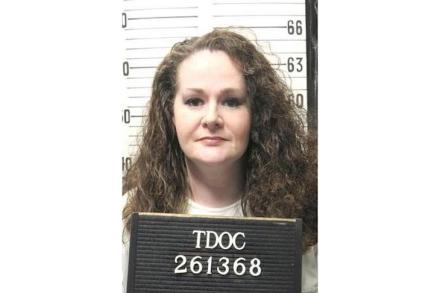
Coincidentally with the sad passing of Esther Rantzen, who spent her last couple of years campaigning for assisted suicide in the UK, there’s just been an interesting case of an assisted dying going wrong. The state of Tennessee kills prisoners sentenced to death by means of an injection of pentobarbital, the same substance used by the Dignitas clinic in Switzerland (only not usually by injection) where Dame Esther had considered going after she was diagnosed with stage four lung cancer. Pike has been executed once; that, even supporters of the death penalty must agree, is enough Unfortunately, or fortunately, depending on your point of view, a prisoner sentenced to death, Christa Pike, survived a double injection of pentobarbital and is now in hospital being resuscitated.