Politics

Read about the latest political news, views and analysis

Read in full: the Lord Geidt letters

At long last, the flatgate letters are out. Boris Johnson has today been cleared by his ethics adviser Lord Geidt of deliberately misleading an investigation into the funding of his Downing Street flat refurbishment – despite being accused of acting 'unwisely'. Geidt had previously cleared Johnson of breaking the ministerial code over allegations of soliciting a donation from Lord Brownlow but a recent Electoral Commission investigation revealed previously unknown WhatsApp messages between Brownlow and Johnson.
Bloodshed in Kazakhstan could spell trouble for Putin

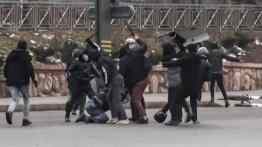
Russian troops have now arrived in Kazakhstan in a desperate bid to halt the tide of violence that has swept the country. Their arrival is a last resort for the country's president Kassym-Jomart Tokayev as he fights to maintain his grip on power. But he isn't the only leader who is eager to quell this unrest: Vladimir Putin will be deeply troubled by what events in Kazakhstan mean for his own leadership. Fuel price rises were the immediate trigger for the unrest in Kazakhstan, but the rapid spread of these protests – from the west of the country, close to Kazakhstan's oil fields, to numerous towns and cities – shows that something much more fundamental is to blame for the disturbances that could well topple the regime of president Tokayev.

Has America learnt anything from the Capitol riot?

30 min listen

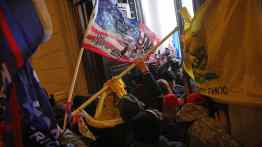
It's been one year since a large number of Trump supporters stormed the Capitol building in Washington DC to try and prevent the certification of the 2020 presidential election. There are still many questions surrounding that infamous day and to look for some answers Freddy Gray talks with John Daniel Davidson, a senior editor at the Federalist.

Rees-Mogg reveals his reading material

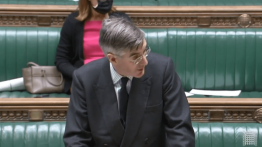
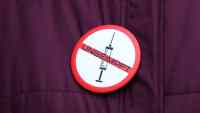
The booster rollout continues at pace but not all Westminster are happy with efforts to increase vaccine take-up. Tory backbencher Danny Kruger popped up in the Commons today to ask the Leader of the House for time to debate compulsory vaccination for NHS workers. All healthcare staff must be jabbed by 1 April or risk facing the sack – one of the so-called 'Plan B' measures which Kruger reluctantly endorsed last month after wrestling with his conscience. Kruger began his question by referencing research published by the British Medical Journal shortly after the Commons voted for the package of Covid measures. It found that the effectiveness of a third vaccine wore off after three months in preventing the transmission of Omicron.

What really matters in the Covid culture wars?

During the grimmest days of the First Crusade in 1098, the western Christians found themselves besieged by the Turks in Antioch. They had travelled more than a thousand miles from France, and countless fellow believers had died in the almost impossible trek across the known world; now running out of food and water, they were tired, hungry and desperate. At their lowest point, and ready to give into despair, Christian spirits were raised by the arrival of one Peter Bartholomew, a poor man from Provence who claimed he had been visited by the Virgin, promising them victory. The noblemen in charge were suspicious, as Peter was not only an illiterate farmhand type but also quite shifty, yet soon momentum built around his cause. He had an audience.

The cost of living – not Covid – could bring Boris down

Two and a half years into his premiership, Boris Johnson has enjoyed no more than a month of that time unencumbered either by Brexit negotiations or the public health emergency. Once Britain is through the worst of the Omicron wave, it would be understandable if the Prime Minister wanted to pursue some kind of political vision. The danger is that, as normality returns, his premiership will be further imperilled by the cost of living. An economic crisis is expected to hit households in April. In that month, National Insurance contributions (NICs) will go up by 1.25 per cent, a direct violation of Johnson’s manifesto pledge to protect voters from tax rises. The price cap on energy bills will also be raised, possibly doubling some customers’ costs as they come off fixed rates.

What Boris must do to survive

In recent years, the notion of cabinet government has been a polite fiction. In theory, the prime minister is merely the first among equals when he meets his secretaries of state. In practice, they all owe their position to No. 10 and usually do what they’re told. The situation was summed up by an old Spitting Image sketch showing Margaret Thatcher at a restaurant with her cabinet ministers. She orders steak. ‘What about the vegetables?’ the waitress asks. ‘Oh,’ she replies, ‘they’ll have the same as me.’ For the first two years of Boris Johnson’s premiership, cabinet ministers were more claque than cabinet. ‘How many hospitals are we going to build?’ he asked at their first meeting after his general election victory.

The Colston verdict is the triumph of values, not law

The verdict is in on the case of the Colston statue in Bristol. Not guilty. Every one of the accused is innocent. And I mean that: everyone is innocent until proven guilty. If found not guilty, they must — at all times — have retained their innocence. But something feels wrong. Eminent lawyers have described the verdict as both absurd and perverse. In the UK we ‘relate’ to law. We aren’t taught it in schools. Our parents, teachers, instead introduce it to us by osmosis. We have a feel for it, a grasp of it. We might have felt we knew what criminal damage was, and we might have felt that pulling down a statue was wrong. That turns out to be an error.

Boris and Keir have the energy crisis all wrong

Because of soaring gas and oil prices, and the regulations that determine the energy price cap, it is almost inevitable most of us will face a rise in energy bills of between 40 per cent and 50 per cent from April. For a typical household, that's an increase in bills of around £600 a year — which would be a painful increase in the cost of living even for those on median (middling) earnings. It would leave the average household spending 6.5 per cent of all their disposable income, after tax and benefits, on heating and power — based on official Office for National Statistics figures. That's one in every £15 earned to keep warm and keep the lights on.

Michael Rosen faces defamation lawsuit

Twitter is a strange place: a rich source of (often unintentional) humour, populated by the puritanical and the po-faced. One such example was provided in May last year, when Dr Pete Newbon, a lecturer in humanities at Northumbria University, ended up being investigated by his employer for making fun of Jeremy Corbyn.  His crime? Tweeting a picture of the former Labour leader reading to a group of schoolchildren from Michael Rosen’s We’re Going on a Bear Hunt. Only the image had been photoshopped to show Corbyn holding the Protocols of the Learned Elders of Zion instead – a classic example of satire.

What does Angela really make of Boris?

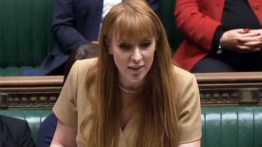
Poor Sir Keir Starmer. He’s having a bad pandemic. The Labour leader was absent again at PMQs. His gifted and charismatic deputy, Angela Rayner, got another chance to display her credentials as his replacement. Rayner, with her necklace of white beads, looked like a duchess launching a battleship. She and Boris flirted constantly, which may not be a good thing. Teasingly he said he knew that she coveted Sir Keir’s job. ‘And I wish her well.’ When she got up she leaned so far across the despatch box that she seemed ready to clamber over it When she got up she leaned so far across the despatch box that she seemed ready to clamber over it and jump in his lap. He giggled and smirked back, visibly thrilled by her vitality.

Fact check: are Sadiq Khan’s vaccination claims right?

Sadiq Khan is always on the lookout for any way in to national debate, and this week he has been starting – quite rightly – to focus on the benefits of vaccination. But the key to doing this effectively is not to say stuff that’s not true. Here, he struggles. After the No. 10 press conference, he tweeted out one of Chris Whitty's graphs claiming that 'at all ages – the vast, vast majority of people hospitalised with Covid have not yet been vaccinated.' But is this actually true? In a word: no. https://twitter.com/SadiqKhan/status/1478416649686753280?ref_src=twsrc%5Etfw Vaccinations reduce your chances of hospitalisation by 88 per cent: they work.

Rayner hits Johnson where it hurts

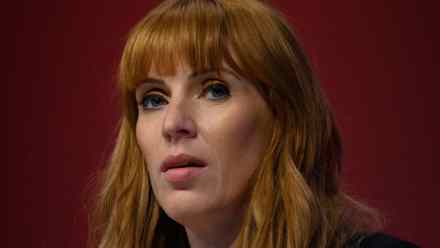
The first PMQs of the year gave us a preview of the political debate we’ll be having for the next few months. Labour went after the government on inflation. Angela Rayner asked Boris Johnson why he had dismissed fears over it as unfounded back in October: Johnson denied he had said it — which is an odd claim given what he said in that interview. She then punched the Tory bruise, by asking why Johnson wasn’t cutting VAT on fuel, as he had said he would do during the EU referendum. Johnson made the point that this help wouldn’t be well targeted, which is true. But the political pressure for this from Labour and his own backbenchers are going to make it very hard for him to resist.

Sturgeon backtracks on Covid (again)

Oh dear. It was just two weeks ago that Mr S remarked on Nicola Sturgeon's unfortunate habit of sneering at journalists who criticised her Covid policies – only to then quietly backtrack days later, without apology or remorse. And now another U-turn can be added to the growing list, after the First Minister today announced she would cut the self-isolation period to seven days. The move is in keeping with Edinburgh's record throughout the pandemic in moving glacially slow to recognise the wisdom of anything done in London. For England changed its Covid rules on 22 December so that infected individuals can stop isolating after seven days rather than ten, so long as they test negative on day six and seven.

Maureen Lipman’s ‘Jewface’ criticism of Helen Mirren isn’t fair

I’m not sure I should be writing this piece, given I am not Jewish. Are Gentiles like me allowed to comment on matters relating to the Jewish community? It’s hard to know these days, in this increasingly rigid era of identity politics, when apparently we must all ‘stay in our lane’; when anyone who veers beyond his or her own ‘lived experience’ risks being accused of cultural appropriation or some other identitarian crime. But anyway, here goes: Maureen Lipman is wrong to say Helen Mirren should not be playing Golda Meir in an upcoming film. Yes, these two dames, two of our finest actresses, have locked horns somewhat. Mirren will play the former Israeli PM, the Iron Lady of Israel, in Golda, which is due to be released later this year.

Does Boris believe in Brexit?

For once, yesterday’s Downing Street press conference included a worthwhile question, and not of the 'why aren’t you locking us down?' variety. In fact, it had nothing to do with Covid at all. Harry Cole of the Sun asked why, given that the Prime Minister had once cited the ability to remove VAT from fuel bills as a tangible benefit of leaving the EU, he was not now taking advantage of his new-found freedom, especially as bills are heading sharply upwards. Boris Johnson mumbled something about not wanting to help people who could easily afford their energy bills and that the government might consider more targeted help instead.

Has Martha Hancock turned on the Tories?

After what her husband put her through, it's no surprise that Martha Hancock might not be the biggest fan of Boris Johnson's government. The soon-to-be ex-wife of the disgraced former health secretary had to suffer days of snooping snappers and sensationalist speculation in June after news of her husband's affair broke.  The ordeal wasn't exactly helped by Johnson's initial refusal to sack Hancock as a minister, prolonging the misery for all as the PM tried to stand by his man. And now Mrs H has perhaps hinted at her true feelings about the embattled Tory leader, if her recent Twitter activity is anything to go by.

Energy bills are Johnson’s next big battle

Keir Starmer is not a lucky politician. He has again been forced into self isolation after testing positive for Covid, which means he misses the first PMQs of the year. This is the Labour leader’s sixth period of self-isolation. So, instead it will be Rayner versus Johnson at PMQs at the later time of 3 p.m. this afternoon. These contests are normally more hammer and tongs than the Johnson–Starmer ones. Rayner’s style is more direct than Starmer’s; and is often more effective in rattling Johnson.  The obvious area for her to go on today is cutting VAT on household energy bills. Labour is already in favour of this and Tory MPs are getting increasingly agitated about the issue.