Music and Opera

Our curation of music and opera reviews

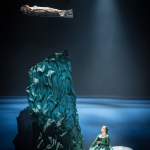
A contradictory staging, but the music floods the ear with splendour: Semele at the Royal opera reviewed

The past is a foreign country: they do things differently there – and opera directors really, really wish they didn’t. The problem is particularly acute if, like the Royal Opera’s Oliver Mears, you believe in staging Handel’s concert works as if they were operas. Broadly speaking, Handel’s oratorios affirm the moral and political consensus of Hanoverian England – Protestantism, marriage, loyalty to Church and Crown. All deeply uncool now, of course, so when Mears staged Jephtha in 2023 he duly inverted its central premise. The good guys became the bad guys. Unfortunately, Handel missed that production meeting and the result was as incoherent as it was dour. Semele is a

A delight: Sabrina Carpenter at BST Hyde Park reviewed

We all know, at heart, that economic theories of rational behaviour are rubbish. And that their application ruins so many areas of life. Football supporters, for example, are not ‘customers’; they are supporters. They are at the club before a new owner arrives, they remain there after that owner leaves. In the meantime, they do not make rational decisions. They do not, when QPR are rubbish, pop across west London to support Chelsea, though it might be the economically rational thing to do. Same with pop. I’m a music fan more than I am a customer. The other week, immediately after filing my review of Bruce Springsteen, which was tinged

More drama-school showcase than epic human tragedy: Evita reviewed

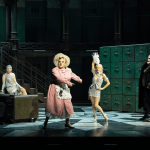
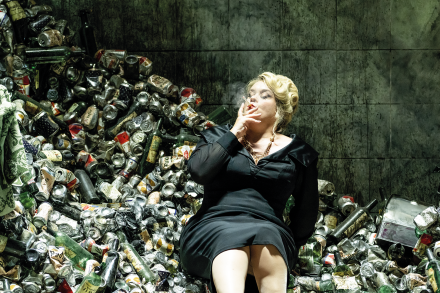
Evita, directed by Jamie Lloyd, is a catwalk version of the Andrew Lloyd Webber musical. The actors perform on the steps of a football stadium where they race through an effortful series of dance routines accompanied by flashy lights and thumping tunes. It’s more a drama-school showcase than an epic human tragedy. There are no interiors, no furnishings and no props – not even a suitcase for ‘Another Suitcase in Another Hall’. Rachel Zegler plays the lead in black pants and a bra from M&S. In Act Two, she changes into a new bra and pants. White this time, with silvery spangles. She looks like a majorette. Why no proper

No amount of discourse will make a good pop song into a great one

There is no higher calling than making great pop music, and no mechanism by which such an achievement can be faked or fudged. No lofty exposition, no pleading discourse, no mitigating circumstance, no ifs, buts or boo-hoo back story can bend a piece of so-so music into a great pop song. We simply know one when we hear one. Commentators may gush about Beyoncé’s genre-strafing cultural significance until the cows come home, but it doesn’t alter the plain fact that she hasn’t released a single piece of music in more than a decade that will stand the test of time come pop’s judgment day. ‘Pop’ implies freshness. Fizz. This doesn’t

The political climate at Glastonbury was not especially febrile

Everyone who wasn’t at Glastonbury this year knows exactly what it was like: a seething mass of hatred and rabid leftiness, characterised by an angry punk duo named Bob Vylan calling for the death of the IDF. But that’s just the tabloid hysteria talking – betraying also maybe a hint of envy towards those lucky enough to have bagged one of the £400 tickets. The truth is, the political climate was not especially febrile. Sure, the jaunty red, white, green and black of the Palestinian flag was very en vogue, but a few years back it was the blue and yellow of Ukraine and the EU. A few decades before

Depressingly corny: Quadrophenia, a Mod Ballet, reviewed

It’s all very well for people like me to sneer at dance makers for drawing on classic rock as a quick way of pulling in the punters, but the trick clearly does the business. Sadler’s Wells was pretty well full on the night I saw Pete Townshend’s Quadrophenia, a concept album that has endured several iterations and rewrites since the recording was first released on vinyl by the Who in 1973. An audience of all shapes and ages seemed to be having a good time, but although there’s nothing disgraceful about the show that director Rob Ashford has overseen, it seemed to me depressingly corny and laboured – a bumpy

Brave and beautiful: Longborough's Pelléas et Mélisande reviewed

King Arkel, in Debussy’s Pelléas et Mélisande, is almost blind, and he rules over a kingdom of darkness. Debussy’s score is so luminous that it’s easy to forget just how dark it supposedly is, this mythical realm of Allemonde – even despite the libretto’s references to gloomy caves, shadowy castles and forests that block out the sunlight. Many productions take their visual cues from the music rather than the words, providing endless opportunity for shimmering effects and the subtle play of light and shade. Jenny Ogilvie’s staging for Longborough Festival Opera doesn’t just embrace the darkness; it goes all in. Shadows texture the huge, brutalist wall of Arkel’s castle and

Alfred Brendel was peerless – but he wasn't universally loved

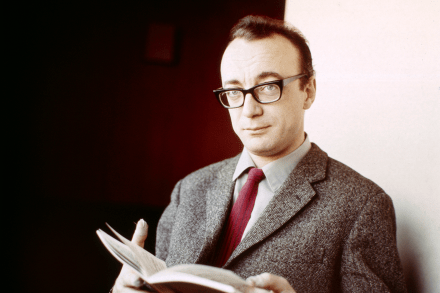
In middle age Alfred Brendel looked disconcertingly like Eric Morecambe – but, unlike the comedian in his legendary encounter with André Previn, he played all the right notes in the right order. OK, so perhaps I’m selling the maestro a bit short: I do think Brendel, who died on 17 June at the age of 94, was a peerless interpreter of the Austro-German repertoire, and for a time in the 1970s had a better claim than any other pianist to ‘own’ the Beethoven and late Schubert piano sonatas. But some of the media tributes have been embarrassingly uncritical, implying that Brendel was universally loved. He wasn’t, and he didn’t want

I’ve rarely seen a happier audience: Grange Festival's Die Fledermaus reviewed

‘So suburban!’ That’s Prince Orlofsky’s catchphrase in the Grange Festival’s new production of Die Fledermaus, and he gets a lot of wear out of it. You couldn’t really describe the Grange Festival as suburban – it’s hard to imagine a corner of the Home Counties that’s more remote from urban civilisation. No, if the vibe at Garsington is plutocratic, and West Horsley is pure Stockbroker Belt, the Grange Festival is definitely county, in a comfy, faded, Aga-and-chintz sort of way. The picnic takes precedence over the opera, and you’ll see evening wear that was new around the time that Alan Coren retired from Punch. Anyway, this lively Die Fledermaus knows

Dua Lipa sparkles at Wembley – but her new album is pedestrian

If, as is said, there are only seven basic narratives in human storytelling, then there should be an addendum. In rock and pop there is only one: the dizzying rise, the imperial period, the fall from grace (either commercial or ethical, sometimes both), and the noble return (historically prefigured with a glossy music mag cover proclaiming: ‘Booze! Fights! Madness! How Rubbish Band went to hell – and came back’). All three were on view in London this past fortnight. Waxahatchee was the one on the way up: this was, Katie Crutchfield announced proudly from the stage, the ensemble’s biggest-ever show. Dua Lipa was the one entering her imperial phase –

The politics of horror

Everyone forgets the actual opening scene of 28 Days Later, even though it’s deeply relatable, in that it features a helpless chimp strapped to a table and forced to watch doomreels of ultraviolence until it loses its little monkey mind and eats David Schneider. But it’s eclipsed by the famous sequence that follows where Cillian Murphy wakes in a hospital bed to find that he has slept through a deadly pandemic and the ensuing collapse of civilisation. As Murphy drags his not-yet-world-famous cheekbones through an eerily abandoned metropolis, we see Piccadilly plastered with the names and faces of the missing and the dead. Audiences in 2002 were reminded of the

Jarvis Cocker still has the voice – and the moves

For bands of a certain vintage, the art of keeping the show on the road involves a tightly choreographed dance between past and present, old and new, then and now. It’s not a one-way transaction: there should be some recognition that the people you are playing to have also evolved since the glory years of the indie disco and student union. Halfway through the first date of Pulp’s UK tour following the release of More, their first album in 24 years, I started thinking about Withnail & I. Watching the film repeatedly as a young man, the booze-soaked antics of the dissipated ‘resting actor’ and his addled supporting cast seemed

Astonishing 'lost tapes' from a piano great

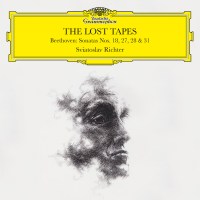
These days the heart sinks when Deutsche Grammophon announces its new releases. I still shudder at the memory of Lang Lang’s 2024 French album, in which he drooled over Ravel’s Pavane pour une infante défunte; when I reviewed it I suggested that if the poor girl wasn’t dead when he started, then she certainly was by the time he’d finished. Now she’s been killed again, this time by the guitarist Robin Scherpen, whose Ravel Reimagined offers us ‘a peaceful and serene soundscape’. Then there’s Rêverie from Nemo Filou, a trio whose cocktail-lounge noodling allows ‘the listener to drift off into bliss’, and Sleep Circle, a ‘re-recorded version of the 2012

The artistic benefits of not being publicly subsidised

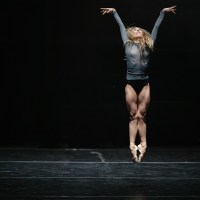
Paralysed rather than empowered by the heavy hand of Big Brother Arts Council, the major subsidised dance companies are running scared and gripped by dismally risk-averse and short-termist attitudes. Free from the deadening metrics of diversity quotas and targeted outcomes, smaller more independent enterprises – London City Ballet and New English Ballet Theatre among them – can be lighter on their feet: they have inherited something of the pioneering spirit of Marie Rambert and Ninette de Valois a century ago and they deserve support. Another such is Ballet Nights – a series of one-off galas masterminded by Jamiel Devernay-Laurence, who doubles up as an embarrassingly brash compère, introducing each performer

Superb: Stereophonic, at Duke of York's Theatre, reviewed

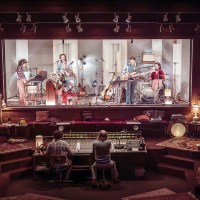
Stereophonic is a slow-burning drama set in an American recording studio in 1976. A collection of hugely successful musicians, loosely based on Fleetwood Mac, are working on a new album which they hope will match the success of their previous number one smash. This is an absolute treat for anyone who appreciates subtle, oblique and quietly daring theatre The studio could almost be an orphanage because the characters keep squabbling and bickering like siblings in need of a parent. The self-appointed leader is Peter (Jack Riddiford) who dresses in classic hippy mode with a kaleidoscopic shirt and a droopy moustache. But he rules the studio with a rod of iron.

Magnificently bloodthirsty: 28 Years Later reviewed

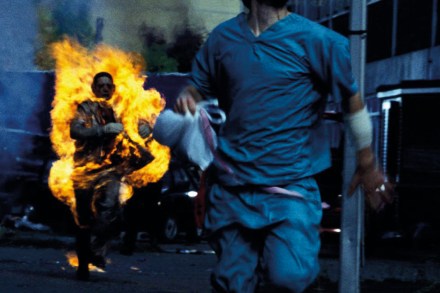
First it was 28 Days Later (directed by Danny Boyle, 2002), then 28 Weeks Later  (Juan Carlos Fresnadillo, 2007) and now Boyle is back at the helm with 28 Years Later, which is, as I understand it, the first in a new trilogy. This post-apocalyptic horror franchise could go on for ever. As the last film was generally (and rightly) regarded as a desultory cash grab, there is much riding on this one. The verdict? It’s entertaining but not outstanding. The biggest surprise is its tonal swerve into sentimentality. Jodie Comer and Ralph Fiennes, however, bring character and heft and, just to put your minds at rest, yes, it’s as

The charm of Robbie Williams

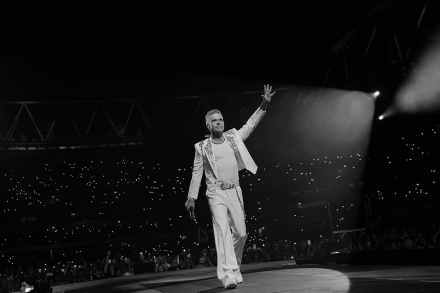
What could it possibly feel like to be a sportsperson who gets the yips? To wake up one morning and be unable to replicate the technical skills that define you. To suddenly find the thing you do well absolutely impossible. Golfers who lose their swing, cricketers whose bowling deserts them, snooker players who can’t sink a pot. Stage fright – something both Robbie Williams and Cat Power have suffered from – is much the same. Williams took seven years off touring last decade because of it, which must have been devastating for someone whose need for validation is so intense that he has made it his brand. Chan Marshall, the

Summer opera festivals have gone Wagner mad

Another week, another Wagner production at a summer opera festival. This never used to happen. When John Christie launched Glyndebourne in the 1930s, he hoped to stage the Ring. So he gathered a team of refugee musicians from Germany, who quickly assured him that it was impossible and he should stick to Mozart. The man who changed all that was Martin Graham, the plimsoll-wearing founder of Longborough Festival Opera, who died in April at the age of 83. Graham was irrepressible; a self-taught enthusiast. With no one around to tell him it couldn’t be done, he pushed ahead regardless, staging the Ring cycle twice in as many decades. And now

Ingenious: the Globe's Romeo & Juliet reviewed

Cul-de-Sac feels like an ersatz sitcom of a kind that’s increasingly common on the fringe. Audiences are eager to see an unpretentious domestic comedy set in a kitchen or a sitting-room where the characters gossip, argue, fall in love, break up and so on. TV broadcasters can’t produce this sort of vernacular entertainment and they treat audiences as atomised members of racial ghettos or social tribes. And they assume that every viewer is an irascible brat who can’t bear to hear uncensored language without having a tantrum. The result is that TV comedy often feels like appeasement rather than entertainment. Theatre producers are keen to fill the gap, and the