World

NATO won’t bleed for Ukraine

Ask three different people whether Russian President Vladimir Putin will approve an invasion of Ukraine, and you are likely to get three different answers. Yes, a Russian land, air, and sea blitz is inevitable and will come in fairly short order, likely without warning. Yes, a Russian invasion is possible, but could still be averted with some shrewd diplomacy. Or, no, surely Putin understands an invasion would be a disaster for his legacy and his country’s economy. In the midst of all of this comes wild speculation about what Putin is thinking at any given moment, how the weather may factor into his calculations, and what the Russian government’s end goal really is. What can be said for certain, however, is that diplomacy has picked up significantly over the past week.

ukraine

Is this Biden’s Munich moment?

When it is 1938 in Washington, it is already past midnight in Moscow. The clock is ticking and the map of Europe is being redrawn, but this is not a Munich moment. We are now past that, and past the time when the leader of a Western democracy might have the honesty to admit to his public, as Neville Chamberlain did in 1938, that he doesn’t want to fight a war over “a quarrel in a faraway country between people of which we know little.” The shadow of Munich shames and intimidates the leaders of the Western democracies, and not without reason. But if there is a Munich moment in the latest Ukraine crisis, then it happened nearly seven years ago — in 2015, when the Obama administration backed the Minsk II accords and the dismemberment of Ukraine.

energy munich

Why does Germany look so weak on Russia?

A recent survey of Germans done by Forsa, amongst the most reputable polling institutions in that country, shows that at least in one way, the Cold War has not quite ended. A majority of West German respondents (52 percent) blame Russia for escalating the conflict with Ukraine, while a plurality of East German participants (43 percent) blame the United States. All respondents, meanwhile, plead for peace in the region and expressed fear of a looming war between Europe and Russia. The political repercussions here are very real. The generation born in the late 1960s, having been completely educated in the East German communist dictatorship, currently constitutes the most significant single voting block in the East.

The unthinkable horror of a Russia-Ukraine war

In the coming days, if intelligence assessments are accurate, the world will watch the unfolding of a bloody war between Russia and Ukraine. It will make history for all the wrong reasons, as the largest armed conflict since World War Two. And while Moscow would almost certainly defeat Kyiv on the battlefield, the real story will be the horror unleashed by the first modern war fought between nations of real consequence in decades. Such a war would showcase military modernizations that, while well-known, will still shock most Americans and change our perception that war in the twenty-first century is anything but cost-free. Worst of all, there's chance that a Russia-Ukraine war might not be contained to just those two countries, sucking in America in the process.

Sacrificing the Uighurs to the Olympics

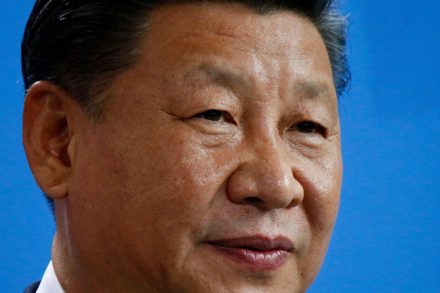
It’s hard to say what was most distressing about the opening days of the Beijing Winter Olympics. The lament of the athletes “injured” by the swabs inserted into their noses for Covid testing? French speed skater Gwendoline Daudet’s anguish under the bubble after she was eliminated from the mixed relay? The embarrassing spectacle of Uighur skier Dinigeer Yilamujiang lighting the snowflake-shaped Olympic cauldron under the gaze of Xi Jinping, an image that the spokespersons of the International Olympic Committee found “charming”? The fact that, unlike in Berlin in 1936 or Moscow in 1980, the matter of a boycott was scarcely mentioned, as “it was shown” that the topic would have a “negative impact” on the athletes’ morale?

Kudos to Macron for going to Moscow

Landing in Moscow on February 7, French President Emmanuel Macron had a twinkle in his eye and a spring in his step. There he was, taking it upon himself to be the first European head-of-state to meet Russian President Vladimir Putin since over 130,000 Russian troops massed on Ukraine’s border from three sides. Macron's mission was to explore whether a de-escalation with Russia was possible. “I believe that our continent is today in an eminently critical situation, which requires us all to be extremely responsible,” he told reporters before his five-hour session with Putin began. The other option, what could be the largest land war in Europe since World War II, would be far worse.

camilla

Getting ready for Queen Camilla

"The Queen is dead. Long live the Queen." This isn’t quite the announcement that will be made when Elizabeth II finally dies; the crown will be passed onto Prince Charles. But the Queen’s public statement over the weekend that the Duchess of Cornwall will become Queen Consort, and will therefore be referred to as Queen Camilla, is a remarkable vote of confidence. It suggests she believes in her daughter-in-law’s ability to offer a stable, successful public face to the monarchy that has been disrupted so dramatically by the antics of Prince Harry and Prince Andrew in recent years. The Duchess’s public standing has been carefully managed over the decades, thanks in part to the PR expert Mark Bolland, who served as Charles’ Deputy Private Secretary from 1997 to 2002.

Nancy takes a knee for Beijing at the Winter Olympics

Nancy Pelosi, stock-trader extraordinaire, doubles as an adviser to America’s Olympic athletes. And her wise, nuanced advice to them is simple: “Shut up.” It would be a very bad idea, she says, to voice any political criticism at the games of the Chinese Communist Party or its glorious rule. You may have missed her similar advice to LeBron James, as he kissed the backside of Beijing’s dictators. You may have missed her critique of the NBA, as it protected its highly-profitable franchise in China. They were as compliant as any US multinational operating in Germany in the 1930s, eager to retain their profitable operations.

pelosi nancy
boris arnie

Is Boris Britain’s answer to Arnold?

As the political stage that Boris Johnson stands on continues to shrink and become more unstable, I am reminded of how much his career resembles that of another larger-than-life celebrity. Last month, Arnold Schwarzenegger rolled his large black Yukon SUV over a red Prius in Los Angeles. The former California governor was uninjured, but the other driver suffered serious injuries and was hospitalized. Law enforcement sources told TMZ that "they believe the accident was Arnold's fault." They think Arnold made an illegal left turn at an intersection. There’s no word if he will be charged. The incident got me to thinking how both Boris and Arnold have a history of ignoring rules and creating mayhem around them.

Canada’s peaceful anti-mandate protesters keep on truckin’

Canada’s Liberal government is getting frustrated. They’ve tried everything and still the Freedom Convoy is camped out in front of the Canadian Parliament, honking horns, blasting music, dancing in the streets, playing hockey, handing out free food — and refusing to go home. Well, they’ve tried almost everything — except, you know, actually talking to the truckers. From the very beginning, Justin Trudeau made it clear that the government was not going to engage with the protesters. As thousands of trucks from all over Canada began converging on Ottawa last week, the thrice-vaccinated Trudeau announced that he had been exposed to Covid and had to isolate, even though he was testing negative.

ottawa canadian truckers

Europe: the little kids’ table at the Ukraine talks

While American and Russian officials are yelling at one another in the UN Security Council chamber, another international actor has found itself at the little kids’ table: Europe. It's possible the phrase “little kids’ table” is too harsh. To be fair, French president Emmanuel Macron is at least in direct communication with Russian president Vladimir Putin and urging his European colleagues to formulate a joint European negotiating position on the Ukraine question. France is also a chief mediator of the Normandy Format, which seeks to resolve the eight-year conflict in Ukraine’s Donbas region. But Macron is largely an outlier on his own continent.

America’s control over the international system is slipping

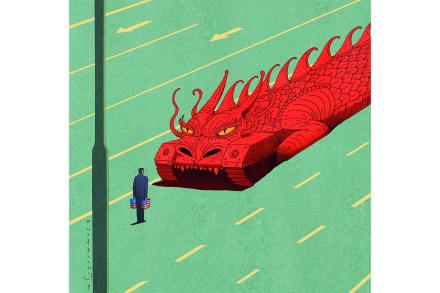
The US-led expansion of NATO in the direction of the Russian border took place when America was at the peak of its power — the "unipolar moment" — and when Russia had hit geostrategic rock-bottom. The global balance of power has changed since then, and that helps explain what is happening now. Vladimir Putin is correct when he argues that, since the collapse of the Soviet Union, the United States and its Western allies have taken advantage of Russian weakness. It may sound simplistic, but back then in the immediate aftermath of the Cold War, American policymakers did a lot of things just because, well, they could do them. And then they created geostrategic narratives to justify what they wanted to do.

biden putin

The next North Korea crisis has begun

While the world is captivated by all things Omicron and Russia, North Korea is once again back on the world stage. And that can only mean one thing: bigger and badder missile tests. None of this should come as a surprise. North Korea’s leader, Kim Jong-un, has announced to the world on numerous occasions that he will continue to test such weapons, even as his nation suffers from a “food problem.” Kim, his father, and his grandfather have been marching towards a fully viable nuclear deterrent for decades now. What is new is that Kim has declared that he will not abide by the promise he made to not test certain weapons platforms that directly threaten the US homeland — what drove the near-nuclear showdown with President Donald Trump back in 2017.

north korea

Save Ukraine by admitting Georgia into NATO

As the Ukraine crisis continues to develop, it has become impossible to avoid mentioning Georgia and its relations with the West. This is not only due to the similarities in the two countries' geopolitical circumstances, but also because Georgia is explicitly mentioned with Ukraine in President Putin's demands to the West to forego any future NATO expansion. Like Ukraine, for years, Georgia has sat in the uncomfortable position of being pro-Western without enjoying the protections afforded by membership in both NATO and the European Union. Yet a country that was once a staunch Western ally has become mired in accusations of authoritarianism, behind-the-scenes governance, and covert pro-Russian sentiment. Georgia and Ukraine have occupied a unique position in the post-Soviet space.

vladimir putin alexei navalny

Trump was tougher on Russia than Biden

Vladimir Putin’s new year is off to quite a start. The Russian autocrat isn't just massing troops on the Ukraine border, kicking off a diplomatic panic in European capitals and in Washington. In recent days he's also backed a refugee stand-off with Poland, helped Kazakhstan's strongman squelch pro-democracy protests, maintained a presence in Assad’s Syria, established new footholds in Mali and Central African Republic, cozied up to communist China, and, in a nod to Khrushchev, hinted he might build military infrastructure in Cuba and Venezuela. What's remarkable about this geographically expansive, chaos-inducing, dangerous spectacle is that it was entirely avoidable. Mr. Putin is no cipher.

Don’t go to war with Russia over Ukraine

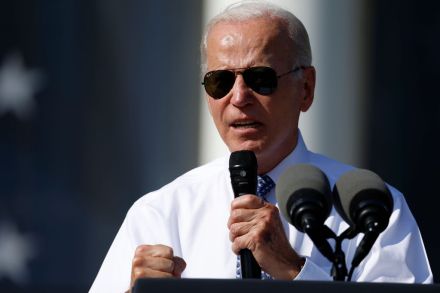
With shocking speed, talk in Washington has shifted from disunity among the Democrats and Joe Biden’s unhappy first year to possible war in Europe. The Putin government is reinforcing units poised to invade Ukraine. Washington is sending weapons to Kyiv. The United States and United Kingdom have begun to evacuate embassy personnel. President Biden is considering sending additional troops to garrison NATO member states. But for what? Why is the United States so thoroughly entangled in a conflict not its own? Not for reasons of history Throughout most of America’s relatively short existence, Ukraine was part of either the Russian Empire or Soviet Union.

ukraine

Russia may very well invade Ukraine

The United States is doing what it can to deter Russian President Vladimir Putin from ordering another invasion of Ukraine. Despite the cool and collected persona that Ukrainian President Volodymyr Zelensky is trying to present to his people, the White House still believes Russian military action is "imminent.” The Biden administration recently put 8,500 American troops on alert for deployment to Eastern Europe. Washington has spent the last several weeks trying to convince the Kremlin that any incursion into its neighbor would be costly. On Tuesday, the US sent a third shipment of lethal equipment to the Ukrainian military, including 300 additional Javelin anti-tank missiles. This comes on top of the 200,000 pounds of lethal aid that had already been provided by Washington.

Russia is the lost great power

Lost in the endless debate about whether Russia will invade Ukraine is the real reason that Moscow — armed with nuclear weapons and one of the most advanced militaries on the planet — feels so threatened by its neighbors, the NATO alliance, and ultimately the United States. While the expansion of NATO in the 1990s plays a big role, it is Russia’s everlasting internal debate about its place in the world that is the real source of tension. It's a historical black hole no one wants to get sucked into, but unless resolved it has the potential to be a source of armed conflict the likes of which Europe has not witnessed since World War II. Geography and history are both a blessing and a curse for Russia.

Will the old world order end in Ukraine?

As Russian troops encircling eastern Ukraine are preparing to attack, western leaders are bracing for a Russian invasion while struggling to maintain a united front. Following the fallout of peace negotiations and numerous deterrence measures that appear to be inconsequential, French President Emmanuel Macron has called on the EU to conduct its own dialogue with Russia and forge its own plan for security and stability. It’s an indication that most European nations are tired of being sidelined during negotiations and reluctant to impose harsh sanctions against Russia, especially since it could risk a gas shortage that would impact recovering European economies.

chinese meddling
china ccp

How China meddles in American academia

"Congress has dropped language from a must-pass bill governing US defense policy that would have effectively prevented US scientists from participating in Chinese programs aimed at attracting foreign scientific talent,” reported Science, the journal of the American Association for the Advancement of Science (AAAS) in December. The journal cautions, however, that the provision may reappear in another bill. The AAAS is the most authoritative voice for American scientists. It has generally opposed any restrictions on relations between US academics and China, and favored the US government’s stepping back from investigating and prosecuting scientists for lying about their service to China.