World

No more dithering over Ukraine

The extraordinary skill, courage and effectiveness of Ukraine’s fighting forces have given the US and NATO an extraordinary opportunity to reestablish military deterrence in Europe and show the Kremlin that unprovoked military aggression will be repelled and ultimately defeated. But President Biden and NATO leaders are dithering. They are simply not acting with the urgency needed to fully support Ukraine’s military. It’s the same failure they displayed for the year prior to the invasion, when Putin was building up tens of thousands of troops along Ukraine’s border. Even now, the US and NATO are hesitating to provide the full complement of essential weapons to Ukraine, including air-defense systems, MIG fighters and a lot more drones, anti-tank and anti-ship weapons.

ukraine
warsaw

Biden’s Warsaw speech was both baffling and moving

Poland “Biden fell asleep.” Perhaps a thousand jokesters posted this and similar jibes in the livestream comments as we waited for the president to speak from Warsaw. Thousands of Poles, and doubtless many Ukrainian refugees, were gathered around the Royal Castle in the center of the Polish capital to wait. Biden trotted out — old but amiable and very much awake. In fact, after spending two days meeting refugees, Ukrainian representatives and Polish politicians, he looked surprisingly sprightly. God help me for saying this but I have a soft spot for the president.

The last American tourist

I was driving along a curvy English road outside a village in Gloucestershire a few weeks ago when a sign loomed on our left. It said: CATS EYES REMOVED My first thought was: What a horrible way to make a living in this day and age, even out here in the countryside. So much for All Things Bright and Beautiful... Maybe those people who said that Brexit would turn the English into depraved monsters were right. I was jumping to conclusions. It hadn’t been put up by an entrepreneur or veterinarian but by the highway authority. Cat’s eyes are what the English call those super-reflective bumps embedded in the stripes on minor highways to keep drivers from drifting across lanes. The sign was a warning that this curvy road had recently become much more dangerous.

tourist

How will the battlefield stalemate end in Ukraine?

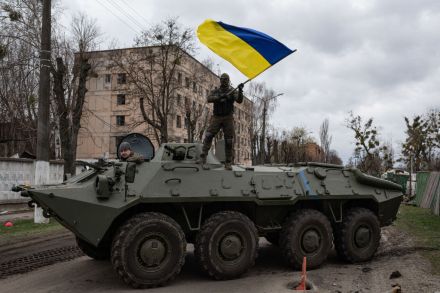
The simplest description of the war in Ukraine is this: stalemate, accompanied by constant, deadly bombardment. For the Ukrainians, that bombardment is aimed at the Russian military. For the Russians, it is aimed mostly at civilian targets, a deliberate strategy that is also a war crime. Russian artillery shells, cluster bombs and cruise missiles are killing tens of thousands of Ukrainian civilians and destroying their homes, schools and businesses. Meanwhile, Ukraine’s counterattack is imposing huge, irreplaceable losses on Russia’s army, killing soldiers, destroying their equipment and liquidating incompetent military leaders who come to the front to untangle the mess. Russia’s initial war plan failed, abysmally.

stalemate

Where Europe ends and the war begins

On a nondescript bridge in the northeastern Hungarian town of Záhony, the European Union ends and the war begins. Even amid the turmoil in Ukraine, the local border crossing is strangely quiescent. The flood of cars from the early days of the war has slowed to a trickle, and big eighteen-wheelers continue to cross over from Hungary into Ukraine. There are only two signs that something is amiss: a small notice on the door of the nearby Penny Market asking customers to help Ukrainian refugees, and a massive billboard of Hungarian prime minister Viktor Orbán’s stern face, promising voters that he will keep Hungary safe and peaceful.

viktor orban eu hungary

The reporter who covered up the Ukrainian famine

Now would seem to be an excellent time for the Pulitzer Committee to withdraw the award it bestowed on Walter Duranty in 1932 for his reporting on events in the Soviet Union. I know I am far from the first to call on the Pulitzer Committee to withdraw the award. I know as well that the Pulitzer Committee responded to one such call in 2003 by declaring that it could find no “clear and convincing evidence of deliberate deception” in Duranty’s 1931 reports from the Soviet Union published in the New York Times in 1931. Those thirteen reports on which the original award was based, admits the Pulitzer statement, amount to work that “measured by today's standards for foreign reporting, falls seriously short.” And time has moved on, etc., etc.

walter duranty

Why the Ukraine war might not end

One thing anyone who studies foreign policy for a living knows is that fairytale endings never happen in war. I suspect Ukraine will follow this sad trend. Why should we expect anything different? War never conforms to humanity’s desire for the good guys to defeat the bad guys. Indeed, great power politics grounded in realpolitik but shaped by mankind’s sense of morality is a mixture that yields tragic results. The demand for closure, clean endings to conflicts where the antagonists get punished, is rarely fulfilled. Wars only have happy endings in the movies. In fact, some wars never seem to end, as the combatants are left unfulfilled — or just haven't been weakened enough.

ukraine

The problem with that ‘stalled’ Russian convoy

The amount of disinformation coming out of Ukraine is unsurpassed in modern history. Unlike the glory days when outlets like CNN sent knowledgeable reporters into combat zones looking for actual information, today most mainstream media coverage is based on borrowed social media video, or just made up. The problem with the former, social media video, is that it lacks context. Here's eight seconds of a tank blowing up. Where was it shot? When? Was the explosion caused by a mine, a missile, or something internal to the tank? Is it Russian or Ukrainian (the tank and the missile)? In most cases, the media outlet has no idea of the answers. Even if they stumble onto the basic who-what-where, the exploding tank video is devoid of context.

merkel retirement

Angela Merkel’s legacy crumbles

Angela Merkel is one of the most recognizable names in modern politics and probably the only German chancellor since post-war leader Konrad Adenauer that Americans will remember. Merkel was the leader of the center-right CDU party and head of the German government for a full 16 years, making her one of the longest-serving chancellors in German history as well as the first woman to hold the post. Now the full scale of her disastrous reign is becoming clear. Following the nuclear power plant incident at Fukushima in 2011, Merkel began Germany's "Energiewende" (energy shift), intending to phase out of all of Germany's nuclear plants in favor of renewables.

support

Make China pay for its quiet support of Putin’s war

China is tacitly backing Putin’s aggression against Ukraine. The Biden administration should combat this by imposing economic costs on China through the corporate Environmental, Social and Governance disclosure requirements that are already in place. Xi Jinping and Vladimir Putin met in February at the Beijing Olympics, their thirty-eighth visit in the nine years since Xi took power. In a 5,000-word statement on February 4, Xi and Putin proclaimed their friendship with “no limits” and “no forbidden areas of cooperation.” Just weeks before the invasion, China signed agreements to buy from Russia energy and agricultural products worth over $200 billion.

Did the realists underestimate Putin?

Liberal internationalists, neoconservatives and NeverTrumpers are having the time of their lives these days, ridiculing anyone on the political right who has ever said a good thing about Vladimir Putin. Those “Putin groupies” as a Wall Street Journal columnist described them, include former Italian prime minister Silvio Berlusconi, far-right French presidential candidate Marine Le Pen, Hungarian prime minister Viktor Orbán and, of course, Trump himself. Trump described Putin as a “genius” and said he was a better president than Barack Obama — and he isn’t the only American president to compliment the Russian leader. President George W. Bush said about Putin, “I looked the man in the eye. I found him to be very straightforward and trustworthy.

putin

The strange ideology that could be driving Putin

Vladimir Putin’s motives in attacking Ukraine have become the subject of many deep and searching speculations. Is he seeking a personal legacy by attempting to reassemble the parts of the Soviet Union that fell asunder? Is he pursuing Russian national security by making sure Ukraine never becomes the frontline of NATO? Is he gleefully taking advantage of a weak and incompetent US president? Is he vindicating the glorious history of the KGB? These theories are not mutually exclusive, and there are many more possibilities. I want to enter the discussion from my nearly pristine ignorance of Russian geopolitical designs.

eurasianism
biochemical weapons

Yes, Putin could use biochemical weapons in Ukraine

The Russian Defense Ministry held a briefing last week claiming that they have discovered US-led biological laboratories in Ukraine. Moscow stated that a rapid halt was brought to the facilities’ activities, adding that Kyiv and Washington had violated the Convention on the Prohibition of Biological and Toxin Weapons. The Kremlin did not feel the need to provide evidence of its claims, par for the course in Putin’s Russia.

crazy nuts

Is Putin nuts?

As Russian forces level Ukrainian cities with artillery, missiles and airstrikes, there's a concerted effort to get inside the mind of Vladimir Putin: from pundits, former US national security officials and current heads of government. What could possibly get the man to stop the bombardment and support a ceasefire? Is Putin intent on conquering all of Ukraine? Or is there some combination of concessions the Ukrainian government and the West could offer that would end the war and bring about a full Russian troop withdrawal? The fact is none of us know what Putin’s endgame is. Putin’s own advisors, especially those kept out of the inner circle, may not even understand what the Russian leader is planning.

Russia is the West’s great tragedy

The books written about the tragedy of the Russo-Ukrainian War will be legion. In the meantime, there's another book that ought to have been written 20 years ago about a previous tragedy concerning Russia: how, following the collapse of the Soviet Union in 1991 and with it the demise of the communist regime, Russia and the West failed to “converge” in some way. Why did the two did not come to embrace each other politically, economically, and culturally? The rivalry between East and West has since 1917 been fundamentally an ideological and not a nationalist one. Historically, before the Bolshevik Revolution, Washington had been on cordial terms with Moscow, from which it had purchased the Russian territory of Alaska in 1867.

us-russia

Russia’s war is a global cancer

One thing I have always found fascinating about Russia is that when they tell us they are going to do something, they usually do it. So when Moscow struck a military base near the Poland-Ukraine border that was a staging ground for arms shipments, we shouldn't have been surprised. They told us that was their next plan of action just twenty-four hours before they did it. But that’s just the beginning of what Russia likely has in store for the West, NATO, and the entire world if we aren’t careful. Russian president Vladimir Putin’s plan seems simple: chaos on a scale that will extend far beyond Ukraine. You see, Putin is starting to come to grips with the fact that he can’t win the war in Ukraine — at least on paper — unless he destroys Ukraine.

cancer

Peace and its consequences in Ukraine

It is now a matter of consensus that Vladimir Putin never intended to fight the type of war that now faces him in Ukraine. What was plainly meant to be a blitzkrieg-style assault has devolved into a war of attrition, with death, destruction and violence on a scale unseen in Europe since the disasters of the last century. It is quite plain that the Kremlin, despite its bluster, is aware of this. The Kyiv government's claims of Putin dismissing his generals and raving in fury at his security services are consistent with events on the battlefield; indeed, after two weeks of fighting, Russia has only managed to decisively claim one Ukrainian city.

volodymyr zelensky ukraine invasion
ukraine

Ukraine and the war for your mind

Deterrence works. Russia's nukes are the only thing keeping the US from full-out war in Ukraine just six months after retreating from Afghanistan. The unprecedented propaganda effort by Ukraine and its helpers in the American mass media to drag the US and NATO directly into the fight has failed — so far. But the struggle — the one for your mind space — is not over. To understand what follows, you have to wipe away a lot of bull being slung your way. Insanity is not the only explanation for Putin’s actions of the past few weeks.

Putin the reckless gambler

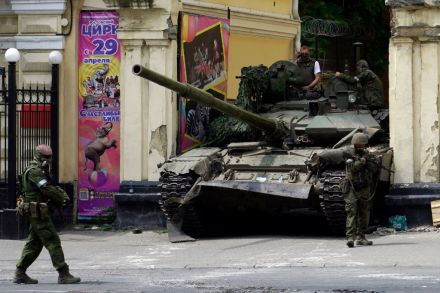
Vladimir Putin’s two-week-long war in Ukraine is not going as planned. What the Russian strongman thought would be a romp of the Ukrainian army in a matter of days has turned into a slow-motion train-wreck, with thousands of Russian soldiers killed in battle, images of burned-out tank husks littering the roads and Russia’s economy circling the drain. CIA director William Burns told the House Intelligence Committee today that Putin is increasingly frustrated about the level of progress achieved thus far in the campaign. "He was confident that he had modernized his military and they were capable of quick, decisive victory at minimum cost,” Burns said during his testimony. “He’s been proven wrong on every count.

vladimir putin alexei navalny
sanctions putin russia davos oligarch

Time for Europe to man up

The End of History has ended. It officially ended with Vladimir Putin’s decision to invade Ukraine. Francis Fukuyama wrote The End of History in the early Nineties. It's a book that captures the optimistic zeitgeist of that decade — born of the fall of the Berlin Wall and the implosion of communism. The basic idea was that once communism faded away — the reality, not the ideal, which will forever exist in the minds of many intellectuals — the world would become a more liberal, democratic and commercial place. It was an argument with real legs. East Germany was digested by the West without a burp. The Baltic states prospered. Asia took off. A rising commercial tide lifted all boats.