China

Trump must act on Hong Kong before it’s too late

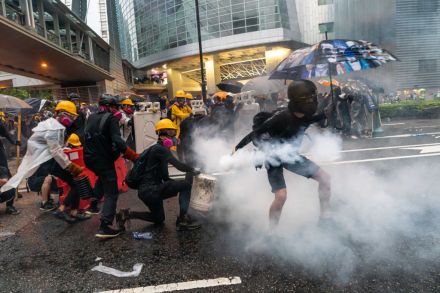
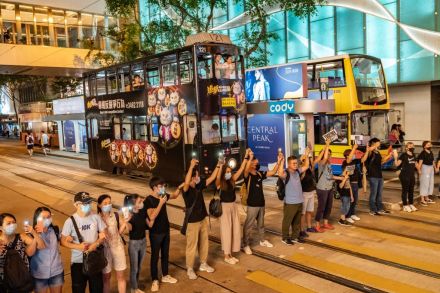
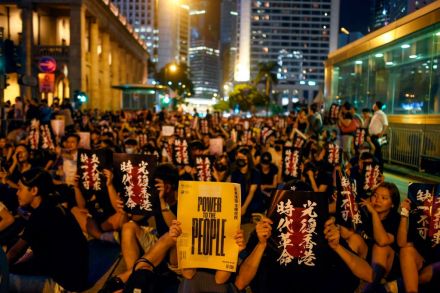
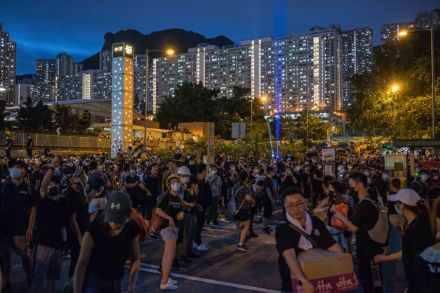
The central question regarding the Hong Kong protests is not whether a crackdown is imminent — it’s already happening — but its final form. After more than 60 days of unrest in Hong Kong, Chinese leader Xi Jinping seeks to bring the city under control as quickly as possible, and without using the military. Rather than repeat the 1989 Tiananmen Square Massacre, Xi wants the repression to occur through aggressive law enforcement and severe punishment, while not yielding an inch to the protesters’ demands. Chinese state propaganda has ominously escalated its rhetoric. The protests are now labeled a ‘color revolution’, and their violence as ‘terrorism'.

hong kong

America should view China as a hostile, revolutionary power

Much has been made of the return of great power competition. In truth, it never went away, although the great game was so one-sided for a time that almost everyone in the West tuned out, assuming the match was over in perpetuity. It was too boring to contemplate and so attention drifted to other concerns and second- and third-order problems. China’s attention did not deviate, and once again it is a great power. Like cholesterol, great powers can be good, in that they accept the present international order, or bad, in that they do not. China does not, and seeks to overturn the contemporary order the West created.  This is the source of what is already the great conflict of 21st century. China is not a status quo great power.

xi jinping power

Will Hong Kong’s revolution come West?

A specter is haunting the world — the specter of a new kind of revolution. The Hong Kong protesters’ technology and tactics have baffled the Chinese authorities, leaving them apparently powerless to restore order, except by extreme and counter-productive violence. Hong Kong's revolutionary template will be adopted by all groups wishing to destabilize existing orders. The Hong Kong riots have unfolded despite the most intrusive surveillance state ever created. The Chinese government gathers information on every citizen, and is working to assign each a social credit score that will determine who may buy a house, get a promotion, or move to a different city.

hong kong

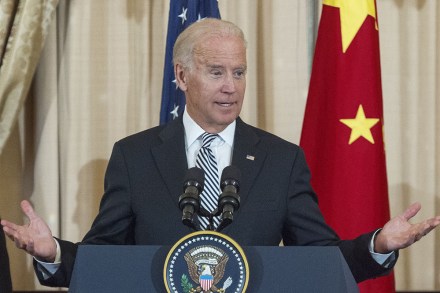
The problem of Beijing Biden

Imagine a presidential primary campaign candidate who is far ahead in the polls. Now, imagine that candidate leading in a diverse array of early states – Iowa, New Hampshire and South Carolina. This candidate is the most famous in his field. He has over four decades in the limelight. He routinely makes remarks that are offensive. Women suspect he is a sexual predator. The commentariat insist he’s finished. This politician is said to be out of step with his party’s base: his values don’t reflect theirs. Oh, and this candidate would be the oldest nominee in his party’s history, and America’s oldest elected president. This person is Donald Trump in 2016. He’s also Joe Biden in 2020.

beijing biden

One academic’s fight for the rights of Uighurs

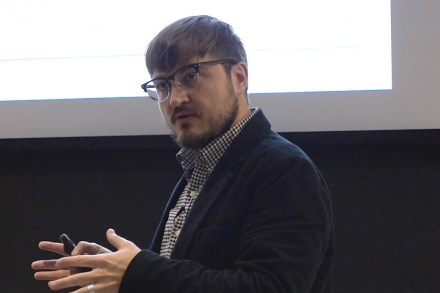
'After I testified in front of the Canadian House of Commons, the Chinese government might have put me in a different "category" on their blacklist,' Darren Byler said with a smile on his face. 'I possibly became an enemy of the state.' Byler is a lecturer in the department of anthropology at the University of Washington. He's an avid mountain climber, a Uighur poetry and literature enthusiast, and an advocate for Uighur rights in China. Since 2017, the People's Republic has interned as many as one million Uighurs, Kazahks, Kyrgyz, and other Muslim minorities in Xinjiang, the Uighur 'autonomous region' in northwestern China. Byler’s testimony, and the testimony of others, resulted in a Canadian government report condemning Chinese government’s treatment of Uighurs.

darren byler uighurs

In defense of treason

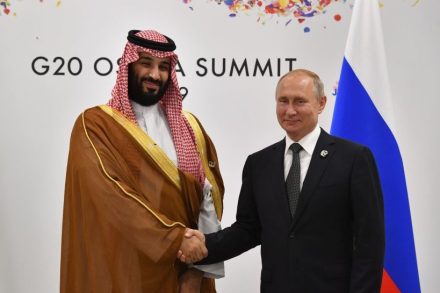
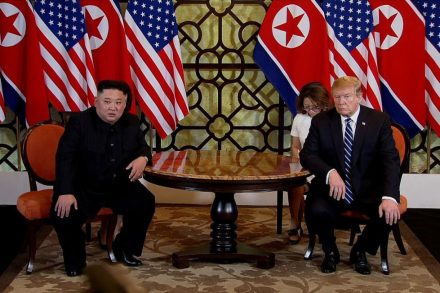
The recent G20 meeting in Osaka and its surrounding events provide a sad view of the emerging New World Order: Trump exchanging love messages with Kim Jong-un and inviting him to the White House, Putin jovially clapping hands with Prince Mohammed bin Salman, and so on, with Merkel and Tusk, the two voices of old European reason, marginalized and mostly ignored. This NWO is very tolerant: they all respect each other, no one is imposing on others imperialist Eurocentrist notions like women’s rights. This new spirit is best encapsulated by the interview Putin gave to the Financial Times on the eve of the Osaka summit, in which he, as expected, lambasted the ‘liberal idea’ claiming that it ‘outlived its purpose.

treason

Trump’s bad Huawei deal with Xi

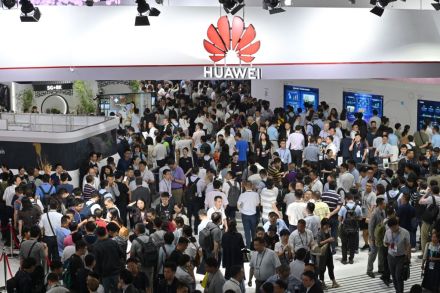
Trump’s decision to lift the ban on US companies doing business with Huawei, the Chinese telecommunications company, is a stunning defeat for him. It’s also a major reversal for the US intelligence community, which has been concerned for years about what it considers to be Huawei’s wholesale theft of American technology.Lifting of the ban reinstates Huawei at the leading edge of China’s global spying. It undercuts months of private attempts to encourage America's allies to join in what the US hoped would be something close to a worldwide ban. And, over the long term, it also threatens America’s strategic advantage as a leader in new technologies.

huawei

China’s Belt and Road Initiative is neo-Imperialism

China’s Belt and Road Initiative (BRI) is touted by Beijing as an attempt at multinational economic cooperation and development, comprising everything from foreign direct investment to the development of infrastructure. However, the purpose of the BRI is not economic or cultural but strategic, and is an effort to mask the expansion of Chinese power. In its strategic intent, the BRI should be considered an imperial project alongside the likes of the British East India Company (EIC) or the Dutch East Indian Company, Vereenigde Oostindische Compagnie (VOC).  With the BRI, China is exercising the 'imperial excuse', just as the EIC and VOC did centuries ago.

belt and road initiative

China will be the AI superpower

As President Trump settles in for a long trade war with China, he ignores a far more serious crisis in China relations. At stake is not just the size of a trade deficit, but the future of America’s position as a superpower. China has made clear its determination to lead the world in Artificial Intelligence by 2030 and to become the world’s sole AI superpower by 2050. To achieve these goals, China is aggressively investing tens of billions of dollars in future technology including robotics, surveillance, and data analysis. This state-controlled effort unites both the public and private sectors for a single purpose: world domination.

AI

Russia and China are watching Iran, and waiting

As US-Iran tensions rise, America’s sway over its allies is falling. Last week, Major General Christopher Ghika, the British officer second in command of anti ISIS forces in Iraq and Syria, publicly contradicted the rationale behind American troop build-ups in the region. US Central Command was quick to rebuff Ghika, but Britain’s Ministry of Defence supported him. Other NATO allies, too, are balking at confrontation with Iran. Spain has withdrawn a frigate from the American-led, Gulf-bound carrier group. Federica Mogherini, the EU’s High Representative for Foreign Affairs, has called for ‘maximum restraint’. If there is to be a third Gulf War, the US might find itself with fewer friends than in the last.

iran

How I learned to stop worrying and love Trump’s trade war

Alarmist news reports and panicky stock sell-offs. A threat to impose tariffs on US goods in retaliation for President Trump’s threatened levies. You’d think that Beijing had just ruthlessly shut down a major engine of American growth. But the truth is that tariff fear-mongering reveals the gulf between America’s financial markets and its real economy that provides everyday goods and services. The Chinese economy has grown spectacularly since Beijing turned away from Maoism in the 1980s. It’s true that major American industries from aircraft to agriculture have profited handsomely from supplying Chinese demand. The offshoring model supercharged by China’s admission to the World Trade Organization (WTO) in 2002 has been especially lucrative.

donald trump trade war

Our real problem with China: Xi Jinping

At the last minute the Chinese Communist Party chief Xi Jinping vetoed the trade deal with the United States, after his representatives had negotiated and agreed to it. Xi claimed that he will take the responsibility for ‘all possible consequences.’ This left President Trump no choice but to impose higher tariffs on some Chinese imports. This battle over trade marks only the early rounds of the US struggle with China. China’s economic success was achieved in large measure by taking advantage of the working people of both China and the US. It was made possible because the US allowed it to enter the world’s free trade system. Because China entered the West’s economic ecosystem a generation ago, it has flourished.

xi jinping

The future of world trade is in the balance

Ongoing trade talks between American and Chinese officials took an unexpected turn on Sunday: President Trump took to Twitter and announced a plan to impose tariffs on all Chinese imports by Friday. The tariff threat adds urgency to negotiations that will continue on Wednesday, when a Chinese delegation is due to arrive in Washington, DC. The move is a departure from last week when US Treasury Secretary Steven Mnuchin and Trade Representative Robert Lighthizer arrived in Beijing to initiate a fresh round of trade talks with China. Despite chronic trade tensions, both sides had sounded optimistic ahead of the meeting. State Councilor Wang Yi, China’s top diplomat, expressed hopes the two sides could ‘reach a mutually beneficial, win-win agreement’.

world trade

Kim Jong-un is doing to Trump what Trump is trying to do to China

Will he stay or will he go? Speculation about President Trump’s future began with House Speaker Nancy Pelosi’s comment this past weekend that she worried in the run-up to the 2018 midterm elections that Trump wouldn’t accept a close result and deem it a Democratic hoax. Now she’s indicating that she’s not convinced that he will abide by the results of the 2020 election if they are close and he’s the loser. As it happens, Trump amplified those concerns with a tweet riffing on Jerry Falwell, Jr.’s contention that he deserves an extra two years added to his first term because an attempted deep state putsch, led by Robert Mueller and his minions in the FBI, deprived him of the ability to govern effectively over the past two.

kim jong-un

China’s war on Islam

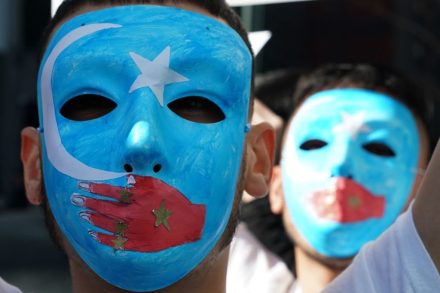
The Reuters photo could be mistaken for a shot of one of America’s ‘supermax’ prisons, the ones where the most dangerous criminals are held. An endless green security fence, topped with coils of barbed wire, punctuated by soaring octagonal guard towers with 360-degree views, all fronting what looks like a massive concrete wall or side of a building. Yet the Chinese workers walking outside the fence give away the truth. The picture is not of a US prison, but rather a Chinese ‘re-education’ center in vast Xinjiang, in the country’s far west. According to research by the Australian Strategic Policy Institute, there are 28 such massive detention camps in Xinjiang, most built within just the last several years.

uighurs

We should be watching Chinese meddling, not Russian

‘Russian influence’ is everywhere these days, especially if you’re a liberal. From the White House to Brexit, the Donbass to the Baltics, the specter of Russian expansionism is inescapable in the news. But have Western media identified the wrong zeitgeist? For a malevolent power, Russia is all too conspicuous. Real mastery of subterfuge entails a degree of subtlety. ‘Russia is very aggressive...up-in-your face,’ says Donald N. Jensen, of the Center for European Policy Analysis. ‘China seems to be a bit more discreet...even when it fails, you don’t really know it.’ Chinese meddling may go unnoticed in Europe and North America, but it is more conspicuous in Australia and New Zealand.

chinese meddling

US military ‘on the balls of our feet’ for Venezuela, says four-star admiral

As Russian, Chinese and Iranian planes arrive in Venezuela to prop up President Nicolás Maduro, key Trump administration officials signaled that the US military is ready to respond. ‘President Trump is determined not to see Venezuela fall under the sway of foreign powers,’ Trump’s national security adviser John Bolton told radio host Hugh Hewitt Wednesday. Bolton favorably referenced the Monroe Doctrine and said that if it ‘fails, if China and Russia, along with Cuba, establish domination over Venezuela, I think American strategic interests will be harmed.

venezuela US Navy Admiral Craig S. Faller

What is Trump’s big deal with China?

Beware the Ides of March. President Trump has indicated that he will defer his promised hike in tariffs on Chinese products to 25 percent until March 1. Stocks promptly went up. ‘If all goes well,’ Trump said on Sunday, ‘we’re going to have some very big news over the next week or two.’ What’s the big deal? Trump, who fashions himself a wheeler-dealer par excellence, is claiming that he, and he alone, can reach the great compact with Beijing that will put an end to its predatory trading practices. China, which continues to smart over the humiliations inflicted upon it by the western powers, including America, during the nineteenth century, has essentially flipped the script, at least if you listen to the hawks around Trump and in the media.

donald trump china

Maybe it’s time to accept that Huawei is a Chinese intelligence front

Established in the southern Chinese city of Shenzhen in 1987, it didn’t take long for Huawei Technologies to become a top player in global telecommunications. Since 2012, it’s been the world’s biggest manufacturer of telecommunications equipment. Last year, Huawei displaced Apple as the world’s second-biggest smartphone maker, after South Korea’s Samsung. Active in 170 countries, Huawei matters – to China and to the global economy.Yet there have long been questions raised about the company, starting with the fact that Huawei’s founder and CEO, Ren Zhengfei, is a former senior technologist for the People’s Liberation Army.

huawei

The confusion of the Confucians

The French fight it out in the streets, the British leave it to their politicians to stab each other in the back, and Americans turn to the market. This is normal service in abnormal times. The turbulence affecting Western societies isn’t going to stop soon, and the ship cannot be steadied by the hand of government on the tiller, whether by small changes to the tax code or big subsidized boondoggles. In fact, the voters suspect that government — not government in principle, but government as practiced — is the problem. And they’re right. I’ve been in Washington, DC for a couple of days, so excuse the world-historical reflections. Two big changes are afoot in the world now, digitization and the shifting of global GDP away from the Euro-Atlantic region to Asia.

Kissinger