China

China’s response to Trump’s tariffs marks a dramatic escalation

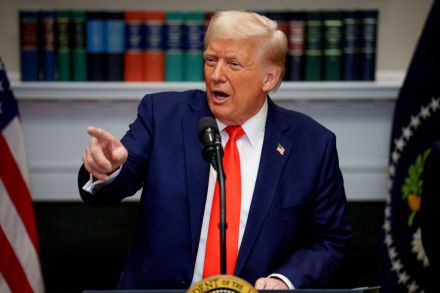
Might peace in Ukraine be prelude to an even more serious conflict between the United States of America and China? Is that a hysterical question? The deal-or-no-deal drama starring Donald Trump, Volodymyr Zelensky and European leaders has dominated the news in recent days, so much so that the latest clash between Washington and Beijing has gone all but unnoticed. Yet China’s official response to the Trump administration’s move to raise its tariffs on Chinese imports to 20 percent does appear to mark a dramatic escalation. "Exerting extreme pressure on China is the wrong target and the wrong calculation,’’ said China’s foreign ministry spokesperson Lin Jian. "If the US has other intentions and insists on a tariff war, trade war or any other war, China will fight to the end.

Why we must not forget Hong Kong

Forty years ago this Christmas I visited Hong Kong for the first time — a few days after the signing in Beijing of the Sino-British Joint Declaration that sealed the former colony’s transfer to mainland rule in 1997. It was a moment of apprehension, but at least the timetable had been set. And how lucky I was to have experienced that extraordinary outpost as it was then, in such contrast to what China’s masters have made it now. The Christmas Day service in St. John’s Cathedral, overhead fans stirring the turbid air, was a poignant glimpse of Hong Kong’s past. Norman Foster’s Hongkong Bank building, the most expensive in the world at the time, was approaching completion as a symbol of commercial confidence in the future.

Hong Kong

Hong Kong justices decide to keep Jimmy Lai in jail

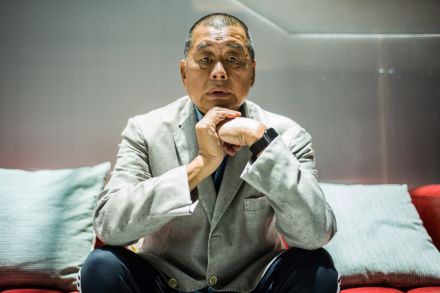
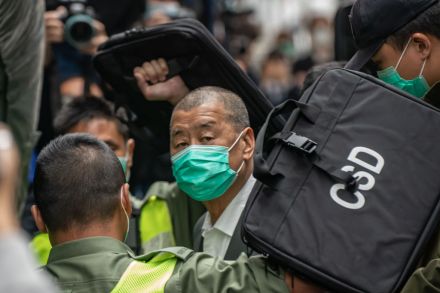
Hong Kong’s top court decided Monday to uphold Jimmy Lai and six other pro-democracy activists’ convictions for their campaigning during the anti-government protests that rocked the city in 2019. In a unanimous agreement, the court dismissed the bid to overturn the convictions of the seven activists.   Among the justices who voted to uphold the conviction was British justice David Neuberger, who is still serving as non-permanent judge in the former British colony.   Lai, seventy-six, the founder of the pro-democracy newspaper Apple Daily, was found guilty in 2021 of organizing and participating in an unauthorized assembly in August 2019 during months-long pro-democracy protests in the China-ruled city. He was sentenced to seventeen months in prison.

jimmy lai

China’s slow but sure infiltration of America

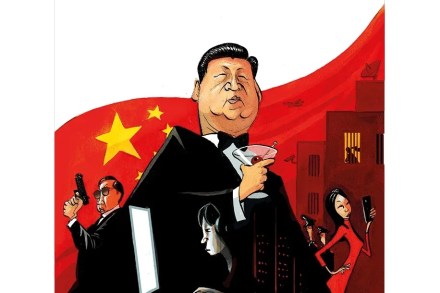
As it becomes clearer that China and the US have entered a new Cold War, Beijing’s spy operations have grown more flagrant and provocative. Whether it be flying spy balloons, buying farmland near US military bases or even establishing a secret police station in New York City, China is slowly but surely infiltrating the US. In February 2023, a US fighter jet shot down a Chinese spy balloon over the Atlantic. The balloon crossed into US airspace over Alaska in late January before passing through Canada and into Montana. While the balloon was able to transmit information back to Beijing in real time, CNN reports the government doesn’t know exactly what intelligence was gathered.

xi jinping wang huning wargame militarizing IP china

Explaining China’s IP problem

Since man’s early origins, the desire to possess gold has been a universal obsession. Gold was once viewed as the ultimate symbol of power and wealth. Governments amassed vast quantities of gold to finance their economies and political ambitions. Until the mid-twentieth century, leading national currencies were directly tied to how much physical gold was housed in national treasuries. But 500 years ago, Sir Thomas More got it right when he described gold as something “which in itself is so useless.” Today, rather than gold, what truly represents a nation’s strength is its ability to innovate and control technologies.

xi jinping wang huning wargame militarizing IP china

Ex-TikTok employees sound the alarm over ties to China

Cocaine Mitch may be onto something. Last week, the senator called on his colleagues to pass a bill banning TikTok unless it is sold by its Chinese parent company, ByteDance. Now ex-TikTok employees are coming forward with stories detailing the company's entanglement with China.  According to eleven former employees interviewed by Fortune, TikTok has deep ties to Beijing through ByteDance which the company has tried to conceal. Some of the employees were with the company as late as last year, after the launch of Project Texas, a $1.5 billion initiative to store data of American citizens in the US. Evan Turner, a former senior data scientist at TikTok, worked for a Beijing executive during his time at the company.

tiktok
TikTok

The fight to curtail TikTok’s US influence

One hundred and twenty minutes. That’s how much time more than 40 percent of American children spent on TikTok every day last year. The app, owned by the Chinese company ByteDance, worms its way into the minds of young people to an extraordinary degree, dwarfing their use of Instagram, Facebook, Twitter/X and Snapchat. And when word went out that the House of Representatives was seriously considering forcing a sale to peel the app away from the power of the Chinese Communist Party, TikTok fired back by weaponizing the same children against Congress — driving a deluge of confused phone calls to Capitol Hill, including some where teens threatened to commit suicide if the vote went forward.

How actually to compete with China

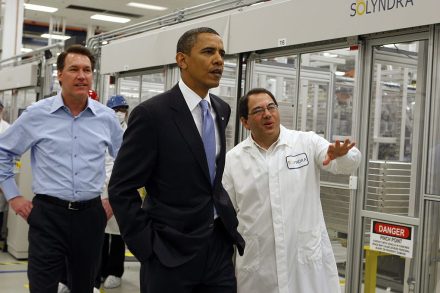
Fifteen years ago, the federal government poured $535 million into a California-based solar module innovator, Solyndra. That’s a lot of money. In today’s money, it would be enough to cover the payrolls of the Red Sox and Dodgers combined. In 2009? It was enough for Solyndra to go bust in fewer than two years — making the company one of America’s biggest public funding debacles. Solyndra’s failure remains both a political talking point and area of introspection — especially as the US increasingly wakes up to the stakes of today’s industrial competition with China.

solyndra

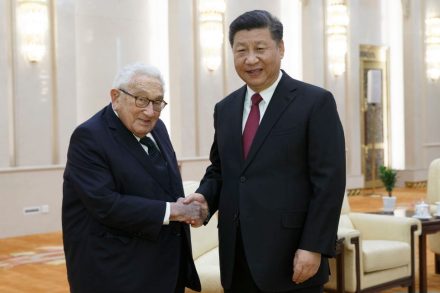
China will miss Henry Kissinger

A hero to some and a villain to others, the late Henry Kissinger impacted American foreign policy thinking in the last six decades more than anyone else. Of the former secretary of state and Nobel Peace Prize winner's contributions, one of the most significant was the strengthening of Sino-American relations. His détente policy was once celebrated by Nixonites when the Soviets were seen as the US’s main competitor. More recently, though, as anti-China sentiment has risen in America, Kissinger’s desire to soften relationships with the Asian giant has gained him some detractors on the right — and he already had more than enough on the left. Arguably his death will be mourned more in China than America.

Kissinger

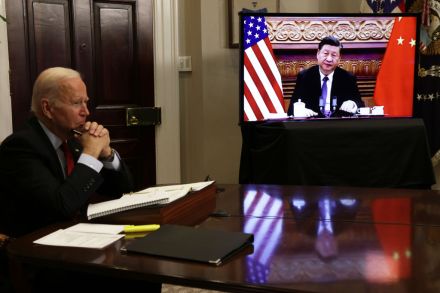
Biden and Xi will resolve nothing in San Francisco

A year ago today, President Biden and Chinese President Xi Jinping shook hands with each other on the sidelines of the G-20 Summit in Bali, Indonesia, in an attempt to reset the world’s most important bilateral relationship. The two men, who knew each other during their previous encounters at the vice presidential level, hoped to exploit their familiarity with one another to bring US-China relations onto a more productive plane. And for a moment, the Bali talkathon seemed to have that effect.

xi

Is California the new China?

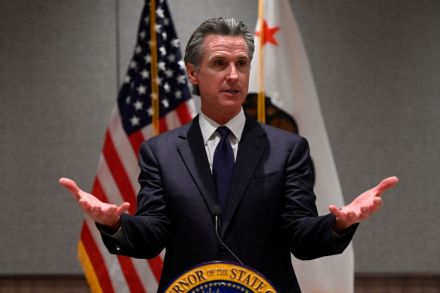
Recently, Gavin Newsom, the greasy-haired governor who may or may not run for president, made a trip to Beijing to meet with Xi Jinping. It went swimmingly, according to various reports.  When it comes to US-China relations, “divorce is not an option,” Newsom, who divorced from Kimberly Guilfoyle in 2005, told CNN on November 8. America’s answer to Justin Trudeau argued that the US and China must “reconcile our strategic red lines.” The idea of being cozy with China, a country that actively uses cyber espionage to undermine the US economy, may strike many as odd, even dangerous — but not Governor Newsom. In fact, according to reports, he is so inspired by his trip to China, that he now wants to bring a CCP-like “social credit system” to the Golden State.

california governor gavin newsom

Democrats bring a CCP-tied witness to education hearing

A hearing about the Chinese Communist Party’s funding of American K-12 education took a surprising turn when the Democrats’ witness — and several members of the House Education and Workforce Committee — took pains to conflate opposing foreign investments in public schools with Asian-American hatred. Gisela Perez Kusakawa, the executive director of the Asian American Scholar Forum (AASF), kicked off her remarks by linking concern over the Chinese Communist Party’s investments in public schools to America’s incarceration of Japanese-Americans during World War Two. Warning the Asian-American youth could end up as “collateral damage,” Kusakawa repeatedly conflated opposing the CCP with anti-Asian-American racism.

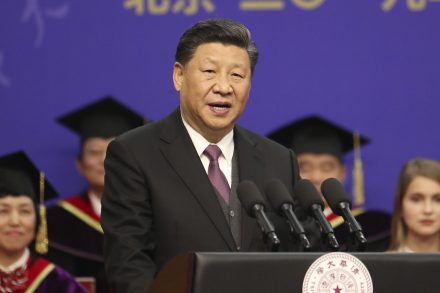
ccp Chinese President Xi Jinping delivers a speech during a ceremony at Tsinghua University ceremony (KENZABURO FUKUHARA/AFP via Getty Images)

Why is America is giving up our panda to China?

America is surrendering its native-born panda to the Chinese Communists, and the Chinese Communist Party — and a premier taxpayer-funded museum and a top defense contractor are helping to foot the bill for the goodbye party. Xiao Qi Ji, an American-born panda whose name means “little miracle,” will be shipped back to China later this month — and the Smithsonian’s National Zoo is having an entire panda-fest to celebrate this humiliation. “We are going big because they are going home,” the National Zoo boasted in its announcement of a nine-day celebration filled with screenings of Kung Fu Panda, yoga sessions and panda-themed items. “Tasty celebratory treats will be provided courtesy of the Embassy of the People’s Republic of China.

panda

Where is today’s equivalent of the Free Tibet movement?

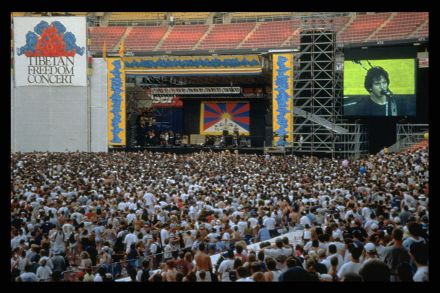
Remember “Free Tibet?” The Tibetan Freedom Concert, a series of music festivals that began in 1996, featured such impressive acts as the Beastie Boys, Red Hot Chili Peppers, Smashing Pumpkins, Rage Against the Machine, U2 and A Tribe Called Quest. An entire generation of young Americans — enchanted with “the other” of Tibetan Buddhism — had no qualms condemning what they believed to be an authoritarian Chinese regime. And why not? The People’s Republic of China, however much they fumed over international denunciations of the Tibetans, seemed weak, and incapable of silencing the Western entertainment industry’s indignation. These days, not so much. The NBA apologizes for players or coaches who criticize Beijing’s actions in Hong Kong.

free tibet

How China is trying to buy up American farmland  

China keeps buying property in the United States. Concern over this trend has been simmering for years, yet leading Democrats and left-wing media outlets dismiss it as harmless because, they say, China doesn’t own very much land in the grand scheme of things or compared to other nations. Also — racism. “No, China isn’t gobbling up America’s farms,” Bloomberg’s editorial board assured us in February as lawmakers across the country were introducing bills to prevent Chinese investors from buying more US land. (The Texas Senate passed such a bill last month, and Florida governor Ron DeSantis signed a series of such bills into law last week.

farmland

A Chinese wargame in the halls of Congress

The House Select Committee on the CCP held a wargame Wednesday evening where members played the role of the US in a showdown with Beijing over Taiwan. As Committee Chairman Mike Gallagher said after the event, “We are well within the window of maximum danger for a [CCP] invasion of Taiwan, and yesterday’s wargame stressed the need to take action to deter CCP aggression and arm Taiwan to the teeth before any crisis begins.” The results of the game were — as Gallagher predicted in his opening statement — “sobering.”  A source close to the Committee told The Spectator that a critical lesson taken by participants was that deterrence must be the top priority.

xi jinping wang huning wargame militarizing IP china
syria peace

After decades of waiting, China goes on the diplomatic offensive

China has been an epicenter of diplomacy over the last month and American officials can’t help but take notice of the shift. Statesmen flying to China, hat in hand, to sign business deals with Chinese firms or enlist Chinese diplomats to assist in solving international disputes gives the foreign policy graybeards ulcers. The general rule seems to be: what’s good for China is bad for the United States. There’s no question that China’s Xi Jinping has had a good few weeks. After being occupied with a nationwide Covid-19 disaster that lasted for three years, Xi, a man whose entire legacy depends on China transforming into a superpower on par with or perhaps even surpassing the US, isn’t wasting any time before injecting his country back into the diplomatic arena.

The truth comes out about Beijing’s balloon

Well, well, well. The world seems amazed at the news that the Chinese spy balloon that meandered over the entire continental United States this winter was, you know, spying. That’s what spy balloons do: they spy. They collect intelligence — in this case, information from some of America’s most sensitive sites (I was going to say “secure sites,” but that would clearly be inaccurate). What do they do then? Like bees collecting pollen, they transmit what they collected back to the hive, which, mirabile dictu, just happens to be located in Beijing.  Anyone who was paying attention knew this. Did secretary of state Antony Blinken? Did puppet-in-chief Joe “Chocolate-Chip” Biden? Probably.

spy balloon

Xi Jinping heads to Moscow

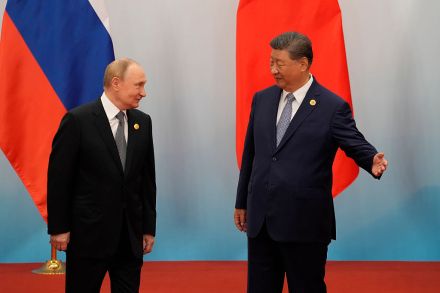
Chinese president Xi Jinping is headed to Moscow next week to meet with Russia’s Vladimir Putin. Xi last visited Russia in 2019, though the two leaders have met in person multiple times since then, including in Beijing just weeks before the invasion and in Samarkand, Uzbekistan, last September. Virtual meetings are a fairly regular affair for the two. This summit, however, is qualitatively different from the rest: it will take place in the heart of Russia while Moscow is waging war on Ukraine. To give Putin such a significant endorsement on the world stage underscores just how close the two powers are, even if Russia is, by almost any metric, the underdog in the partnership.

China’s big win in the Middle East

China had a diplomatic triumph last week that was a disaster for the US. In a vacuum, Saudi Arabia and Iran re-establishing relations would be a good thing, reducing the risk of conflict between two Middle East powers that have been engaged in proxy wars for years. But nothing happens in a vacuum, and this deal was brokered by China. Before Friday, Iran was in an accelerating downward economic spiral, with its currency at a record low. The country was increasingly viewed as the pariah that it is, alienated from much of the world as it pushed ahead with its nuclear program, supplied Russia with arms, and brutally suppressed its own citizens. Normalization does not fundamentally change that, but it does give Tehran breathing room at a time when the pressure should be increasing.