Culture

The good, the bad and the ugly in books, exhibitions, cinema, TV, dance, music, podcasts and theater.

Black History Month and the usable past

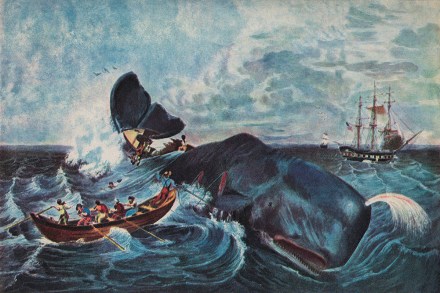
This is Black History Month when we are invited to think through a certain spectrum of the people who came before us. As it happens, I am very much interested in black history. I wrote a book about it, 1620: A Critical Response to the 1619 Project, and several books about diversity, and I have been working for several years on a nearly completed documentary about the early days of black theater and film. But, lacking any black ancestors, I must make do with my own sketchy line of progenitors. When I was growing up in the Fifties and Sixties, my father attempted to find his great-grandfather — GGF in anthropological parlance. GGF had an air of mystery since all anyone knew about him was his last name and GGM’s inveterate reply when asked about him: “He was lost at sea.
black history month

It’s not Joe Rogan who needs to apologize

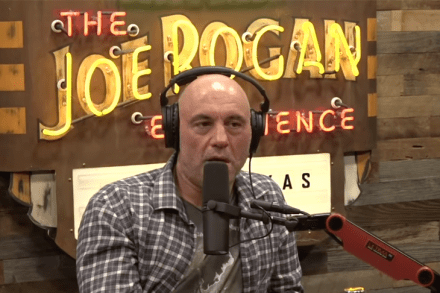
We are spending too much time talking about Joe Rogan, and Joe Rogan is spending too much time apologizing. “Whenever you're in a situation where you have to say, ‘I'm not racist,’ you fucked up,” Rogan apologized on February 5. “And I clearly have fucked up.” Rogan was addressing a montage that is circulating on social media, showing him saying the N-word on multiple episodes of his podcast, The Joe Rogan Experience. When Joe describes the montage as “the most regretful and shameful thing that I've ever had to talk about publicly,” I believe him. And I don’t think Joe made a mistake apologizing. That was Joe expressing his authentic self.

joe rogan

Biden’s food policies have nothing to do with hunger

No one starves in America. The public schools feed poor children breakfast, lunch and occasionally dinner. Church food banks, private charities and municipal programs are everywhere. Eating soundly is not always exciting, crunchy, convenient or microwave-ready, but getting adequate calories is not the nation’s problem. Buying clean, washed lettuce, firm potatoes or a sweet pineapple during a February snowstorm is a small industrial miracle. In 1900 Americans spent about 40 percent of their income on food, and today about 10 percent. The standard claim that 20 million adults live in households that do not get enough to eat rings false. Americans are the people of plenty and commodities surpluses. They have low-cost, safe, tasty food galore.

Time for the baby boomers to grow up already

It was a nice neighborhood until those people moved in. Now you can’t even swim in the pool. By four in the afternoon, they’re all sitting around drinking Corona, smoking pot, and blasting their awful music. Oh, and the language! I used to love swimming in that pool when I was little. Now, I’m not sure I want my kids anywhere near it. Seriously, the retirement park has gone to the birds since all the boomers moved in. When my grandparents died, my mom and dad inherited their double-wide in this park near Sarasota. From what I remember growing up, it was a lot like the retirement park in Seinfeld, only with old WASPs instead of old Jews. There wasn’t as much shouting. Everything else was the same though. There were lots of pastel sweaters and Bermuda shorts.

boomers

The hippies have become the cops

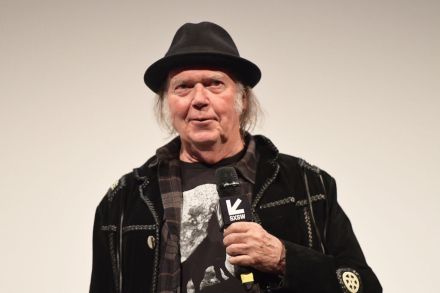
You either die a rebel or live long enough to see yourself turn into a snowflake. The generation of free love and free expression have gradually transformed into the baton-wielders. I’m referring to Neil Young’s demand that Spotify either pull his entire catalog or do away with Joe Rogan’s podcast. Spotify reportedly paid $100 million to acquire Rogan’s podcast in 2020. You'd imagine their contract includes legal bulwarks against such demands. Young is reportedly upset with Covid “misinformation” (the media’s new favorite vague term) and is no longer willing to abide by a streaming service that plays host to Rogan. It took Spotify about three seconds to make their decision: Neil Young is no longer on their platform.

neil young

Playboy’s #MeToo problem isn’t Hugh Hefner — it’s porn

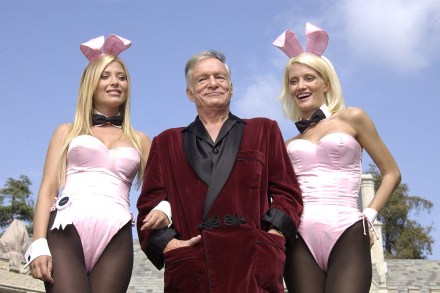
Playboy founder Hugh Hefner, who died in 2017 at the age of ninety-one, is facing renewed allegations of sexual misconduct thanks to the new A&E documentary Secrets of Playboy. Former Playmates said they were subjected to cult-like conditions at the Playboy Mansion. Hefner reportedly plied them with drugs and alcohol to get them to participate in wild sexual activities, and threatened them with revenge porn if they ever tried to leave the mansion. "I watched him, I watched his game. And I watched a lot of girls go through [the Playboy Mansion] gates looking farm-fresh, and leaving looking tired and haggard," former Hef girlfriend Sondra Theodore told the New York Post.  How anyone could be surprised by this is beyond me.

playboy hugh hefner

Tweed is of the essence

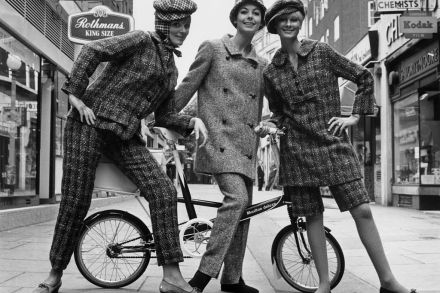
Rushing through Dulles Airport after a trip abroad this winter, I noticed a policeman following quickly but discreetly behind me. Not having smuggled any sausages or cigarettes on that particular flight, I was of clear conscience, and nodded hello at him when he caught up. All he said was: “Love the jacket.” It was a heavy, scruffy, brown herringbone tweed. People like tweeds. When I wore one, my parents’ friends used to tell me what a nice-looking young man I was. At college, women I didn’t know would occasionally run a fingertip down the sleeve and say, “Mmm.” Never found out what that meant. Too late now. The cop’s compliment was a bit different. There was pity in it. “My wife’s grandfather had one,” he said. “That’s old-school.” I suppose he was right.

tweed

What’s driving America’s sex recession?

Young people are having less sex, and not just because they’re getting married later. According to the General Social Survey, the percentage of never-married Americans between the ages of 18 and 35 who did not have sex in the past year rose from around 16 percent in 2000 to over 22 percent in 2021. Why is this happening? There are plenty of theories. In a 2018 piece for The Atlantic, editor Kate Julian came up with five: 1) porn and masturbation, 2) the elevation of other priorities over forming committed relationships, 3) the toxic dynamics hard-coded into dating apps, 4) advances in feminism that empower women to say no to sex they don’t want to have, and 5) an increase in anxiety disorders.

revolution

How the 1960s institutionalized us

I was recently on Steve Bannon’s show, The War Room, to talk about my book The Long March. It was first published in 2000, so you might think that it is steeped in the sepia tones of another age. Doubtless in some ways it is. But in essentials, I believe, we are living now with the fruits of ideas that were but tender shoots when I was writing that book. Its subtitle is “How the Cultural Revolution of the 1960s Changed America.” The 1960s! Aren’t we done with that silly decade yet? It was sixty, not twenty, years ago that Sgt Pepper taught the band to play. Haven’t we moved on? You tell me.

jews

Eighty years after Wannsee

Eighty years ago in January, fifteen men sat around a table at a villa near Berlin and decided to eradicate a nation. To be precise, they decided how to eradicate a nation. Their decision, their “solution” as they perversely termed it, would lead to the murder of more than six million European Jews, though that is the easy-to-remember round number to which we so often default. The murders had started long before the Nazi leadership met at Wannsee in January 1942: this was not the first time a group of European leaders had planned to rid themselves of the Jews. The meeting clarified not just the goal of wiping out Europe’s Jewry, but the path to solving the “Jewish problem” by modern means.

How elites hijacked the conversation on race

Americans in 2021 spent more time watching TV than on any other leisure activity (outside of sleeping). Presumably those numbers increase during the holidays, especially given a hot NFL playoff race and endless bowl games (are you ready for Duke's Mayo Bowl?). Yet for me what stands out are not the touchdowns or halftime shows, but the commercials. Practically every commercial over the course of a three-hour football game features more people of color — blacks, Asians, Latinos — than whites. Many in the media and advertising are celebrating this for increasing diversity and inclusion, while others claim it undermines meritocracy.

Adieu, Teddy Roosevelt

It is a custom to offer a blindfold to prisoners facing a firing squad. Just so, the authorities covered the statue of Teddy Roosevelt that has stood in front of the American Museum of Natural History before it is carted off to its new home in North Dakota. Everywhere one turns, America’s past is being dismantled. Just last month, a statue of Thomas Jefferson that had graced New York’s City Hall for 187 year was removed.  At schools and colleges across the country, images are being covered or removed, buildings renamed, history rewritten. It’s open season on the past. Back in June 2020, I wrote about the decision to remove the statue of Roosevelt from in front of the institution he help to found.

roosevelt

I’m dreaming of a ‘problematic’ Christmas

A new edict has just been handed down by our woke betters. According to an article at the Huffington Post, it is now forbidden to use the (distinctly holiday) phrase "let's work off ___," as in "let's go to the gym and work off those seventeen snickerdoodles and entire burlap sack of peppermint bark we ate yesterday." Per HuffPo, such fat-shaming, "while surely intended as a lighthearted joke, is seriously problematic, according to experts." It's the "according to experts" that always slays me there. And while I don't want to pit the authorities against each other, the doctors I've talked to have all warned that one consequence of engorging on sweets is that eventually you do turn into a lardass.

Cicero on rejecting the 1619 Project

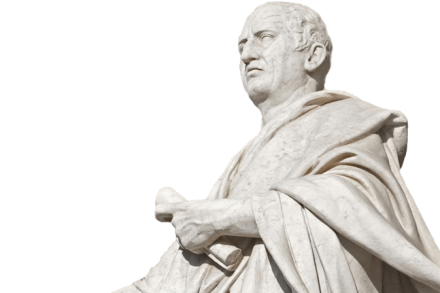
“Why are the Wisest ever the most easy and content to die, and the Weak and Foolish the utmost unwilling? Is it not, think you, because the most Knowing perceive, they are going to change for a happier State, of which the more Stupid and Ignorant are uncapable of being sensible?” Thus wrote Cicero in On a Life Well Spent, a 2,000-year-old essay. The English version I possess was published by Benjamin Franklin in 1744, and it was beloved by the Founders, one of the most remarkable generations to have graced the North American continent. Well, so people used to think.

Assisted suicide is the new trans rights

You can 3D-print your own suicide pod now. No doctor’s note required. And it’s legal in Switzerland. One woman featured in the official announcement video called the pod “utopian.” According to one of the numerous news pieces covering Sarco (as the device is known), those who die by this and similar means are “cared for,” not “killed.” And yet that same article included the phone number of a suicide hotline along with a disclaimer: “If you or someone you know is struggling with depression or has had thoughts of harming themselves or taking their own life, get help.” But why? Is suicide bad or isn’t it? And if it isn’t, why are you telling suicidal people to get help?

moran

More woke gymnastics at the Tenement Museum

One of the great things about not being obsessed with racism is that you don’t have to put yourself through the mental twisty turns required to see racism in everything. For example, I don’t have to pretend that moving from New Jersey to Manhattan to find a new job was, for a free black man in the nineteenth century, the same thing as an Irish immigrant boarding a “coffin ship” hoping to survive the Atlantic journey, knowing his only alternative was to die of starvation during the Potato Famine.

tenement museum

I could have been Kyle Rittenhouse

When I was 16, I threatened to carry out a school shooting. Okay, not really. I was sitting in math class with my hand up, trying to get the teacher’s attention. He called on one student, then another, then another. After the fourth or fifth time he failed to take my question, I became frustrated and said to myself something along the lines of “Oh my God, I’m gonna start shooting people.” I had no plans to harm anyone. It was a dumbass thing to say, even under my breath. You were 16 once, and I’m sure you said your share of dumbass things too. The timid farm girl in front of me overheard my comment and reported it to the principal. I was suspended for a few days and had to get a letter from a shrink saying I posed no threat to my fellow students. Soon, I was back in school.

Pregnant at the end of the world

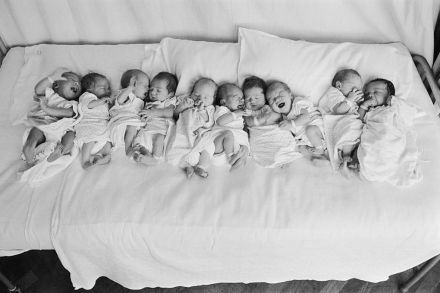
We hear lot of talk these days about anti-natalism: the ethical view that procreation is morally wrong. Young women and men are choosing not to have kids and, in extreme instances, choosing sterilization in their late teens. “I got my uterus thrown out voluntarily at 19!” a young woman boasts on an internet forum devoted to this topic. Climate anxiety often tops the list of reasons cited by contributors. Call them the “baby doomers.” When I went down the rabbit hole to read what these young folks are saying, they sounded exactly like me in my twenties. My climate anxiety peaked in the early 2000s (thanks, Al Gore). The inconvenient truth is that I loudly told anyone who would listen that I was never having children.

children pregnant
sex

Life after sex

Sex is everywhere in America, except in the bedroom — or anywhere else you’d like to have it. This has been going on so long that it’s got a name: in a 2017 article for the Atlantic, Kate Julian called it the “sex recession.” The research she cites found that “American adults had sex about nine fewer times per year in the early 2010s compared to the late 1990s.” Nine times fewer a year might not seem so bad, but every other marker of sexual activity was also down. A 2018 study in the Journal of the American Medical Association found that sexual activity had dropped among men between eighteen and thirty-five and women between twenty-four and thirty-five. Young people were having fewer sexual interactions and also fewer partners.

austin

Can the University of Austin spark a new Enlightenment?

The University of Austin, America’s newest university, was launched this month. I am one of five founders, because I am convinced that higher education is at considerable risk. A new ideology — sometimes called social justice, and revealed in numerous ways, but most succinctly called “woke” — is taking a huge toll on the free exchange of ideas. Safe spaces and trigger warnings are demanded by students, and many faculty as well, rather than recognizing that challenge, risk, and discomfort create strength of will, and wisdom. Instead of being the adults in the room, scared and hapless administrators capitulate to their demands.