Culture

Is the Anglican Communion dead?

29 min listen

In the space of a month, the Church of England has acquired its first female Archbishop of Canterbury, a majority of the world’s Anglicans have left the Anglican Communion in protest at the mother Church’s willingness to bless same-sex relationships – and the House of Bishops has suddenly backed away from introducing stand-alone gay blessings. The situation is chaotic. In this week’s Holy Smoke, theologian Andrew Graystone talks to Damian Thompson about the almost insoluble problems that will face Archbishop Mullally after she is enthroned in January.  Produced by Patrick Gibbons.

Best of Notes on...

29 min listen

The Best of Notes on… gathers the funniest, sharpest and most wonderfully random pieces from The Spectator’s beloved miscellany column. For more than a decade, these short, sharp essays have uncovered the intrigue in the everyday and the delight in digression. To purchase the book, go to spectator.co.uk/shop On this special episode of Spectator Out Loud, you can hear from: William Moore on jeans; Laura Freeman on Brits in Paris; Justin Marozzi on boxer shorts; Mark Mason on coming second; Michael Simmons on doner kebabs; Fergus Butler-Gallie on Friday the 13th; Hannah Tomes on rude place names; and, Margaret Mitchell on lobsters. Produced and presented by Patrick Gibbons, with an introduction from William Moore.

Piers Morgan: Woke Is Dead with Andrew Doyle

Watch Piers Morgan in conversation with Andrew Doyle to discuss Piers’s provocative new book, Woke Is Dead, and share their unfiltered views on the state of the world today, exclusively for Spectator subscribers. Rather than celebrating the death of woke, Piers’s book advocates for the return of common sense and a less divided, more sensible society. Piers Morgan: Woke Is Dead with Andrew Doyle will explore why Piers believes woke culture is on its way out, what a return to common sense might look like, and how the cultural tide is shifting across politics, the media and everyday life.

Nick Boles, James Ball, Andrew Rosenheim, Arabella Byrne & Rory Sutherland

27 min listen

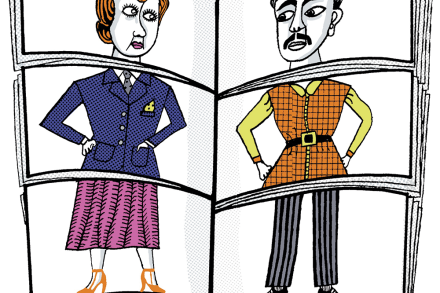
On this week’s Spectator Out Loud: Nick Boles says that Ukraine must stand as a fortress of European freedom; James Ball reviews If Anyone Builds It, Everyone Dies: The Case Against Superintelligent AI, by Eliezer Yudowsky and Nate Sores; Andrew Rosenheim examines the treasure trove of John Le Carre’s papers at the Bodleian; Arabella Byrne provides her notes on skip-diving; and, in the battle of the sexes, Rory Sutherland says the thing to fear is not feminisation, but emasculation. Produced and presented by Patrick Gibbons.

Chinese spies, Vance’s rise & is French parenting supreme?

30 min listen

‘Here be dragons’ declares the Spectator’s cover story this week, as it looks at the continuing fallout over the collapse of the trial of two political aides accused of spying for China in Westminster. Tim Shipman reveals that – under the last Conservative government – a data hub was sold to the Chinese that included highly classified information; one source describes this to him as a ‘stratospheric clusterfuck’. Why do successive governments seem to struggle with UK-China relations? And, with many unanswered questions still remaining, what’s the truth over this case?  Host Lara Prendergast is joined by the Spectator’s political editor Tim Shipman, arts editor Igor Toronyi-Lalic and deputy editor

Why men are the disposable sex

I am a proud father. Both my daughters got good degrees. But better still, they smoke, go to pubs and drink Guinness. I suspect they may sometimes drink rosé or prosecco behind my back, but I soldier on. You see, if you are the lone man in an otherwise all-female family, it’s important to make sure overall testosterone levels don’t decline too far. Kanye West found much the same thing when he lived with the Kardashians. It is a man’s ‘job’ to be stupid – to take rapid, risky decisions with high variance outcomes in the hope that they pay off And at least neither of my daughters likes Taylor

With Gyles Brandreth

36 min listen

Broadcaster, writer, actor – and former MP – Gyles Brandreth joins Lara Prendergast on this episode of Table Talk to discuss his memories of food, from hating dates and loving ‘bread sandwiches’ to his signature dish of fish fingers and his love of eating baked beans cold from a can. Gyles also tells Lara about getting permission to eat swan, his encounter with Raymond Blanc and his friendship with a former editor of The Spectator. Plus – Gyles bemoans the lack of freebies that come with recording a Spectator food podcast (sorry Gyles!). Gyles’s new biography of A.A. Milne, Somewhere, a Boy and a Bear, is out now. Produced by

What does it mean 'to forgive'?

34 min listen

The announcement by Erika Kirk – the widow of assassinated political activist Charlie Kirk – that she forgave her husband’s killer, has led many to question the nature of Christian forgiveness. Granting forgiveness can seem hard for the smallest of crimes, let alone the murder of a close family member, so how can other people follow Erika’s example? One person who sadly knows better than most is Professor Everett Worthington. Prof. Worthington is Professor Emeritus at Virginia Commonwealth University and a clinical psychologist who has studied forgiveness throughout his career. However, it isn’t just through academia that he understands forgiveness; when his mother was murdered, he also made the decision

Jewish fear, 'the elimination of motherhood' & remembering Jilly Cooper

25 min listen

The Spectator’s cover story this week looks at ‘the fear’ gripping Jewish people amidst rising antisemitism. Reflecting on last week’s attack in Manchester, Douglas Murray says that ‘no-one in the Jewish community was surprised’ – a damning inditement on Britain today. How do we tackle religious intolerance? And is there room for nuance in the debate about Israel and Palestine?  Host Lara Prendergast is joined by the Spectator’s US editor Freddy Gray, associate editor – and host of our religious affairs podcast Holy Smoke – Damian Thompson and commissioning editor Mary Wakefield. As well as the cover, they discuss: how biological innovations are threatening motherhood; the views of the new – and first

Obsolete message: Led By Donkeys in conversation, reviewed

https://www.youtube.com/watch?v=xVdR7DvLbjw The founding members of Led By Donkeys granted a public interview last Thursday at a theatre in Walthamstow. They were questioned by Guardian columnist Zoe Williams. Seated on squashy sofas, the four men looked like an ageing boyband who met at public school. James Sadri, suave and handsome, seems to be the boss. Ollie Knowles is the ebullient charmer. Ben Stewart, who scowls as he talks, is the grumpy technical wizard. And Will Rose, who says very little, seems to be the token northerner. The Donkeys specialise in harmless political pranks. Their approach is new but their content is stale. In their latest stunt, they projected a short film about Donald Trump and

James Heale, William Atkinson, David Shipley, Angus Colwell and Aidan Hartley

25 min listen

On this week’s Spectator Out Loud: James Heale says that, for Labour, party conference was a ‘holiday from reality’; William Atkinson argues that the ‘cult of Thatcher’ needs to die; David Shipley examines the luxury of French prisons; Angus Colwell provides his notes on swan eating; and, Aidan Hartley takes listeners on a paleoanthropological tour from the Cradle of Mankind.  Produced and presented by Patrick Gibbons.

Kemi's fightback, the cult of Thatcher & debunking British myths

40 min listen

The Spectator’s cover story this week is an interview with Conservative leader Kemi Badenoch ahead of the Tory party conference. Reflecting on the criticism she received for being seen as slow on policy announcements, she says that the position the Conservatives were in was ‘more perilous than people realise’ and compares herself to the CEO of an ailing firm. Can Kemi turn it around for the Tories? Host William Moore is joined by the Spectator’s political editor Tim Shipman – who interviewed Kemi – alongside commissioning editor Lara Brown, and academic and author Philip Hensher. They discuss whether the ‘cult of Thatcher’ needs to die, Tim says he’s more Disraeli

Matthew Parris, Stephen J. Shaw, Henry Jeffreys, Tessa Dunlop and Angus Colwell

31 min listen

On this week’s Spectator Out Loud: Matthew Parris reflects on the gay rights movement in the UK; faced with Britain’s demographic declines, Stephen J. Shaw argues that Britain needs to recover a sense of ‘futurehood’; Henry Jeffreys makes the case for disposing of wine lists; Tessa Dunlop reviews Valentine Low’s Power and the Palace: The Inside Story of the Monarchy and 10 Downing Street; and, Angus Colwell reviews a new podcast on David Bowie from BBC Sounds.  Produced and presented by Patrick Gibbons.

Labour’s Terminator, Silicon Valley’s ‘Antichrist’ obsession & can charity shops survive?

37 min listen

First: who has the Home Secretary got in her sights? Political editor Tim Shipman profiles Shabana Mahmood in the Spectator’s cover article this week. Given Keir Starmer’s dismal approval ratings, politicos are consumed by gossip about who could be his heir-apparent – even more so, following Angela Rayner’s defenestration a few weeks ago. Mahmood may not be the most high-profile of the Starmer movement, but she is now talked about alongside Wes Streeting and Andy Burnham as a potential successor to Starmer. But – it all depends on what she can achieve at the Home Office. So, who does she have in her sights? Tim joined the podcast Next: why

Reparations: the tyranny of imaginary guilt, with Nigel Biggar & Katie Lam

19 min listen

The past few years have seen growing calls for countries in the global west to pay reparations to former colonies for their role in the transatlantic slave trade. The debate over reparations was already part of the so-called ‘culture wars’, but became louder following the Black Lives Matter movement, as many groups sought to re-examine their histories. Calls for reparations have been embraced by the Church of England which set up a £100 million fund, with the aim of raising £1 billion, to pay reparations for the role the Church played in the slave trade. But do the arguments in favour of reparations really stand up? Conservative peer Nigel Biggar,

John Power, Nick Carter, Elisabeth Dampier, Maggie Fergusson & Mark Mason

26 min listen

On this week’s Spectator Out Loud: John Power argues the Oxford Union has a ‘lynch-mob mindset’; Elisabeth Dampier explains why she would never date a German; Nick Carter makes the case for licensing MDMA to treat veterans with PTSD; Maggie Fergusson reviews Island at the Edge of the World: The Forgotten History of Easter Island by Mike Pitts; and, Mark Mason provides his notes on guided walks. Mark will also be hosting a guided walk for the Spectator, for tickets go to spectator.com/events Produced and presented by Patrick Gibbons.

800 years on, why is Aquinas Gen Z’s favourite philosopher? 

26 min listen

This year marks 800 years since the birth of the theologian St Thomas Aquinas. Aquinas, best known for his theory of natural law and his magnum opus the Summa Theologia, argued for the existence of God through faith-based reason. The influence of the 13th Century theologian on the philosophy of religion is unquestionable, but what is curious is his resurgent popularity amongst Generation Z – particularly in America. Is this part of the recovery of the sacred seen across the global west? Fr Gregory Pine OP, professor of dogmatic and moral theology at the Dominican House of Studies, joins Damian Thompson to talk about Aquinas’s legacy, unpack some of the

Weimar Britain, the war on science & are you a competitive reader?

36 min listen

First: a warning from history Politics moving increasingly from the corridors of power into the streets, economic insecurity exacerbating tensions and the centre of politics failing to hold; these are just some of the echoes from Weimar Germany that the Spectator’s editor Michael Gove sees when looking at present-day Britain. But, he says, ‘there are grounds for hope’ – what are they? Michael joined the podcast to discuss.   Next: why did science succumb to the ‘culture wars’? Biologist and peer Matt Ridley bemoans the ‘cultification of science’, arguing that ‘left-wing ideological nonsense’ ended up permeating through all scientific disciplines. Thinking ‘neutral facts’ were safe, Matt admits he – and colleagues

Archbishop of Canterbury: who's on the shortlist?

22 min listen

It is 10 months since the resignation of Justin Welby as Archbishop of Canterbury. Now, finally, the Crown Nominations Commission is believed to have drawn up a shortlist of candidates, and a successor to Welby could be approved by October. Theologian and author Andrew Graystone joins Damian Thompson to talk through what he calls ‘a weak list’ of potential candidates – weak because there are no obvious frontrunners and the Commission is choosing between ‘half a dozen equals’.  These range from the more talked-about Michael Beasley (Bath and Wells), Guli France-Dehqani (Chelmsford) and Rose Hudson-Wilson (Dover) [all pictured in the thumbnail] to the ‘others’: Stephen Lake (Salisbury), Martyn Snow (Leicester),