Culture

The good, the bad and the ugly in books, exhibitions, cinema, TV, dance, music, podcasts and theater.

How Alex Jones won

One of my favorite Walt Whitman stanzas goes like this: I’m a pioneer! I’m an explorer! I’m a human, and I’m comin’! I’m animated! I’m alive! My heart’s big! It’s got hot blood goin’ through it fast! I like to fight! I like to eat! I like to have children! I’m here! I got a life force! This is a human! This is what we look like! This is what we act like! This is what everyone was like before us! This is what I am! Just kidding. That’s Alex Jones, the voice of our time. Nobody in media has won more in the past 20 years than Jones. He’s lost a lot along the way, of course, including the largest defamation suit in American history and access to every mainstream media platform. But those were only temporary slowdowns.

Jones
gender-affirming

‘Gender-affirming care’ is never justified

Even now, hundreds of thousands of ordinary Americans just assume that there is a vast and vulnerable cohort of kids who are born “trans” and need so-called “gender-affirming care.” They look at the protests and listen to progressive politicians and assume that there must be at least some evidence that pediatric medical transition helps children in distress. It would be unthinkable to have put children through all this for nothing, and for American medics to have gone along with it all. But the awful truth is that there is no evidence that allowing children to transition actually works in any meaningful sense. An analysis recently published in the Journal of Sex and Marital Therapy has finally cut through the noise with a simple but devastating tool: a calculator.

rats

New York City belongs to the rats

Before I moved to New York City five and a half years ago, the warnings were never about astronomical rent prices, apocalyptic winters or days-long subway delays. They were about rats. Former Manhattanites authoritatively spoke of them with the kind of hushed dread usually reserved to conjure biblical plagues. These weren’t mere animals, I was told, but tiny demons in fur coats – miniature Tony Sopranos with tails – who were quick to scuttle from the shadows at the merest whiff of a discarded bagel, bold enough to set up camp in your kitchen and perfectly willing to maul a callow pug or nibble on an unsuspecting baby. One friend cautioned me to keep the toilet lid shut at all times.

gossip

Gossip is good for you… so I’m told

The late Pope Francis hated gossip. In his Christmas message to his Vatican advisors last year, he warned that it is “an evil that destroys social life.” It wasn’t the first time he’d attacked rumor-spreading. He once compared gossips to terrorists because “he or she throws a bomb and leaves.” His condemnations are of particular concern for me because I was recently accused of being a “notorious gossip.” I vehemently reject the charge, but if it were true, at least I’d be following a proud journalistic tradition. In fact, if it were not for gossip, this very magazine might not exist. The original Spectator’s founders, Joseph Addison and Richard Steele, filled the 1711 incarnation by hovering around coffee-houses, picking up gossip for stories.

We need Sabrina Carpenter

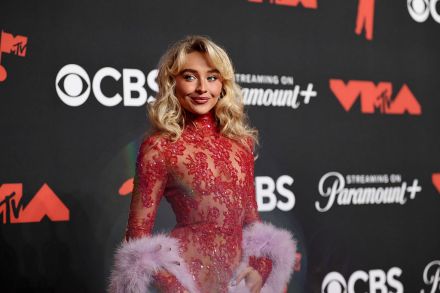
Sabrina Carpenter, who will for the first time this week be hosting NBC’s Saturday Night Live, continues to be a cause of controversy. Over the summer, the five-foot, honey-voiced singer revealed the cover for her newly released album, Man’s Best Friend. It shows her wearing a black minidress on her hands and knees, while a faceless man holds a handful of her hair. The image immediately stirred outrage online. Those who usually find themselves on the side of unfettered female sexual liberation called the cover regressive, degrading, and submissive toward the male gaze. Some fans defended the image, arguing that Carpenter was clearly satirizing incompetent and controlling men as well as her portrayal by the media as a “sex obsessed” pop star.

Have the Virginia Giuffre revelations got Prince Andrew sweating?

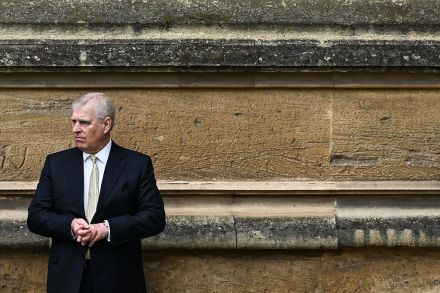
It is a staple of Gothic fiction that the malefactor is often caught out by a document or apparition that appears from beyond the grave. And so it appeared for Britain’s scandal-riddled Prince Andrew, ever since it was announced that Virginia Giuffre, who the now-former Duke of York allegedly had sexual relations with when he was 41 and she was 17, was posthumously publishing a memoir, entitled Nobody’s Girl, in which she offered candid accounts of what, precisely, happened with Andrew, courtesy of the disgraced sex offender Jeffrey Epstein. Everyone – including the royal family – braced for impact, and the decision to remove Andrew’s title and Order of the Garter must surely have been dictated by this latest humiliation.

Happy Birthday, Aleister Crowley

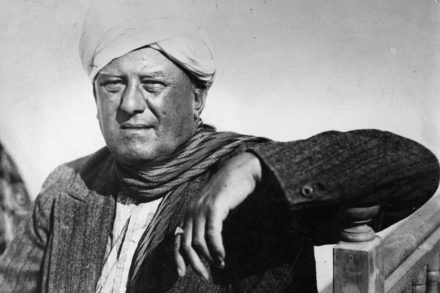
Aleister Crowley, who was born 150 years ago today, was once one of my idols. No one else seemed to match the panache of someone who could make a name for themselves as a magician, poet, artist, novelist, prophet, journalist, mountaineer, and spy. Yet, the outsized influence of such characters frequently attracts legions of charlatans. I met one during my adolescence when I became a student of a Tibetan Buddhist lama who claimed to be Aleister’s living son. It did not immediately occur to this bright-eyed seeker that the alleged son's chief interest seemed to be in shagging his female students, but eventually it did, and I grew disillusioned.

Crowley

Will Dwayne Johnson always be The Rock?

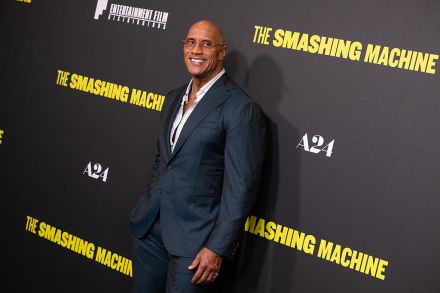
Over the past couple of weeks, two expensive, auteur-driven films with big stars have been released at the American box office, both conscious throwbacks to the kind of Seventies cinema that isn’t supposed to be made any longer. In the case of Paul Thomas Anderson, his Leo DiCaprio-starring Thomas Pynchon fantasia One Battle After Another seems to have been a success by the skin of its (yellowed) teeth: it has already made over $100 million worldwide, helped by excellent reviews and strong word of mouth. But in the case of another A-lister, Dwayne “The Rock” Johnson, the critical and commercial reception of The Smashing Machine has been rather more muted, suggesting that audiences know what they want from Johnson, and it sure as hell isn’t arthouse fare.

The bully doctrine

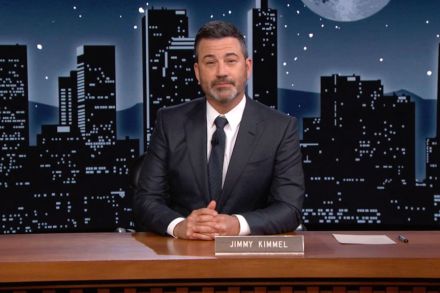
When the suspended late-night comic Jimmy Kimmel got his show back in late September, he did not apologize for the callous remark that briefly drove him off the air. Kimmel had accused Donald Trump and his followers of harboring and inciting the man who assassinated the activist Charlie Kirk, a beloved friend to many in Trump’s circle. This brought threats from one of Trump’s communications officials, then boycotts by two major station operators and finally Disney’s suspension of Kimmel. On his return, the comedian cracked a joke about Trump: “I don’t like bullies,” he said. “I played the clarinet in high school.” Weird thing to say. With tempers running so high, why would an impenitent enemy settle for calling Trump a “bully?” Why not call him a censor? A dictator?

bully
summer

A farewell to summer

On the roads in Amagansett, in the shops, at the train station, the summer crowds have vanished, and those of us who spend time here “off-season” sigh with relief. Until we drive down the most exclusive street in town, Further Lane. Then we – some of us at least – seethe over the loss of something we loved. Last winter, a person or persons operating under the moniker Further Lane Barn LLC, bought two contiguous lots totaling seven acres, stretching from Further Lane to the magnificent ocean dunes that front the wide, sandy beach that is the chief attraction of the gorgeous east end of Long Island. The price for land, house, and a couple of outbuildings? A cool $70 million. So far, so 21st century.

What can we expect from the Simpsons sequel?

It is now more than three decades since President Bush the First declared that American families should be “more like the Waltons, and less like the Simpsons.” In this, as in so many other things, Bush was to be disappointed. Thirty-three years after he made his remarks, the Waltons are now barely discussed in popular culture, if at all, while the exploits of America’s most famous yellow-skinned family have now moved into their 37th season with a further three, at least, planned. This is a degree of longevity that is unparalleled in any live-action sitcom equivalent, and the show’s creator Matt Groening could be forgiven for doing a victory lap.

‘Media Literacy’ and the decline of Woke

What is “woke”? To Jordan B. Peterson it is “postmodern neo-Marxism.” To James Lindsay it is “critical race theory” and latterly “revisionism” in general. These theories of what woke means take for granted that one of its core tenets is a denial of objective truth under the influence of what is broadly called “critical theory,” but the thinking behind contemporary wokeness falls far short of these theoretically exalted standards. Critical theory was a movement, primarily among academics, in the mid 20th century which had a diverse array of followers, but the common denominator was the belief that texts, whether literary works like novels, or historical documents, had no inherently “true” interpretation.

Media Literacy

‘From the folks that brought you 9/11’

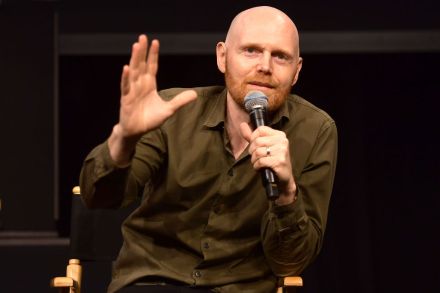
The American comedy world finds itself embroiled in a not-so-civil war of words over the Riyadh Comedy Festival, sponsored by the Saudi royal family. The Saudis have given enormous paychecks to big names like Kevin Hart, Dave Chappelle, Louis C.K., Aziz Ansari, and Bill Burr.  On one side, you have the people invited to perform at the festival, who mostly lean toward the anti-woke, sometimes-semi-canceled, will-do-anything-for-a-dollar camp. On the other, you have hyper-woke, mostly male Gen X comics whose routines these days involve delivering panicked podcast screeds about the end of democracy.

Riyadh

Why is Bad Bunny performing at the Super Bowl?

The NFL announced on Sunday that Bad Bunny, the musician who just wrapped a residency in Puerto Rico, is now a hop, skip and step away from performing on the largest stage in America: the Super Bowl LX halftime show. “What I’m feeling goes beyond myself. It’s for those who came before me and ran countless yards so I could come in and score a touchdown… this is for my people, my culture, and our history,” Bad Bunny said in an NFL statement announcing the halftime show. Okay, but Americans are the ones in large part watching the Super Bowl – the same culture and country Bad Bunny chose to boycott when his world tour kicks off in November because of fear that US Immigration and Customs Enforcement (ICE) would raid the concert venues.

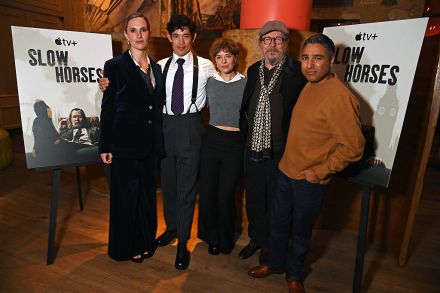
Is Slow Horses slowing down?

Since it launched in 2022, Slow Horses has been one of the most reliable television treats for all its four seasons. Based on the excellent novels by Mick Herron, it has focused on a group of “misfits and losers,” as none other than Mick Jagger sings over the credits, who have all been semi-exiled from MI5 for various misdeeds. They have ended up in the purgatory of Slough House, where they are stuck doing various soul-destroying administrative tasks until they quit. The joke is that most of them are good at their jobs (although not without some seriously challenging interpersonal issues), led by Gary Oldman’s superspy Jackson Lamb, whose belching, flatulent and deeply unhygienic exterior belies a razor-sharp mind and a keen grasp of human nature.

How does the American right move on?

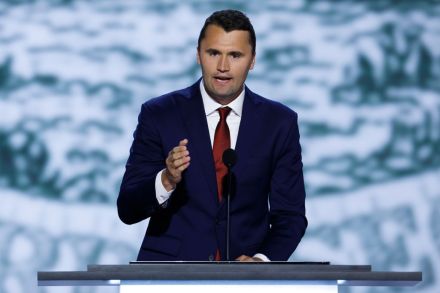
At the time, it was audacious. Guy Benson, now a commentator for Fox News and Townhall, recalls being approached by an Illinois teenager who wanted Chicago high schoolers to listen to conservative ideas. He offered the same advice to the gangly 6ft 5in youngster that anyone would suggest to a man with a mind on politics: keep hustling, go to a good school, get a degree and an internship at a think tank. But the precocious Charlie Kirk had different ideas. “He was smart enough to completely reject my advice,” says Benson. Neither of them could have known how that decision, and the Turning Point USA organization Kirk then founded, would go on to change the country.

Kirk

Iryna Zarutska and Charlie Kirk have exposed the media’s depravity

“Clarifying.” It seems almost obscene to say that the murders of Iryna Zarutska and Charlie Kirk were “clarifying.” But the huge and still-exploding response to those savage events shows that the mournful synergy of murder can be an occasion for illumination as well as for grief. To say that something is “illuminating” is not necessarily to say that it is pleasant. The media yearned for a pro-Trump, heterosexual, white male killer of Kirk. One out of three was a disappointment A picture is worth a thousand words. Iryna Zarutska, a 23-year-old refugee from Ukraine, was murdered on a commuter train in North Carolina on August 22. The attack went mostly unreported until early September. Then video footage of the incident emerged. That changed everything.

media

The blurred lines between politics and common morality

Some 238 years ago Thomas Jefferson wrote that “the tree of liberty must be refreshed from time to time with the blood of patriots and tyrants.” Charlie Kirk was a patriot and his blood, shed by an assassin’s bullet, is making Americans take their free-speech liberties seriously once again. Jefferson wrote his famous line in response to an insurrection – a real, armed one quite unlike the ugly out-of-control protest at the US Capitol on January 6, 2021. The author of the Declaration of Independence wasn’t defending the rebels who had risen up under the command of Daniel Shays. His letter was instead a warning against overreaction to the rebellion on the part of the national government.

morality

I’m done with default illiberalism

It took me far too long to reach the point where I could vote for Donald Trump confidently. I’d been redpilled multiple times. First in 2015, during Trump’s first campaign and the unhinged reaction to it; then again during the Brett Kavanaugh hearings; and most intensely in 2020 while living in Los Angeles. That city under lockdown was chaos. Churches and AA meetings were shuttered. Protests, looting and arson were tacitly permitted. I watched the collapse of society, a grim spectacle of selective enforcement and eroded trust. The grown-ups, I realized, weren’t in charge. Someone had to clean up the mess. I could explain away my reluctance to vote for Trump with January 6 or his contesting the 2020 election results. Those events provided convenient excuses.

Kirk