China

Russia and China are watching Iran, and waiting

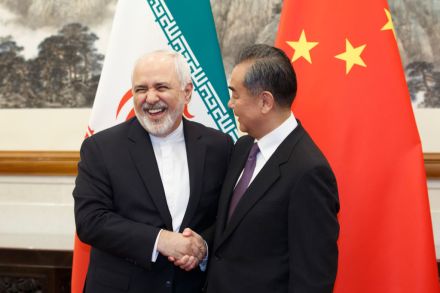
As US-Iran tensions rise, America’s sway over its allies is falling. Last week, Major General Christopher Ghika, the British officer second in command of anti ISIS forces in Iraq and Syria, publicly contradicted the rationale behind American troop build-ups in the region. US Central Command was quick to rebuff Ghika, but Britain’s Ministry of Defence supported him. Other NATO allies, too, are balking at confrontation with Iran. Spain has withdrawn a frigate from the American-led, Gulf-bound carrier group. Federica Mogherini, the EU’s High Representative for Foreign Affairs, has called for ‘maximum restraint’. If there is to be a third Gulf War, the US might find itself with fewer friends than in the last.
iran

How I learned to stop worrying and love Trump’s trade war

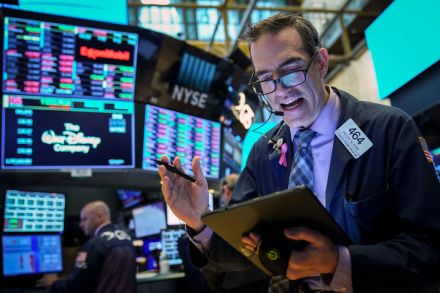
Alarmist news reports and panicky stock sell-offs. A threat to impose tariffs on US goods in retaliation for President Trump’s threatened levies. You’d think that Beijing had just ruthlessly shut down a major engine of American growth. But the truth is that tariff fear-mongering reveals the gulf between America’s financial markets and its real economy that provides everyday goods and services. The Chinese economy has grown spectacularly since Beijing turned away from Maoism in the 1980s. It’s true that major American industries from aircraft to agriculture have profited handsomely from supplying Chinese demand. The offshoring model supercharged by China’s admission to the World Trade Organization (WTO) in 2002 has been especially lucrative.

donald trump trade war

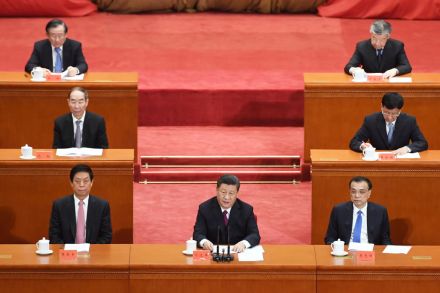
Our real problem with China: Xi Jinping

At the last minute the Chinese Communist Party chief Xi Jinping vetoed the trade deal with the United States, after his representatives had negotiated and agreed to it. Xi claimed that he will take the responsibility for ‘all possible consequences.’ This left President Trump no choice but to impose higher tariffs on some Chinese imports. This battle over trade marks only the early rounds of the US struggle with China. China’s economic success was achieved in large measure by taking advantage of the working people of both China and the US. It was made possible because the US allowed it to enter the world’s free trade system. Because China entered the West’s economic ecosystem a generation ago, it has flourished.

xi jinping

The future of world trade is in the balance

Ongoing trade talks between American and Chinese officials took an unexpected turn on Sunday: President Trump took to Twitter and announced a plan to impose tariffs on all Chinese imports by Friday. The tariff threat adds urgency to negotiations that will continue on Wednesday, when a Chinese delegation is due to arrive in Washington, DC. The move is a departure from last week when US Treasury Secretary Steven Mnuchin and Trade Representative Robert Lighthizer arrived in Beijing to initiate a fresh round of trade talks with China. Despite chronic trade tensions, both sides had sounded optimistic ahead of the meeting. State Councilor Wang Yi, China’s top diplomat, expressed hopes the two sides could ‘reach a mutually beneficial, win-win agreement’.

world trade

Kim Jong-un is doing to Trump what Trump is trying to do to China

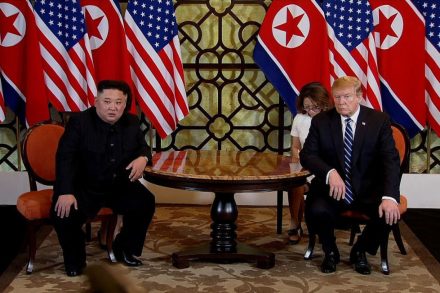
Will he stay or will he go? Speculation about President Trump’s future began with House Speaker Nancy Pelosi’s comment this past weekend that she worried in the run-up to the 2018 midterm elections that Trump wouldn’t accept a close result and deem it a Democratic hoax. Now she’s indicating that she’s not convinced that he will abide by the results of the 2020 election if they are close and he’s the loser. As it happens, Trump amplified those concerns with a tweet riffing on Jerry Falwell, Jr.’s contention that he deserves an extra two years added to his first term because an attempted deep state putsch, led by Robert Mueller and his minions in the FBI, deprived him of the ability to govern effectively over the past two.

kim jong-un

China’s war on Islam

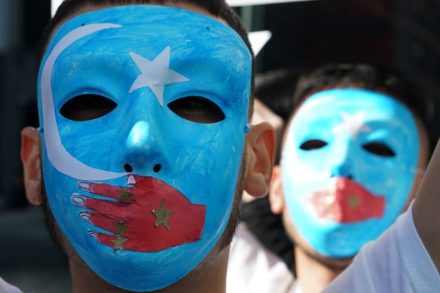
The Reuters photo could be mistaken for a shot of one of America’s ‘supermax’ prisons, the ones where the most dangerous criminals are held. An endless green security fence, topped with coils of barbed wire, punctuated by soaring octagonal guard towers with 360-degree views, all fronting what looks like a massive concrete wall or side of a building. Yet the Chinese workers walking outside the fence give away the truth. The picture is not of a US prison, but rather a Chinese ‘re-education’ center in vast Xinjiang, in the country’s far west. According to research by the Australian Strategic Policy Institute, there are 28 such massive detention camps in Xinjiang, most built within just the last several years.

uighurs

We should be watching Chinese meddling, not Russian

‘Russian influence’ is everywhere these days, especially if you’re a liberal. From the White House to Brexit, the Donbass to the Baltics, the specter of Russian expansionism is inescapable in the news. But have Western media identified the wrong zeitgeist? For a malevolent power, Russia is all too conspicuous. Real mastery of subterfuge entails a degree of subtlety. ‘Russia is very aggressive...up-in-your face,’ says Donald N. Jensen, of the Center for European Policy Analysis. ‘China seems to be a bit more discreet...even when it fails, you don’t really know it.’ Chinese meddling may go unnoticed in Europe and North America, but it is more conspicuous in Australia and New Zealand.

chinese meddling

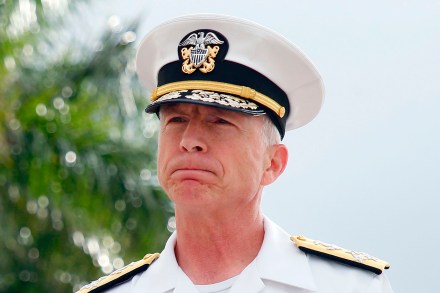
US military ‘on the balls of our feet’ for Venezuela, says four-star admiral

As Russian, Chinese and Iranian planes arrive in Venezuela to prop up President Nicolás Maduro, key Trump administration officials signaled that the US military is ready to respond. ‘President Trump is determined not to see Venezuela fall under the sway of foreign powers,’ Trump’s national security adviser John Bolton told radio host Hugh Hewitt Wednesday. Bolton favorably referenced the Monroe Doctrine and said that if it ‘fails, if China and Russia, along with Cuba, establish domination over Venezuela, I think American strategic interests will be harmed.

venezuela US Navy Admiral Craig S. Faller

What is Trump’s big deal with China?

Beware the Ides of March. President Trump has indicated that he will defer his promised hike in tariffs on Chinese products to 25 percent until March 1. Stocks promptly went up. ‘If all goes well,’ Trump said on Sunday, ‘we’re going to have some very big news over the next week or two.’ What’s the big deal? Trump, who fashions himself a wheeler-dealer par excellence, is claiming that he, and he alone, can reach the great compact with Beijing that will put an end to its predatory trading practices. China, which continues to smart over the humiliations inflicted upon it by the western powers, including America, during the nineteenth century, has essentially flipped the script, at least if you listen to the hawks around Trump and in the media.

donald trump china

Maybe it’s time to accept that Huawei is a Chinese intelligence front

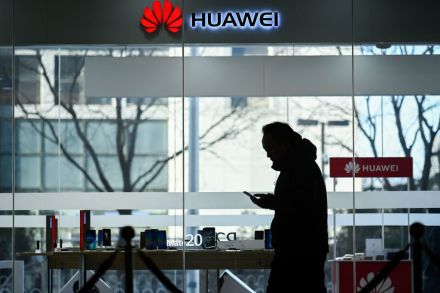
Established in the southern Chinese city of Shenzhen in 1987, it didn’t take long for Huawei Technologies to become a top player in global telecommunications. Since 2012, it’s been the world’s biggest manufacturer of telecommunications equipment. Last year, Huawei displaced Apple as the world’s second-biggest smartphone maker, after South Korea’s Samsung. Active in 170 countries, Huawei matters – to China and to the global economy.Yet there have long been questions raised about the company, starting with the fact that Huawei’s founder and CEO, Ren Zhengfei, is a former senior technologist for the People’s Liberation Army.

huawei

The confusion of the Confucians

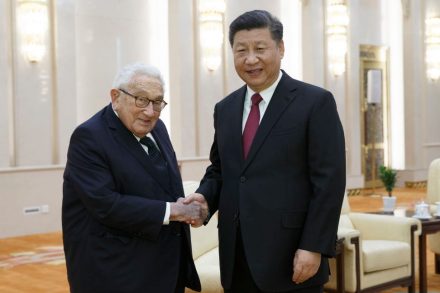
The French fight it out in the streets, the British leave it to their politicians to stab each other in the back, and Americans turn to the market. This is normal service in abnormal times. The turbulence affecting Western societies isn’t going to stop soon, and the ship cannot be steadied by the hand of government on the tiller, whether by small changes to the tax code or big subsidized boondoggles. In fact, the voters suspect that government — not government in principle, but government as practiced — is the problem. And they’re right. I’ve been in Washington, DC for a couple of days, so excuse the world-historical reflections. Two big changes are afoot in the world now, digitization and the shifting of global GDP away from the Euro-Atlantic region to Asia.

Kissinger

From the archives: Peregrine Worsthorne on Bush 41

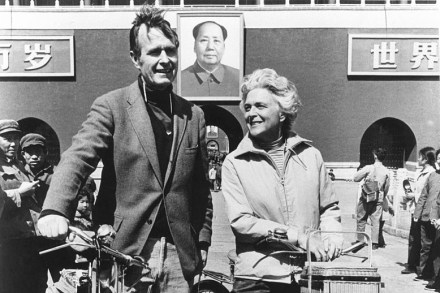
Four years ago, Peregrine Worsthorne wrote about his various experiences with American presidents forThe Spectator magazine. He concluded with this anecdote about George H.W. Bush from the mid-Seventies... The only thing I remember about George Bush senior was an exceptional act of kindness. He was then the American representative in Peking — as it was still called — and had asked me to lunch. It was a scorching day. In the course of the conversation I mentioned I was going on to sleep that night in Mao’s favorite village in the south, a place of pilgrimage for the faithful. ‘Don’t forget to take a good overcoat,’ he warned. ‘It’s mighty cold down there.

george h.w. bush 41

The US and China are headed for a showdown. Do the American people care?

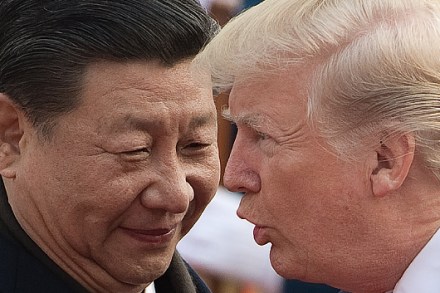
Know this: It doesn’t matter what happens during what can only be described as ‘dinner diplomacy’ between Donald Trump and Xi Jinping at the G20 — good, bad or breakthrough. That’s because the course of US-China relations — a complex relationship that blends cooperation, competition and geopolitical slugfest — is set in stone. The reasons are obvious. From tensions all around China’s near seas, to the final status of Taiwan, to the flow of hundreds of billions of dollars in trade to an arms race in Asia that will soon feature sci-fi like hypersonic weapons the future is frighteningly clear.

donald trump xi jinping showdown

Peter Navarro slams Wall Streeters as ‘foreign agents’ hindering the White House

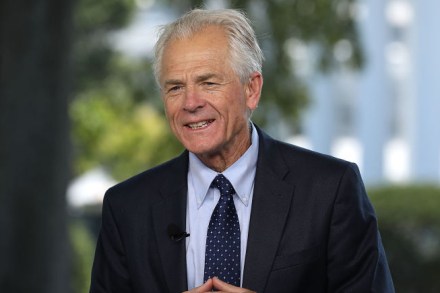
‘Wall Street and Goldman Sachs…here’s the most important thing,’ said Peter Navarro, the White House trade policy pointman, at a Washington think tank Friday. ‘When these unpaid foreign agents engage in this kind of diplomacy – so-called diplomacy – all they do is weaken this president and his negotiating position.’ The factionalism within the White House itself and the in-fighting over Washington’s China policy was on full display. The president’s encouragement of rival camps battling it out has often spilled over into plain view during the first two years of this administration.

peter navarro

The failure of globalization and the return of inflation

Most of today’s political debates are at heart about globalization. Terrorists, tree huggers, and Trumpists have their cultural complaints, but the great wave of Western populism is fueled by economic anger. Owing to the large amount of money that has been printed, financial asset prices have risen. But median incomes have stagnated. There is much truth in the claim that metropolitan elites have prospered, while the unvisited hinterlands have lost out, and much danger in the myth that all stakeholders benefit equally. Has globalization failed? On its economic merits, globalization can stand tall — not through increasing everyone’s income, though it has done this in many emerging economies, but by reducing everyone’s costs.

globalization

How China sees the trade war

What started out as one of those trade wars that Donald Trump believes are ‘easy to win’ has turned into a far broader confrontation between the US and China which is set to expand and deepen further. In his no-nonsense manner, the President has brought the era of ‘constructive engagement’ between the world’s two largest economies to a shuddering halt. Gone are the days when successive administrations thought economic growth would make the Chinese and their leaders ‘more like us’. Instead, the last major country ruled by a Communist Party is identified as a strategic competitor whose further economic political and military expansion has to be checked in America’s national interest.

china xi jinping

Why ‘we’ got Turkey wrong (and China. And Russia. And Iraq)

In addition to warning us of the growing tide of populism and nationalism, and bashing Donald Trump, Pundits in Washington and other Western capitals have been also spending also a lot of time, debating ‘How the West got China wrong,’ as The Economist put it, which was just another way of asking, well, ‘How The Economist got China wrong.’ The West – or to use the first person plural ‘We’– so favoured by the intellectually modest Washington ‘foreign policy expert’ – had bet that China would head towards democracy and the market economy.

turkey china iraq

How blockchain can beat state censorship

The concept of blockchain is popularly associated with cryptocurrencies, Bitcoin in particular. But there is another function of the technology which could have huge repercussions for states which attempt to censure the internet – as well as improving inline security and even tackling fake news. It is called ‘Proof of Existence’ (PoE) – the least talked about but perhaps most powerful application of this nascent technology. Earlier this year, a blog post by a Chinese student documenting the intimidation she’d suffered from school officials trying to block her investigation into an incident of sexual assault went viral.

Australia’s choice: Chinese trade – or American security?

 SydneyFor decades, Australia has been known as ‘the lucky country’. At the end of the world geographically, we are separated from the global troublespots by vast oceans. We have recorded 27 years of uninterrupted growth, partly because of a surge in exports of commodities to China. At the same time, our tough border protection policies boost public confidence in, as John Howard put it, ‘who comes to this country and the circumstances in which they come’. As a result, our politics have not been profoundly affected by the kind of populist forces dismantling established parties across Europe. Nor have we witnessed an anti-globalisation backlash. Not for us any Trump- or Brexit-like insurgencies.

Steve Bannon: ‘We have to end the Cold War with Russia’

Yesterday, in central London, I spent an interesting hour with Stephen K. Bannon, discussing the fall out from President Trump’s Helsinki summit. We recorded a podcast which you can listen to here: https://audioboom.com/posts/6936042-steve-bannon-why-china-is-a-bigger-threat-than-russia I asked Bannon whether he felt the media were right to be working themselves into such a lather over Trump’s apparent siding with Russia over American intelligence services over the 2016 election – this was before the Commander-in-Chief’s peculiar ‘double negative’ volte-face in the afternoon. In reply, Bannon reiterated the now fairly standard – nonetheless fair – point that the media conflates Russian meddling with Russian collusion.