China

Trump’s ZTE talks have Congress wondering if he’s putting America first

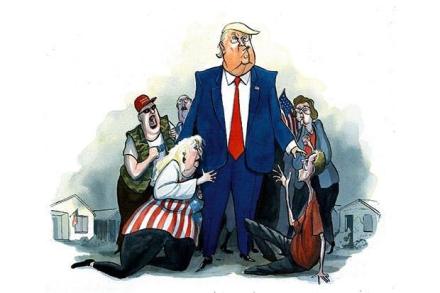
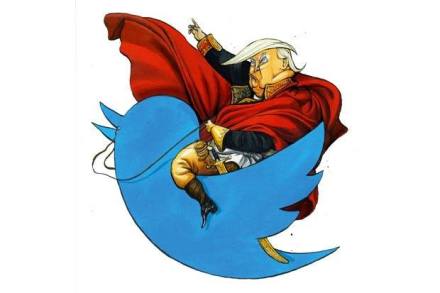
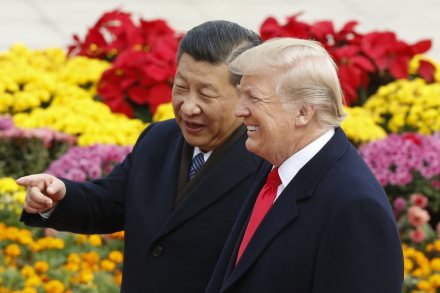
It doesn’t happen often, but it happened this week: Republicans in Congress made it officially known that they disagree with their party leader, President Donald Trump, on an important issue of policy.On Thursday, the House Appropriations Committee voted unanimously to accept an amendment to the 2019 Commerce, Justice, and Science Appropriations Bill. That amendment, introduced by Democratic Maryland congressman Dutch Ruppersberger, forbids the Commerce Department from renegotiating the sanctions it enacted last month on Chinese telecom company ZTE.It’s a real reprimand of the president, who started sending tweets in support of the company on Sunday.
AI

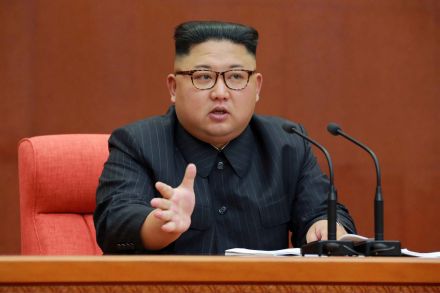
Has Kim Jong-un finally grown up?

Given the mutual bluster, threats and sabre-rattling we got used to from Donald Trump and Kim Jong-un, it may be hard to credit the air of sweet reasonableness that has spread over the Korean peninsula in recent weeks leading to the weekend announcement of an end to weapons testing by the North. The potential for a reversion to confrontation is all too evident. Pyongyang has a long record of reneging on agreements and its announcement contained no mention of a reduction in its arsenal that includes missiles which can hit Japan and South Korea even if it stops development of ICBMs aimed at the USA.

Are you a winner or a loser in Trump’s trade war?

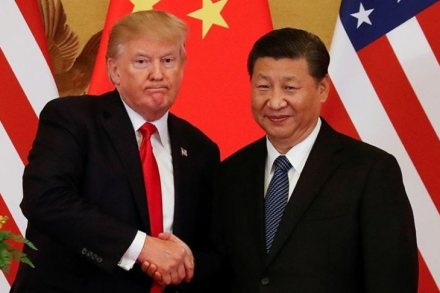
China’s imposition today of tariffs on 128 imports from the US was inevitable – and is no doubt exactly the reaction that Donald Trump wants, giving him the excuse to announce yet more tariffs in addition to those on steel and aluminium imports which he has already imposed.  After all he did say, even before China announced any form of retaliation:  “trade wars are good.  It should easy for the US to win one”.  A trade war is what he wanted, and what he has got. But does he have any more of a strategy for his trade war than George W Bush had a plan for winning the peace in Iraq? There is an argument for saying that China will come off worse – on the basis that it exports far more to the US than travels in the other direction.

A trade war with China sounds terrifying – but the US is doing the right thing

Nobody likes the sound of trade war, and rightly so. China’s new retaliatory tariffs against US products feel like the beginning of something bad: an escalating tit-for-tat trade conflict between the world’s richest countries which could choke the global economy. But there are good reasons to think that, far from being another silly move by a hothead president, Trump’s right about trade with China and that, as he has with North Korea, he is grasping a dangerous nettle that other presidents dared not touch. It may be scary, but it needs to be done. And it’s not just necessary for America, but perhaps the rest of the world as well. China is deeply protectionist, and is rapidly becoming the most powerful country on earth.

What are Kim Jong-un’s motives in meeting Xi?

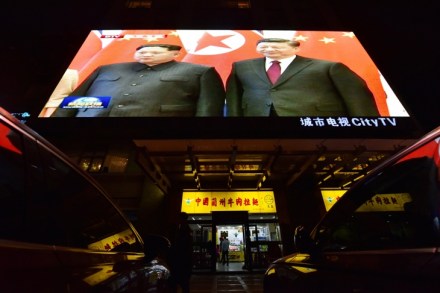
Kim Jong-un surprised the world—once again—by making an unannounced trip to China earlier this week, and observers in the United States still haven’t come to any agreement on what it means. The North Korean leader traveled to Beijing by bulletproof train to meet with Chinese president Xi Jinping ahead of a planned meeting later this spring between Kim and American president Donald Trump. Georgetown University professor and American Enterprise Institute scholar Oriana Skylar Mastro told Vox it was “Kim’s desperation”—as well as both leaders’ fears of war—that precipitated the China meeting.

Isolationist? Donald Trump appears to be assembling a war cabinet

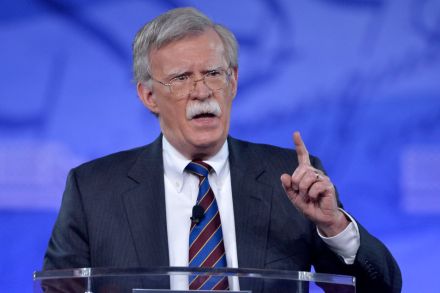
Is the third time the charm? President Trump has already run through Mike Flynn, who enjoyed the shortest tenure in history of any national security adviser. Next came three-star General H.R. McMaster. Now John Bolton, the former George W. Bush ambassador to the United Nations who has been angling for the job ever since Trump won the 2016 election, has gotten the nod. Bolton’s ascension is temporarily eclipsing other events such as the 700 point stock market plunge today thanks to the imposition of tariffs on China or the resignation of Trump’s lawyer John Dowd. No one personifies the hawkish wing of the GOP better than Bolton whose appointment is being greeted with hosannas by neocons such as Senator Marco Rubio. Diplomacy, in Bolton’s mind, is for wussbags.

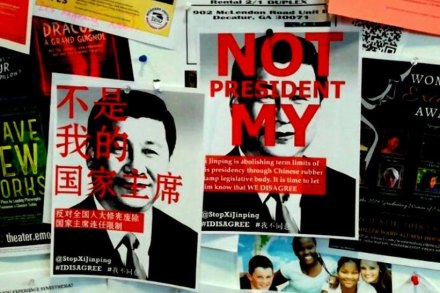
Not my president: meet the Chinese students standing up to Xi Jinping

At last, some students in the West are campaigning for freedom and democracy. Following years of supposedly rad students banning pop songs about sex, and force-fielding their campuses against offensive speakers, and even expelling certain newspapers from their common rooms as if they were heretical abominations, a group of students has emerged to demand more liberty, not less. They’re Chinese students, studying in Western universities, and the target of their youthful liberal ire is Chinese President Xi Jinping. This week, Xi convinced the annual sitting of China’s parliament, the National People’s Congress, to scrap the two-term limit on presidency. They didn’t take much convincing, by the looks of things.

Is Donald Trump, like Bush, being taken over by neocons?

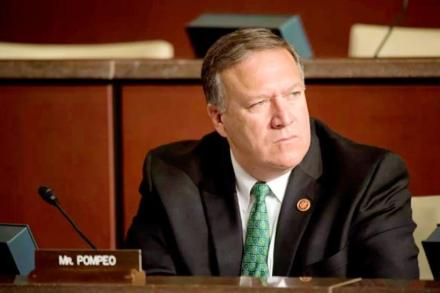
The Trump administration’s foreign-policy team is beginning to look a lot like a Marco Rubio foreign policy team. It’s not hard to imagine a generally hawkish Republican like Mike Pompeo serving as Secretary of State under Little Marco, and John Bolton - widely tipped to replace H.R. McMaster as national security adviser - would have turned up sooner or later in any GOP administration, except one led by Sen. Rand Paul. Nikki Haley at the United Nations, meanwhile, has been hailed by neoconservatives as heartily as Bolton was when he served as George W. Bush’s UN ambassador from 2005-6. The hawks don’t like to be called 'neoconservatives', but the neoconservative worldview is their worldview.

Why Trump’s ‘trade war’ makes strategic sense

Has Donald Trump sparked off a trade war? His plans for a 25 percent tariff on steel imports and 10 percent tariff on aluminum have shocked friend and foe alike. China is outraged; so are Canada, Japan, and South Korea—allies that in fact export more steel to the U.S. than China does. They stand to be hurt worst if they aren’t granted exemptions or cut special deals by the president. Trump accuses the Chinese of 'dumping' steel into the American market, while the legal grounds for his new tariffs rest in the idea that strategically critical manufacturing is endangered by a diminished U.S. metals industry.

China vs America: the espionage story of our time

Why aren’t spy stories sexy anymore? The revelations last year that Beijing destroyed America’s espionage ring inside China a few years ago, including executing a number of US informants, got a brief flurry of attention and then subsided beneath the waves. News reports of American bureaucrats arrested for passing information to the Chinese have also barely raised eyebrows. Now the ex-CIA agent suspected of being the mole that led to the collapse of America’s spy operations in China has been arrested, though on a lesser charge of simply possessing classified information. How long before Americans turn back to Donald Trump’s tweets or the latest #MeToo charges?

If China backs Trump on North Korea he won’t like the quid pro quo

The first election day since Donald Trump was elected president a year ago brought a funereal mood to Washington that you could feel on the streets. The swamp, apparently, remains undrained. Elections for governor in Virginia and New Jersey and for mayor in New York City cheered the locals a bit, producing the expected victories for Democrats. Virginia was the most consequential of these. It seemed a harbinger of the next presidential race. The moderate, decidedly un-Trumpian Republican Ed Gillespie was accused of making ‘ugly racial appeals’ — this for expressing the opinion that the statues of Virginia’s Civil War heroes should not be razed in a frenzy of revisionism.