Books

Lionel Shriver: A Better Life

38 min listen

My guest on this week’s Book Club podcast is Lionel Shriver, whose new novel A Better Life offers among other things a savage send-up of liberal pieties on immigration. I asked Lionel what she was trying to do with the book (why make the argument, for instance, in a novel rather than an op-ed?), whether New York’s immigration law really is as nutty as her story paints it, and how she reacts to the opprobrium that this sort of to-the-moment writing stirs up.

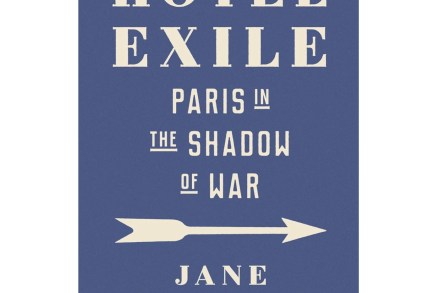
Jane Rogoyska: Hotel Exile – Paris in the Shadow of War

45 min listen

My guest on this week’s Book Club podcast is the historian Jane Rogoyska, whose new book Hotel Exile: Paris in the Shadow of War tells the bloody story of the Second World War through the lens of Paris’s Hotel Lutetia – following a cast of exiled intellectuals through the febrile 1930s, the increasing horrors of the war and occupation, through to the devastating aftermath as waves of prisoners returned from the camps. She tells me how she came to this unusual approach, how the connections between her cast of characters proliferated, how close Samuel Beckett came to a concentration camp – and about falling a little bit in love with Walter Benjamin.

Jane Rogoyska: Hotel Exile – Paris in the Shadow of War

Francis Spufford: Nonesuch

32 min listen

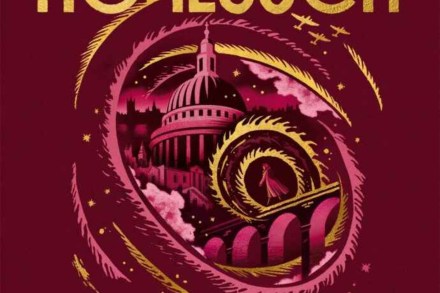
My guest this week is Francis Spufford, whose fabulous new novel Nonesuch is a fantasy adventure set during the Blitz containing magical Nazis, nerdy TV techs and honest-to-goodness angels. He tells me about fantasy world-building and historical research, the pleasures and pitfalls of writing a female protagonist, why C S Lewis is as influential as Tolkien — and supersizing Dr Manhattan. You can read Philip Hensher’s review of Nonesuch here.

Francis Spufford: Nonesuch

What Would You Do Alone in a Cage with Nothing but Cocaine?

45 min listen

My guest in this week’s Book Club podcast is the philosophy professor Hanna Pickard, whose new book is What Would You Do Alone in a Cage with Nothing but Cocaine? A Philosophy of Addiction. She tells me why we need a new approach to ‘the puzzle of addiction’. She says the idea that addicts are helplessly in thrall to the compulsions of a ‘broken brain’ is wrong, that we need to understand how sometimes using even if it’s looks like killing you can make a sort of sense – and describes how her own one-off experience of morphine set her on the path of trying to change the way we think about drugs.

What Would You Do Alone in a Cage with Nothing but Cocaine?

Eric Schlosser: Fast Food Nation – revisited

In this week’s Book Club podcast my guest is Eric Schlosser, the investigative journalist whose Fast Food Nation: The Dark Side of the All-American Meal is being reissued as a Penguin Modern Classic 25 years after its first publication. He tells me what’s changed and what hasn’t since he first published this groundbreaking exposé of fast food’s effects on so many aspects of American society, why he was destined to suffer the fate of Upton Sinclair, how Keir Starmer fits in – and how he proudly built a chapter around six vital words.

Eric Schlosser: Fast Food Nation – revisited

How big tech companies steal your attention

41 min listen

This week’s Book Club podcast deals with attention: what it is, why it is in crisis, how it came to be the biggest business in the world, and how we can resist the tech juggernaut that is destroying it. I am joined by two co-authors of the new book Attensity!: A Manifesto of the Attention Liberation Movement. They tell me why the ‘attention economy’ would be better termed ‘human fracking’, and how the problem is so much more than can be solved by a new year’s resolution or more restrictions on screen time.

How big tech companies steal your attention

Joanna Kavenna: How To Play A Game Without Rules

35 min listen

My guest in this week’s Book Club is Joanna Kavenna, who talks about her witty, philosophically riddling new novel Seven: Or, How To Play A Game Without Rules. She tells me about taking her bearings from Italo Calvino, making up a board game and then being the world’s worst player at it, how AI challenges our sense of ourselves – and how Morten Harket found his way into her fiction.

C. Thi Nguyen: How To Stop Playing Someone Else’s Game

45 min listen

In this week’s Book Club podcast, my guest is the philosophy professor C. Thi Nguyen, whose new book The Score: How To Stop Playing Someone Else’s Game asks why rules and scores and metrics are so liberating in games, yet so deadening in real life. He tells me about the societal perils of our growing dependence on quantitative information, what Aristotle got right, and what yo-yos can tell us about the meaning of life.

Slipshod – by Sarah Perry

35 min listen

For this special Spectator Out Loud, Sarah Perry reads her short story Slipshod, from the Spectator‘s Christmas issue. The story follows an academic tasked with reconstructing a disturbing incident involving two long-standing colleagues whose close friendship unravels under the weight of envy, illness – and something harder to explain. What emerges from the investigation is a chilling reflection on rivalry, resentment and how buried histories can resurface with devastating consequences. Produced by Patrick Gibbons.

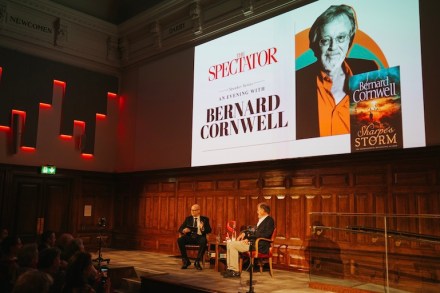
Speaker series: Bernard Cornwell – Sharpe's Storm

35 min listen

The Spectator’s associate editor Toby Young sits down with master storyteller Bernard Cornwell, author of more than 50 international bestselling novels, including The Last Kingdom and much-loved Sharpe series. They delve into Cornwell’s life and career, discuss the real history behind his riveting tales of war and heroism and explore the enduring appeal of historical fiction. This event marks the launch of Sharpe’s Storm, a bold new chapter in the saga of Richard Sharpe, set amid the chaos of 1813 France. This discussion was part of the Spectator’s speaker series. To see more on our upcoming events, go to events.spectator.co.uk.

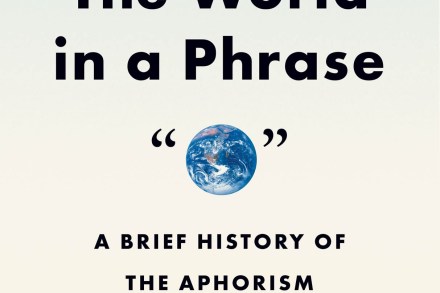
James Geary: A Brief History of the Aphorism

43 min listen

My guest in this week’s Book Club podcast is James Geary, talking about the new edition of his classic The World in a Phrase: A Brief History of the Aphorism. He tells me about what separates an aphorism from a proverb, a maxim or a quip; about the long history of the form and his own lifelong infatuation with it; and about whether – given our dwindling attention span and appetite for zingers on social media – we can expect to be living through a new golden age of aphorism.

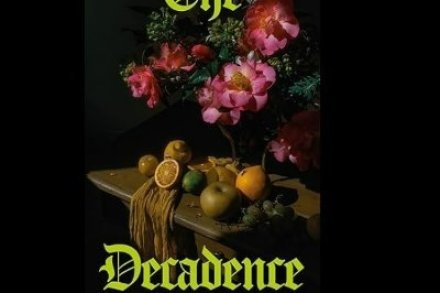
Leon Craig: The Decadence

29 min listen

On this week’s Book Club podcast I’m joined by debut author Leon Craig to talk about her novel The Decadence – a story of millennial debauchery in a haunted house which uses a knowing patchwork of literary influences from Boccaccio and Shirley Jackson to Martin Amis and Mark Z. Danielewski to make an old form fresh. She discusses how and why it took her so long to write, how she first acquired a taste for the gothic, and why she thinks the horror novel, that seeming relic of the 1970s, is making such a dramatic comeback.

Benjamin Myers: Jesus Christ Kinski

36 min listen

Ben Myers joins Sam Leith to discuss his book Jesus Christ Kinski, which he describes as a ‘novel about a film about a performance about Jesus’. Klaus Kinski was one of Germany’s biggest actors of the 20th Century – but he was also one of the most controversial, and Ben questions if he was one of the worst people to have ever lived. In this novel, Kinski returns for a one-man performance about Jesus Christ, and it nearly becomes his last as the audience turn on him and violence is threatened.  Ben tells Sam about how he came to be fixated on Kinski, why the worst people can be some of

Wikipedia founder on his 'friend' Elon Musk & finding truth online

35 min listen

Sam Leith’s guest this week is Jimmy Wales, the founder of Wikipedia and author of The Seven Rules of Trust. They discuss why trust is such an important value for public debate, and how it can address polarisation in society. Jimmy addresses the challenge Elon Musk has posed to Wikipedia after the entrepreneur branded the site as ‘woke’, despite the pair having a personal relationship. Sam also asks whether the internet is getting worse – and if it can be fixed.

Graham Robb: The Discovery of Britain

40 min listen

Sam Leith’s guest this week is Graham Robb. In his new book The Discovery of Britain: An Accidental History, Graham takes us on a time-travelling bicycle tour of the island’s history. They discuss how Graham weaves together personal memories with geography and history, his ‘major cartographic scoop’ which unlocks Iron Age Britain and contemporary debates about national identity. Graham also has a discovery of interest for those who hold out hope that King Arthur really existed. Produced by Patrick Gibbons and James Lewis.

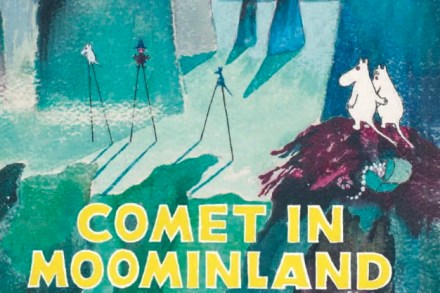
Nat Jansz: Comet in Moominland turns 80

36 min listen

Nat Jansz joins Sam Leith to celebrate the 80th anniversary of the Moomin novels. The first of these, Comet in Moominland, was revised by author Tove Jansson a decade after the original publication date. To celebrate the anniversary Sort of Books, co-run by Jansz, is publishing this revised edition for the first time in English. Jansz discusses why she finds the books so compelling, the influence of the war on author Jansson and why she feels Jansson’s ‘quest for the truth’ was written in a way that was easy for children to understand. For Jansz, the Moomin novels had a mix of light and dark which broke the mould of