Books

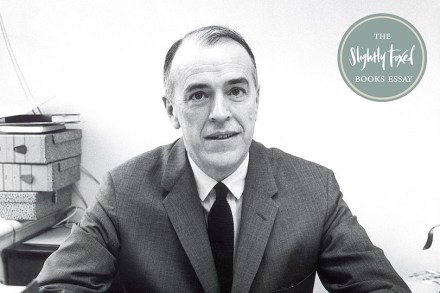
Anthony Powell gets the superb new biography he deserves

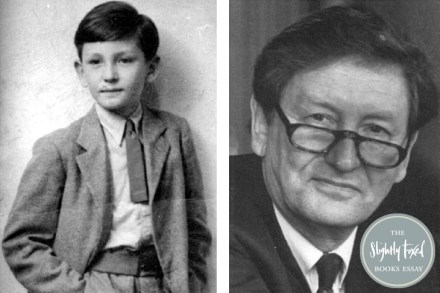
Great novelists come in all shapes and sizes, but one thing they all share is a status of half-belonging. If they had no foot in the world at all, they could hardly understand it; if they completely belonged, they could hardly understand what was distinctive. One of the pleasures of this excellent biography is fully appreciating the peculiar, liminal, not-quite-successful position Powell wrote from, and described with great exactness. In half a dozen social and professional milieux, he was a tolerated, perhaps useful minor presence, like a spare man at dinner. From the standpoint of a rather failed editor, screenwriter, soldier, socialite, he stood by and watched the world. In each case, one suspects, the subjects hardly realized they were being observed.

anthony powell

To Kill a Mockingbird would probably not find a publisher in the age of #MeToo

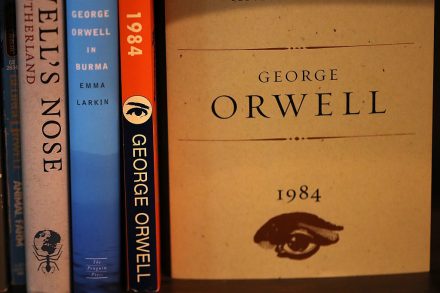
On Tuesday, after a six-month long poll in which four million Americans voted, Harper Lee’s To Kill a Mockingbird was voted the US’s best-loved novel. Mockingbird is so often at the summit of such polls or described as a book ‘every adult should read before they die’ that another win is no surprise. Lee, who stopped writing fiction and giving interviews almost as soon as the novel became a phenomenon, struggled for the rest of her life with the scale of its success. First published in 1960, as the civil rights movement hit its stride, Lee’s anti-racist novel has been handcuffed to liberalism for the last 50 years. An uncharitable reading of Mockingbird would see it as a childishly progressive fantasy.

to kill a mockingbird

The end times of the liberal order?

A liberal order is not natural. Robert Kagan admits as much in his new book, The Jungle Grows Back, when he writes that the ‘the creation of the liberal order has been an act of defiance against both history and human nature’. Nor is a liberal order an ‘order’, or liberal in nature. It is a sort of hegemonic or imperial peace. Nothing wrong with that, of course; peace, any peace, is important. Unfortunately, it is the liberal part, which causes the problem. An internationalist, utopian worldview, liberalism is full of crusaderly zeal, constantly ‘going abroad in search of monsters to destroy’. Liberal internationalists badly want to shape the world. When given the chance, they do manage to shape the world, very badly indeed.

robert kagan liberal order

Chapo Trap House’s revolution fizzles

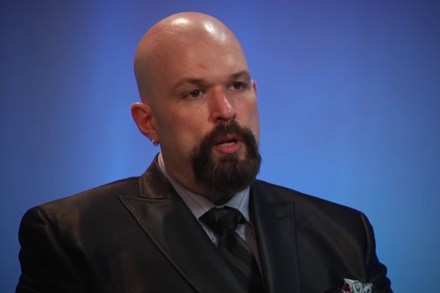
The socialists behind the immensely successful podcast ‘Chapo Trap House’ have now released a book, The Chapo Guide to Revolution. A satirical attack on liberals and conservatives, as well as a sincere case for democratic socialism, it is often funny and sometimes instructive. The book has good jibes about the foaming rage of right-wing keyboard warriors and the affectations of conservative intellectuals. Chapo satire often flounders on its contradictions, though. The Chapo crew enjoy mocking the appearances of liberal and conservative figures, for example, yet their photographs suggest that if they want such jokes to be effective they should confine themselves to non-visual forms of media.

chapo trap house

Stormy Daniels’s honesty issues

Stephanie Clifford, better known as ‘Stormy Daniels’, is famous on account of three hours spent in a hotel suite with Donald Trump 12 years ago. She says they did, he says they didn’t, and since everything that Donald Trump does or doesn’t do makes the geographical center of America ecstatic with praise while the edges explode with uncontrollable indignation, Ms Clifford has fairly earned her place as the starlet of series 220, episode 394 in this exhilarating, and never ending sitcom.

stormy daniels bed thunder

Hallelujah: Leonard Cohen speaks from beyond the grave

There was something inexplicable about Leonard Cohen, some combination of sexiness and silliness, brains and bohemianism. It  never should have worked, but it did, and that put him in a category of his own. Cohen died in November 2016, just after the release of his final studio album, You Want It Darker. Before he died, he compiled his first posthumous work, The Flame, from the uncollected poems, sketches, and lyrics in his hundreds of notebooks. A complicated man, Cohen somehow assembled uneven poetic gifts, limited musicality and a questionable vocal range into a consummate artistry. Cohen’s star burned more brightly with age, but he was a writer first and, in the end, last. In 1959, he published his first collection of poetry, Let Us Compare Mythologies.

leonard cohen

Reagan, victor of the Cold War, with a little help from Lech Walesa and the Pope

At 6 in the morning on December 13, 1981, Poland’s prime minister Wojciech Jaruzelski appeared on Polish television and described in sonorous tones a looming Apocalypse. ‘Our homeland is at the edge of an abyss,’ he said. ‘State structures are ceasing to function. Each day delivers new blows to the waning economy… There are more and more examples of terror, threats, mob trials and direct coercion. Crimes, robberies, and break-ins are spreading like a wave through the country.’ Jaruzelski then took a step directly into that abyss. He declared martial law. Soldiers went door-to-door arresting members and suspected sympathisers of the populist labour movement Solidarity, including its leader, Lech Walesa.

reagan poland walesa covert action

How moderates can save immigration reform

Reihan Salam has written a timely and important book, urging centrists of left and right to accept reduced immigration in order to improve social cohesion and integrate the children of immigrants. As a prominent Bangladeshi-Muslim American conservative, he brings a highly distinctive perspective to this vexed question – a second-generation immigrant’s case for immigration reform. Immigration was the defining issue of Donald Trump’s primary bid, and analyses of survey data show that non-voters and Obama voters who wanted lower immigration were decisive for Trump’s election. Yet the rise of the post-1960s New Left, with its focus on disadvantaged cultural groups, has made inroads into the Democratic Party, rendering it allergic to immigration control.

immigration melting pot or civil war

All things lead to 9/11

In the immediate aftermath of 9/11 many writers spoke of feeling immobilised. The scale of the attacks and the world’s shared experience of the media event seemed to demand a response; but simultaneously writers such as Ian McEwan, Martin Amis and Jay McInerney described a sense that the tools at their disposal were inadequate — that the reality of what had taken place exceeded fictional representation. These three all recovered from their shock reasonably quickly, contributing to the flood of 9/11 fiction that poured into bookshops during the 2000s. In recent years this torrent of novels and stories has slowed, but as Christopher Priest’s eerily powerful An American Story demonstrates, it most certainly has not stopped.

american story
myers-briggs

The personality test that conned the world

The other day in the Guardian’s Blind Date column, two participants, or victims, finished off an account of their frightful encounter by dismissing any chance of a future relationship: ‘I’m sure two ENFPs might wear each other out.’ The acronym is perhaps not familiar to everyone, but that, coming from a couple of young people steeped in human resources gibberish, would have been the point. The woman involved was showing off her Myers-Briggs personality type. Myers-Briggs is an American analysis of personality first used in the 1940s, which gained huge success in the 1950s. It was a decade in which, as Merve Emre poetically says, ‘the stench of political paranoia was accented by cheap gasoline and apple pie’.

lords of the desert

The scramble for the Middle East: Britain and America fall out

One of the many pleasures offered by Lords of the Desert, which narrates the rivalry between Britain and the United States in the Middle East from the end of the second world war through to 1967, is the quotations that are liberally strewn across its pages. They have been culled from memoirs or official documents unearthed in British or US archives and testify to the research that has gone into this dense but consistently fascinating account. Some reveal the deep complacency of influential individuals. Ralph Brewster, an American senator who undertook a round- the-world tour in August 1943 to investigate the progress of the war and report to President Franklin D.

lords of the desert

The scramble for the Middle East: Britain and America fall out

One of the many pleasures offered by Lords of the Desert, which narrates the rivalry between Britain and the United States in the Middle East from the end of the second world war through to 1967, is the quotations that are liberally strewn across its pages. They have been culled from memoirs or official documents unearthed in British or US archives and testify to the research that has gone into this dense but consistently fascinating account. Some reveal the deep complacency of influential individuals. Ralph Brewster, an American senator who undertook a round- the-world tour in August 1943 to investigate the progress of the war and report to President Franklin D.

paris echo sebastian faulks

Hoping to find happiness

It is a truth universally acknowledged that a serious novel must be in want of a theme. Paris Echo soon makes it clear that it has several. It’s about the shifting nature of history and the mysterious footprints of the past in the present. It’s also concerned with the myriad and biased interpretations that we place on past events. Another preoccupation is the ambiguities of spoken and written French. Modern Paris, the novel’s main setting, allows Sebastian Faulks to explore his themes through two main viewpoints. There’s Tariq, a precociously self-aware 18-year-old Moroccan from a middle-class family in Tangier, who comes to Paris in search of himself, his mother’s French family and an obliging woman who will help him lose his virginity.

The old man and his muse: Hemingway’s toe-curling infatuation with Adriana Ivancich

One rainy evening in December 1948, a blue Buick emerged from the darkness of the Venetian lagoon near the village of Latisana and picked up an Italian girl — 18, jet black wet hair, slender legs — who had been waiting for hours at the crossroads. In the car, on his way to a duck shoot, was Ernest Hemingway — round puffy face, protruding stomach and, at 49, without having published a novel in a decade, somewhat past his sell-by. He apologised for being late, and offered the rain-sodden girl a shot of whisky which, being teetotal, she refused.

ernest hemingway adriana ivancich
endeavour

A date with Venus in Tahiti

There is something about the Transit of Venus that touches the imagination in ways that are not all to do with astronomy. The last Transit occurred in 2012, and if nobody who watched it will ever see another, the sight of that small black dot, making its almost imperceptible progress across the disc of the sun, offered, across the span of 243 years, an oddly moving connection with the scientists and sailors who quartered the globe and, sometimes, risked their lives in 1769 to attempt the first comprehensive observations of the event. There is no shortage any more of ‘global events’ — a good, old fashioned footballing brawl between England and Colombia will stop the planet — but in the more localised world of the 18th century it was another matter.

Modernist architecture isn’t barbarous – but the blinkered rejection of it is

When I was younger, one of my favourite books was James Stevens Curl’s The Victorian Celebration of Death. His latest is much less cheerful. Like one of those innocents who re-enact the Civil War in embarrassing costume on Bank Holidays, Curl has been time-travelling backwards into a pre-modern world. He returns from the past with a crude message that has been familiar since Reginald (Menin Gate) Blomfield told us in the 1930s that modern architecture is a godless conspiracy of foreigners, Jews and Bolsheviks to eradicate an established culture of building, patiently evolved over three millennia. This is less than a half-truth. Yes, modernist principles, misunderstood by unimaginative planners, often led to atrocious results.

modernist architecture

How scary is dairy?

For tens of thousands of years, humans have been domesticating other mammals — cows, buffaloes, sheep, goats, camels, llamas, donkeys, yaks, horses — and keeping them for their milk. This has generated myriad products, from yoghurt and buttermilk through butter and cheese to toffee and ice cream, in many varied, culturally specific and resourceful forms. A sign of the elemental importance of this foodstuff is that our galaxy is called the Milky Way — and indeed the word ‘galaxy’ is derived from the Greek word for milk, gala. In Ancient Greek mythology, the Milky Way was formed when Hera, the goddess of womanhood, spilled milk while breastfeeding. Each drop became a speck of light, known to us as a star.

dairy Milk! A 10,000 Year Food Fracas by Mark Kurlansky reviewed

Glenda Jackson might have made a magnificent Hamlet

The role of Hamlet is, Max Beerbohm famously wrote, ‘a hoop through which every eminent actor must, sooner or later, jump’. In this book, and in its online supplement, Jonathan Croall charts the flight through that hoop of pretty well all of the ‘eminent actors’ — male and female, young and not so young, white and black — who have taken the leap in British performances, from Michael Redgrave with the Old Vic company in 1950 to Andrew Scott at the Almeida in 2017. The trajectory of the actor’s flight is of course different in every production.

hamlet

Will all whales soon be extinct?

Nick Pyenson, curator of fossil marine mammals at the Smithsonian Institute in Washington, is quick to tell us he’s not a ‘whale hugger’. ‘I didn’t fall asleep snuggling stuffed whales or decorate my room with posters of humpbacks suspended in prismatic light.’ Pyenson sees whales through their ancestral bones, and their contemporary entrails, digging up their past or scrying their future. Spying on Whales begins its surveillance in the fossil-rich site of Cerro Ballena (‘Whale Hill’) in the Atacama desert. Here, in the Miocene layers, he uncovers an entire pod of ancient, stranded whales, stilled in the moment of their deep-time death. It’s an Indiana Jones moment.

whales