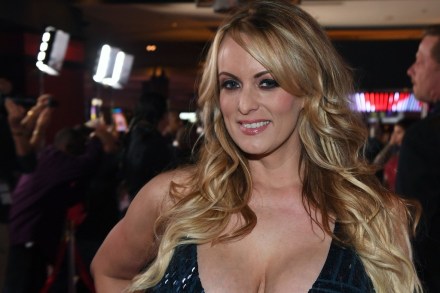
The Stormy Daniels affair is a storm in a DDD cup
The story of the president and the porn star has been, in the last week, a fast-moving one
The good, bad and ugly in arts and exhbitions
The story of the president and the porn star has been, in the last week, a fast-moving one
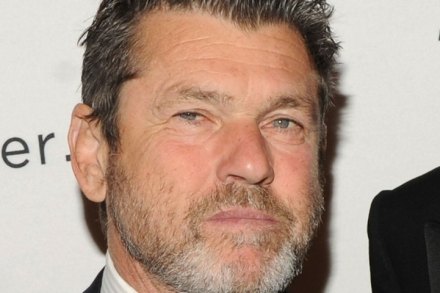
We were so close to getting rid of Jann Wenner. When his 51 per cent stake in Rolling Stone was put up for sale last year, it felt safe to assume that the new owners would gently ease out the man whose disastrous recent leadership brought the publication to the point where it needed to … Read more
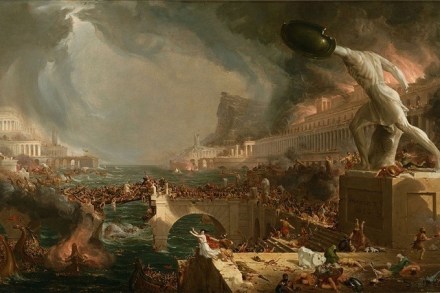
These days, the political climes of the United States are deeply unhappy. The weather, as if endorsing the pathetic fallacy of the historical schema, is miserable too. Caught by the snow in New York this week, I thought I would dry off in the Metropolitan Museum of Art. Under the pseudo-Classical portico and past the … Read more
You Were Never Really Here is a fourth feature from Lynne Ramsay (Ratcatcher, Morvern Callar, We Need to Talk About Kevin) and the first thing to say is that it is exceptionally violent. I don’t say this disapprovingly but if your threshold for violence is as low as mine — I incurred a paper cut the other day and passed clean out — it will prove an 89-minute ordeal. Still, it has been described as ‘the Taxi Driver for the 21st century’, if that is of help while you’re bracing yourself for the next hammer blow. Personally, I found it of no help at all. Also, it’s untrue. The film
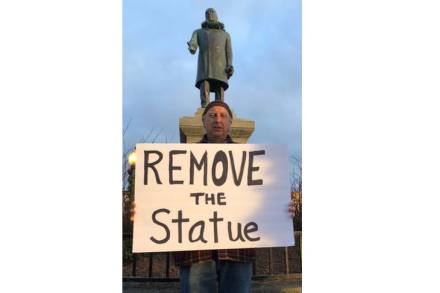
Ah, this will be about empire. So I thought when I saw that the small city of Arcata, California, has voted to remove the statue on their town plaza of President William McKinley. The United States had never possessed overseas colonies before McKinley. Every territory we acquired, we eventually brought into the republic with full … Read more
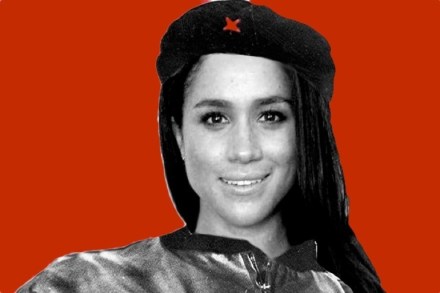
The wedding of Meghan Markle to Prince Harry has no precedent in the history of the Royal family. How will a relatively ordinary person, albeit a celebrity, cope with the rigid etiquette and stifling sense of entitlement of the culture into which they are marrying? I’m referring, of course, to Harry. From the moment he … Read more
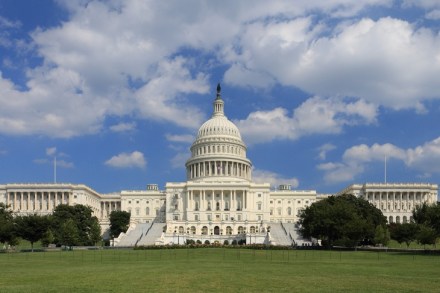
A couple of months ago, I moved to the capital of the United States. I had one year of university left and applied for a fellowship (in journalism) in my final term which parachuted me into the world of Washington D.C. The view from my bedroom window is now the distant Capitol Building and the … Read more
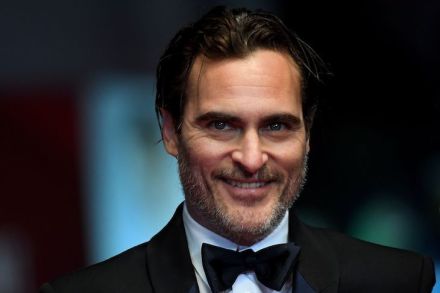
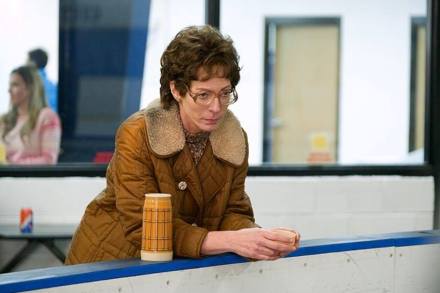
Films about the Winter Olympics don’t grow on conifers. Twenty-five years ago there was Cool Runnings about the Jamaican bobsleigh team. It took many years for Eddie the Eagle to reach the screen. Both were cockle-warming comedies about implausible Olympians who embody the ideal that participation is all. Only last week Elise Christie, the British speed skater who kept tumbling in Pyeongchang (and Sochi), hoped that ‘Reese Witherspoon’ would play her in the movie. In the mean time, the latest Olympiad has flushed out two more biopics on ice. I, Tonya tells of Tonya Harding’s catastrophic career. Like Monica Lewinsky, Harding is a public figure whose epitaph, thanks to a
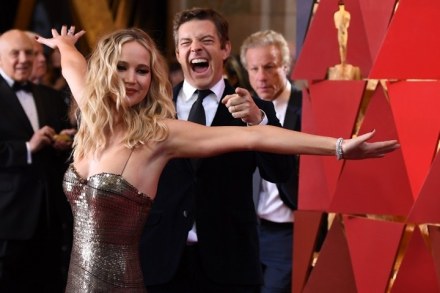
Reading the lip-smacking reports of the latest troubled celebrity relationships (Jennifer Aniston and Justin Theroux definitely high and dry, Cheryl Cole and Liam Payne allegedly on the rocks) I couldn’t help musing that stars – and more specifically, the place they occupy in our mass psychological landscape – have very much changed since the first mass-market celebrities emerged. The film stars of the fledgling Hollywood truly were worshipped as higher beings; a tribe of Pathan Indians opened fire on a cinema when they were denied entry to a Greta Garbo film while women committed suicide when Valentino died. Their marriages were regarded as heavenly unions; their romantic sunderings as tragedies.
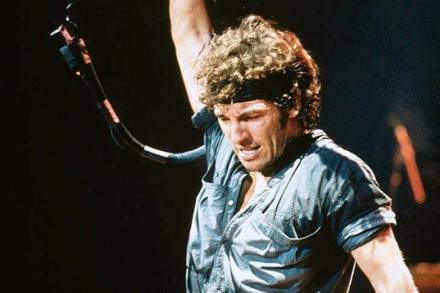
Bruce Springsteen promised that he was ‘Born To Run’, and now, like Judy Garland and Ethel Merman before him, he is running on Broadway—and running, and running. From last October to early February, the workingman’s tribune performed five nights a week at the Walter Kerr Theatre, his tools a piano, an acoustic guitar, and a … Read more
The Oscars promise to be truly unbearable this year, with vomit-inducing levels of sanctimony followed by the usual gibberish from the commentariat. The results and speeches and even clothes will be subject to endless politicised scrutiny, and whatever the film industry does to stay Woke, the Buzzfeed headline will inevitably be ‘and people aren’t happy about … Read more
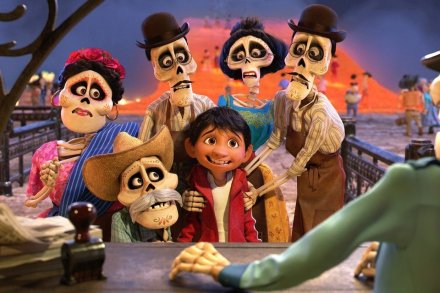
As a British woman, I love Americans’ kindness, generosity and energy but am often thrown by their exaggerated politeness and euphemistic speech. They use ‘passed’ for ‘died’ and always say ‘excuse me’ if they brush against you in a shop. They sentimentally refer to ‘your puppy’ when the dog is patently over three years old. … Read more
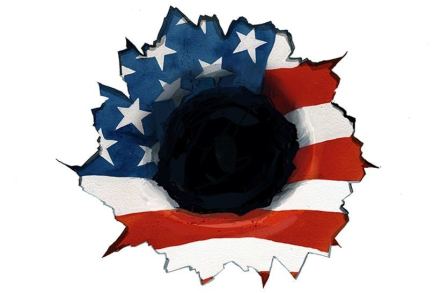
Lady Bird is a semi-autobiographical film written and directed by Greta Gerwig with a plot synopsis that need not detain us as it is basically only this: girl has a mum. (Or: girl has a mum, and sometimes they row and sometimes they don’t.) But thus far it has won near universal critical praise, two Golden Globes and five Oscar nominations, thereby proving there is mileage in girls and their mums, and box office in girls and their mums, and that girls and their mums can be more than mere afterthoughts. In this respect, Lady Bird may, in fact, be quite the rare bird. It’s set in Sacramento, California, in
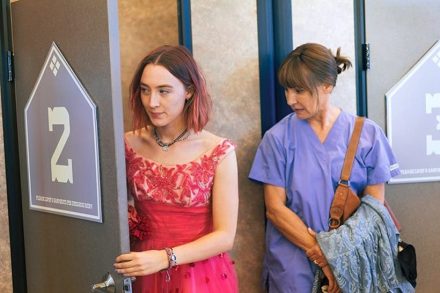

‘Hi, it’s Jonas.’ When the great tenor rings from Vienna, I ask if there are any topics he wants me to avoid, such are his minders’ anxieties. ‘Ask anything,’ laughs Jonas. ‘I’m not shy.’ He is heading in from the airport to see a physio — ‘these concerts, you have to stand there all the time’ — before taking Hugo Wolf’s Italian Songbook on a seven-city Baedeker tour: Vienna, Paris, London, Essen, Luxemburg, Budapest, Barcelona. I wonder if he is aware that Wolf is a hard sell to English audiences. ‘Not just the English,’ he replies. ‘Even in Germany promoters say to me, please don’t do a Wolf-only recital, no
Paul Thomas Anderson’s Phantom Thread is a lush psychosexual drama starring Daniel Day-Lewis as a pampered, tyrannical, pernickety 1950s couturier whose life is disrupted when he falls for a waitress who, in the most unexpected way, proves his match. It is a wonderfully fixating film in every respect, and wholly non-formulaic. And it miraculously transforms an addition to a breakfast order — ‘…and sausages’ — into one of the sexiest things ever said. Ultimately, its meaning will be open to interpretation. I saw it as the rather timely story of a man who is finally forced to cut out his misogynist heart and see women as real people, but your
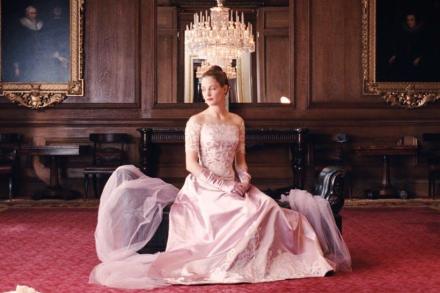
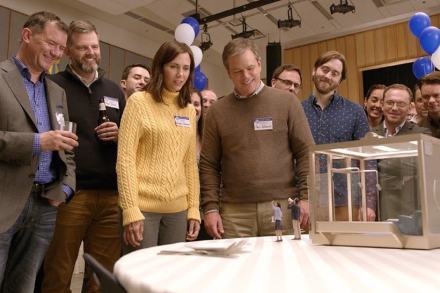
Downsizing is a film with the most brilliant premise. What if, to save the planet, we were all made tiny? What if we only took up a tiny amount of space and flew in tiny planes and produced tiny amounts of rubbish? And what if we could live in the sort of mansions that would cost millions if they were regular-sized? What if, what if, what if, what if… but most crucially: what if this film had run with the premise rather than throwing it away? Could it have avoided becoming just another dumb ‘white saviour’ movie? And this, alas, is the ‘what if’ that must preoccupy us today. This
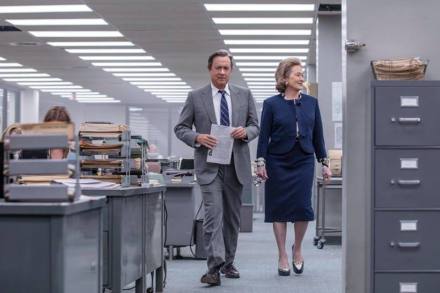
Steven Spielberg’s The Post, which dramatizes the Washington Post’s publication of the Pentagon Papers in 1971, doesn’t exactly push at the frontiers of storytelling. It’s told straight and in a familiar way. Here are the journalists furtively working through top-secret government papers in a smoke-choked room for the public good. (There were no empty pizza boxes in this instance, but there could have been, if you get my drift.) Here’s the government trying to stop them. Here’s the newspaper rolling off the press, and everyone clapping. And so on. But it does star Tom Hanks and Meryl Streep, engaged in a kind of dance as the paper’s editor and proprietor,
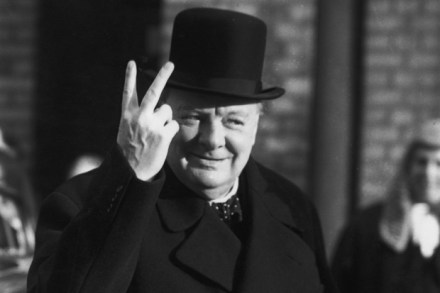
Gary Oldman has joined a long list of actors who have portrayed Winston Churchill — no fewer than 35 of them in movies and 28 on television. He is one of the best three. ‘I knew I didn’t look like him,’ Oldman has said. ‘I thought that with some work I could approximate the voice. The challenge in part was the physicality, because you’re playing someone whose silhouette is so iconic.’ We all have our own mind’s-eye view of what Churchill should look and sound like, and his personality was so strong and sui generis that it is almost impossible for an actor to impose himself on the role. He
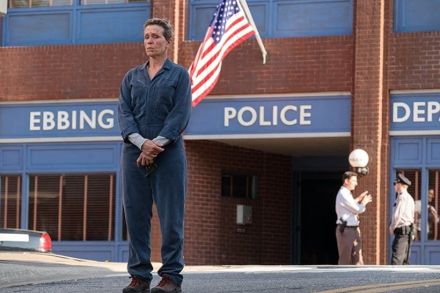
Three Billboards Outside Ebbing, Missouri does, indeed, feature three billboards outside Ebbing, Missouri. They have been placed at the roadside on the outskirts of town by Mildred Hayes (Frances McDormand), a middle-aged woman whose teenage daughter had been raped and murdered seven months earlier. The billboards read: ‘Raped While Dying’; ‘And Still No Arrests’; ‘How Come, Chief Willoughby?’ Mildred is grieving, in pain and a ball of fury. But not your regular, everyday ball of fury. She is a ball of fury of the most magnificent, unstoppable kind. If only she could go after every rapist from now on. I’d certainly sleep better in my bed. Written, directed and produced
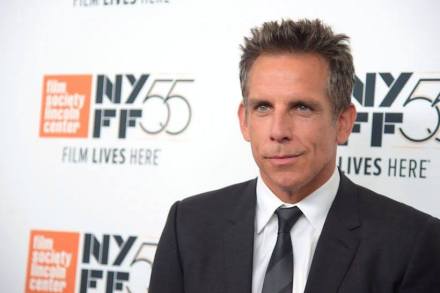
Brad’s Status is a midlife crisis film starring Ben Stiller as a nearly 50-year-old man whose status anxiety is through the roof, poor thing. My heart bleeds and all that. I’ll tell you what Brad’s status should be: face well and truly slapped. The film is written and directed by Mike White (Beatriz at Dinner; Enlightened) and in some quarters it has been renamed Mike’s White Privilege, which is fair — no one else gets a look in — but as it’s intended as a satire of white male privilege you can’t exactly blame it for being white, male and privileged. However, while some moments will resonate (who hasn’t ever