Arts Reviews

The good, bad and ugly in arts and exhbitions

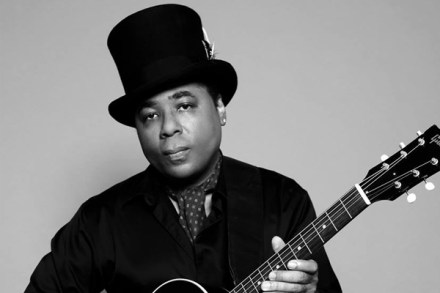
Big Jay McNeely brought joy to millions with his music

If I had to define rock’n’roll in one sentence, it would be: ‘The Blues from the Forties, played by Country musicians in the Fifties.’ Which is to say, black music played by white people. In the Sixties, and almost entirely at the prompting of the Beatles, the Rolling Stones and other white foreigners, white Americans allowed themselves to be persuaded of the merits of black American music. This created a small heritage industry, summarised in a 1991 album title by one of its beneficiaries, Screamin’ Jay Hawkins, as Black Music For White People. The black originators, ripped off once by R&B labels, and once again by the white impersonators, were granted the chance of being ripped off again by a new generation of promoters, selling their old hits to white audiences.

big jay mcneely

It’s the blood that gets you

Like Socrates and Cher, the name of Delacroix says it all. Here is the hot lunch of 19th century French art among so many dishes served cold — exoticism and eroticism, à la français. We can all form some image of the piratically handsome Romantic swashbuckler. We can also picture something of his harems, lions, and malfunctioning blouses rendered in his colours of blood and bone. Or, at the very least, we know someone who can. And just so, the major survey of Delacroix’s work, which opens this week at the Metropolitan Museum of Art in New York, is simply titled Delacroix — no subtitle, s’il vous plaît. The Met’s gift shop even sells a black shirt with his name typed out in white. The latest from the House of Delacroix.

delacroix Jeune tigre jouant avec sa mère Young Tiger Playing With Its Mother

2001: A Space Odyssey still gets better as it goes along, 50 years on

It’s been fifty years since 2001. Not fifty years since the start of the second Bush presidency — though that was long ago too — but a half-century since the release of Stanley Kubrick’s science-fiction masterpiece 2001. A new ‘unrestored’ version of the film, made by Christopher Nolan from the original film negatives and sound recordings, has been in theaters this summer, including select IMAX theaters. I caught the final showing at the Smithsonian’s Air and Space Museum cinema — the Lockheed Martin IMAX Theater, as it’s naturally called — this week. How does it hold up after five decades?Not well, is my first impression.

2001: a space odyssey

Sensation seeking

This adaptation of Anton Chekhov’s play is handsomely mounted, as they say, and features a stellar cast (including Annette Bening, Elisabeth Moss and Saoirse Ronan), but it won’t be setting the world alight. It is not a waste of 90 minutes, and Bening is superb, as if you even needed me to tell you that. But it doesn’t especially distinguish itself otherwise and I kept waiting for it to deliver emotionally. I waited and waited and waited, but no, nothing. The film is, of course, set on a country estate just outside Moscow, because if it weren’t set on a country estate just outside Moscow it plainly wouldn’t be Chekhov.

the seagull
moon landing

It’s not just the moon landings. Everywhere, the PC brigade is rewriting history

I remember the moon landing very well. I was nine years old. I can remember too my sense of outrage and disillusion. ‘This is a blatant violation of the moon’s dignity and sovereignty,’ I told my parents, as the astronauts Buzz Aldrin and Neil Armstrong attempted to secure the US flag to the lunar surface. ‘An act of imperialistic, Zionist barbarism and a statement of intent from the American government that it intends to export its white supremacy throughout the known galaxy. You will note that no people of colour were chosen as astronauts, nor women, nor people with fibromyalgia.

Hank Mobley, the greatest sax player you never heard

Jazz may be an egalitarian, collaborative music, but jazz musicians honor their best with the laurels of hierarchy. Everyone knows the royal monikers of ‘Duke’ Ellington and ‘Count’ Basie, and most people know that Billie Holiday was ‘Lady Day’. But there’s also a whole aristocracy of hip name-drops: ‘The Baron’ (Charles Mingus), ‘Pres’ (Lester Young), ‘The Court Jester’ (Ornette Coleman), ‘The High Priest’ (Thelonious Monk). The list goes on, and on. The mid-century saxophonist Hank Mobley (1930–86) was never ennobled in such fashion — unless you count Dexter Gordon’s hilarious handle for his friend, ‘The Hankenstein’. Nor has historical consensus enshrined Mobley as a leading musician of his era.

hank mobley

Any storm in a port

Reports of the death of bookstores are fiction. In 1931, there were about 4,000 bookstores in the United States. Almost all of them were gift stores, selling a limited stock of paperbacks. Only about 500 of them were specialist bookstores, and almost all of them were in major cities. True, between 1995 and 2000, the number of independent bookstores collapsed by 40 per cent. Amazon opened for business in 1994, but two other factors were big-city gentrification, and the expansion of mediocre chains like Barnes & Noble and Borders, which went public in 1995. Now, the big chains are gone — and who, apart from a homeless person looking for a day bed, will miss them? — and independent bookstores are booming.

the bookshop

Millennials aren’t taking offence. They’re hunting for victims

In a recent column, I vowed to return to a point made in passing. To refresh your memory, the American magazine the Nation printed a formal apology for running a harmless 14-line poem by a white writer about homelessness. The poet’s sins: using the word ‘cripple’ and adopting a voice lightly evoking what I gather we’re now to call ‘AAVE’: African-American Vernacular English. Facebookers were incensed, comments huffy. The poet apologised, too. I decried this ritual progressive self-abasement as cowardly and undignified. But it’s worth taking a second look at that story as a prime example of screaming emotional fraudulence in the public sphere.

antifa snowflakes millennials
yardie idris elba

Idris Elba’s directorial debut is a patchy disappointment

Yardie is Idris Elba’s first film as a director and what I have to say isn’t what I wanted to say at all. I love Elba and wanted this to be terrific. I wanted him to be as good from behind as he is from the front, so to speak. I wanted this to absolutely smash it as a narrative about the Jamaican-British experience as there have been so few. But, alas, it is a disappointment. It is patchy. It’s not paced excitingly. The characters are insufficiently drawn. And I struggled with the thick Jamaican patois, I must confess. I was often muddled, yet whether it was due to that or the plot was muddled anyway, I cannot say for sure. This is based on Victory Headley’s cult novel, first published in 1992, and is set in Jamaica and then London in the early 1980s.

The Precisionist Impulse: in search of the first American art movement

‘The chief business of the American people,’ said Calvin Coolidge, ‘is business.’ Commerce to Coolidge was a kind of religion: ‘the man who builds a factory, builds a temple.… The man who works there worships there.’ In the forward momentum of American industrialisation from the turn of the 19th century through the Great Depression, skyscrapers, factories, docks and railroads, all became urban temples. If you had looked closely at one such building, a 20-story structure going up at 100 Church Street in Lower Manhattan in 1958, you would have seen two figures clambering up scaffolding trying to reach the highest point, pulling out first a camera, then a sketchpad.

precisionist impulse precisionism

Handling Pooh with kid gloves

Is it good to contact your inner child — assuming, that is, you have one at all? And if you do, how far should you go—throwing tantrums, eating snot, wetting the bed? As an advocate of regression, Walt Disney was right up there with Arthur ‘Primal Scream’ Janov and R.D. ‘The Mad Aren’t Mad’ Laing. At least Yanov and Laing did their best to help troubled adults towards happiness. Disney did his wicked best to drive guilty parents into penury. Disney, the evil genius, realised that to really make money from children’s entertainment, you had to follow the money. Flatter the breadwinner, and he’ll spend bread on taking the kids to the movies, buying them stuffed toys, and even going to a Disney-themed resort.

christopher robin winnie the pooh

Stop calling me ‘a privileged white man’ – I’m more than that

I got some bad news this week. I discovered that I’m a ‘privileged, white male’. It was my agent who broke it to me. We were talking about the trouble he’s having in finding a publisher for my book — a work of non-fiction — when the following exchange took place. Me: What’s wrong with my book? Agent: There’s nothing wrong with your book. It’s brilliant. It’s moving. It’s funny. Me: OK. So what’s the problem? Agent: You’re the problem. Me: Excuse me? Agent: You’re a middle-aged, privileged white man. You’re out of fashion — and so is your book. Publishers think you’re too male. Too white. Things are difficult for writers like you at the moment.

privileged white man
jimmy page capricorn

Jimmy Page is a Capricorn – that says it all

In 1957, aged 13, Jimmy Page appeared with his skiffle group on a children’s TV programme dedicated to ‘unusual hobbies’ — skiffle apparently qualifying as one. During the show, he was interviewed by Huw Wheldon who, following an old-fashioned BBC lunch, arrived in the studio with a hearty cry of ‘Where are these fucking kids then?’ Asked what he planned to do when he grew up, Page gave a perhaps unexpected reply: find a cure for cancer. As we now know, this plan failed — but already, it seems, the young Jimmy wasn’t lacking in the swaggering self-confidence that true rock stars are required to possess (or at least to fake convincingly).

Where did all the Chippendales go?

It all began with the orders. In the preface to his Gentleman and Cabinet-maker’s Director (1754), Thomas Chippendale started with ‘an explanation of the five Orders’ — those foundations of all architecture, the Tuscan, Doric, Ionic, Corinthian, and Composite. ‘Without an acquaintance with this science,’ he continued, ‘the cabinet-maker cannot make the designs of his work intelligible.’ Nearly two hundred years later, Evelyn Waugh said much the same thing. Writing in 1938 in Country Life, Waugh noted that by learning the orders of architecture, ‘you can produce Chippendale Chinese; by studying Chippendale Chinese, you will produce nothing but magazine covers.’.

chippendales

Life ‘n’ Arts podcast: celebrating American audacity with William Giraldi

The Spectator USA Life 'n' Arts podcast launches this week with fanfares, the popping of corks, and much coughing and wheezing into microphones. From now on, every week I’ll be casting a pod with artists, writers, thinkers, painters and even people who do something useful for a living too. First up is the novelist and essayist William Giraldi. Author of the novels Busy Monsters and Hold the Dark, and The Hero’s Body, a memoir of misspent youth as a bodybuilder, Giraldi is one of the few contemporary American critics worth reading. This month, he publishes his first collection of essays, American Audacity: In Defense of Literary Daring (Norton).

william giraldi podcast
blackkklansman

The backlash against Spike Lee’s BlacKkKlansman leads towards a divided America

Before the climax of Spike Lee’s new film BlacKkKlansman, scenes of an initiation for new knights of the Ku Klux Klan are interspersed with shots of Harry Belafonte as a fictionalised activist describing the 1916 lynching of a black man. Lee makes the division between the two groups clear. But the hero of Lee’s movie belongs to neither group, and has therefore been derided by Boots Riley, the American musician, in a viral tweet.BlacKkKlansman makes it clear that while the Black Power activists presented in the film are on the moral high ground, moral righteousness does not make for might without reaching across tribal aisles and reworking corrupt systems from within.

The poetry of Tommy Robinson

Life’s not all politics. Even for Cockburn. Well, kind of. Cockburn enjoys poetry, but the digital news churn leaves him no time to recline with a slim volume of verse and a glass of dry sherry, as he was wont to do in his youth. Imagine, then, Cockburn’s delight at finding a poem that combines the pleasures of lyric with deep research into global issues—immigration, Islam, the ‘administrative state’ (rhymes with ‘people we hate’), and the budding romance between Steve Bannon and Europe’s new nationalist parties: ‘Letter to England: For Tommy Robinson’, by the American versifier Joseph Charles MacKenzie.

Tommy Robinson poetry

V.S. Naipaul’s gentle side

When I went to see V.S. Naipaul in hospital last week he was feeling marginally better. His wife Nadira had arranged for a violinist to play some Mozart to him, helping him relax. She did not allow too many visitors. This was not the first time he had been in hospital. His health had been deteriorating for the past 12 months and the family had been receiving — as always — a flurry of invitations from literary festivals and heads of state. All had to be declined. In his hospital room we discussed his coming 86th birthday and I suggested that we celebrate with champagne at the Ritz. He smiled and proposed we go to ‘the other place’. He had a better time at the Lanesborough and preferred to head there instead.

V.S. Naipaul’s

Only Aretha Franklin had the soul power to summon the spirit at will

Aretha Franklin, who died this morning at the age of 76, was called the Queen of Soul. But she did not inherit her crown, so much as create it. Nor, though she inspired plenty of oversold and over-souled pretenders, did she ever have a plausible heir. She wove that crown from the music of the black church, the blues and Broadway, from faith, pain and love. No one else could touch her, and she will meet her maker still wearing it. Aretha — the voice was so distinctive that her surname seemed superfluous — was simply the finest popular singer of her generation. Unlike every other pop star of the Sixties and Seventies, she would have been among the finest of the previous generations, too.

Azealia Banks is telling the truth

For a certain slice of the online commentariat, nothing better captured the zeitgeist this year than the surprise romance between tech industrialist Elon Musk and Claire Boucher, the cyberpunk-ish music impresario known professionally as Grimes. This week, we discovered their coupling was just the beginning.The worlds of Musk and Grimes worlds merged bizarrely when the pop star Azealia Banks wound up blasting out status updates on Instagram from inside Musk’s LA manse. Banks painted an unflattering portrait of Musk as a billionaire whose impulsive business decisions made it impossible to get Banks and Grimes in the same room of the same house where, ostensibly, their musical collaboration was supposed to begin: https://twitter.