Arts Reviews

The good, bad and ugly in arts and exhbitions

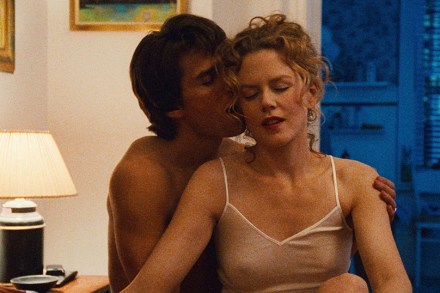
Is Martin Scorsese America’s greatest living director?

Who’s the greatest living American film director? Many would say Steven Spielberg, and that can’t be dismissed, but he hasn’t made a really good film since Munich (2005). There are many younger pretenders – such as David Fincher, Paul Thomas Anderson, Quentin Tarantino – and the more esoterically inclined might make the case for anyone from Terrence Malick to Spike Lee. Yet it’s hard not to feel that the don of contemporary American cinema is Martin Scorsese, whose career over the past five-and-a-half decades has existed, sans pareil, thanks to a vast dollop of talent, a considerable degree of good fortune and, crucially, an ability to lure both A-list collaborators and deep-pocketed moneymen into financing his films.

scorsese
phantom

A new Phantom comes to Broadway

Around midway through Masquerade – the new immersive adaptation of The Phantom of the Opera, which sees a small audience whirled through a labyrinth of rooms and sets – I feel a hand on my shoulder. Smiling, I turn, expecting to see my friend – and immediately recoil. A tiny circus freak grins at me, revealing teeth like sharpened screwdrivers and a painted face lifted straight from Día de los Muertos. Later, in a carnival scene, that same freak hammers three nails into her face and an ice-pick up her nose. The carnival sequence is not in the original Phantom. It is one of the largest and perhaps most important of Masquerade’s additions.

The Running Man runs out of steam

After a spectacularly bad few weeks for the box office – with only the Predator sequel overperforming, probably because it was rated PG-13 – Paramount is no doubt eyeing the release of their Edgar Wright/Stephen King/Glen Powell would-be blockbuster The Running Man with unusual trepidation. As well they might. Although it has been marketed as an all-action thriller in the vein of the studio’s Mission: Impossible films, it comes with the slight air of tainted goods.

Vince Gilligan wins again with Pluribus

Say what you will about Breaking Bad and Better Call Saul creator Vince Gilligan, but there are few showrunners who are better at starting a series off with a bang. Who could forget the spectacle, from the pilot episode of Breaking Bad, of Bryan Cranston’s pants-less, intense-looking Walter White, addressing his family – and by extension, the audience – by saying “My name is Walter Hartwell White. I live at 308 Negra Arroyo Lane, Albuquerque, New Mexico, 87104. To all law-enforcement entities, this is not an admission of guilt?" Or Bob Odenkirk’s half-hapless, half-sly Jimmy McGill, aka Saul Goodman, leading a black-and-white half-life in Omaha, Nebraska, as we slowly, inexorably observe the circumstances that have led to his downfall?

pluribus
youtube tv disney

Will Disney strike a deal to end its YouTube TV blackout?

A war has taken over media coverage. No, not one of actual consequence. This war, however, is imminently affecting your national pastime and your wallet. This is a civil war within media. The combatants are the Walt Disney Company with it’s channels – including ABC and ESPN, plus the SEC and ACC networks – and Google, YouTube TV’s parent company. The two entities failed to meet a carrier agreement, and all Disney channels are blacked out on YouTube TV. That means that much of the nation will not have access to most of the weekend’s football content, as has been the case since the showdown a couple weeks ago.

On less famous presidential assassins

Everyone can name JFK and his (probable) assassin, Lee Harvey Oswald, or Abraham Lincoln and everyone’s least favorite actor, John Wilkes Booth. But what of James A.  Garfield, America’s short-lived (in both senses) 20th President, and his murderer, Charles Guiteau? Both men have disappeared into obscurity, at least until Candice Millard’s award-winning 2011 true-crime history Destiny of the Republic, which skillfully unpicked the sheer strangeness of the backstory behind Garfield’s protracted death and Guiteau’s conviction and execution for the crime. Garfield won election in the 1880 presidential election almost by accident.

Bryan Garner has recovered a lost master

Bryan Garner has performed a remarkable act of cultural recovery with his vigorously written new book, The Etcher: The Life and Art of Oskar Stoessel, a long-forgotten Austrian artist who had total mastery of his form and deep understanding of the human face. Stoessel (1879-1964) attained success in the US in the 1940s after fleeing from the Nazis in 1938 with the help of US Minister to Austria, George Messersmith, who introduced him to elite American circles. Stoessel went on to etch portraits of Franklin Delano Roosevelt and Secretary of State Cordell Hull, among many others, and exhibited at the Corcoran Gallery in Washington, DC. He found his greatest supporters and subjects in the Supreme Court – he sketched all the sitting justices in 1941 and more in subsequent years.

bryan garner

Die My Love is Jennifer Lawrence at her best

Big-name, all-star team-ups used to be the preserve of Hollywood blockbusters – perhaps reaching its peak in 2005 with Mr. and Mrs. Smith, when Brad Pitt and Angelina Jolie met, fell in love and sold a billion copies of the National Enquirer in the process. But in our new era of superhero-driven slop, where it barely matters which actor is in what picture, such things have largely fallen into abeyance. Still, even in our jaded times, there remains an undeniable thrill from seeing Katniss Everdeen and Edward Cullen together on screen at last, as they are in Die My Love.

die my love

Is Meghan Markle making a thespian comeback?

As Britain's royal family attempts to maintain a "business as usual" approach in the aftermath of the biggest scandal to have engulfed the institution in decades, the pair responsible for its last existential embarrassment have been notably silent. You might have expected, as Andrew was showily stripped of all his titles, some sanctimonious comment on the Sussex Instagram account, some hashtag-laden exhortation always to stand with the victims of abuse. But no. Those of us who were wondering why this has not happened now have an answer, of sorts. Meghan Markle, the Duchess of Sussex, has returned to her old profession: acting. In truth, it is unclear as to whether Meghan’s appearance in the forthcoming picture Close Personal Friends will be the greatest test of her thespian abilities.

meghan markle

Uncovering Brian Wilson’s real genius

The death earlier this year of Brian Wilson, aged 82, was marked by the usual tributes to a man who was not only a pioneer of popular music, but also a sadly troubled genius whose early years of wild success were quickly overtaken by decades of drug addiction and mental health problems. A recurring theme in the obituaries was what might have happened in the aftermath of the Beach Boys’ masterpiece, 1966’s Pet Sounds, if Wilson, by then the band’s producer and lead songwriter, had not descended almost immediately into narcotic-induced torpor. It has commonly been suggested that Paul McCartney – who revered Wilson – was also jealous of the achievement of Pet Sounds, which arguably overshadowed the Beatles’ Revolver, and that Sgt.

met kinky

Why is the Met making medieval art perverse?

Unwitting historians often reveal just as much – if not more – about their own time and place than the time and place they claim to describe. The curators of Spectrum of Desire: Love, Sex, and Gender in the Middle Ages, a new exhibition at the Met Cloisters, are prime examples. Gathering manuscript illustrations, paintings, sculptures, jewelry and more from the 13th to 16th centuries, the exhibition promises to uncover “the hidden sexuality and sensuality of medieval art.” The intent is “queering the past,” and the objects were chosen to show expressions of “desire” in as many forms as possible – a saucy premise that appeals to contemporary trends. But many of the new interpretations range from the woolly to the laughable.

tron ares

Drowning in the neon swamp of Tron: Ares

Sitting in the nearly empty movie theater at which I saw Tron: Ares, I found myself swamped by neon. Its hues are unappealing in real life – redolent of dive bars, arcades and other unsavory venues – but neon is downright unbearable when experienced in a movie theater, where you have no choice but to stare at the screen unless you want a perfectly good $21.51 to go to waste.

black metal

Are black-metal bands going Christian?

In his youth, Emil Lundin became obsessed with the idea of recording the world’s “most evil album.” The lanky, long-haired Swede formed a black-metal band and set to work. He faced an immediate obstacle. In making history’s most nefarious musical creation, he could hardly use Swedish, with its singsong tones. English was also out of the question: he didn’t want to sound like ABBA. That left Latin, the native tongue of the occult and, it is said, of demons. In a quest for suitably devilish lyrics, he pored over arcane texts. That led him to Latin editions of the Sayings of the Desert Fathers – badass early Christian monks – and St. Augustine’s Confessions.

Florence and the Machine is back

It may be coincidence or clever record company marketing, but the two current reigning queens of the British pop music scene, Lily Allen and Florence Welch, have released their two latest records within a week of one another. Allen, who has admittedly been more involved in acting and selling pictures of her feet on OnlyFans of late, brought out the excoriating and autobiographical West End Girl, which is said to explore the compromises and difficulties of her short-lived marriage to Stranger Things actor David Harbour. And, not to be outdone, Welch and her band Florence and the Machine have come back with her first album since 2022’s excellent Dance Fever; it promises another smorgasbord of operatic vocals, soaring choruses and BIG tunes. Does it work?

The free market can’t stop AI actress Tilly Norwood

The British actress Tilly Norwood began appearing in viral videos and short films across the internet earlier this year. She is young, fresh-faced, with girl-next-door vibes. She will be signed by a major talent agency soon. But Tilly Norwood is not real. She is an artificial-intelligence synthetic. She is not in the real world, not embodied. She is not a person or an actress. She is a digital Frankenstein’s monster of video software and ChatGPT. Tilly was created by Particle6 Productions, an AI studio founded by Dutch comedian and actress Eline Van der Velden. Tilly is her project. Van der Velden moved to the UK when she was 14 to study drama and musical theater – and Tilly is fairly clearly her idealized self. Tilly, and by extension Van der Velden, is increasingly famous.

Del Toro’s Frankenstein deserves the big screen

If you want to see Guillermo del Toro’s no-expense-spared adaptation of Mary Shelley’s Frankenstein this Halloween, you’ll have to hope that you’re living in a major city with an arthouse cinema. That is because, as part of the Faustian deal that Netflix strikes with the filmmakers whom it gives blank checks to realize their dream projects, the pictures that they make get only the most token of cinematic releases before they are sent onto the streaming service, there to become part of the algorithm for all eternity.

Why was Steven Soderbergh’s Star Wars film rejected?

Ever so often, a film project – especially one that never ended up happening – emerges into the public domain to a mixture of disbelief and disappointment. So it has proved with Steven Soderbergh’s Star Wars film, tentatively entitled The Hunt for Ben Solo. The picture was to have been a sequel to the little-loved The Rise of Skywalker and focused on Adam Driver’s character Kylo Ren, aka Ben Solo, the son of Han Solo and Princess Leia who finds himself torn between the noble impulses of the Force and the more dastardly influence of the Dark Side. Given that Soderbergh is nobody’s idea of a conventional blockbuster director, the results would, at the very least, have been interesting.

It’s a shame that Crooked Cross isn’t better

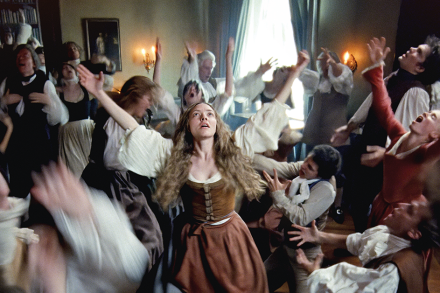
It’s Christmas Eve in a small German town. In a cozy wood-paneled living room, a brother and sister named Helmy and Lexa are decorating the tree, half chatting and half squabbling, the way siblings do. As they light candles, Lexa’s fiancé, Moritz, pounds on the door, demanding jauntily to be let him. He’s as excited as a small child to see the festivities – and to kiss his bride to be. So opens the off-Broadway production of Crooked Cross.  It's a joyous scene, full of promise. Quickly, though, things begin to go south. Moritz Weissman, a surgeon, is accomplished, smart, and well-liked. But while he was raised Catholic, his name, taken from his professor father, is Jewish.

Crooked Cross

Is OCD hip?

About half-way through the one-woman show Unstuck, the American comic Olivia Levine admits that it’s “hip” to talk about one’s obsessive-compulsive disorder.   She’s right. In Unstuck – which tracks Levine’s at times paralyzing battle with the illness – Levine is following a well-trod path, seen on many a movie and television show. The OCD character can’t stop counting or washing their hands or looking over their shoulder. Often their symptoms are played for laughs or sympathy or to showcase their weird but essentially charming quirkiness. Rarely is the more menacing side of OCD shown.  Levine is here, then, to disrupt the stereotypes and, with humor and likability, discuss the symptoms that are less often depicted in media.

Olivia Levine (Bryan Berlin)