Arts Reviews

The good, bad and ugly in arts and exhbitions

The one-note wonder

Art museums normally organize career surveys or thematic exhibitions, but this spring the Museum of Modern Art has departed from this practice to focus on a single work. Matisse: The Red Studio examines the pivotal painting of the same name that Henri Matisse (1869-1954) created in 1911. Exhibitions are normally years in the making, so while this one was in the works long before the Covid-induced lockdown, it offers a model for institutions struggling in the wake of the pandemic. Rather than expending scarce resources on an expensive blockbuster loan show, do a deep dive into something in your own collection. And what a dive this is.

matisse

Playing the long game

Back in the fall of 1995, on the centennial of Paul Cezanne’s breakout late-career exhibition at Ambroise Vollard’s avant-garde art gallery, a retrospective opened at the Grand Palais in Paris, titled simply “Cézanne.” That show traveled to the Tate in London in 1996 and then to the Philadelphia Museum of Art. Now, more than a quarter century later, another retrospective with a similarly spartan title has opened in the Windy City: a joint venture between the Art Institute of Chicago and Tate Modern.

cezanne

A concert begun in darkness

It was all glitter at Blues Alley in Washington, DC when the trumpeter Terence Blanchard, who is the composer of a widely hailed opera called Fire Shut Up in My Bones that was recently performed at the Met, appeared in March with his E-Collective band as well as the Turtle Island Quartet to play several sets. Blanchard wore iridescent tennis shoes and played a miked trumpet with extra reverb that almost looked as though it was glowing in the dark. Periodically, he would tap his right foot onto an electronic device on the floor that manipulated his tones to extend them into the ether. Indeed, his audacious high notes lingered on long after he had stopped blowing. The collective is Blanchard’s foray into the world of deep funk. It definitely makes an impact.

Schächter

How green is your Soylent?

In 1966, when Harry Harrison penned his dystopian thriller Make Room! Make Room!, which began life as a serial in Impulse magazine, he predicted that by 1999, there would be more than 7 billion people on earth, and a robust 35 million in New York City alone. The 1973 film adaptation of Harrison’s novel, Soylent Green, altered several aspects of Harrison’s novel, including the year in which the thriller is set: 2022. Now that we’re there (and decades past 1999), it’s worth asking: did Soylent Green director Richard Fleischer and his writer, Stanley R. Greenberg, get things right?

Soylent
Macbeth

Macbeth on Broadway: a Very Modern Scottish play

The new Macbeth on Broadway starring Daniel Craig ends up about where you’d expect: a Macbond unhinged and raving about Birnam Wood come to Dunsinane, splattering the castle walls with the gore of his enemies and pummeling Macduff mercilessly until the showstopping reveal that the latter was “of no woman born” but, in fact, “from his mother’s womb/ untimely ripped.” Omit the full-cast kumbaya circle at the end (a too-sweet cherry atop a bloody sundae), and the denouement essentially gives you Shakespearean drama at its most unimaginative — as a Hollywood action blockbuster. This isn’t to say that Shakespeare cries out for bold reimagining. Nor is there anything wrong with giving people what they came to see. It is Daniel Craig, after all.

Friends

Friends creator falls victim to white guilt

Friends creator Marta Kauffman is very, very sorry. No, not for forcing us to endure the exhausting decades-long debate over whether Friends or Seinfeld is a better sitcom (the show about nothing wins without question, obviously). Instead, Kauffman apologized to the woke mob for not being nearly three decades ahead of her time. The fun-sucking left has for years complained that Friends is *problematic*. The show, they whine, lacked diversity and mocked and trivialized issues such as fat-shaming and transphobia. Kauffman says she finally took these concerns to heart after the death of George Floyd because the incident forced her to reckon with the way she "bought into systemic racism." Gag.

Bracing for the tension of Better Call Saul

Next week will see the final tranche of episodes of the sixth series of Better Call Saul swaggering onto Netflix. They follow a tense mid-season cliffhanger that saw the sudden death of one major character and the unexpected return of a former nemesis. Expectations for the last installment are appropriately high, not least because of the much-heralded return of the two characters who defined the Breaking Bad universe from which the series was spun off: Aaron Paul’s hapless Jesse Pinkman and, most excitingly of all, Bryan Cranston’s Walter White. Better Call Saul’s creators, Peter Gould and Vince Gilligan, are intelligent men. Gilligan was responsible for Breaking Bad, on which Gould was a writer, producer and director.

Ezra Miller needs help

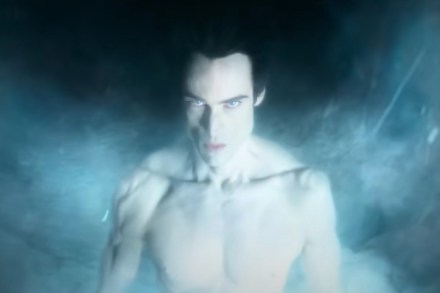
It has been a less than stellar year for celebrities. Will Smith slapped the piss out of Chris Rock for comparing his wife to a beloved action hero. Johnny Depp and Amber Heard publicly relived every detail of a relationship so toxic that it made nuclear waste look like sparkling water. Still, no one has surpassed the exploits of Ezra Miller. A star of such films as The Perks of Being a Wallflower, Fantastic Beasts and the forthcoming The Flash, Miller shows every sign of transitioning to documentaries — and true crime in particular. Miller’s alleged criminal rampage has been one of the most bizarre subplots of 2022. An androgynous eccentric with the features of a bird of prey, Miller was filmed choking a female fan in 2020.

ezra miller

Kevin Spacey’s transatlantic fall from grace

At the beginning of the forgettable comedy Austin Powers in Goldmember, there is a selection of starry cameos, including Tom Cruise as an idealized version of Powers and Kevin Spacey hamming it up to high heaven as an alternate Dr. Evil. The film was made two decades ago, when Cruise was probably the biggest star in Hollywood, and when Spacey, a double Oscar winner for his roles in The Usual Suspects and American Beauty, was the leading character actor of his generation, both onscreen and onstage. Today, Cruise is as successful as he has ever been, with his latest film, Top Gun: Maverick, attracting rave reviews and stellar box office earnings. It has been a far different story for Spacey.

In search of a credible Elvis movie

Baz Luhrmann’s latest exercise in excess, a new biopic of Elvis Presley, called simply Elvis, opens across American theaters this weekend. As ever with Luhrmann, it’s a mixture of sensory-popping provocation, cartoonish performances (Tom Hanks’s Colonel Tom Parker is written and played as if he’s walked out of a Snidely Whiplash short), an eclectic soundtrack and, once the sturm und drang settles, a surprisingly conventional account of a decidedly unconventional man. Played with chutzpah and charisma by Austin Butler in what must be a star-making performance, Luhrmann’s Elvis is less the bloated, drug-addicted behemoth of latter days than a youthful, hip-swivellin’, groin-thrustin’ icon.

The Jurassic series is ready for its asteroid

The third — and apparently final, if rumors are to be believed — Jurassic Park film arrived in American theaters last weekend. Entitled Jurassic World: Dominion, one of those meaningless names that looks good on a poster, it was released to critical scorn: “the last time dinosaurs were subjected to a disaster this bad, an asteroid was involved” was a typical comment. Although Dominion opened to a mighty $145 million at the box office, terrible word of mouth is likely to see the gross plummet before very long. This is very much not a Top Gun: Maverick situation, where the most unlikely people have found themselves raving about a brilliant film. This is a bad, generic summer blockbuster, and it will be forgotten in due course, like all bad, generic summer blockbusters.

The welcome return of The Kids in the Hall

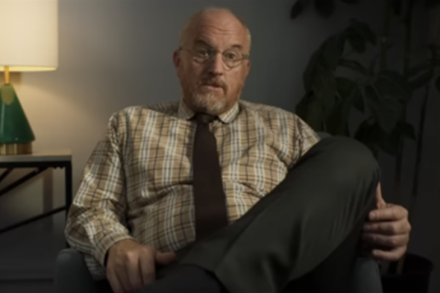
The Kids in the Hall was the best sketch comedy group of the early 1990s. Sure, Saturday Night Live had Phil Hartman, Chris Farley, Norm Macdonald, and Janeane Garofalo — and sketches like Celebrity Jeopardy!, Phil Hartman’s Unfrozen Caveman Lawyer and Motivational Speaker Matt Foley. But there were plenty of duds, too, like The Rickmeister and the ESPYs. The Kids in the Hall was less loud and more intelligent than SNL. They took more risks with sketches like the prescient Politically Correct Art Class, and no one skewered corporate culture better than the Kids (see Not Working Out and Can I Keep Him?). There were absurd characters like the Chicken Lady and the Sizzler Sisters, but their best sketches were the ones they played straight, like Parenting and Salty Ham.

Stranger Things and the perils of nostalgia

Recently, Kate Bush went to the top of the iTunes charts — yes, such a thing does still exist — with her 1985 single "Running Up That Hill." It’s an excellent song, one of her finest works, but the reason for its somewhat unexpected resurgence in popularity is because it was prominently featured in the fourth and penultimate season of Stranger Things. It's testament to the show’s continued popularity that its consistent, even ruthless channeling of Eighties nostalgia can lead to unexpected knock-on effects.

Hollywood has a school violence problem

Streaming services have a school violence problem. For all the hand-wringing and anti-gun stances actors love to indulge on social media, their industry has no problem glorifying the very terror they claim to condemn. Two such cases came last week, right after the Uvalde school shooting that left twenty-one people dead, nineteen of which were schoolchildren. On Friday May 27, three days after Uvalde, the fourth season of Stranger Things premiered on Netflix with an opening scene of mass child death, apparently at the hands of the show’s protagonist, Eleven, in a flashback. Several kids' corpses lie on the floor with smears and pools of blood around them. The streaming service added a disclaimer at the beginning of the season specifically referencing the incident in Texas.

stranger things school

America has lost her Top Gun spirit

Quick Top Gun II: Maverick movie synopsis (and spoiler alert) by the Bad Guys: let's build a secret base using the Star Wars Death Star plans. We'll leave an air vent that looks like a giant bullseye where one bomb will take down the whole place. Good Guys movie synopsis: to make it a fair fight, instead of one Navy Seal throwing a grenade down that ventilation shaft, we'll come up with a near impossible plan involving multiple airplanes flown by irascible characters. Should kill the whole two hours. It seems like some sort of anti-union move to credit people with the screenwriting for this movie.

Deep water Winslow

The advance buzz on Winslow Homer: Crosscurrents wasn’t good. “Woke Winslow” — that’s how observers, online and through the grapevine, pegged the Metropolitan Museum of Art’s new exhibition of paintings and watercolors by Winslow Homer (1836-1910). The stalwart purveyor of maritime adventure and manly pursuits, woke? One glance at the enlarged black-and-white photo displayed at the front end of Crosscurrents — a blurred portrait of Homer in his Maine studio — makes clear that the fusty man with the impatient glare is no one’s idea of a social-justice warrior. Looks aren’t everything, of course. Truth to tell, Homer’s art does touch upon important aspects of American history.

winslow homer

Diaries from Eighties New York

Duncan Hannah, wild child of Andy Warhol’s 1970s, matured to the art world of Eighties New York. The following is an exclusive excerpt from his as-yet-unpublished diaries that chronicle a decade of growing up and getting down — of painting, writing, reading, heroin, AIDS, infatuations, sobriety, Reagan and more. February 15, 1984: Semaphore Gallery sold the painting “Christmas” that I painted on Christmas. Hooray! I was in a cab coming down Broadway with Greg Crane and Simon Lane. We stopped for a red light at Houston Street. Crane said “Oh my God, LOOK!” and pointed to the south side of the street. Above the New-Wave fruit-stand, illuminated in the darkness, was a giant billboard advertising my upcoming show at Semaphore.

Hannah

Is Hans Zimmer a genius or a charlatan?

If you have visited a cinema in the past two decades, you will know the work of the film composer Hans Zimmer. Since he emerged in 1988 with his score for the Oscar-winning film Rain Man (he recently won his second with Dune, among twelve total nominations), Zimmer has created the music for more than a hundred films, television series and other multimedia projects. His eclecticism both startles and amuses. He is surely the only person alive to have collaborated with the reclusive director Terrence Malick (on The Thin Red Line) and to have composed music for a soccer-based video game, FIFA 19. He has scored romantic comedies, sweeping epics, cartoon animations and thrilling action films.

zimmer

Throwing curveballs

"This mob is not the people,” declared Henry J. Raymond in his paper, the New York Times, about the Draft Riots in July 1863. Blue-collar workers in New York, mostly Irish, had begun by protesting a new conscription law, but anti-war sentiment quickly became a pretext for widespread destruction, looting and racial violence. Blacks were hunted, their homes and businesses trashed, and scores of them lynched. Raymond wanted no quarter for the rioters: “Give them grape[shot] and plenty of it.” The new musical Paradise Square imagines a “little bit of Eden” in the Five Points slum of downtown Manhattan, July 1863, where, we are told, blacks and Irish did not just coexist peacefully for a time but flourished.

paradise