Arts Reviews

The good, bad and ugly in arts and exhbitions

Bodies Bodies Bodies cancels its characters to death

Movies that define an era — Fast Times at Ridgemont High, Easy Rider, Casablanca — rarely get stuck there, even if anachronistic references and jokes fly by without notice today (does anyone watching Fast Times today know what a mimeograph is?). Annie Hall and Nashville are as particular to mid-1970s America as they are timeless works of art, both emotional panoramas of a period filled with affluent and successful but unhappy people, confused and eventually destroyed by their own wandering eyes and broken hearts. You didn’t have to have lived through the disappointment of the late 1960s — Vietnam, all of the assassinations — to feel the exhaustion and disillusionment of these films: it’s in every frame, often unsaid.

bodies

A visit to Louis Armstrong’s old home

The New York Times recently started a new series about introducing a friend to jazz in five minutes with a tribute to Duke Ellington. In many ways, Ellington is a sound choice. He was the bandleader par excellence, a brilliantly inventive composer who formed much of the modern jazz vocabulary. But matters can’t rest there. In any assessment of jazz’s founding fathers, Louis Armstrong has to stand as the most influential figure. Both his trumpet and voice are simply inimitable. A recent visit to his modest home, which is now a museum, during a trip to New York with my family offered a reminder of the magnetic attraction Armstrong continues to exert.

armstrong

Weighing in on the unauthorized Hamilton

It was probably inevitable that the culture wars would come for Hamilton. The show had something for everyone — parents and kids, pop-culture enthusiasts and history buffs, right and left. It was the unifying, twenty-first-century Great American Musical, if we could keep it. We couldn’t, of course, and the dustup over a rogue Hamilton production in early August at The Door Christian Fellowship Church of McAllen, Texas, gives one indication why. The non-denominational church, situated not ten miles from the Mexican border at the very southern tip of Texas, presented a modified version, censoring risqué sections and making secular bits Jesus-centric. One scene has our hero Alex repenting his sins (his capitalism?

Hamilton

The deeply human Walking Dead

It was the middle of July 2007. The dead-summer streets of Phoenix, Arizona, were fairly smoldering, so I went into a comic-book shop to beat the heat. I was shipping out to Iraq with the Marine Corps in two days and needed something to distract me. Indulging in a bit of casual melodrama, I asked the half-stoned employee behind the desk what he would read if he had two days to live. Without a second’s pause, he gave a knowing smile and said: “The Walking Dead, man.” Robert Kirkman never expected his comic to turn into the dominant media phenomenon it has become over the past two decades. But nerd culture has a funny way of jumping the bridge into mass media.

walking dead

Is it ever acceptable to drink wine at a football tailgate?

One of the things Cockburn likes best about working for The Spectator is its unswerving devotion to the policy debates that matter. In that intellectual spirit, and bearing in mind the recent photo of Pennsylvania Republican candidate Dr. Oz holding a glass of Cab at a Penn State tailgate, he's proud to announce our first ever Spectator World symposium, featuring the views of his colleagues. Today's subject: is it ever acceptable to drink wine at a football tailgate? Amber Athey, Washington editor If you’re under the age of forty at a college football tailgate, ideally the only wine you’re drinking is from a box. Acceptable consumption methods are out of an oddly dusty and sticky red solo cup or directly from the spout during a game of "slap the bag.

football

The real reason straight people aren’t going to see Bros

Something happened in American society between the release of Bros last weekend and 2018, when Bohemian Rhapsody, the biopic of gay, HIV-positive Queen front man Freddie Mercury, grossed $900 million at the box office. Comedian Billy Eichner’s gay romcom barely eked out a pathetic $4.8 million on opening night, around the same amount that Ellen "Elliot" Page spent on flannel shirts and Groucho Marx glasses last year. Why the disparity in box office takings? Well, American moviegoers became deeply homophobic. That’s according to Eichner himself, who wrote on Twitter following the paltry opening weekend numbers, “That’s just the world we live in, unfortunately.

bros billy eichner

Don’t Worry Darling was almost interesting

Olivia Wilde’s Don’t Worry Darling is a film more likely to be remembered for its offscreen drama than its substance. If only the final product that made it onscreen was as spicy: here, a promising premise and intriguing themes are let down by languid pacing, scattershot performances, and a willingness to lapse into preachiness that borders on misandry. Don’t Worry Darling is set in the planned community of “Victory” somewhere in the American West, a town led by self-help guru Frank (Chris Pine, playing a mixture of Joe Rogan, Jordan Peterson, and a televangelist — really, he wouldn’t be out of place on The Righteous Gemstones).

Trevor Noah got lost in a sea of Jon Stewart wannabes

Trevor Noah’s announcement last week that he would be stepping down after seven years on The Daily Show was met with about the same level of attention as when he was announced as host. It trended on Twitter briefly, and then everyone went about their day. Noah never really caught on with the same media outlets that regularly juiced Jon Stewart, blaring about how he "Destroyed" and "Obliterated" things. There are several reasons why this was the case. One was that Stewart, for all his clown-nose-on-clown-nose-off theatrics, was still a capable and interesting interviewer. He was genuinely curious about his guests and didn’t seem like he was just asking questions handed to him on a notecard. Noah, a traditional stand-up comic, was never able to harness that same ability.

The Woman King is satisfying but it sanitizes African slavery

Every large-scale historical drama is a product of its time. The introduction to Cecil B. DeMille’s beloved The Ten Commandments explicitly outlines the film’s anti-communist agenda: “Are men the property of the state or are they free souls under God? This same battle continues throughout the world today.” Similarly, Gladiator, released in 2000 at the height of neoliberal dominance, anachronistically portrays the arc of Roman history as bending away from despotism towards democracy. 2022’s The Woman King is no exception to this rule. It centers on a fearless female leader who defends a pan-African, antislavery vision while reckoning with her own private traumas. Historically questionable? Yes. A satisfying movie? Also yes.

This season should be Saturday Night Live’s last

The 48th season of Saturday Night Live premieres tomorrow, and this one should be its last. The show has never felt more out of touch — a stale, punch-pulling iteration marked by a dim vision of what comedy can achieve in a politically and socially divisive moment. This is a target-rich environment, but SNL seems firmly of the opinion that taking shots against our current feckless leadership class is verboten. At a time when online comedy is exploding and hilarious sketches and specials abound on YouTube, SNL operates as if they have no competition. This offseason saw the show's biggest staff turnover in almost thirty years. This might have been an opportunity: if Saturday Night Live wanted to be relevant, the talent is obviously out there.

Blonde and Hollywood’s immortal sucking machines

The most interesting part of the new Netflix Marilyn Monroe pic Blonde, for me, is the representation of a very specific kind of Hollywood rot. We do not at first appreciate very much about the two men with whom a young Marilyn Monroe, played by Ana de Armas, begins a romantic affair. We know they are two faces in a Hollywood acting class. We know they are bookends of a sort — blandly handsome, interchangeable, good casting on the part of writer/director Andrew Dominik, who in other ways delivers a project that, in the words of a friend, “looks like a very expensive student film.

blonde

Maren Morris should transition to pop where she belongs

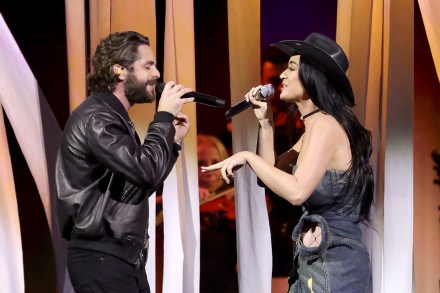
Country music singer Maren Morris is so open-minded, inclusive, and tolerant that she’s considering not attending a major country music awards show because someone she disagrees with will be there. Here’s the backstory: country star Jason Aldean’s wife, Brittany, posted on Instagram a video of herself getting glam, along with the caption: "I'd really like to thank my parents for not changing my gender when I went through my tomboy phase. I love this girly life." Her husband commented: “Lmao!! I’m glad they didn’t too, cause you and I wouldn’t have worked out.” The post got a ton of support — including a pair of heart-eye emojis from Lara Trump. Then Morris lashed out online, writing: “It’s so easy to, like, not be a scumbag human?

Scarface lands on post-woke Netflix

“I always tell the truth — even when I lie,” says Tony Montana in Brian DePalma’s 1983 cult classic gangster film Scarface, which on September 1 became available for streaming on Netflix. The line resonates well in a post-truth world. In the film’s climactic scene, Tony, the drug kingpin played by Al Pacino, has just started his slide to rock bottom. His wife, Elvira, played by a young and then-unknown Michelle Pfeiffer, has publicly dumped him in an embarrassing scene at a high-end restaurant as well-manicured bourgeois types look on aghast. His erstwhile business partner in the drug trade is closing in after Tony failed to dispose of a troublesome investigative journalist.

Ken Burns’s angry new film

There is probably no American documentary filmmaker more respected than Ken Burns. From his landmark 1990 series about the Civil War to his most recent work that has explored everyone and everything from Ernest Hemingway to country music, Burns has established himself as a fearless chronicler of stories that illuminate the nation’s history, sometimes in ways that viewers might find uncomfortable. His 2005 documentary about the African-American boxing champion Jack Johnson, Unforgiveable Blackness, was a fine example of the filmmaker turning his gaze on a subject that many might have preferred be left obscure, and it won him an Emmy for Outstanding Directing as a result — one of fifteen that he and his films have won to date.

Beyoncé’s new album kind of sucks

Renaissance, Beyoncé's first solo album in six years, dropped at the end of July. Critics raved about the genius of Queen Bey. Pitchfork gave the album a 9/10, calling it "immaculate." The Guardian referred to it as a "breathtaking, maximalist tour de force." "America Has a Problem and Beyoncé Ain’t It," the New York Times declared. Thematically, Renaissance is courageous. It's a departure from the pop-laced R&B songs we typically hear from Beyoncé. It leans heavily on club music; it subverts expectations. However, Beyoncé's clear desire to make a statement means that the entire project comes across as trying way too hard. It's an album a listener is supposed to "get" rather than enjoy.

beyoncé

Woody Allen’s non-retirement retirement

Even if you ignore the endless controversies associated with him, it is undeniably true that Woody Allen has lost his touch. With the partial exceptions of Midnight in Paris and Blue Jasmine, the director has not made a good film since the early '90s. The last few pictures he's made — Rifkin’s Festival, A Rainy Day In New York, and the like — have been seen by so few people that they seem more like self-indulgent home movies than commercial works. Therefore, it comes as no surprise that, announcing his fiftieth film, the Paris-set crime thriller Wasp 22, Allen, at the age of 86, also allegedly said that he expects it will be his last picture. He told the Spanish newspaper La Vanguardia, "My idea, in principle, is not to make more movies and focus on writing.

Make art free, not digital

If you won the lottery tomorrow and suddenly had the money to invest in art, what would you prefer: a work from Picasso’s Cubist period (Guitar on a Table, 1919), or an NFT made from AI-based images and shapes? On the one hand, Picasso’s Guitar on a Table isn’t his most famous or even most interesting work — by 1919, the radicalism of Cubism had begun to wane. But on the other, NFTs are a relatively unproven market with dubious artistic merit, and have been linked to art crime, money laundering, and even allegations of human trafficking. If Picasso couldn’t persuade you to ditch the digital art, what about a painting by Renoir, a sculpture by Rodin, or a triptych of paintings by Francis Bacon?

The new Pinocchio is straight up trash

With the possible exception of 2016’s The Jungle Book, none of Disney’s live-action repristinations of its animated classics have been a real success. Beauty and the Beast was too rococo for its own good. Aladdin obsessed over politics at the expense of romance. The Lion King traded elegant animation for dead-eyed CGI. And on it goes. None of these come close, though, to the disaster that is Robert Zemeckis’s Pinocchio — a turgid, nihilistic recreation of the 1940 classic that fails utterly to honor its source material. This month, it’s been dumped unceremoniously onto Disney+ rather than given a proper theatrical release; even the almighty Mouse knows when it has a stinker on its hands.

Remembering Jean-Luc Godard, one of the great film directors of our time

The death of French director Jean-Luc Godard, at the age of 91, is probably doomed to not get its due because of the saturation media coverage of Elizabeth II. That said, it should be noted that admirers of Godard and ardent royalists probably occupy a relatively small space on a Venn diagram, and, once the funeral obsequies for the Queen have passed, the legacy of one of France’s most innovative and influential — if also infuriating — filmmakers might be taken as seriously as it deserves.

The glorious rebirth of Brendan Fraser

At this year’s Venice Film Festival, it was widely agreed that the best male performance was given by none other than Brendan Fraser in the new Darren Aronofsky film, The Whale. Based on a play by Samuel D. Hunter — who also wrote the screenplay — it has nothing to do with Moby-Dick or any other watery protagonist. The title instead refers to Fraser’s character Charlie, a 600-pound middle-aged man who is determinedly eating himself to death, even as his family and friends attempt to break through the walls of pain that he has meticulously constructed for himself. The film itself has received mixed reviews, with some critics praising it and others describing it as manipulative and cheap.