Arts Reviews

The good, bad and ugly in arts and exhbitions

Jonathan Majors’s arrest is the ultimate headache for Marvel

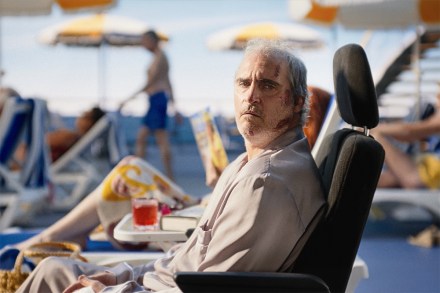
The arrest of Jonathan Majors last weekend, which resulted in his being charged with several assault and harassment misdemeanor charges — despite his lawyer announcing he is “completely innocent and is probably the victim of an altercation with a woman he knows” — is one of the more surprising developments in recent popular culture. Majors, who recently appeared as the arch-villain Kang in the latest Marvel picture Ant-Man and the Wasp: Quantumania, has been progressing steadily towards superstardom for some time, starring as the antagonist in the third Creed film and appearing in a series of ads for the US Army. Those commercials have since been pulled, with a spokesman declaring that the Army was “deeply concerned by the allegations.

The forgotten art of Hollywood backdrops

Hollywood is America’s greatest export. Yet most museums either fixate on the industry’s tawdriness, as with the Hollywood Museum’s preservation of Marilyn Monroe’s pill bottle, or prioritize indie films over the artistic yet popular movies of Old Hollywood. MoMa’s film program can get so lost in Sundance obscurity that you wouldn’t know movies were a popular art form. When the Academy of Motion Picture Arts and Sciences — aka the group that gives out the Oscars — opened the Academy Museum of Motion Pictures in Los Angeles, Americans hoped an intuition would finally document the products, people and dreams pumped out of La La Land. But the space was so preoccupied with twenty-first-century politics that it failed to honor the Jewish immigrants who built the damn town.

hollywood backdrops
salvador dalí alice cooper

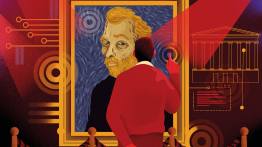
When Salvador Dalí met Alice Cooper

It was the ultimate summit between the two kings of pop-art camp, and one of the weirdest celebrity encounters even by the standards of 1970s New York. Salvador Dalí might have been the century’s most notorious modernist, but by the spring of 1973, when he was turning sixty-nine, his reign as the high priest of surrealism had descended into self-parody. Paintings such as his 1931 “The Persistence of Memory,” with its array of limp watches set in a barren landscape, had once sharply polarized critical opinion. For years, people saw Dalí either as a beacon of intellectual and emotional freedom, or as a madman who was more interested in money than art.

A stripped back Doll’s House on Broadway

The difference between a divorce and a funeral seems lost on the director Jamie Lloyd; ditto for bird cages and prisons and, in the end, Henrik Ibsen’s A Doll’s House (1879) and a sanatorium. Lloyd’s new, minimalist production on Broadway is so stripped of ornament, so unremittingly rote, that this reviewer nearly handed his valuables to an usher and asked for a padded room. At the play’s close, the director has the embattled housewife, Jessica Chastain’s Nora Helmer, make her defiant exit through the back wall of the theater upstage; a garage door opens and she strides onto the rain-soaked pavement, probably to be harassed by tweakers or shoved into oncoming traffic. Peals of laughter erupted in the audience — here was our chance!

doll's house
kamala harris spotify playlist

Listen: Kamala Harris’s Afrobeats playlist

Grab the aux! Vice President Kamala Harris has released a playlist of African artists for her trip to the continent this week, in a move mimicking a trend former president Obama started in 2015. Cockburn wonders if this a sign of Kamala’s well-known ambitions to reach the highest office in the land, by channeling her inner Barack. Joe better watch out! The list consists of songs by musicians from the three countries — Ghana, Tanzania and Zambia — where Harris is stopping during her visit. Harris’s stated intent for her playlist is to “amplify artists and sounds from my travels around Ghana, Tanzania and Zambia.” Included in the twenty-five-song list are Moliy’s “Ghana Bop,” Chile One Mr. Zambia’s “I Love You” and Alikiba’s “Mahaba.

Why were 2000s movies so hypersexual?

Even though the endless debate about sex scenes in movies recurs every three or four months, it remains fixed. Nothing ever moves forward; nothing more is understood; no one’s perspective is shifted. Dug in on both sides of an argument that remains black and white, people refuse to move. Maybe one day they’ll be able to talk in Technicolor, but for now, some are distressed by erotic cinema and others are desperate for more of it. Stellar home-video labels like Severin, Arrow and Vinegar Syndrome continue to provide high-definition discs of genre films full of naked women and bloody bodies. But if Tom Cruise is the only real movie star left, the world won’t get more than a chaste kiss (maybe) from modern American cinema.

sex

Is Quentin Tarantino finished as a filmmaker?

Throughout his career, director Quentin Tarantino has been admirably consistent about his ambition to make ten films — no more, no less — and then move on to other fields. He once stated, “I like that I will leave a ten-film filmography… it’s not etched in stone, but that is the plan. If I get to the tenth, do a good job and don’t screw it up, well that sounds like a good way to end the old career.” He was savvy enough to include a caveat: “if, later on, I come across a good movie, I won’t not do it just because I said I wouldn’t.” He concluded, “But ten and done, leaving them wanting more — that sounds right.

Drinking with Picasso

In February 1900, a critically acclaimed art exhibition went up at a Barcelona café called Els Quatre Gats. It was neither the first nor the last show mounted at the establishment, a popular drinking spot for avant-garde artists, writers and others. It was, however, the very first solo outing for one of the café’s regular patrons: a brash nineteen-year-old local art student named Pablo Ruiz Picasso. It has now been fifty years since Picasso died, on April 8, 1973, and even as that anniversary is being commemorated worldwide with new exhibitions and publications, he has never really faded from public consciousness. His art and even personal objects associated with him are avidly collected, and he continues to inspire filmmakers, musicians and other artists.

picasso

Chris Rock’s wonderful way to make a living

Chris Rock was paid $20 million for his seventy-minute Netflix special, so by my reckoning his riff on whether or not the British royal family are racist must have made him more than a million quid. Was it worth the money? Well, I enjoyed it but I’m not sure how well it will translate here, in precis, with all the swearing removed. Rock begins by pointing up the absurdity of Meghan Markle (winner of the "lightskin lottery," he says) complaining to Oprah: "I didn’t know how racist they were." "It’s the royal family!" expostulates Rock. "They’re the OGs [Original Gangstas] of racism. They’re the Sugarhill Gang of racism." (The 1980s cultural references give you an idea of the age of Rock’s mostly black audience at the live recording in Baltimore.

chris rock

65 is a better B-movie than it has any right to be

Growing up, one of my favorite books was Gary Paulsen’s Hatchet, the story of a boy whose plane crash-lands in the Canadian wilderness and who must then fend for survival with only a single tool. 65 tries to pull off something similar, but with dinosaurs and sci-fi weapons. And bizarrely enough, it's a far better B-movie than it has any right to be. Yes, the setup of this film is seriously convoluted. Adam Driver stars as Mills, a long-haul space shipper who works for a spacefaring human civilization based on a planet other than Earth. When his vessel collides with an unexpected asteroid belt, he’s forced to crash-land on Earth — 65 million years before the present day. That’s right: this film takes place a long time ago, but in a galaxy not quite so far away.

The first post-slap Oscars was a bit dull

It was ordained months ago that this year’s Academy Awards were going to be dominated by Everything Everywhere At Once, and so it has proved spectacularly. The film has taken seven awards, including Best Film, Best Director, Best Actress, Best Screenplay and Best Supporting Actor. While I was not one of the fans of the duo Daniels’s picture — multiverse spanning fantasy films are not exactly my bag, whether they’re made by Marvel or the hipper-than-hip indie company A24 — it’s still a distinctive and original work of cinema, albeit less likely to be regarded as a future classic than Todd Field’s magnificent Tár, which went home empty-handed. It may well be that Tár’s magnetic star Cate Blanchett lost to EEAO’s Michelle Yeoh for reasons of optics as much as ability.

michelle yeoh oscars

The Christian movie finally finds its niche

When Mel Gibson’s ultra-violent, ultra-religious Passion of the Christ made $612 million worldwide, it was not earning its money from teenagers looking for a night out. Despite its R rating, churchgoers were being bused to theaters by the millions, thanks to the heavy support it received from evangelical Christian groups. Everyone from Billy Graham and Jerry Falwell to Pat Robertson and Chuck Colson came out in support of the film, although the Pope’s supposed endorsement — "it is as it was" — was denied by the Vatican. Yet faith-based films have quietly been big business in Hollywood for decades now.

Russell Brand reminds John Heilemann he’s not one of the media cool kids

John Heilemann, the shiny-headed former journalist best known for collaborating with Mark Halperin of sexual harassment fame, and who now operates as a hype man for political scam artists like Steve Schmidt and Michael Avenatti, went viral this weekend for his desperate, cloying defense of the corporate media on HBO's Real Time With Bill Maher. Facing off against actor, comedian and sex enthusiast Russell Brand, Heilemann found himself in the unenviable position of being a man in a Joy Division T-shirt with a recent hand tattoo standing up for the cause of Morning Joe and the cast of rebellious media rapscallions housed at 30 Rockefeller Plaza. It did not go well. https://twitter.com/ggreenwald/status/1632095569152811008?

A century of Bing Crosby

If, in the spring of 1923, you’d somehow found yourself in the tumbleweed junction of Spokane, Washington, you might have shaken the dust from your feet at the strange and magnificent Davenport Hotel. Still standing today, this vast folly, soaring up in the middle of town like a gaudily iced wedding cake, was evidently greeted by cries of disbelief upon its opening in 1914. In the rural west of the early twentieth century, the Davenport was the last word in luxury and refinement. The lobby was a work of art in itself, with lamps in alabaster shells mounted on a twisted bronze column in each corner, and an Italian marble fountain set under a chandelier that tilted at a slightly drunken angle, like one of those ghostly photographs taken onboard the wreck of the Titanic.

bing crosby
all quiet on the western front

German patriotism collides with All Quiet on the Western Front

As the bewilderingly overpraised Everything Everywhere At Once continues its inevitable march to Best Picture at the Oscars, many of the films that were once tipped to defeat it have slipped away. The Banshees of Inisherin, Top Gun: Maverick, Tár — all have settled into their time-honored place of being forever the Academy’s bridesmaid and not the triumphant bride. Yet almost out of nowhere, Netflix’s All Quiet on the Western Front has emerged as a serious contender. It swept the BAFTA awards in February, and with nine Oscar nominations, including Best Film, Best Foreign Language Film and Best Adapted Screenplay, it looks certain to win at least a couple of them. Not bad for a two-and-half-hour adaptation of a 1929 German novel.

Everything Everywhere

Everything Everywhere All at Once might not be complex enough

The New York Times has called Everything Everywhere All at Once “a swirl of genre anarchy.” It simultaneously works as a tender story of acceptance, an exploration of the pressures of not living up to parental expectations, an existential study on whether or not anything matters, a reminder to be kinder to others, and a love story about reigniting the spark in a marriage that has seemingly run its course. It’s a family drama, a sci-fi mess of multiple universes, a superhero battle to save the world, comedy, and action movie. As Vox's Alex Abad-Santos said, “No amount of description — alternate timelines, jumps, existential crises, moms, hot dog fingers, butt plugs, etc. — could ever accurately describe what’s happening at any given moment during this maximalist fantasia.

The magnetism of His Dark Materials

When I was in middle school back in the 1990s, there were two sets of books every boy seemed to have in his backpack. One was the Redwall series, Brian Jacques’s swashbuckling tales of heroic mice and tyrannical wildcats. The other was the His Dark Materials trilogy by Philip Pullman. It’s no coincidence, I think, that both Jacques and Pullman are British. What made these books intriguing, beyond their carefully wound plots, was that they were marketed to children yet addressed subject matter that was very much adult. In Redwall, it was the brutal violence. His Dark Materials had some of that too (in the first chapter of the first book, we witness an attempted killing; in the first chapter of the second book, we witness an accidental fatality).

his dark materials

Greg Lansky: the artist with a scandalous past

St. Paul points out that “all have sinned and fall short of the glory of God.” Despite that inclusive “all,” human nature inclines toward exclusion of the “other,” which is a very difficult thing for many of us to overcome — me included. Enter Greg Lansky, pornographic-film producer. Perhaps no one in recent memory has made a greater profit from the highly lucrative commerce paradoxically known as “adult entertainment” than Parisian-born entrepreneur Lansky. Within the span of about fifteen years, he went from dropping out of school and having few realistic prospects to making fortunes from adult media, partying with celebrities and receiving glowing profiles in magazines such as Forbes, GQ and Rolling Stone.

greg lansky

Mary Blair, doyenne of Disneyland

On a cold day at Disneyland, I walk through sugarplum-scented air, past a midcentury-modern poster for Alice in Wonderland, and beneath a plaque that reads, “Here you leave today and enter the world of yesterday, tomorrow and fantasy.” Walt Disney — the controversial impresario of twentieth-century animation and escapism, not the corporation that bears his name — intended his magic kingdom as an escape, a real-life never-never land devoid of the politics and troubles of the everyday. But on this visit to the park, I encounter the here and now around every corner. Passersby notice that an empowered female pirate has replaced the bride-auction scene in the Pirates of the Caribbean ride. (“Did anyone really believe pirates were role models?” one visitor asks.

mary blair

& Juliet and Titanique: two newly minted cult classics

Fears that the new pop-parody musical & Juliet would be a vehicle for steamrolling Shakespeare are understandable but unfounded. It’s true that, on Broadway as in the rest of the arts, holding dead white males up for flagellation is now almost a cherished ritual — a recent example being last season’s Six, a glitzy feminist paean danced on the grave of Henry VIII. There’s a healthy dose of girl power in & Juliet, too, and I don’t doubt that a few heedless theatergoers came with tomatoes in hand, hoping to find the Bard pilloried. Let me tell you a secret: the theater world still adores Shakespeare, even in 2023. To renounce him is to swear off your mother’s milk.

Juliet