Arts Reviews

The good, bad and ugly in arts and exhbitions

Azealia Banks flames Milo Yiannopoulos as they sever professional ties

Milo Yiannopoulos has fallen out with another Trump-supporting musical artist. The right-wing provocateur and one-time intern of Marjorie Taylor Greene had been teasing his intention to start managing Azealia Banks, a rapper and singer as talented as she is controversial best known for her songs "212" and "Anna Wintour." "At Yeezy, I discovered a gift for navigating, protecting and advising mercurial and demanding geniuses," he tweeted ten days ago. "I deliver and close ruthlessly, effectively and efficiently. So I’m moving into artist management full time. Signing my first client in a few days. You will, as they say, gag." Banks retweeted his post. Yet days later, on the eve of Banks's UK tour, the blossoming working relationship appears to have unraveled.

azealia banks

RIP James Earl Jones

The death of the great actor James Earl Jones, at the robust age of ninety-three, has been marked with tributes from every walk of society, not least the acting profession. There were many remarkable things about Jones’s career, from his being the last surviving member of the cast of Kubrick’s Dr. Strangelove to his many and varied Shakespearean roles, all of which he excelled in (save, perhaps, Mark Rylance’s misguided attempt to cast him as a superannuated Benedick in Much Ado About Nothing at the Old Vic in London in 2013, which was critically ridiculed). Yet the reason why he has a fame and repute far beyond just about any other actor of his generation is simple: he was the voice of Darth Vader.

james earl jones

The decline of Tim Burton

Beetlejuice Beetlejuice — so good, they named it twice. At least, that’s what you would have hoped. Unfortunately, Tim Burton’s latest movie is a dismally confused hotchpotch that aims for a curious mixture of comedy, mild horror and the usual Burton wackiness, along with performances from his regular actors including Michael Keaton, Jenna Ortega and Winona Ryder. Sequel to an Eighties curio that was diverting rather than brilliant in the first place, it has nevertheless capitalized on the ever-present vogue for nostalgia that has permeated theaters over the past few years. It made an astonishing $111 million at the US box office last weekend; the original grossed $75 million worldwide during its entire run at movie theaters, albeit the best part of four decades ago.

tim burton

The welcome return of Slow Horses

Apple TV+ may be struggling to break through into the streaming mainstream with more than a handful of their shows (as I’ve written before), but one categorical success is the British comedy-thriller Slow Horses, about to begin its fourth series on the service this week.   Because Apple has a vastly lower take-up for its subscriptions than Netflix or Amazon Prime, it remains a niche, cult show, rather than a much-discussed behemoth, and this suits its admirers down to the ground, who discuss its fidelity to Mick Herron’s brilliant series of novels with the kind of revivalist fervor usually seen at the Democratic National Convention.  From one clapped out old has-been to another.

slow horses

Should we cheer the return of Ted Lasso? 

Lovers of Jason Sudeikis, British soccer — that’ll be “football” to you — and undemanding, if surprisingly curse-laden, comedy-dramas, rejoice. The third season of Sudeikis’s hit comedy Ted Lasso ended last year, with what seemed to be a fairly definitive conclusion to the show. The eponymous Ted returned home after seeing his beloved AFC Richmond come second in the league, the club’s dastardly former owner Rupert (Anthony Head, the show’s MVP in my opinion) was defeated and comic sidekick-turned-villain Nate “the Great” was redeemed and welcomed back into the fold. There were, admittedly, a few curveballs and loose ends chucked in there, but it was hard to see where a fourth season could go.   It now looks as if we will find out.

ted lasso

Megalopolis and the strange art of negative marketing

After a fairly barren summer movies-wise (I’m just waiting for the Alien: Romulus backlash to begin, and will be only too pleased to join in with it), there are more promising movies coming our way this fall. Yet the one that’s attracted more attention and interest than possibly anything else this year, maybe even this decade, is the grand return of Francis Ford Coppola with Megalopolis, a self-funded, wildly ambitious folie de grandeur that premiered at this year’s Cannes Film Festival to predictably mixed reactions and an overall consensus that, alas, the one-time visionary genius of theater is no longer a force to be reckoned with, however loopily wild his latest (and, one reluctantly assumes, last) movie is.

megalopolis

In the studio with Merche Gaspar

I was sitting cross-legged on the floor of artist Merche Gaspar Caro’s studio in Barcelona on a rainy Monday morning when I asked myself, “Why isn’t this artist better known?” We had met by chance some months earlier, when I passed by the Galeria Subex, which at the time was hosting a show of her recent work. I was initially drawn in by the exhibition poster, which displayed a stunning image of a young woman wearing a dark-blue dress and a white apron. Once inside the gallery, I was enthralled by canvases of mothers and daughters, drawings of birds and paintings of children playing or curled up in bed reading stories. Many featured a wonderfully cool, contemporary palette of mauve, gray and sapphire.

Sylvester

The life of David Sylvester

It’s 1960, and the clock has struck seven in the morning on Manhattan Island. A car weaves through the clamorous city as the morning sun settles. In the front seat are the Canadian-American painter Philip Guston and the British art critic David Sylvester; the pair have just enjoyed a sobering Chinese meal after a long night of drinking with Willem de Kooning and Franz Kline, which called for the digestif of a drive. It has been an epochal night for Sylvester; he just doesn’t know it yet. In 1996, Sylvester, who would have turned 100 this year, wrote his essay “Curriculum Vitae” later reproduced in his acclaimed About Modern Art: Critical Essays 1948-2000.

What is the point of the George R.R. Martin extended universe?

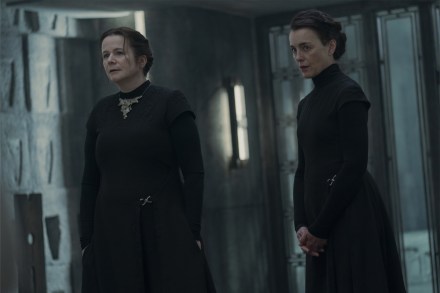
And so House of the Dragon has come to the end of its second season. It is fair to say that, for all the intrigue and fruity British character actors on screen (first place as far as I’m concerned: the great Simon Russell Beale as Ser Simon Strong, “the only gentleman in an ungentlemanly world”), the series is still finding its feet and has yet to provide the visceral thrills that might be expected of it. As my esteemed colleague Matt McDonald described it, “the second season was basically all foreplay. The first season ended with ‘wow, they’re about to fight some dragons.’ Then this season ends after one dragon fight and the promise ‘oh wow, now they’re really going to fight some dragons.’” There are undoubted improvements in this more confident second outing.

house dragon george r.r. martin

The revival of Marvel

It’s never nice to be wrong. Last November, with the unwanted superhero sequel The Marvels about to flop, the would-be series starter Eternals already unpopular and with Marvel’s hotly tipped next star Jonathan Majors on the verge of conviction for assaulting and harassing his ex-girlfriend, thereby imperiling the Kang Dynasty that he was supposed to star in, I — and, to be fair, many others — began to wonder if Marvel’s once-golden touch had begun to desert it. After all, since 2008’s Iron Man, there had been countless films, television series and other spin-offs from the studio; it seemed inevitable that audiences would eventually lose interest.

Wolverine and Deadpool in Deadpool & Wolverine (Marvel)

Glen Powell is your new favorite movie star

Last weekend’s opening of Twisters saw the windy picture receive both critical acclaim — although not in this magazine — and commercial success, blowing to a wildly impressive $81 million opening at the US box office. This was by no means a given for the tornado thriller, as the original film, although a smash hit when it opened in 1996, is largely unknown to the millennial audience who make up the majority of moviegoers who will flock to see a film as soon as it comes out; many of them were not even born when it was released. Instead, its appeal lies another way, in the casting of newly minted megastar Glen Powell in one of the lead roles.

The Boys is empty shock value

Some shows, like Game of Thrones, are only great so long as they stick to their source material. Others succeed by respecting the lore and cannon of a beloved novel or comic, but tell an original story in that universe. HBO’s Watchmen is the pinnacle example of this; however, the first season of The Boys may be the only show that succeeded precisely by not being like its source material. The Boys comics shares Watchmen’s premise of exploring an alternative reality where superheroes are real; but whereas Alan Moore considered this premise richly, and opposed the concept of superheroes on philosophical grounds — against the worship of power and great man theory of history —  that isn’t so for Garth Ennis.

boys

The Jedermann, the myth, the legend

The telephone was ringing. On the other end was Markus Hinterhäuser, artistic director of the Salzburg Festival. “Robert, would you like to direct a new production of Jedermann for us next year?” A new Jedermann at the Salzburg Festival, but with only a few months to prepare? I hesitated for about one second before saying I would be delighted and honored to direct. Jedermann is the complex, frightening, inspiring and fascinating German adaptation by the great Austrian writer and poet Hugo von Hofmannsthal of the English medieval morality play Everyman. Hofmannsthal’s adaptation premiered at Berlin’s Circus Schumann theater in December 1911.

Jedermann

A new adaptation of The Great Gatsby is enrapturing and impressive

In F. Scott Fitzgerald’s classic 1925 novel The Great Gatsby, Daisy Fay is a mercurial character. The popular rich girl from Louisiana — married to Tom Buchanan, an adulterous brute — is ravishing and entrancing and, at times, cruel. It is her voice that most draws Jay Gatsby to her years after their initial fling when he was a poor officer, as he longs for her across the bay. As Fitzgerald describes it, Daisy’s is a voice that rises in dramatic swells and falls to intimate murmurs, coaxing its listeners to draw closer. Gatsby, the nouveau-riche rumored bootlegger from an impoverished farming family, is obsessed with Daisy: her class, her beauty, her unattainability, her voice. It is a voice, he tells the book’s narrator Nick Carraway, that is “full of money.

Gatsby

Inigo Philbrick, the art world’s wheeler dealer stealer

A few months after going on the lam in late 2019, the thirty-two-year-old wunderkind art dealer Inigo Philbrick sent his friend and colleague Orlando Whitfield a trove of documents. Philbrick wanted his old friend to write a sympathetic account of the misdeeds he stood accused of — since described as the biggest art fraud perpetrated in US history, for which Philbrick was later convicted and imprisoned. Whitfield has instead written All That Glitters, a memoir chronicling their friendship and dealings during a heady “gold rush” decade in the art world. Going through Philbrick’s correspondence and the court documents, Whitfield realized his friend was not the person he purported to be, certainly not the one his clients believed he was.

Philbrick

A beginner’s guide to buying art

Perceived barriers to entry often keep potential art collectors from taking the step beyond admiration to acquisition. Sometimes this results from neither liking nor understanding what’s available, but basic hurdles can involve learning how best to source and price what you are collecting — and the terminology can be daunting too. In his latest book, How to Collect Art, art-market expert Magnus Resch puts forward the most comprehensive, clearly explained guide to art collecting that I’ve ever read. A best-selling author, an entrepreneur and an art collector himself, Resch not only teaches art management at Yale, but has written and commented on the art market for years.

Resch

Emmy nominations 2024: shocks and surprises

It’s been an unusually good year on TV, and the Emmy nominations reflect a quality of both breadth and depth. The likes of Shogun, Slow Horses, Ripley and, of course, Baby Reindeer don’t come along very often, but for them all to be competing against one another is going to give Emmy voters quite the headache. Obviously it’s all but impossible to compare many of these shows; the genre-bending black comic horrors of Baby Reindeer simply aren’t more or less deserving than the elegant noirish depravity of Ripley, both of which are up for Best Limited Series, but the nature of awards is that one has to be accounted the winner, and Richard Gadd’s none-more-hyped show is likely to walk away with several awards, and deservedly so.

Are you looking for a man in finance?

“Did I just write the song of the summer?” twenty-seven-year-old Megan Boni, an aspiring New York-based singer-actress known on social media as “Girl on Couch,” asked her public a few weeks ago. Days before, she suggested that her TikTok followers set to music a thirteen-word satirical musing she had improvised about her undersexed Gen Z peeresses’ lofty romantic expectations. Known simply as “Man in Finance,” the song’s lyrics easily divide into four short verses that unfold like shallow ads in the “Personals” section of an old newspaper: “I’m looking for a man in finance/Trust fund/Six-five/Blue eyes.” Adaptations have gone viral on social media, gathering more than 80 million hits and earning Boni more than $300,000 in revenue.

What does the future hold for Alec Baldwin?

Before the news of the assassination attempt on Donald Trump blew him off the front pages, the dramatic collapse of the trial of Alec Baldwin in a New Mexico courtroom was the most discussed story in American public life. Those attuned to cosmic ironies might note firstly that both the Trump and Baldwin stories revolved around the discharge of a firearm — accidentally and fatally in the case of Baldwin, deliberately and non-fatally in the case of Trump — and also in the abiding animosity between the two men, fanned by Baldwin’s continued impersonations of the former (and future?) president on Saturday Night Live. Yet the question now for Baldwin is what happens next.

alec baldwin

Can Gladiator II save a genre — and a studio?

The trailer for Ridley Scott’s new epic, Gladiator II, is undeniably impressive, but then it rather had to be. Rumors that its already massive budget had ballooned to as much as $310 million — which would mean it would have to be one of 2024’s highest-grossing movies just to break even, never mind making a profit — may have suggested that the film was in trouble, but an early screening of the preview at the CinemaCon convention in Las Vegas reassured exhibitors and studios alike, with the few journalists who had seen the footage rushing to extol its scale and grandeur. Now it’s been released online, and viewers have a chance to judge for themselves. (Its cinematic debut will come with Deadpool vs Wolverine.) Does it look like a worthy follow-up to Gladiator? https://www.

gladiator ii