American Life

With reference to

"You spend your life waiting for a moment that just don't come," sang Bruce Springsteen many moments ago. But sometimes it comes and catches you off guard. Perhaps once a decade you are gifted a sentence begging completion or a question inviting the perfect answer, and if you don’t spit out the mot juste you spend the rest of the day cursing on the staircase, pained by a bad case of l’esprit de l’escalier. (And that about exhausts my C-minus college French.) You never know when or wherefrom these pitches are coming. I doubt that even Oscar Wilde could hit much above .500 in this league. I’m probably closer to Cornel Wilde, but I have driven a few into the gaps. Let me explain. Last spring I was toting a garden-shop tray that my wife was filling with plants.

reference

On embracing the winter years

Batavia, New York I sit in hospice at the bedside of my beloved Aunt Jane — who never let us use the honorific, as “Aunt” made the perennially youthful Jane feel old — and the jukebox in my mind plays its saddest song: “Who Knows Where the Time Goes?” by Fairport Convention. Jane, who is eighty-nine and till a few weeks ago looked twenty-five years younger, was my hip and happening aunt of the 1960s who lived in Buffalo and dated pro athletes and bopped along to WKBW’s Top 40. She taught my brother and me to write letters, which is why I still have an autographed photo of Minnesota Vikings kicker Fred Cox, and my brother has his signed picture of Rams quarterback Roman Gabriel.

years

An ode to six-on-six

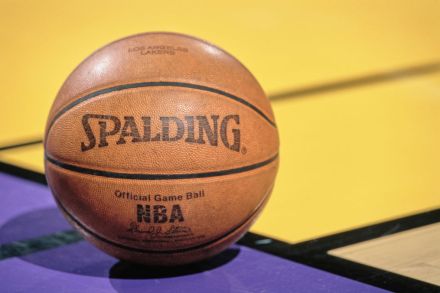
Once again, high-school gyms across America resound with the thump-thump of balls dribbled on hardwood floors, the clang of three-point bricks bouncing off steel rims and the rubber-soled roar of twenty sneaker-clad feet running up and down the court. Yes, basketball is back — and I curse the imagination-deprived standardizers who succeeded thirty years ago in banishing four additional feet from roundball courts in the Hawkeye State. Iowa, the historic hotbed of girls’ basketball, is hailed today for producing the superb Caitlin Clark, but for most of the twentieth century its hundreds of small-town bandbox gymnasiums were alive with the wonderfully idiosyncratic sporting variant known as six-on-six basketball.

six-on-six

‘Democracy’ in New York State

Batavia, New York Election Day in New York just ain’t the same anymore, thanks to nepo numbskulls George W. Bush and Andrew Cuomo. Though I always vote for longshots and losers, radicals and reactionaries, I have such happy memories of early November Tuesdays. Mr. Milward, dressed as Uncle Sam, would tour the polling places of my hometown, benign and reassuring in a way that his model — the autocratic “I Want You!” martinet — was not. When I was a tyke, I trailed my mother as she cast a 1964 ballot for LBJ. The gray-haired election inspectors panicked — “There’s a child in the voting booth!” — but my violation of polling-place etiquette paled in comparison to Landslide Lyndon’s stolen US Senate election of 1948.

Kennedy

A matter of presidents

Virginia spawned four of the first five US presidents. Between Reconstruction and the roaring twenties, Ohio’s executive fecundity earned it the sobriquet “Cradle of Presidents.” But the next time fate, or providence, guides you to western New York, the friendly folks at the Buffalo Presidential Center will set you straight on the most president-haunted city this side of Washington, DC.

presidents

Back to 1984 with Robert Dean Lurie

Robert Dean Lurie, who had written very good books on worthy rock music subjects (REM, David Bowie and the Church), sure picked the right year — 2020 — to slip into a time machine. Instead of finding Morlocks and Eloi, as H.G. Wells’s time traveler did, this married father of two in Tempe, Arizona, encountered Walter Mondale and Night Ranger — and he lived to tell his entertainingly perceptive tale. Lurie explains, “In 2019, I had a premonition that 2020 was going to suck. So I decided to spend the year re-experiencing my favorite year from my [Minneapolis] childhood: 1984.

Lurie

How one bad scene can ruin an otherwise great movie

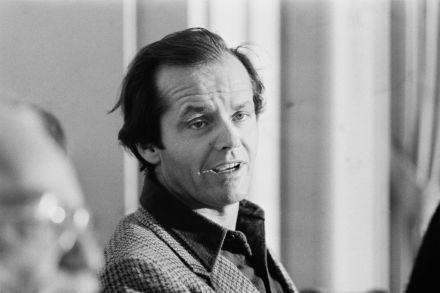
Can one egregiously bad scene ruin an otherwise great movie? When I go on an early 1970s jag — revisiting the golden age of American cinema — I can never bring myself to rewatch Five Easy Pieces (1970), in which Jack Nicholson plays an upper-middle-class piano prodigy turned downwardly mobile oil field worker. It’s a fine character study poisoned, for me, by the famous scene in which a petulant Nicholson berates a diner waitress who stubbornly refuses his request to add tomatoes to his omelet.

scene

The awesome Alan Pell Crawford

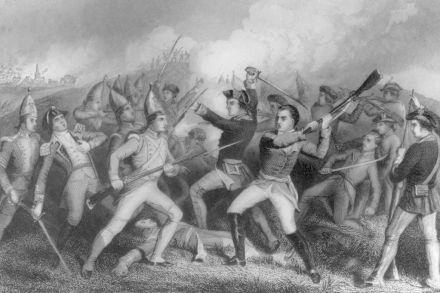
The great nineteenth-century novelist Harold Frederic (The Damnation of Theron Ware) had a character complain “I cannot read or listen to the inflated accounts” of the role played in the Revolution by Massachusetts and Virginia “without smashing my pipe in wrath.” Frederic’s pipe-smasher would smoke in peaceful raptness while reading Alan Pell Crawford’s engrossing new book, This Fierce People: The Untold Story of America’s Revolutionary War in the South.

Crawford

Gazing at the eclipse in Walt Whitman’s perfect silence

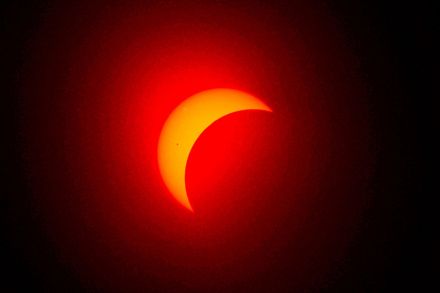
The day before the April 8 eclipse — our postage stamp of ground sat smack dab in the middle of totality — we abounded in sunshine and birdsong, with nary a cloud in the sky. The day after, too, was dominated by the yellow star moseying along the ecliptic, but on the big day — we won’t be similarly situated for another 120 years — ole Sol was obscured by thick gray clouds. (Which parted, as if on mischievous cue, two hours after the celestial spectacular.) This is why Western New Yorkers exhibit a cheerful “oh well” fatalism, and why we know that the Buffalo Bills kicker will always miss the game-ending field goal. The hungry and hotel-hunting eclipse trackers who were predicted to overrun our rural county, leaving a spoor of tourist dollars, never showed.

eclipse

The story of Vince Maney

Batavia, New York  'Tis spring, and if a young man’s fancy lightly turns to thoughts of love, as Tennyson opined, an older man’s reveries turn — no, not to lawn-mowing — to baseball. Not, in my case, to the grotesque parody of the American game on display in the major leagues, with their automatic extra-inning runners and TV timeouts and $100-plus tickets, but to the sandlot, the high school or college field, the amateur and independent and minor-league ballparks built on a human scale and played in with joy, even in error, by mere mortals.

Maney

My biggest regrets

Regrets, I've had a few, but unlike Mr. "My Way," mine are enough to mention. (Didn’t Hoboken Frank at least regret slapping Ava Gardner or hanging out with Joey Bishop?) “When you see the end of things coming close and staring at you,” as Jason Robards tells his son in Ray Bradbury’s filmic adaptation of his own novel, Something Wicked This Way Comes, “it’s not what you’ve done that you regret — it’s what you didn’t do.” (For good or ill, cataracts prevent me from seeing the coming end.) Surely some missed opportunities are worth missing. For instance, I doubt if any of the awestruck Lou Reed fans whom the rock’n’roll coprophage famously invited to defecate into his mouth regretted turning down the chance.

regrets

An introduction to presidential grave-hunting

Where better to talk about dead presidents than over beer and wings at Jim's Saloon in East Pembroke, New York, three days before Millard Fillmore’s birthday? Across the table from me is Pat Weissend, a convivial bank manager and former museum director who has visited the gravesites of all thirty-nine dead presidents and all but two of the forty-three dead vice presidents of the United States. (The hard-to-get veeps are Walter Mondale, whose ashes have yet to be interred under the cold hard Minnesota ground, and Nelson Rockefeller, whose private and inaccessible burial spot is the Holy Grail of the grave-hunting community.

presidents

Remembering George Eastman

George Eastman, founder of Eastman Kodak and benefactor of Rochester, New York, told my late friend Henry Clune (1890-1995 — and no, that’s not a typo) that he had never laughed until he was forty — and the camera tycoon wasn’t exactly a chuckle-factory in his old age, either. Eastman put an end to the grimness with a bullet to his head in 1932. He left a suicide note that read, “My work is done — Why wait?” Clune, star reporter of the Gannett newspapers, habitué of poolhalls and burlesque palaces and country clubs, a man who read Macaulay for enjoyment and composed panegyrics to strippers and barkeeps, occasionally visited the “lonesome little old man” in his home or office. (Henry’s mother had coated photographic plates for Eastman’s fledgling company in 1881.

eastman

Remembering John Gardner

"Art begins in a wound, an imperfection,” said the late novelist John Gardner, one of the last American writers to grow up on a farm, “and is an attempt to either learn to live with the wound or to heal it.” Gardner’s wound was more gaping than most: on April 4, 1945, the eleven-year-old was driving a tractor hauling a two-ton roller called a cultipacker. His six-year-old brother Gilbert fell from the tractor’s hitch. John turned around just in time to see his brother’s skull crushed under the huge implement. (Marge Cervone, a Gardner family friend, told me that “Gilbert was the kind of kid who would never hold on.”) “He was not to blame,” said John’s mother. “Nobody could have stopped that thing happening.

gardner

Revisiting Gettysburg

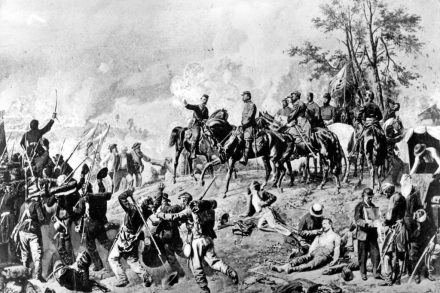
The Civil War, said Gore Vidal, is “the great single tragic event that continues to give resonance to our republic.” Gettysburg was its climacteric battle, and Ron Maxwell’s epic Gettysburg (1993), filmed on and around the battlefield, is the definitive cinematic treatment of the most consequential, written-about and argued-over military engagement in the history of the United States. (I would call it the most stirring as well but then I remember the words of the eminent historian J.G. Randall, best-known for his four-volume Lincoln the President: “That there was heroism in the war is not doubted, but to thousands the war was as romantic as prison rats and as gallant as typhoid or syphilis.

Gettysburg

The cemeteries of New York State

Prose may be deathless, but authors are not — and some of us honor those who compose with visits to where they decompose. I’m afraid that I am one such pilgrim: heck, my wife left her bridal bouquet at the grave of Jack Kerouac in Edson Cemetery in Lowell, Massachusetts. The epitaph for “Ti Jean” is “He Honored Life”; so, paradoxically, do those who make sepulchral sorties. The noted poet Steve Huff knows his way around a necropolis, and he brings us along for the ride in his new book, Resting Among Us: Authors’ Gravesites in Upstate New York from Syracuse University Press. Huff wants “to help raise Upstate New Yorkers’ awareness of our literary heritage.” New York schools have failed miserably at this task.

gravesites

Roque is alive and well in Angelica, New York

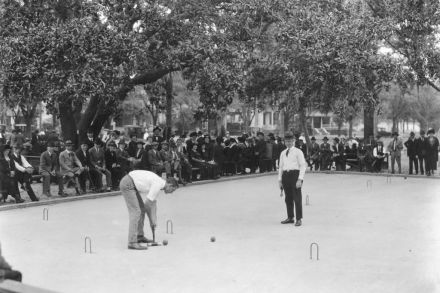
Goose-pulling is dead and gone, and lawn darts are on life support, but roque is alive and well and avoiding the roster of extinct sports thanks to the good folks of Angelica, an attractive village of fewer than 1,000 souls in the southwestern corner of New York State. What’s that: you’ve never heard of roque? Affix a “c” to its left and a “t” to its right and you have its sporting parent. Roque is a nineteenth-century American variation on the erstwhile European pastime of the leisure class. A hybrid of croquet and billiards, it is played on an oval-octagonal court of sand and clay with fixed wickets and hardwood boundaries off which a player can ricochet shots. Its mallets, shorter than those used in croquet, are now either homemade or handed down from roquers past.

roque

Summering in Scranton

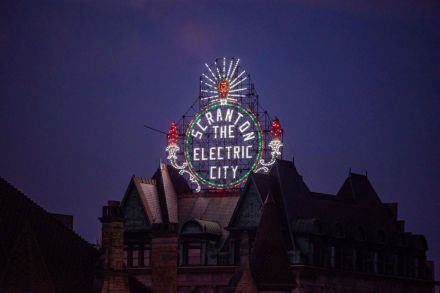
Our big adventure this summer was supposed to be a trip to the Capri for a young friend’s wedding, but there was a hitch in the plan. You see, in my six decades on this orb I never have gotten the hang of this whole money thing. (Whose idea was it, anyway?) But I am blessed in countless ways, not least by having married a woman who, when she moved east from Los Angeles, expressed a wish to see two places: Cleveland and Utica. So Lucine and I hitchlessly shifted to Plan B. Capri was out, replaced by an overnight in Scranton, Pennsylvania, followed by a visit to Centralia, the Keystone State’s ghost town, under which a coal-mine fire has burned since 1962. Don’t think that I was acting out of tightfistedness.

scranton

Rage against the baseball machine

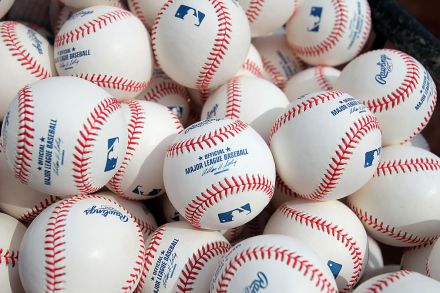
In a lifetime of attending perhaps a thousand professional baseball games, all but ten or so in the minor leagues — quondam site of the sport’s heart — I have finally encountered an umpire I would despise, disparage, spit upon, kick, and, yes, kill: ABS, colloquially known as “Robo-ump.” It happened in Rochester, New York, where the storied Red Wings took on the Scranton Wilkes-Barre RailRiders. The game being played on the field was recognizably baseball, but there was something off about the experience, rather like when the niece meets the pod-person version of Uncle Ira in Invasion of the Body Snatchers (1956).

umpire

How the NCAA twisted women’s sports

This has been a banner, or perhaps baneful, year for women’s intercollegiate sports, what with trash-talking basketballers, record TV ratings and biological men swimming in the distaff pool. But the focus on celebrity female athletes only emphasizes the degree to which the NCAA has twisted women’s sports into a depressing duplicate of the Y-chromosome side of the street. It wasn’t supposed to be this way. The pioneers of women’s collegiate — not necessarily intercollegiate — athletics conceived and promoted a healthy and democratic ideal that was antithetical to what they saw as the elitist, corrupted and sloth-inducing male version.

sports