Last Sunday, Germany saw a tale of two election victories. The right-wing Alternative for Deutschland narrowly edged out the leftish Social Democrats to come first in the backwater state of Mecklenburg-West Pomerania north of Berlin. Massive media coverage focused on the AfD’s success, its allegedly extreme views on immigration and the danger it poses to Germany’s democracy.
The next day, the huge media contingent that had camped out in Schwerin, the state capital, returned to the capital of Berlin. It’s where most domestic reporters are based and from where international reporters fly home. Most chose to ignore the results of the Berlin state election held on the same day in which Die Linke (The Left), the legal successor to the East German Communist party, also came first. The Left’s victory in Berlin was vastly underreported, even though it was at least as big a story.
Anti-Semitism within the party is so strong that some key members of Berlin’s left-wing community have denounced it
While the Mecklenburg election saw a strong showing for the far right, there is zero chance the AfD will take power in the state due to the decision of all other parties to build a “firewall” against cooperation. In Berlin, the only realistic coalition government emerging from the elections will see Die Linke joining with the weaker Green party and Social Democrats to take power in the city of 3.9 million.
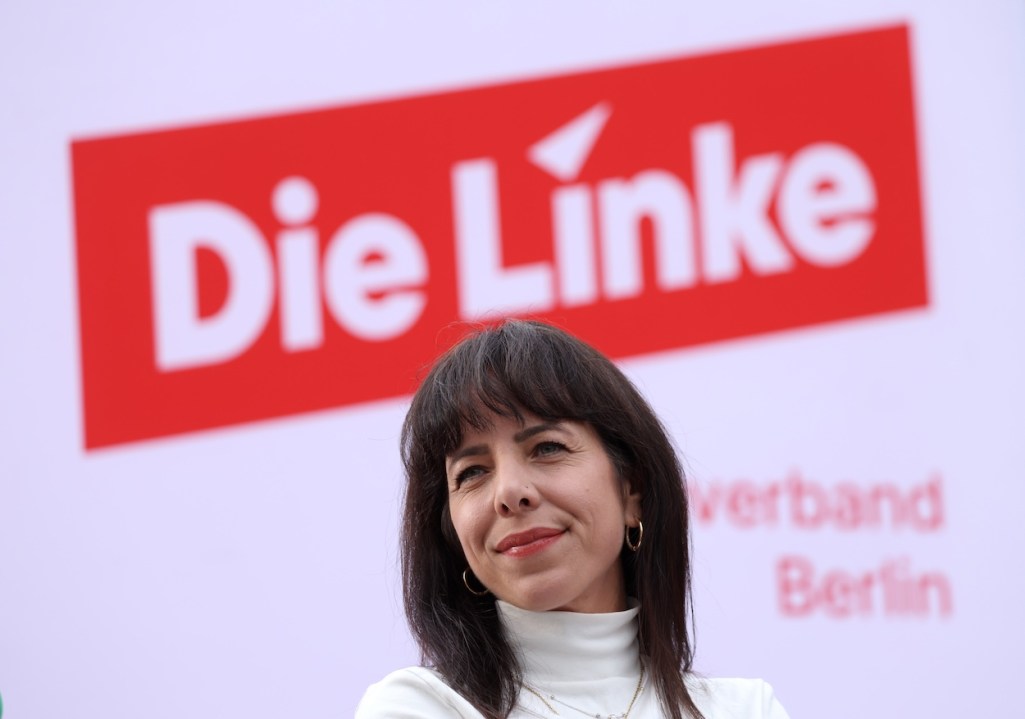
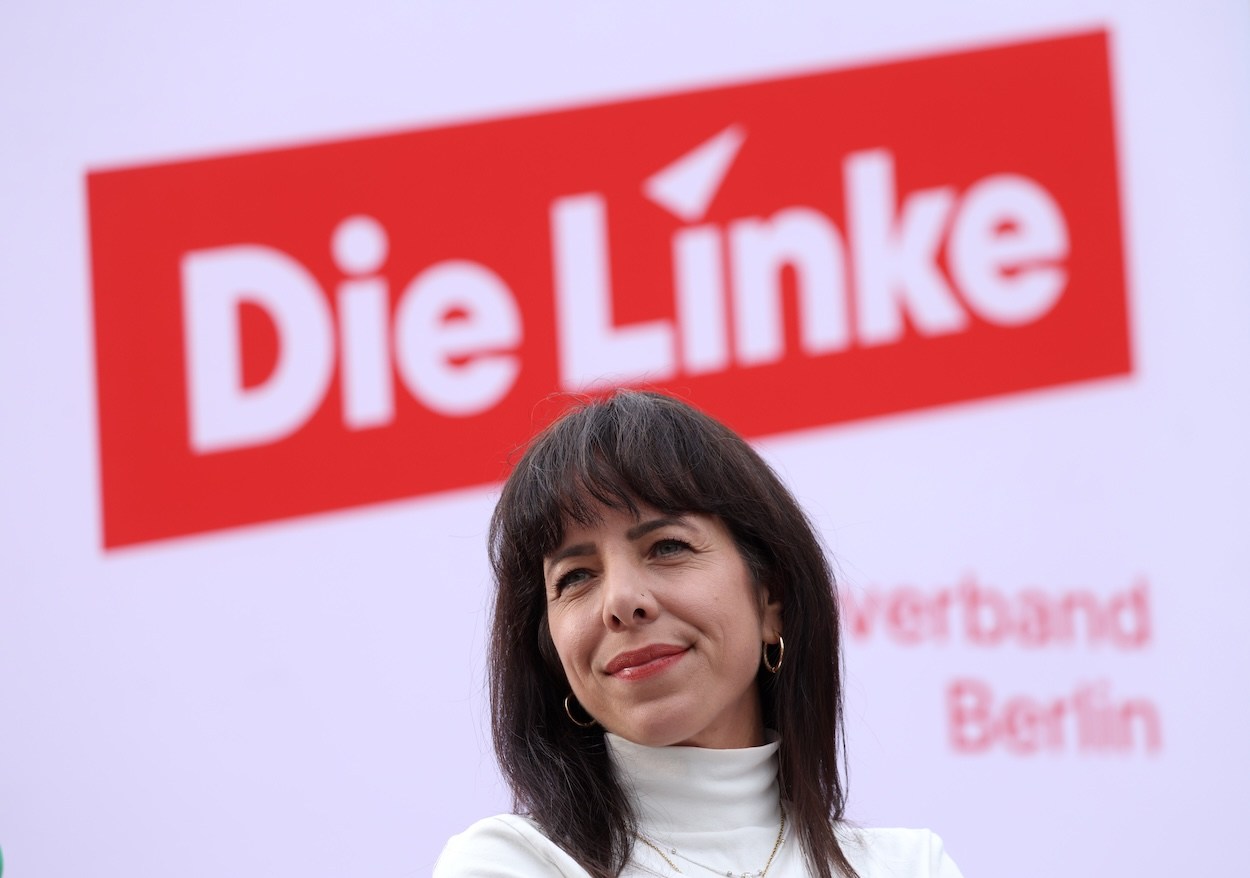
Die Linke looks likely to become Berlin’s dominant governing force and its 45-year-old leader Elif Eralp, who has Turkish roots and has been dubbed “Germany’s Mamdani,” will therefore become mayor. If that happens, it will represent an earthquake in German politics.
Die Linke’s success in Berlin parallels Mamdani’s in New York. The party paired photos of Eralp and Mamdani in its publicity and cited the New York City mayor as a model. Die Linke activists traveled to New York to get advice from Mamdani’s team. Liza Plaum, head of digital communications for Die Linke, said “we also let ourselves be explicitly inspired” by Mamdani’s campaign. Like Mamdani, Die Linke focused on social media and an army of door-to-door volunteers to turn out the vote, targeting the 42 percent of Berlin’s population with a migrant background (about half of whom are eligible to vote).
Die Linke, however, is much more radical than Mamdani. Its priority is an immediate rent freeze on 400,000 apartments and the expropriation of 200,000 more, acquiring them by paying about 40 percent market value. Many ordinary services would be taken over by the city, the cost paid by higher taxes on property, real estate transfers and a local trade levy. Publicly funded canteens would be set up in every neighborhood to serve cheap cooked meals.
More of everyday life would be put in public or non-commercial hands. Rainer Zitlemann, a historian and real estate analyst, predicts Berlin would gradually slide down the slippery slope to “democratic socialism.”
Economic quackery isn’t the biggest problem with Die Linke. During the election campaign, disturbing ties between the party, anti-Semitic forces and even criminal gangs surfaced. Even establishment media source such as Politico Europe, whose US affiliate has just been banned from the Trump White House, concluded that “the last few weeks have shown that the Left Party’s state branch [in Berlin] is uncontrollable.”
Anti-Semitism within the party is so strong that some key members of Berlin’s left-wing community have denounced it. Volker Beck, a well-known Green politician and president of the German-Israeli Society, demand his party rule out any cooperation with Die Linke. He cited a campaign appearance by rapper Dahabflex who used slogans such as “Yalla Yalla Intifada” and “Death to the IDF.” Beck labeled Die Linke Berlin an “anti-Semitism open project.”
Die Linke even has its own version of America’s Hasan Piker, the virulently anti-Semitic streamer who is best buds with Abdul El-Sayed, the Democratic Senate nominee in Michigan. For years, Muslim radical Ibrahim Ibrahim has praised terrorist groups that seek to wipe Israel off the map. He is a regular speaker at Die Linke events in Berlin. Ibrahim has even been linked to the PFLP, a Palestinian group on the European Union’s list of terrorist organizations. In 2019, he signed a document describing himself as a sympathizer of the group. “For years, Ibrahim has glorified terror against the Jewish state” including the 2023 Gaza uprising, reports the newspaper Die Welt. Berlin’s Central Council of Jews President Josef Schuster told Die Welt: “Anyone who allows this to happen is straying far from any sense of moral integrity.” He notes a clear rise in anti-Semitic incidents in Berlin since 2023, including 2,197 last year.
Then there is the alleged proximity between Die Linke and Berlin’s local mafia. Issa Remmo, widely accused of being the head of Germany’s most notorious organized crime family, appeared at two of Die Linke’s election night parties in Berlin. German police have linked members of his family to drug trafficking, weapons smuggling, money laundering, fraud, extortion and high-profile thefts – including a 100kg gold coin from Berlin’s Bode Museum and the spectacular jewellery heist at Dresden’s Green Vault. Remmo denies any criminal involvement and has never been convicted. He is, however, influential in the city. Berliner Morgenpost reported Remmo told them “I am happy for the Left Party” and that for the first time in Germany he felt supported by a political party. Die Linke officials say Remmo was not invited to either party, but they have long maintained the use of the term “clan crime” is discriminatory.
Frank Teichert, the chair of the Berlin police union, told the Berliner Zeitung that the election result “worries me as a police officer.” Die Linke ran on “less police, fewer powers, and an end to weapons ban zones… Social workers do not replace police officers when crimes are committed, weapons are involved, or organized crime has to be fought consistently.”
If Die Linke takes power in Berlin, the city will be less able to withstand bad public policy than those run by other left-wing governments. New York and London have corporate headquarters, banks, law firms, and high-value private services, Berlin’s emphasis is on government ministries and NGOs with only about a third of its residents employed in the private sector. Its unemployment and welfare rate is already some 70 percent higher than the German average.
Some Social Democrats and Greens are uneasy about forming an alliance with Die Linke. But if they wish to be in government, that will require them to be yoked to a radical, left-wing party as junior partners. History shows that arrangement rarely ends up well for the satellite parties involved – or for the people who have to live under it.




Comments