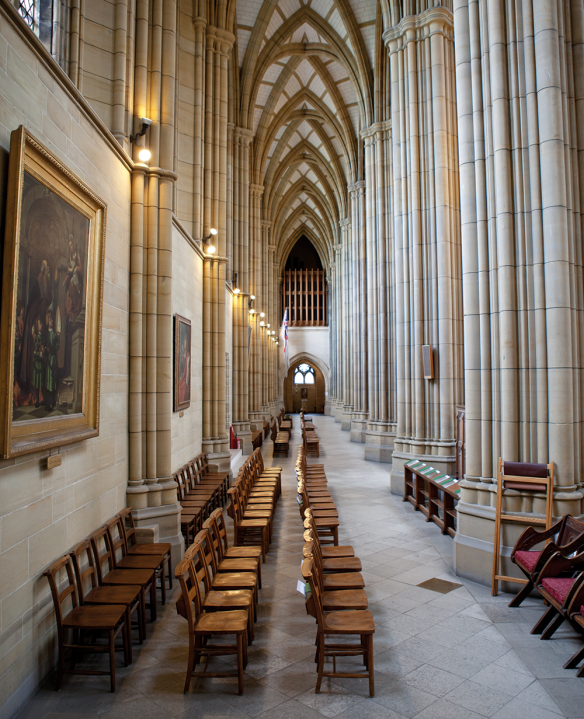
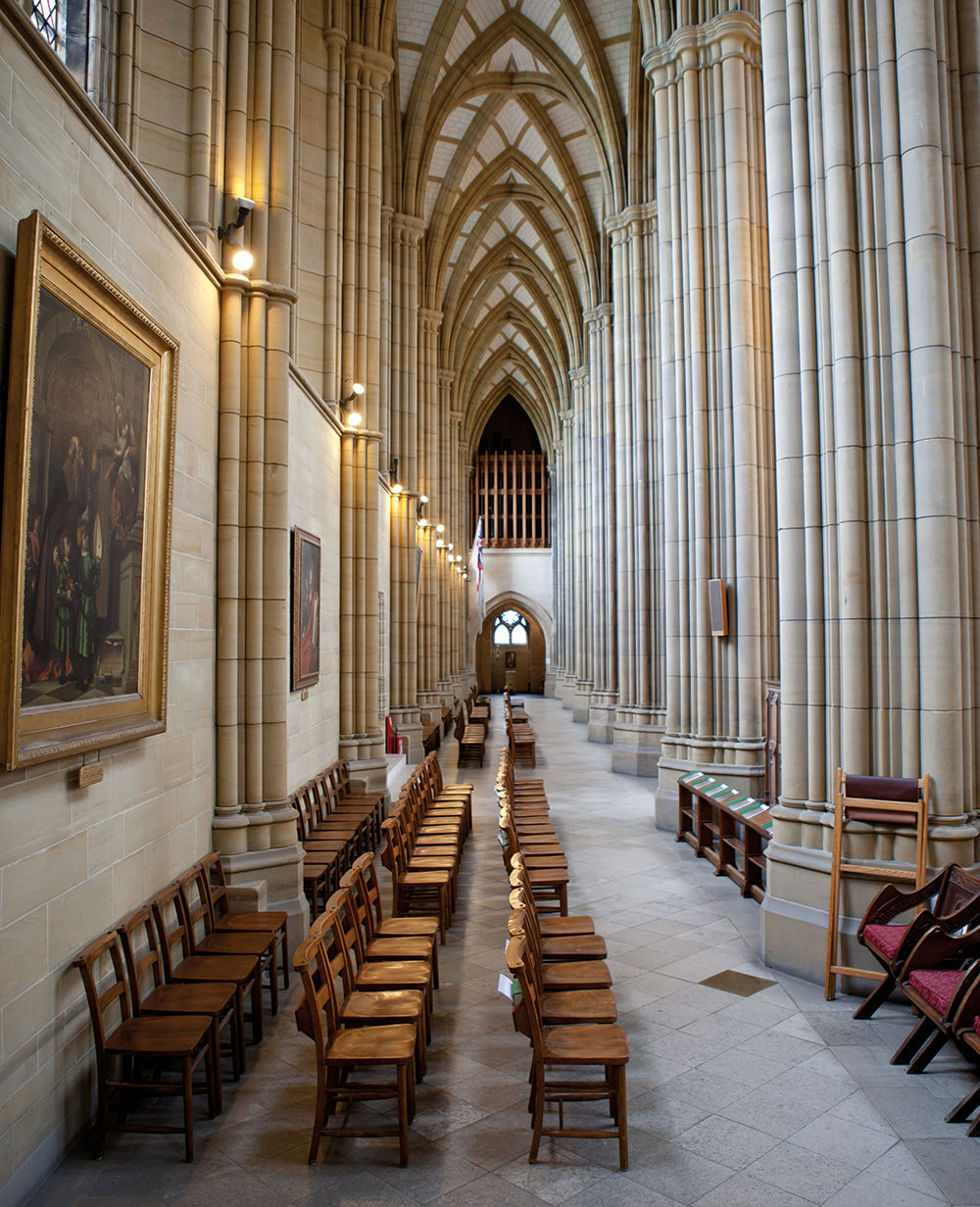
I can still just about recall the exact angle of rotation required of the metal hymn-book casings in the Tonbridge School chapel to produce a piercing scraping sound – perfect for putting any preacher off his stride. God, as St Paul tells us, is not mocked, and as I ascended the pulpit when I returned 12 years later as the school’s assistant chaplain, I heard the old familiar scrape once more, now deployed to distract me.
Chapel was the central experience of our school years, the place we remember most clearly
In many ways it was comforting. Generations of pupils praying and singing in the same space and inevitably learning the same techniques to distract or annoy. They are teenagers after all.
A school chapel has a much quicker turnover of worshippers than a church, yet it provides a link to past generations who sat in the same pews and stared at the same carving or glass while singing the same hymns. In the five years we were there, my Tonbridge contemporaries and I spent more time in chapel than we did in any individual classroom or dormitory. It became, almost inadvertently, the central experience of our time there, the place which we can most clearly remember as the years away from the school pass by.
Tonbridge nearly lost its chapel altogether. The school outgrew its original early 19th-century building and so built a great Edwardian barn. That burned down in the 1980s and plans were afoot to replace it with a steel and glass behemoth constructed on a lesser-used cricket pitch. Fortunately, a restoration was favoured instead, and – squeaky metal casings aside – is considered a triumph.
Public school chapels are so often architectural gems, masterpieces that stand alongside some of the nation’s finest buildings. Lancing’s is often mistaken for a cathedral by baffled tourists who cannot imagine that such a magnificent building could have been set aside for a bunch of 13- to 18-year-olds.
The oldest school chapels are ecclesiastical buildings themselves – King’s Canterbury pupils worship in England’s Mother Church; Westminster pupils in the Abbey. Invariably schools with medieval origins were so enmeshed in the life of the Church that they had no need for separate places of worship. There is a notable exception. Eton’s chapel is essentially the reason the school exists. Henry VI, desiring a stream of prayers for his soul, wanted to make it the longest church in Europe, with a piece of the Crown of Thorns inside. He even secured from the papacy the right – unique in England – to grant indulgences on the Feast of the Assumption. With lofty aims like these for the school’s worship, the education of the boys was merely a secondary matter.
Of course not every public school has an architectural gem of a chapel. Places such as Berkhamsted, Epsom and Worksop, which are hardly on the lips of the international set, still have at their hearts a solid red-brick testament to education as a vocation and to the enrichment of the lives of others as being pleasing to God.
These solid Victorian buildings perhaps do a better job of conveying the purpose of the chapel in the life of the school, which is, ironically, to ground it. Schools can tend towards overdramatising trivial matters – the stress of missed prep or the agony of not being selected for the 1st XV – and so chapels are a good reminder that there are more important things going on.
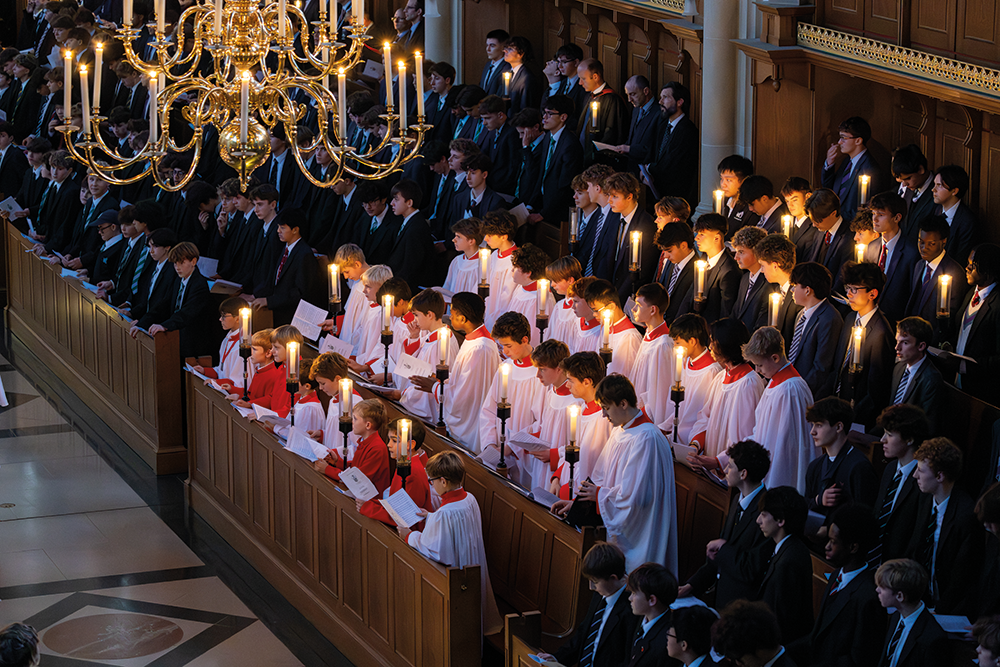
Chapels are also one of the more accessible aspects of institutions which by their very nature are exclusive: they are often the only parts of public schools open to the public. The town of Tonbridge, a Low Church bastion within the diocese of Rochester, provided a steady flow of attendees with more exotic religious tastes to the school’s evensongs and holy communions, it having been a stronghold of High Church sympathies since it rebelled against Dr Knox, its headmaster in the Napoleonic Wars, for being too much of a free-thinking Whig.
Schools are chasing parents who see education not as a good in itself but as a luxury product like any other
These magnificent buildings are under threat. There is a fear that a generation of weaker headmasters are likely to bow to the desires of helicopter parents who want their little darlings home on Sunday nights rather than spending them singing ‘All People That on Earth Do Dwell’. The dominance of international markets for public schools also causes problems. As we have seen in Oxbridge, if the managerial caste can find an excuse for turning something distinct and beautiful into the meaningless void of a ‘multifaith space’ then they will.
Public schools are no longer close to their founding principles, as medieval houses of piety and learning, or as Tudor monastery replacements, or as Victorian factories for the values that made Britain. Instead, they resemble physical embodiments of LinkedIn, obsessing over outreach and numbers, focusing on ‘networking’ and the building of ‘leadership structures’. They are greedier too, chasing parents who see the education they provide not as a good in itself but as a luxury product like any other. Their chapels might still stand at the centre of their physical landscapes, but it is hard to see how they will continue to have a role in such institutions, speaking as they do of the increasingly alien concepts of beauty, truth and love.
A surefire test of a public school’s worth is whether it treasures its chapel. Those that still do should be commended and celebrated. It was in chapel that I learned patience, the virtue of service, how to listen, and where the first seeds were sown of a faith and a vocation which has been the great joy of my life. No multi-faith assembly or careers seminar or lecture on ‘values’ would or could achieve the same.


Comments