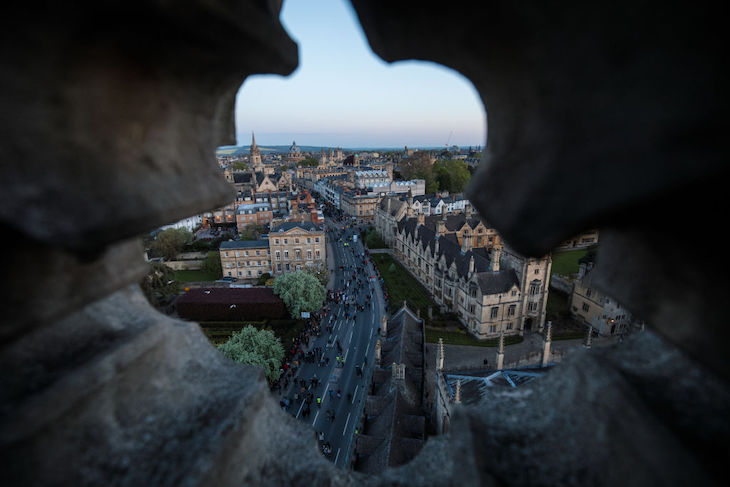
Magdalen College, Oxford, is over-represented at The Spectator. Not long ago, Paul Johnson and Matthew d’Ancona were fixtures here. Today, there are Sam Leith, Douglas Murray, and Harry Mount. Unbeknownst to them, there is also me. I was there at the same time as all three, and a while after Matt Ridley.
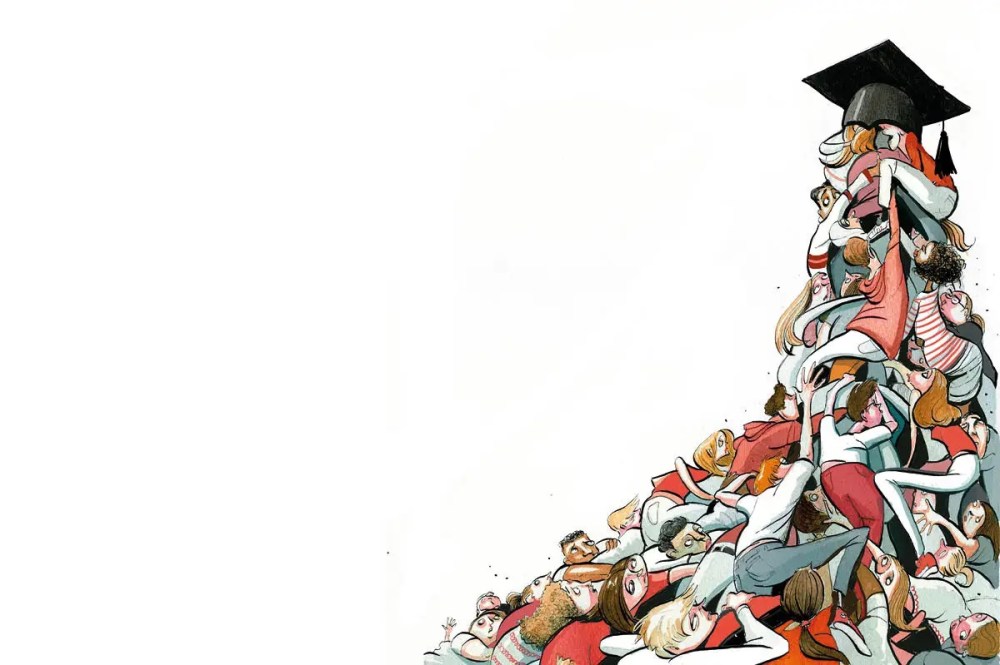
Poor white kids who are clever enough to go to Britain’s ancient universities will find it much harder to get a look in
Murray, I believe, spent time in a bad state school, but like Leith and Ridley reached Oxford via Eton; for Mount it was Westminster. I came the other way, a route which is now at the heart of a row over whether white kids from disadvantaged backgrounds are being shut out of many Oxbridge diversity schemes.
At Oxford and Cambridge, there are at least 15 scholarships, bursaries or financial aid schemes aimed at students from a black, Asian, and minority ethnic (BAME) background. Poor white kids who are clever enough to go to Britain’s ancient universities will find it much harder to get a look in.
I was one of the lucky ones. When I attended King’s Heath Boys in Birmingham in the mid 1980s, it was a violent sink school in a deprived area. Historically it was a Secondary Modern, but when the city aldermen were told to adopt comprehensives they renamed it and went to no further trouble. The grammar schools remained, the 11+ continued to stream students, the Secondary Moderns were re-christened. When I escaped to a city-centre Catholic sixth-form college, I knew of more former classmates in jail than doing A levels.
Diversity, Equity, and Inclusion (DEI) programmes had not yet achieved their modern degree of perfection, but efforts were made. A don from a place called Maudlin came and gave a talk. I was given a pamphlet and a teacher suggested I apply. Teenage ignorance and indifference meant it took me a fortnight to read it and discover Maudlin was spelled Magdalen.
I remember looking at the Oxford entrance exam papers. ‘“Is A Dream A Lie If It Don’t Come True, Or Is It Something Worse?” B. Springsteen. Discuss.’ I didn’t have a clue, and asked my teachers if they’d help. Sensibly, they refused. I would just have to apply on the strength of my grades.
I was interviewed. Later the college – the same don, the wonderful David Roberts, in charge of biological sciences – wrote to my sixth form. I had been the weakest applicant on paper, the letter explained, and I had been interviewed purely because it was policy to invite state school applicants whenever possible, so as not to discourage future ones. They had two places for my course, which had been given to the two most promising candidates. But they had liked me at interview, so they were creating a third place for me, if I could get the grades.
Luck, and growing up in a house with books, favoured me. I was a DEI hire, and I stayed for a decade. Dr Roberts did his best to teach me fruit fly genetics, and tried persuading me to read Jane Austen. I found Oxford diminished by class prejudice, but only my own. I sneeringly avoided those from public schools, missing out on interest and friendships as a result, and don’t remember meeting anyone now writing for The Spectator.
Decades later, on the other side of the interview table, I found myself unable to give out places to those I judged best. A collegiate system with wiggle room for personal judgement had been replaced by a university-wide programme with scores, mechanically adjusted to produce the approved outcomes.
Dr Roberts told me he later went back through a lifetime’s worth of his own admissions to test his hypothesis that personal judgement trumped bureaucracy, and found it wrong. A student’s A levels, not an experienced tutor’s gut feeling, best predicted their degree class. Not, he said, that it mattered much. Ninety per cent of people would do the same whatever university they got into. At Oxford you wanted the five per cent so brilliant they could exploit its unique opportunities, and the five per cent who needed collegiate support not to drown. The trouble was, he added, there seemed no real way of identifying them. A great shame, and as one of the latter five per cent I live knowing that life treated me better than I deserve.
The search for talent should embrace metrics and evidence. But fairness of fate cannot be enforced by fiat, not in a free and therefore unequal world. The best attempts to do so have downsides, and all of them too easily become dishonest. The Daily Telegraph investigation tells of a white boy from a humble background with sparkling grades, shut out from outreach programmes.
The scandal is not that universities and employers actively look for overlooked talent, but that they pursue it with thoughtless dogmatism. We learnt this week in The Spectator that the Treasury withdrew numeracy and verbal reasoning tests for applicants years ago because it found they discriminated. My weak paper application was enough to win me a place over people with better ones; the young man in the Daily Telegraph has a glittering one, and is effectively being refused more help for having the wrong colour skin. Magdalen could have given that extra place to someone with better A levels and more of a work ethic; someone more like him.
Probably whoever I displaced at Magdalen did just as well, or better, elsewhere. But perhaps, somewhere larger and less supported, they sank. We are right to enjoy the gifts life gives us, and right to think that too radical attempts at redistribution can harm. But we are also right to wonder about those who deserved more, whose good fortune was handed to us, and whom we would never have heard drowning.






Comments