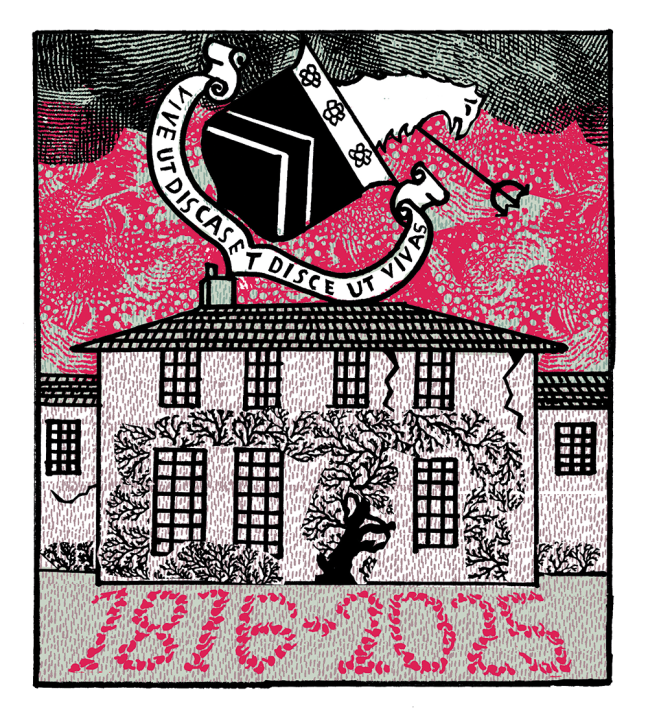
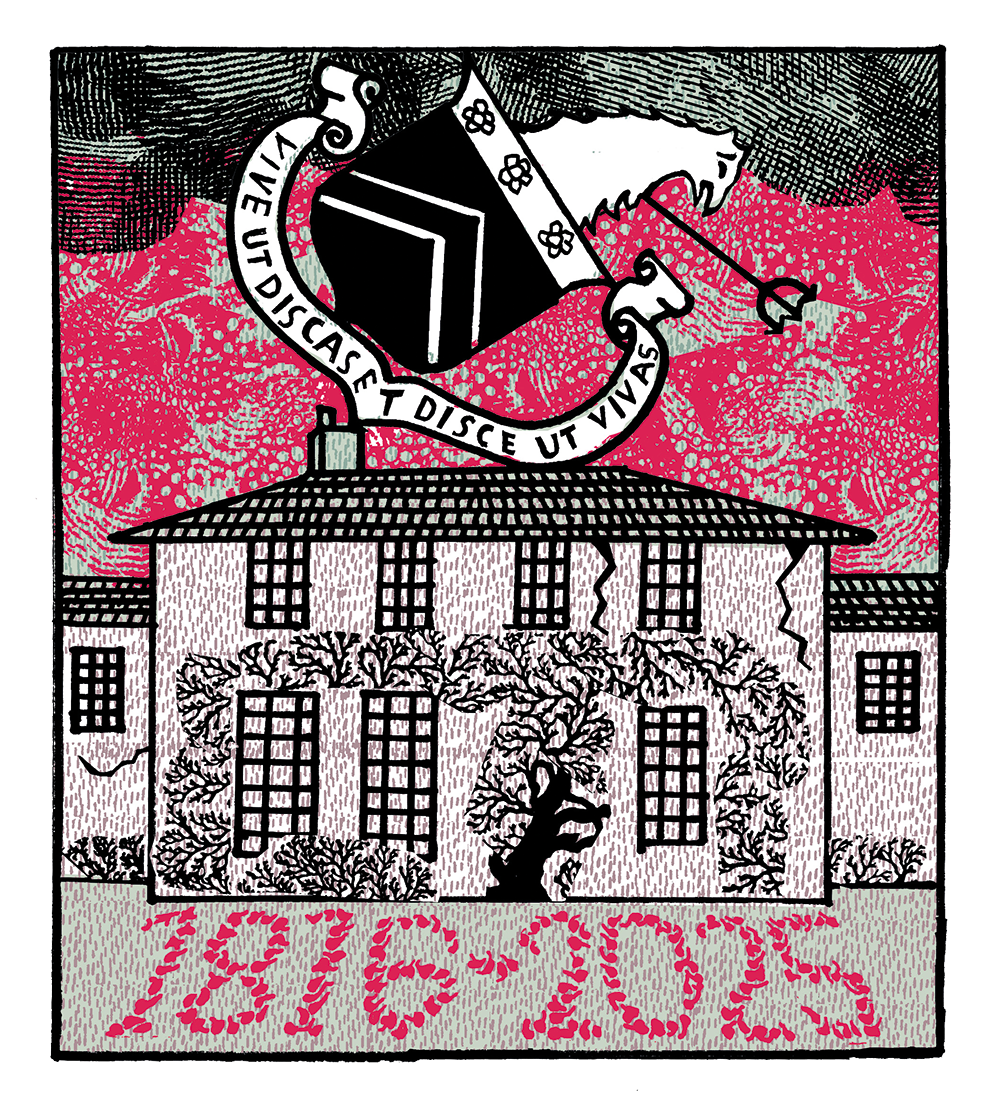
Woodcote House, an all-boys’ independent preparatory school of 76 pupils, closed its doors for the last time on 4 July last year. Asked by the editor to write an elegy for the school, I set about making enquiries. Many ran cold. The website had been shut down. Requests to friends who lived in Surrey fizzled out. Not a year after the closure of the 150-year-old institution, all that remained were digital embers: a sad Instagram post in which former parents and friends of the institution mourned its loss; an online Telegraph article detailing the headmaster’s final letter to parents in which he cited the ‘buffeting headwinds’ and a ‘drop in pupil numbers’ of the independent school sector in the aftermath of Labour’s VAT raid.
According to Plato, Atlantis, that ‘great and wonderful empire’, sank in a single day and night. Britain’s private schools may be sinking at a marginally slower rate, but soon we may struggle to find their remains at all. In the rout of independent schools since Labour’s policy, small private schools (many of them faith-oriented and non-selective) have emerged as some of the greatest casualties. Among them are Maidwell Hall in Northamptonshire (the alma mater of Earl Spencer, notoriously described in his memoir A Very Private School) and Our Lady’s Abingdon, a Catholic school in Oxfordshire. According to Schoolsmith, a market comparison site for the independent sector, prep-school closures averaged 19 a year between 2014 and 2024. Last year, 45 prep schools closed – more than twice the historic average.
Saddened but not surprised by these numbers as a prep-school mother myself, I nearly gave up on writing about Woodcote. If 45 prep schools had closed in the past 12 months, my chances of locating its last headmaster, Oliver Paterson, seemed slim. The larger narrative would win out; the details would be squashed. But this would be to underestimate the Paterson family, who have been at the helm of Woodcote House since 1931. On a wet February morning, Nicholas Paterson – a previous headmaster and the father of Oliver – rang me. He would, he said, be delighted to talk.
Woodcote was first and foremost ‘a family business’, he began. Few prep schools (bar perhaps Ludgrove and Sunningdale, which also lay claim to father-son headmaster duos) can boast the kind of intergenerational leadership that Woodcote did. After the school was acquired by Douglas Paterson in 1931, the headmastership passed from Douglas to his son Mark in 1958. In 1985, Nicholas became co-headmaster with his father until 1989, and occupied the position on his own until 2009. Subsequently Nicholas’s twin brother David took up the mantle, before passing the title to Nicholas’s son, Oliver, until the school’s closure.
Such extraordinary levels of familial devotion to preserve what Nicholas terms the ‘unique model’ of the school are hard to replicate. In the current climate of prep-school mergers led by, inter alia, the Radley Group, schools will likely become homogenised: efficient feeders to certain senior schools rather than stand-alone institutions of unique import. ‘I fear the Orwellian hoovering-up of the sector,’ Paterson says.
Woodcote, on the other hand, provided a preparatory education true to the movement’s 18th-century definition: pastoral, rural, generational. Class sizes were small (never more than 12), with a holistic approach to character development and happiness. Sport – the pride of the prep-school model – was encouraged and delighted in. No more so perhaps than when Gary Lineker, former England football captain and a Woodcote parent, appeared on the sidelines to watch his sons play. So, too, music. Woodcote’s most famous alumnus, Roger Hodgson of Supertramp fame, recalls being allowed to practise the guitar in a teacher’s study, among other musical endeavours – ‘It was probably my stint as head of the school choir which helped develop my vocal chops,’ he has said.
In the end, pragmatism won out. ‘The numbers had been sliding for two to three years,’ Nicholas says, explaining that although parents formed a committee to save the school, it quickly emerged that this would not be enough.
All that remains is for the Patersons to decide what the former school might become next. The grounds themselves are not unfamiliar with the shifting sands of history. Woodcote was able to expand significantly on the back of a bonus from the wartime government for ‘staying put’ during the Blitz, and would later take in Holocaust refugees. Having survived Nazi aggression, the Patersons could have been forgiven for thinking they would survive Rachel Reeves. Sadly, this was not to be.


Comments