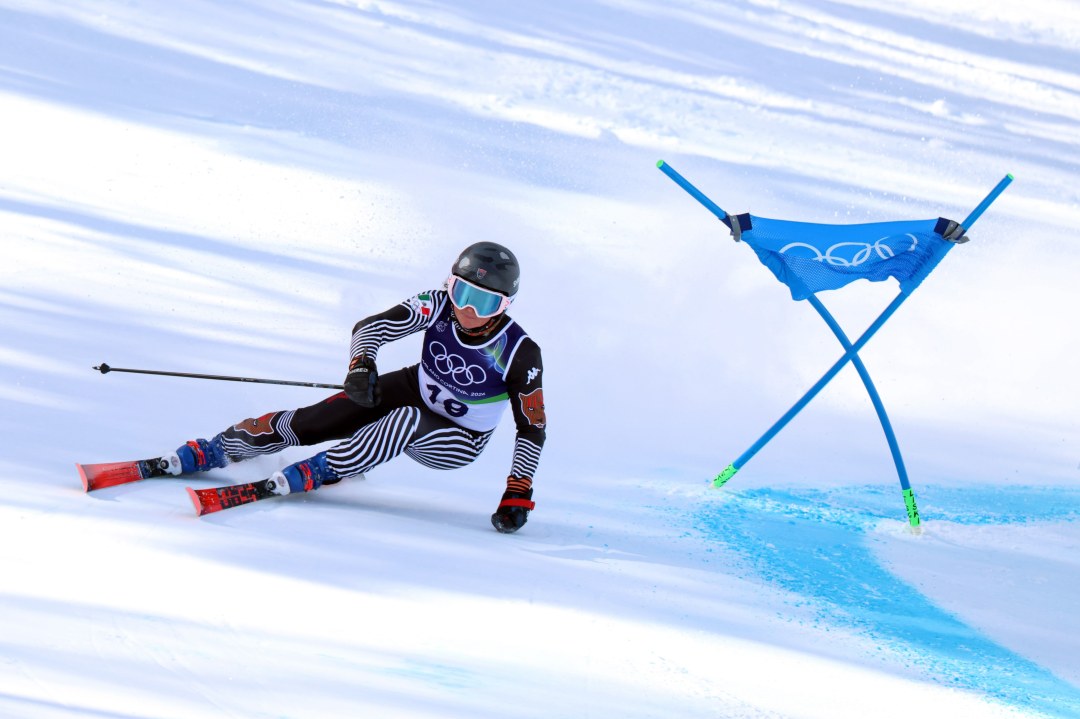
My family skied a lot. We did it home-style, with packed lunches and Mars Bars on the lifts, my brother and me following my expert Milan-raised father down terrifying drops of ice in the twilight. We took our chances on low or no visibility, scraping round mountainous moguls and – my least favourite – careering through the root, stone and tree-stuffed terrain of the arboreal American off-piste. We wore the least trendy gear imaginable: huge foam-rimmed goggles already years old in the Nineties and never any hint of a helmet. Nobody but over-protective, scaredy-cat dorks wore helmets then.
This background gave me two things. One: an intimate physical knowledge of the agony and ecstasy of ice and snow, the speed and the pain, the fear and the thrill, and how far you can strain a thigh muscle. Two: a sense of awe and envy of those people who manage to look cool, pretty, unruffled and athletic on snow and ice. Atop blade or skate (or even sledge), so very much embarrassment can ensue – from wardrobe malfunctions to losing control with your legs akimbo, to say nothing of the risk of serious injury.
And so, I ask, how can the Winter Olympics be anything other than an object of keen, lustful interest? These people are the Anti-Wimps of the world. Clouds of snow billow at these line-ups of Austrian teens, Italian babes and Swiss hunks as they shoot down awful inclines. They can barely see and, still, they crouch down further and go even faster. These people fear nothing. They see terror and they say: ‘Come and get it, sucker.’
Winter, not summer, is for the true hotties. Surely there is no more attractive figure to women than the salt-and-pepper-haired ski instructor or emergency responder, those wiry men in red, pulling sledges through dire conditions all the Alps over. They’re the (svelte) Great Danes of men.
Yet the Winter Olympics are at their most mesmerising with the women’s competitions. Women in everyday life are schooled in physical fear on the one hand and a preoccupation with the staid strength-building of indoor workouts on the other, where a reformer machine or a stationary bike is the great opponent.
The general impression of women is that we don’t like physical danger and tend to be less drawn to thrill-seeking than men. For many, from the age of about 25, bodily risk centres on the road to child-bearing and then recovering from that. Women who are mothers may then find their appetite for physics-bending danger dies down a bit.
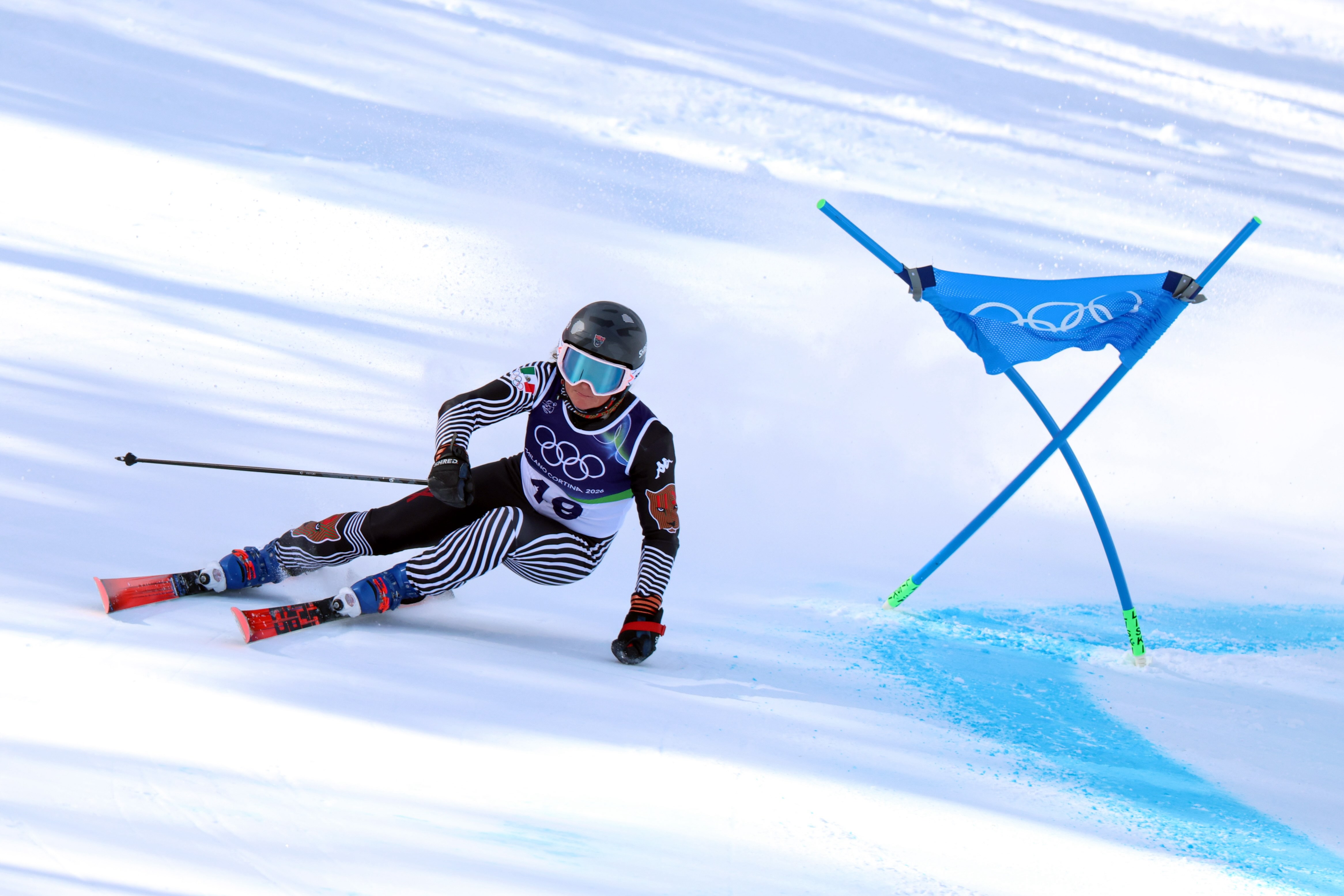
The Winter Olympics is the opposite of all that. Take Sarah Schleper, the Mexican-American who competed at the Super-G and giant slalom just before her 47th birthday last week – making her the oldest Alpine skier ever to compete at the Winter Olympics. Her son Lasse Gaxiola, who at age three was famously in her arms as she rocketed down a slope during a world cup slalom in 2011, is now 18 and competing at this Olympics alongside her. Lovely stuff.
These people fear nothing. They see terror and they say: ‘Come and get it, sucker’
In an age of geopolitical division and post-Brexit edginess, it’s also jolly nice to see pink-cheeked Austrian and Italian ski jumpers hurtling towards an epic jump where they will fly 100 metres before landing like superheroes. It’s fun seeing young Norwegians clean up (with all that oil-money, one thinks peacefully). Some of them are also glamorous celebrities with a nice, gossipy paper trail, like the beautiful American skier Mikaela Shiffrin – the most successful world cup racer of all time – and her equally photogenic partner, Norway’s Aleksander Aamodt Kilde. Or the speed skating Dutch babe, Jutta Leerdam, as famous for her looks as for her relationship with the American boxer Jake Paul.
The East Asian presence is also interesting to watch. Traditionally these are cultures associated with female deference and restricting expectations of femininity. Why, then, are so many of the best lady curlers Chinese? The best snowboarders Japanese, Korean and Korean-American?
As one of the BBC’s snow-side commentators – a breathless man caught up in the wondrousness of these flying women – put it last week: ‘These women are tough as old boots.’ ‘That doesn’t sound like a compliment!’ hiccuped his colleague, to which it was clarified he would ‘look like a dog chew’ after a fall like the ones we’d just seen. Too right.
For students of ‘untoxic’ masculinity and muscle, the figure skating events are also priceless. Figure skating is the belle of the ball, and always was – right back to the spat between Nancy Kerrigan and Tonya Harding: the titans of my youth in 1994. Even so, I cannot think of anything more escapist than watching freestyle slopeski – where skiers hurl themselves off hard objects – or, if you really need to calm down, cross country skiing.
Like them or not, winter sports are where one sees the sheer perversity of bravery in action and the glorious spectacle of real-life wonder women.




Comments