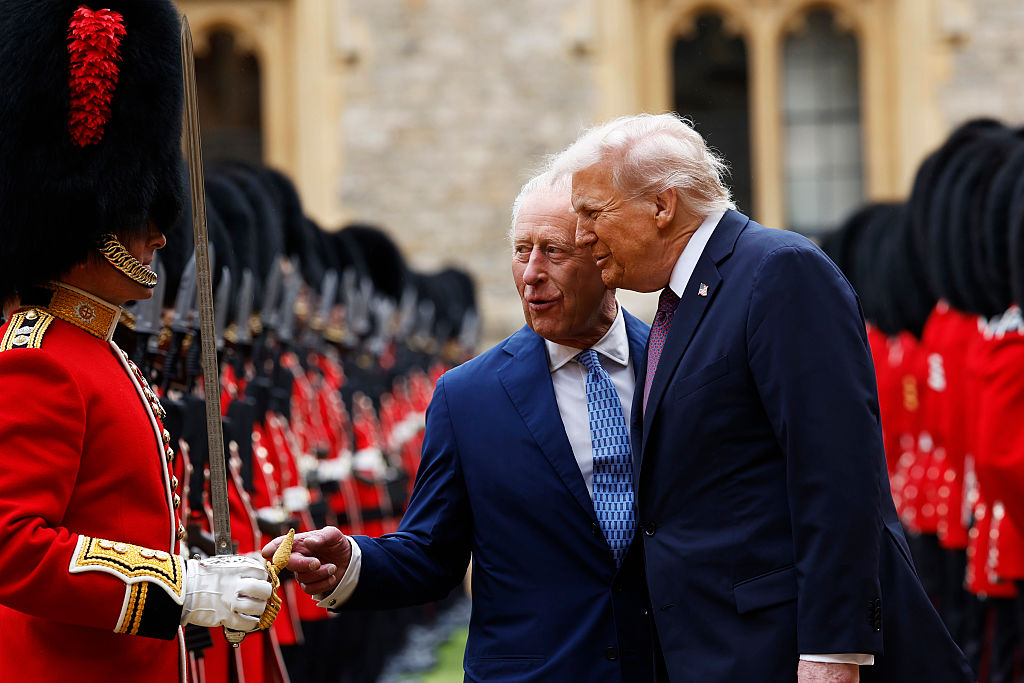
In April, King Charles is scheduled to visit the United States to mark 250 years since America achieved its independence. Given that Britain has hosted President Trump twice – once in each term – it seemed a relatively easy piece of reciprocity. Pageantry, pomp, the King and Queen smiling and waving a lot, photo opportunities with the President, Vice President and anyone else who wants something to show their grandchildren, and little of any lasting worth achieved.
How things change. Now, after the beginning of the Iran war, there is a growing groundswell of support on both sides of the Atlantic for the state visit to be postponed, if not canceled altogether. Sir Ed Davey, the leader of the Liberal Democrats, the largely irrelevant third party in Britain, has demanded that it be called off altogether, saying, “At a time when Trump has launched an illegal war that is devastating the Middle East and pushing up energy bills for British families, it’s clear this visit should not go ahead. A state visit from our King would be seen as yet another huge diplomatic coup for President Trump, so it should not be given to someone who repeatedly insults and damages our country.”
Nobody listens to Sir Ed, at home or abroad, so it is unlikely that this “British lawmaker,” will have any impact. Yet, as so often with the Liberal Democrats, Davey has accidentally hit upon a wider seam of opinion which may yet grow to a clamor of protest. There is an increasing sense that King Charles, whose state visits are hardly uncommon occurrences but are nevertheless rationed by Buckingham Palace to deserving countries and governments, is unwilling to be associated with the conflict.
And given its near-complete lack of popularity in Britain – where his subjects are, quite rightly, furious at the potential rise to energy and gas prices because of a war that they have had no direct involvement in – it would be a surprisingly popular decision if the monarch was to make a public stand and refuse to visit America in April.
Donald Trump, of course, would be outraged. It is a key part of the so-called “special relationship” that the President’s Anglophilia, and love of the royal family, is used as a bargaining chip to smooth over the often tense relationship that he has with the Prime Minister Keir Starmer. And given that relations between the two men are currently at the worst they have been since both acceded to their jobs, the soothing presence of King Charles for a good round of pageantry and flag-waving could well have paid dividends.
Yet at a time when the Andrew Mountbatten-Windsor scandal is taking up a great deal of Charles’s thought and energy – with the constant knowledge that there is going to be a considerable amount more to come – the idea of sucking up to Trump is, frankly, rather less important both to the monarch and to Britain than it once was.
There is no tactful way to cancel a state visit, and such things are only done as a last resort. If it is called off, expect the relationship between the United Kingdom and the United States to get a great deal worse and for punitive tariffs, angry Truth Social briefings and the like to become far more prevalent.
All of these things are being weighed up and factored in, and the visit may yet still go ahead. Yet if it does not, Trump and his administration will know that it has been called off on the grounds of principle, rather than convenience, and may yet rue the day that their foreign adventure led to such a loss.
Alexander Larman
Will Iran scupper King Charles’s US state visit?


Comments